When choosing a three-compartment sink for your food truck, prioritize models that meet health code standards and are made of durable stainless steel. Look for features that promote water efficiency, like low-flow faucets, and guarantee proper installation with necessary drainage and splash guards. The right size and layout will boost your workflow and make cleaning easier. Keep these tips in mind, and you’ll discover how to set up a safe, efficient mobile kitchen—more insights await you.

Get kitchen staples and gadgets delivered free with Prime
- Fast, free delivery on millions of items
- Prime Video, Amazon Music and more included
- Member-only deals all year
Key Takeaways
- Prioritize stainless steel sinks for durability, hygiene, and compliance with health standards.
- Choose models with water-saving features like adjustable flow faucets to reduce operational costs.
- Ensure proper installation height, drainage, and splash guards for safety and regulatory compliance.
- Select appropriately sized and configured sinks to optimize workflow and ease of maintenance.
- Verify that the sink meets local regulations and includes necessary features for secure, compliant setup.
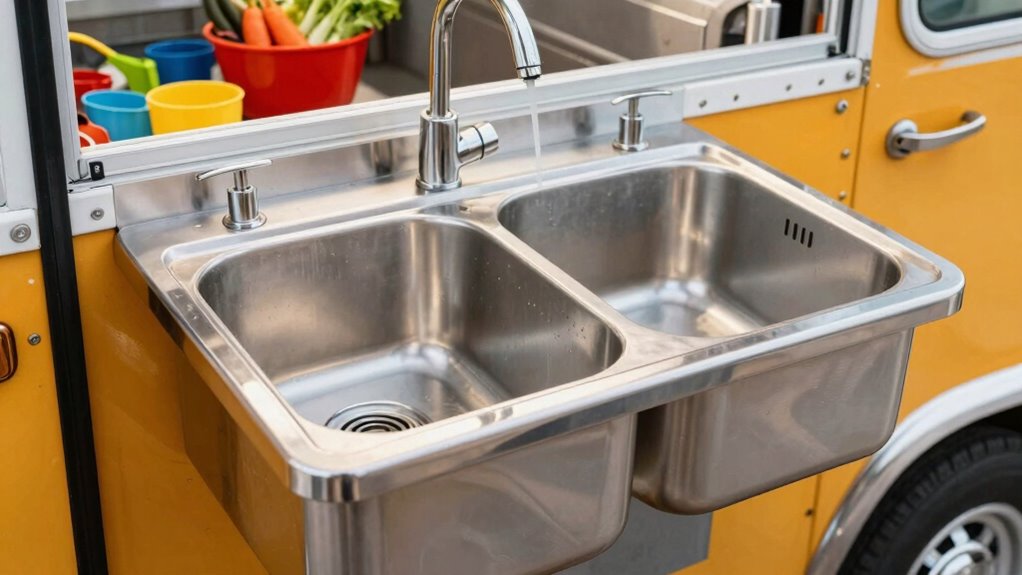
If you’re running a food truck, having a three-compartment sink is vital for maintaining proper hygiene and meeting health code requirements. This setup allows you to efficiently wash, rinse, and sanitize dishes, which is essential for keeping your mobile kitchen safe and compliant. When choosing a sink, water efficiency is a key consideration. Look for models that are designed to minimize water waste while still providing the necessary cleaning capacity. Features like adjustable water flow faucets or low-flow aerators can help you save water, reducing your operational costs and environmental impact. Efficient water use isn’t just good for the planet—it also helps you stay within local regulations that often specify water consumption limits for food service establishments. Ensuring your sink setup adheres to installation regulations is crucial for legal compliance and operational safety. Installation regulations are another important factor when selecting a three-compartment sink. These rules guarantee your sink is set up correctly for sanitation and safety. Many jurisdictions require sinks to be installed at specific heights, with proper drainage and splash guards to prevent cross-contamination. You’ll need to verify local health department standards before purchasing or installing your sink, as improper setup can lead to violations or shutdowns. Proper installation also involves ensuring the sink is securely mounted and that there’s adequate space around it for easy cleaning and maintenance. Keep in mind that some areas may have additional requirements, such as separate compartments for different types of cleaning or specific plumbing connections, so do your research beforehand. Choosing durable materials like stainless steel can significantly extend the lifespan of your sink and maintain hygiene standards over time. Durability and material quality are equally important. Stainless steel is the top choice because it resists corrosion, is easy to clean, and meets health standards. Cheaper materials might save money initially but can lead to quicker wear and difficulty maintaining hygiene standards over time. When shopping for a three-compartment sink, consider its size and configuration to fit your truck’s layout without sacrificing workflow efficiency. A well-designed sink will streamline your cleaning process, saving you time during busy service hours. Additionally, selecting a model with easy maintenance features can help ensure your sink remains in optimal condition with minimal effort.
stainless steel three compartment sink for food truck
As an affiliate, we earn on qualifying purchases.
As an affiliate, we earn on qualifying purchases.
Frequently Asked Questions
Are Three Compartment Sinks Legally Mandatory for Food Trucks?
Yes, three compartment sinks are legally mandatory for food trucks in many areas. They guarantee proper sanitation, allowing you to wash, rinse, and sanitize dishes effectively. You need to take into account water filtration systems for each sink to meet health standards. Additionally, proper sink placement is vital for compliance and workflow efficiency, helping you avoid violations and maintain a safe, clean environment for food preparation and service.
How Much Space Do Three Compartment Sinks Typically Require?
You might think three compartment sinks take up a lot of space, but they typically need about 5 to 7 feet of linear space, including room for sink placement and water access. Consider water efficiency by choosing compact models that fit your truck’s layout without sacrificing functionality. Proper placement guarantees smooth workflow, saves space, and meets health standards. Planning carefully helps you maximize limited space while maintaining efficient operations.
What Are the Maintenance Requirements for These Sinks?
You need to follow regular cleaning protocols to keep your three compartment sink in top shape. Use hot water and approved cleaning agents daily, and sanitize thoroughly to prevent bacteria buildup. Keep an eye on wear and tear, and replace parts like gaskets or faucets as needed to maintain proper function. Consistent maintenance guarantees your sink stays efficient, hygienic, and compliant with health standards.
Can Three Compartment Sinks Be Customized for Different Truck Sizes?
Think of your truck as a blank canvas, ready for a tailored masterpiece. Three compartment sinks can absolutely be customized for different truck sizes using modular designs and custom sizes. This flexibility lets you optimize space and workflow, ensuring your sinks fit snugly and work seamlessly. With a bit of planning, you can create a perfectly fitted setup that enhances efficiency and keeps your mobile kitchen running smoothly.
What Are the Most Common Issues With Three Compartment Sinks?
You might encounter issues with water drainage if the sink isn’t properly installed or maintained, causing slow drainage or backups. Sanitation protocols can be compromised if you don’t regularly clean and sanitize all compartments, leading to bacteria buildup. Leaks and rust can also occur over time, affecting the sink’s durability. Regular inspections and proper installation help prevent these common problems, ensuring your sink functions efficiently and maintains hygiene standards.
water-saving three compartment sink with low-flow faucets
As an affiliate, we earn on qualifying purchases.
As an affiliate, we earn on qualifying purchases.
Conclusion
Choosing the right three compartment sink is essential for your food truck’s efficiency and compliance. Did you know that proper sanitation can reduce foodborne illnesses by up to 50%? Investing in a durable, well-sized sink guarantees smooth operations and safety for both you and your customers. Remember, a smart purchase today keeps health risks at bay tomorrow. Prioritize quality and functionality to keep your mobile kitchen running seamlessly and safely.
commercial mobile kitchen three compartment sink
As an affiliate, we earn on qualifying purchases.
As an affiliate, we earn on qualifying purchases.
adjustable height three compartment sink for food truck
As an affiliate, we earn on qualifying purchases.
As an affiliate, we earn on qualifying purchases.
Halloween Picks
halloween
As an affiliate, we earn on qualifying purchases.