
TL;DR

Get kitchen staples and gadgets delivered free with Prime
- Fast, free delivery on millions of items
- Prime Video, Amazon Music and more included
- Member-only deals all year
Virginia’s health department has documented 55 patients across 19 states in a Salmonella Telelkebir outbreak linked to oysters, compared with 27 illnesses reported by the CDC. The outbreak investigation points to oysters harvested by Little Wicomico Oyster Company, which were recalled; the agencies have not explained the gap between their patient counts.
Virginia’s Department of Health has documented 55 patients across 19 states in a Salmonella Telelkebir outbreak linked to oysters, while the CDC reports 27 illnesses in 12 states. The difference in the counts is not explained in the available reports; the CDC’s total also includes five people who were hospitalized.
The CDC reported its 27-case count on October 19, and the Food and Drug Administration cited the same total in a recall notice. Virginia’s health department says illnesses began in late May and continued through October 6. The CDC’s five hospitalizations are the only hospitalization figure specified in the report.
The recall covered oysters harvested by Little Wicomico Oyster Company from the Little Wicomico River between September 18 and October 8. For the 27 patients counted by the CDC, 10 reported eating raw oysters. Investigators had tag and traceback records for seven patients: two ate oysters from one Virginia source, while five ate oysters from several sources. The company’s oysters were the only oysters identified in common among those seven patients.
All 27 patients in the CDC count ate oysters harvested before the recall period. Georgia’s Department of Agriculture said Publix sold the recalled oysters under the name “James River Oysters” through October 14, five days after the recall. The available report does not give details on how or when the sales ended.
The Gap Between Case Counts
The different totals show that public case counts can vary as health agencies gather and verify reports. A higher state health department count does not, on its own, establish why the figures differ or mean that the CDC has revised its outbreak total. Readers should distinguish Virginia’s report of 55 patients across 19 states from the CDC’s current tally of 27 across 12 states.
The suspected connection matters for people who may have bought or eaten the recalled oysters. The harvest dates in the recall span September 18 through October 8, and the report says Publix sales continued through October 14. Consumers who have oysters matching the recall should follow official recall instructions rather than eat them. The information provided does not identify every retailer or establish whether recalled product remains available.
The outbreak also illustrates why the official number is not necessarily the total number of people who became ill. The CDC estimates that for each confirmed Salmonella patient in an outbreak, 29 additional infections may go undetected. That is a general estimate, not a measured multiplier for this oyster outbreak, and should not be used to calculate a specific total of illnesses here.
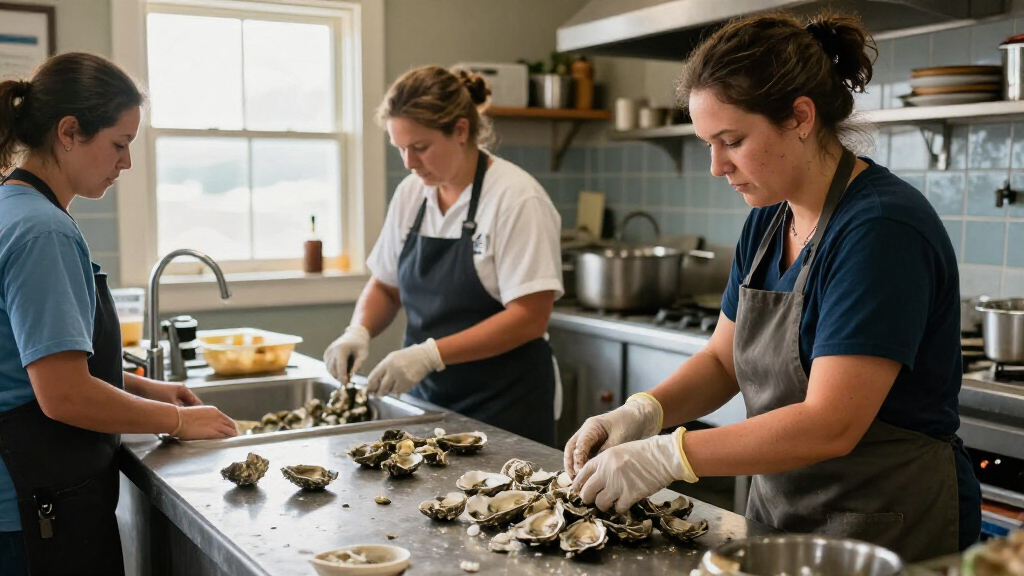
food safety oyster shucking gloves
As an affiliate, we earn on qualifying purchases.
As an affiliate, we earn on qualifying purchases.
Traceback Points to Virginia Oysters
The CDC and FDA reported the same 27-patient total when the recall information was issued, while Virginia’s health department documented a broader count. In its traceback work, investigators compared oyster sources reported by patients for whom records were available. Little Wicomico River oysters were the sole source common to the seven traced patients, according to the report; that finding supports the outbreak link but does not mean all 27 patients had complete traceback records.
Salmonella infections can take time to be identified and linked to an outbreak. The CDC says it can take three to four weeks for a stool culture to become a sequenced isolate that can be matched to an outbreak and counted. Some people with illness do not seek medical care, and some who do are not tested for Salmonella. These factors can delay or limit case counting, though the available information does not say which explains the specific difference between the Virginia and CDC figures.
“The illnesses began in late May and run through Oct. 6.”
— Virginia Department of Health
As an affiliate, we earn on qualifying purchases.
Why the Totals Differ
The available reports do not explain why Virginia has documented 55 patients across 19 states while the CDC counts 27 illnesses across 12 states. They also do not clarify whether the figures use different reporting dates, case definitions, or methods, or whether the Virginia total includes cases not yet reflected in the CDC tally.
The source report says the outbreak is linked to the recalled oysters based on traceback findings, but it does not provide the names or locations of all affected patients, the full list of retailers, or the number of people who ate the recalled product. The 29-to-one CDC estimate describes under-detection in Salmonella outbreaks generally; it is not a confirmed estimate of additional cases in this incident. Further case updates and investigation findings remain pending.
As an affiliate, we earn on qualifying purchases.
Further Case and Recall Updates
Health agencies may revise their counts as additional illnesses are reported, tested, and matched to the outbreak. The CDC says sequencing can take three to four weeks, so the case total may lag behind illness onset. The CDC and Virginia health department have not provided a date for their next update in the information available.
Consumers can check FDA and state health department recall notices for product identification and handling instructions, and should not eat oysters that match the recall. Anyone who becomes ill after eating oysters should contact a healthcare provider and mention the exposure. The next key developments will be any updated case counts, additional traceback findings, and information from agencies about the recall’s distribution and status.
As an affiliate, we earn on qualifying purchases.
Key Questions
How many illnesses have been reported?
Virginia’s health department has documented 55 patients across 19 states. The CDC’s October 19 report counted 27 illnesses across 12 states, including five hospitalizations. The reason for the difference has not been stated in the available reports.
Which oysters are linked to the outbreak?
The investigation points to oysters harvested by Little Wicomico Oyster Company from the Little Wicomico River. The recall covered harvest dates September 18 through October 8. The report says Publix sold the recalled oysters as “James River Oysters” through October 14.
Were the CDC-counted patients exposed to oysters during the recall period?
No. According to the report, all 27 patients counted by the CDC ate oysters harvested before the recall window. The recall dates are not the same as the dates when patients became ill.
Why might the reported case count be lower than the actual number of illnesses?
Some people do not seek medical care, and some patients are not tested for Salmonella. The CDC also says matching a stool culture to an outbreak through sequencing can take three to four weeks. Its estimate that 29 infections may go undetected for every confirmed Salmonella patient is a general estimate, not a specific calculation for this outbreak.
What should consumers do if they have the recalled oysters?
Do not eat oysters that match the recall. Check official FDA or state health department notices for product details and disposal or return guidance. The available report does not specify whether recalled products remain on sale or identify every retailer.
Source: rss
Fall Picks
fall essentials
As an affiliate, we earn on qualifying purchases.