
To choose the right wastewater tank for your food truck, consider size, material, and stormwater management features. Make certain the tank fits available space and handles your wastewater output comfortably without being cumbersome. Opt for durable, corrosion-resistant materials like polyethylene or stainless steel. Look for secure fittings, drainage ports, and overflow valves to prevent spills and contamination. Proper installation and regular maintenance are essential. Keep reading to discover detailed tips for selecting the best tank for your needs.
Listen free for 30 days with Audible
Thousands of audiobooks and originals — cancel anytime.
As an affiliate, we earn on qualifying purchases.
Key Takeaways
- Assess your food truck’s wastewater output to determine appropriate tank size and capacity.
- Choose durable, corrosion-resistant materials like polyethylene or stainless steel for longevity.
- Ensure the tank design includes drainage ports and overflow valves for effective stormwater management.
- Verify secure fittings and accessible features for easy cleaning, maintenance, and sanitation.
- Consider installation requirements to prevent leaks, stormwater infiltration, and regulatory compliance.
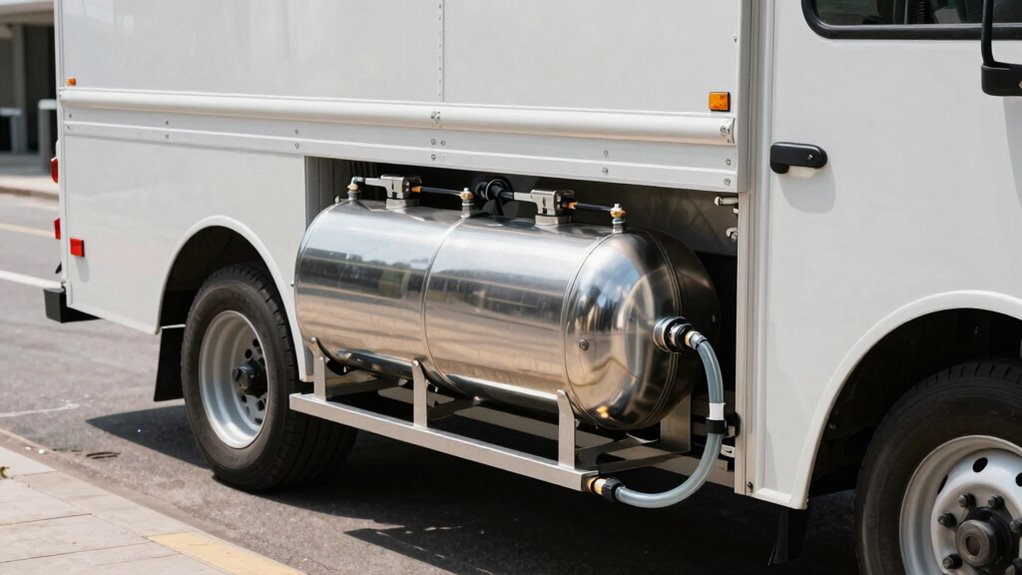
Choosing the right wastewater tank for your food truck is essential to guarantee compliance with health regulations and maintain smooth operations. When selecting a tank, you need to contemplate how well it manages stormwater runoff and how the tank material supports durability and sanitation. Stormwater management is critical because improper handling can lead to contamination and regulatory issues. You want a tank that prevents overflow or leaks during heavy rain, ensuring wastewater doesn’t spill onto your vehicle or surrounding areas. A good wastewater tank should feature secure fittings and a design that minimizes exposure to external elements, helping you stay compliant and avoid fines.
Choose a wastewater tank that prevents leaks, manages stormwater effectively, and ensures compliance for smooth food truck operations.
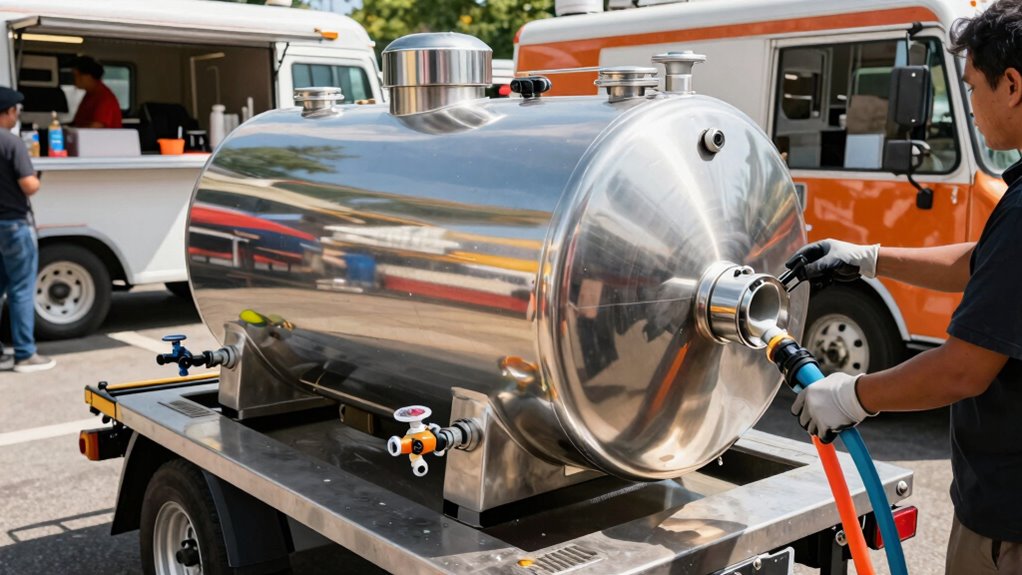
Tank material selection plays a significant role in the longevity and sanitation of your wastewater system. You’ll find options like polyethylene, stainless steel, and fiberglass—each with its advantages. Polyethylene tanks are lightweight, resistant to corrosion, and affordable, making them a popular choice for food trucks. They’re also easy to clean, which supports maintaining hygiene standards. Stainless steel tanks, though more costly, offer superior durability and resistance to extreme conditions, making them suitable if you anticipate heavy use or need a more robust solution. Fiberglass tanks strike a balance, being corrosion-resistant and relatively lightweight, but they can be more expensive than polyethylene.
Consider how your chosen tank material interacts with stormwater management. For example, a polyethylene tank won’t rust, so it’s less likely to degrade over time even if exposed to rainwater or moisture. Properly sealing the tank’s connections is key to preventing leaks, especially during storms when rainfall is intense. You should also evaluate the tank’s shape and size based on your truck’s available space and your wastewater output. A tank that’s too small will require frequent emptying, while one that’s too large might be cumbersome and inefficient. Proper stormwater management features like drainage ports and overflow valves are essential to prevent backups and spills during heavy rain, protecting your operation and the environment.
Additionally, look for tanks with features that facilitate stormwater management, such as drainage ports and overflow valves. These features help prevent backups and spills during heavy rain, protecting your operation and the environment. Regular cleaning and maintenance are essential, so choose a tank with accessible fittings and smooth surfaces that make sanitation straightforward. Proper tank installation is also crucial to prevent issues related to stormwater infiltration or contamination. Properly managing stormwater runoff not only ensures compliance but also helps protect surrounding ecosystems and biodiversity. By carefully considering stormwater management needs and selecting the appropriate tank material, you can ensure your food truck’s wastewater system is reliable, compliant, and long-lasting. Proper planning also involves understanding biodiversity considerations, ensuring your operations do not harm surrounding ecosystems.
As an affiliate, we earn on qualifying purchases.
Frequently Asked Questions
What Is the Average Lifespan of a Wastewater Tank?
The average lifespan of a wastewater tank is around 10 to 15 years, depending on tank installation and maintenance schedules. Regular inspections and prompt repairs help extend its life. If you stay consistent with cleaning and avoid harsh chemicals, you can maximize durability. Keep an eye on signs of wear and corrosion, and replace the tank when necessary to guarantee your food truck runs smoothly and stays compliant with health standards.
Are There Specific Regulations for Wastewater Tanks in Food Trucks?
Yes, there are specific regulations for wastewater tanks in food trucks. You need to guarantee regulatory compliance by following local health and environmental standards, which often include proper tank installation guidelines. These rules help prevent contamination and ensure safe disposal. Always check with local authorities before installation, and choose tanks that meet code requirements. Proper compliance not only keeps you legal but also promotes safe, hygienic food truck operations.
How Often Should Wastewater Tanks Be Emptied and Cleaned?
Imagine your wastewater tank as a crucial artery, carrying away used water from your food truck. You should empty and clean your tank every 3 to 5 days, depending on usage. Prioritize tank maintenance with a consistent cleaning schedule to prevent odors and blockages. Regularly checking and cleaning guarantees smooth operations, reduces health risks, and keeps your food truck compliant with regulations.
Can Wastewater Tanks Be Customized for Different Food Truck Sizes?
Yes, wastewater tanks can be customized for different food truck sizes. You can choose from various tank sizes to match your truck’s capacity needs, ensuring efficient wastewater management. Material options like polyethylene, stainless steel, or composite materials are available, allowing you to select a durable and suitable tank. Customization helps optimize space and functionality, making sure your wastewater system aligns perfectly with your specific food truck size and operational requirements.
What Materials Are Best for Preventing Odors in Wastewater Tanks?
Like a fortress guarding its secrets, the right materials safeguard your tank from odors. You should prioritize odor control and material durability, choosing high-quality polyethylene or stainless steel. These materials resist corrosion and contain odors effectively, keeping your food truck smelling fresh. Their toughness ensures longevity, so you won’t have to worry about leaks or breakdowns. Ultimately, durable, odor-resistant materials let you focus on serving great food without the stress of foul smells.
stainless steel wastewater tank for food truck
As an affiliate, we earn on qualifying purchases.
As an affiliate, we earn on qualifying purchases.
Conclusion
So, now that you’ve navigated the wild world of wastewater tanks, remember—choosing the right one isn’t rocket science, just slightly messier. Pick a tank that fits your truck, handles your waste, and saves you from plumbing nightmares. After all, nothing screams “professional” like a clean, odor-free operation. So go ahead, make a splash—just maybe avoid the one that turns your food truck into a floating disaster zone. Happy trucking!
polyethylene wastewater tank with overflow valve
As an affiliate, we earn on qualifying purchases.
As an affiliate, we earn on qualifying purchases.
food truck stormwater management tank
As an affiliate, we earn on qualifying purchases.
As an affiliate, we earn on qualifying purchases.
Fall Picks
fall essentials
As an affiliate, we earn on qualifying purchases.