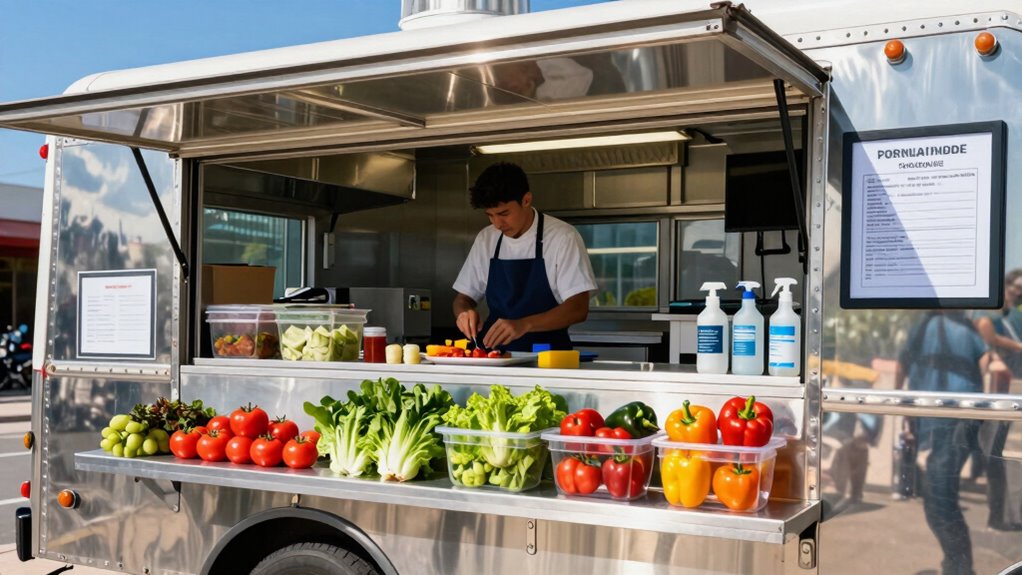
Before a surprise inspection, you should thoroughly review your food truck’s cleanliness, making certain all surfaces are sanitized, debris is cleared, and food is stored at the correct temperatures. Check that all equipment, from refrigeration units to fryers, is functioning properly and has current certifications. Confirm hygiene practices are followed, including proper handwashing and glove use. Don’t forget to update your compliance records and safety signage. Keep an eye on these details to pass smoothly—there’s more to guarantee you’re fully prepared.

Get kitchen staples and gadgets delivered free with Prime
- Fast, free delivery on millions of items
- Prime Video, Amazon Music and more included
- Member-only deals all year
Key Takeaways
- Ensure all food preparation and storage areas are clean, sanitized, and food is stored at proper temperatures.
- Verify all equipment and vehicles are functioning correctly and have up-to-date certifications and permits.
- Confirm staff follow hygiene protocols, including proper handwashing, glove use, and pest control measures.
- Review maintenance of sanitation logs, cleaning schedules, safety signs, and emergency procedures.
- Utilize digital records and modern inspection tools to quickly identify and address potential violations.
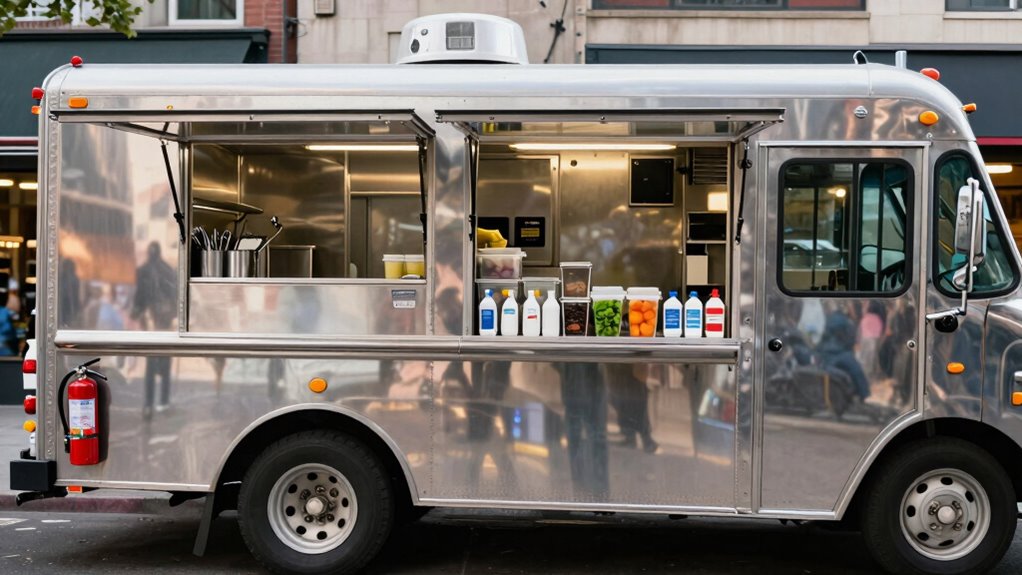
Before an official inspection, it’s vital to thoroughly review your food truck’s operations to guarantee everything is in top shape. As a mobile vendor, you want to avoid surprises that could lead to fines or shutdowns. Preparing ahead of time means carefully going over every detail on your inspection checklist. This checklist serves as your roadmap, ensuring nothing gets overlooked. Start by inspecting your food preparation and storage areas. Make sure all surfaces are clean, sanitized, and free of debris. Check that food is stored at the correct temperatures—cold foods kept below 41°F and hot foods above 135°F. Proper storage prevents contamination and keeps your food safe.
Thoroughly review your food prep and storage areas to ensure cleanliness, proper temperatures, and safety before inspection.
Next, review your equipment. Confirm that your refrigeration units, grills, fryers, and sinks are functioning properly. Regular maintenance is key to avoiding breakdowns during or before an inspection. Don’t forget to verify that all equipment has the necessary certifications and that safety features, like thermometers and pressure gauges, are in working order. As a mobile vendor, you also need to guarantee that your vehicle itself passes inspection standards. Check your license, registration, and any permits required by local health departments. Keep these documents easily accessible, so you’re ready to present them if asked.
Your inspection checklist should also include a review of your food safety practices. Make sure employees are trained in proper handwashing techniques and that handwashing stations are stocked with soap and paper towels. Confirm that gloves are used when handling ready-to-eat foods and that all staff follow hygiene protocols. Additionally, double-check that your pest control measures are effective and that your trash is regularly disposed of to prevent infestations. It’s also beneficial to utilize new technology to streamline compliance and record-keeping, which can impress inspectors with your professionalism. Incorporating digital record management can help you keep detailed logs and easily update them as needed. Using digital tools can also facilitate faster response times if discrepancies are found during the inspection process. Implementing visual inspections with modern tools can further enhance your ability to identify potential issues before an official check.
It’s also helpful to utilize 3D scanning technology to verify the integrity of your food truck’s structural components and ensure compliance with safety standards. Another critical aspect is your cleaning schedule. Guarantee that you have a documented routine for cleaning all surfaces, utensils, and equipment. Record-keeping for cleaning logs shows inspectors that you prioritize sanitation. Finally, walk around your truck and verify that all safety signs are visible and that fire extinguishers are up-to-date and accessible. Confirm that your emergency procedures are clearly posted for staff and that you have a first aid kit on hand.
As an affiliate, we earn on qualifying purchases.
Frequently Asked Questions
How Often Should Food Trucks Conduct Self-Inspections?
You should conduct self-inspections weekly to guarantee menu cleanliness and staff hygiene stay excellent. Regular checks help catch potential issues early, preventing surprises during official inspections. Focus on cleaning surfaces, proper food storage, and making sure staff follow hygiene protocols. These frequent reviews keep your food truck compliant, safe, and ready for any surprise visit, giving you peace of mind and maintaining your reputation for quality and safety.
What Common Violations Do Inspectors Frequently Cite?
Inspectors often find violations like poor food safety training and sloppy staff hygiene, which can feel like the biggest disasters on wheels. You gotta guarantee your team follows strict handwashing, proper glove use, and temperature controls. Regular staff training keeps everyone sharp, preventing common infractions from turning your food truck into a scandal. Stay vigilant about cleanliness and food handling, because even minor lapses can lead to major violations.
Are There Specific Equipment Requirements for Inspections?
Yes, there are specific equipment requirements for inspections. You need to guarantee your kitchen cleanliness is maintained, with all surfaces sanitized and free of debris. Equipment maintenance is vital; make certain all cooking, refrigeration, and storage units are in proper working order, calibrated, and clean. Regularly check for any broken or malfunctioning equipment, as inspectors look for well-maintained, sanitary equipment that complies with health standards.
How Should Food Trucks Handle Inspection Surprises?
You should stay prepared for surprise inspections by regularly conducting food safety training with your staff, emphasizing cleanliness and proper food handling. Keep your truck organized and sanitary at all times, so you’re ready when inspectors arrive. Manage customer feedback actively to address issues promptly, showing your commitment to safety. Staying consistent with these practices guarantees you handle surprise inspections confidently and demonstrate your dedication to high standards.
What Documentation Should Food Trucks Prepare Beforehand?
You should prepare essential documentation like up-to-date food safety protocols and proof of staff training. Make sure your food safety protocols are clearly written and accessible, demonstrating your commitment to hygiene standards. Keep records of staff training sessions to show your team understands proper procedures. Being organized and ready with this documentation helps you respond quickly during inspections, showcasing your compliance and dedication to maintaining a safe, clean environment for your customers.
food truck refrigeration thermometer
As an affiliate, we earn on qualifying purchases.
As an affiliate, we earn on qualifying purchases.
Conclusion
Before a surprise inspection, think of your food truck as a ship steering stormy waters—you want it to sail smoothly. Double-check all your documentation, hygiene standards, and food safety practices. Staying prepared isn’t just about passing; it’s about showing your commitment to quality and safety. When you’re proactive, you’ll weather the inspection with confidence, turning potential chaos into a calm sea of compliance. Remember, preparation is your best anchor in choppy waters.
As an affiliate, we earn on qualifying purchases.
food truck hygiene inspection kit
As an affiliate, we earn on qualifying purchases.
As an affiliate, we earn on qualifying purchases.
Halloween Picks
halloween
As an affiliate, we earn on qualifying purchases.