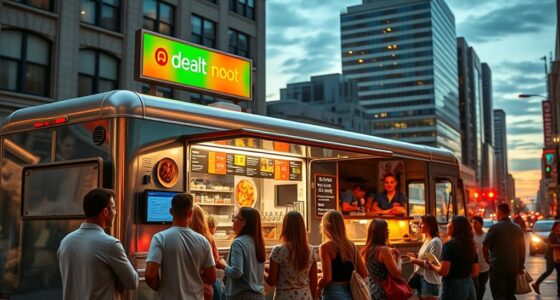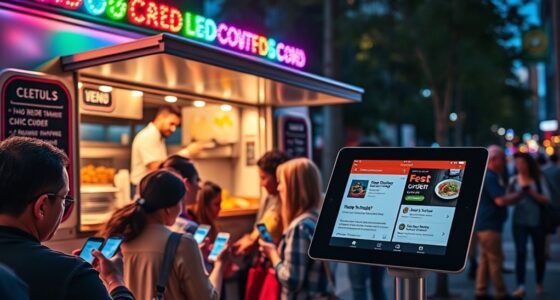
AI-driven menus and predictive ordering personalize your dining experience by analyzing your preferences, dietary restrictions, and order history. They adapt menus in real-time based on inventory, trends, and popular choices, helping you discover new dishes while reducing wait times. These systems improve efficiency for restaurants and boost customer satisfaction, but they also raise privacy concerns. To learn more about how these innovations balance personalization and data security, keep exploring the details behind this technology.

Get kitchen staples and gadgets delivered free with Prime
- Fast, free delivery on millions of items
- Prime Video, Amazon Music and more included
- Member-only deals all year
Key Takeaways
- AI personalizes menus by analyzing customer preferences, dietary restrictions, and order history for tailored dining experiences.
- Predictive ordering uses AI to forecast busy times and optimize order timing, improving efficiency and customer satisfaction.
- AI manages inventory and suggests menu adjustments in real-time to reduce waste and support supply chain efficiency.
- Personalized menus promote dish exploration, boost sales, and enhance engagement through tailored recommendations.
- Privacy concerns are addressed with secure data handling and transparent policies to maintain customer trust.
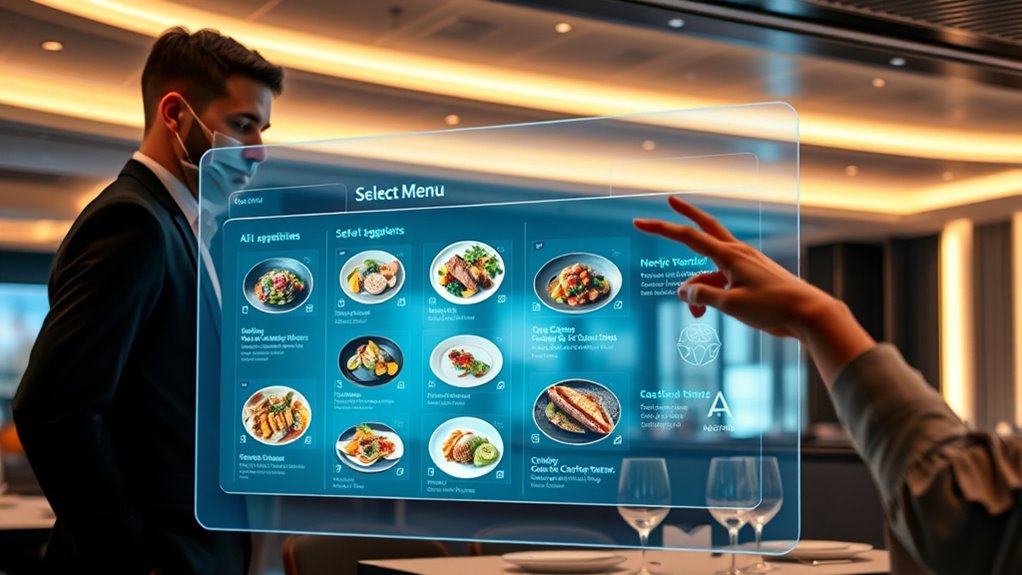
Artificial intelligence is transforming the way restaurants serve customers by enabling AI-driven menus and predictive ordering systems. As a diner, you’ll notice more tailored experiences, with menus that adapt based on your preferences, dietary restrictions, and ordering history. These personalization strategies help restaurants create a more engaging and efficient dining experience, making it easier for you to find what you like and discover new dishes suited to your tastes. By analyzing past orders, AI can recommend menu items you’re likely to enjoy, reducing decision fatigue and speeding up the ordering process. This personalized approach not only enhances customer satisfaction but also boosts sales for the restaurant, as it encourages you to explore options you might not have considered otherwise.
AI personalizes menus by analyzing your preferences and order history, making dining more efficient and enjoyable.
However, with these advancements comes the concern of data privacy. When you share your preferences and ordering habits, your data is collected and analyzed to refine recommendations. While this improves your experience, it raises questions about how securely your information is stored and whether it’s shared with third parties. Many restaurants and tech providers prioritize data privacy, implementing encryption and strict access controls, but as a customer, you should stay informed about their privacy policies. Transparency about data usage builds trust, and understanding what information is collected helps you make informed decisions about sharing your data.
AI-driven menus also allow for real-time adjustments based on inventory levels, popular trends, or even time of day. For example, if a certain ingredient is running low, the system might suggest alternative dishes or promote specials to manage supply and reduce waste. This dynamic adaptability benefits both the restaurant and you, ensuring a smooth service flow and minimizing wait times. Additionally, predictive ordering systems can anticipate busy periods and suggest optimal order timings, helping you plan your meal more efficiently, especially during peak hours or special events.
Despite these benefits, you should be aware of the balance between personalization and privacy. While AI can make your dining experience more convenient and customized, it’s essential to understand how your data is used and protected. Restaurants that prioritize transparent communication and secure data handling are more likely to earn your trust. As these technologies evolve, staying informed about your rights and the measures in place to safeguard your information becomes increasingly important. Ultimately, AI-driven menus and predictive ordering aim to make dining more personalized, efficient, and enjoyable—if you’re comfortable with how your data is managed.
Frequently Asked Questions
How Secure Is Customer Data in Ai-Driven Ordering Systems?
Customer data in AI-driven ordering systems is generally secure if proper measures are in place. You should ensure data encryption is used to protect information during transmission and storage. Additionally, implementing strict access controls limits who can view or modify sensitive data. By combining these security practices, you can greatly reduce risks and keep customer data safe from unauthorized access or breaches.
Can AI Menus Adapt to Dietary Restrictions Automatically?
Imagine a menu that instantly recognizes your dietary needs like a vigilant guardian. Yes, AI menus can automatically adapt to your restrictions by addressing personalization challenges and allergy detection. They analyze your previous orders and preferences, adjusting suggestions in real-time. This seamless process guarantees you’re offered safe, tailored options without fuss, making dining both personalized and worry-free. You get a smooth, customized experience every time you browse.
What Are the Costs Associated With Implementing Predictive Ordering?
Implementing predictive ordering involves several costs you should consider. You’ll need a thorough cost analysis of software licensing, hardware upgrades, and integration expenses. Implementation expenses also include staff training and ongoing maintenance. While upfront costs can be significant, they often lead to long-term savings through improved efficiency and customer satisfaction. Be sure to evaluate these factors carefully to determine if the investment aligns with your operational goals and budget.
How Do AI Systems Handle Special or Unique Menu Items?
Ever wonder how AI handles those rare or custom menu items? You see, AI systems adapt through custom menu customization, learning from staff input and customer preferences. They analyze patterns to manage unique dishes without confusion. Staff training needs are essential here, ensuring your team understands how to update the system for special items. This way, AI becomes a seamless partner, effortlessly accommodating your restaurant’s one-of-a-kind offerings.
Is There a Risk of AI Bias Influencing Menu Suggestions?
Yes, there’s a risk of AI bias influencing menu suggestions. Algorithm bias can cause the system to favor popular or promoted items, which impacts recommendation fairness. This means you might not see diverse or unique options, limiting choices and skewing customer experience. To minimize this, you should regularly audit the AI’s recommendations, ensure diverse data inputs, and implement fairness checks to keep suggestions balanced and inclusive.
Conclusion
So, next time you’re surprised by a dish you didn’t order, blame the AI. It’s quietly learning your favorites, predicting your cravings, and maybe even choosing your meal before you do. Ironically, in a world where technology promises personalized service, you might just end up eating what the AI thinks you should have, not what you actually want. Guess it’s true—sometimes, the machine knows you better than you know yourself.
NFL season / tailgating Picks
team gear
As an affiliate, we earn on qualifying purchases.