
During inflation, you should adjust your pricing and menu strategies to maintain profits without losing customers. Consider dynamic pricing to respond swiftly to ingredient cost changes, and highlight high-margin items through menu engineering and placement. Small portion adjustments and bundling can help offset rising costs while keeping value clear. Staying aware of market trends and analyzing sales data enables you to make informed decisions. Keep exploring how these tactics can help you adapt effectively during economic shifts.

Get kitchen staples and gadgets delivered free with Prime
- Fast, free delivery on millions of items
- Prime Video, Amazon Music and more included
- Member-only deals all year
Key Takeaways
- Implement dynamic pricing to adjust menu prices based on ingredient costs and demand fluctuations.
- Promote high-margin items through strategic menu placement and visual cues.
- Use portion control techniques to offset rising ingredient expenses without compromising quality.
- Regularly analyze sales data to identify and promote profitable menu items.
- Stay informed on market trends and adapt pricing strategies proactively during inflation periods.
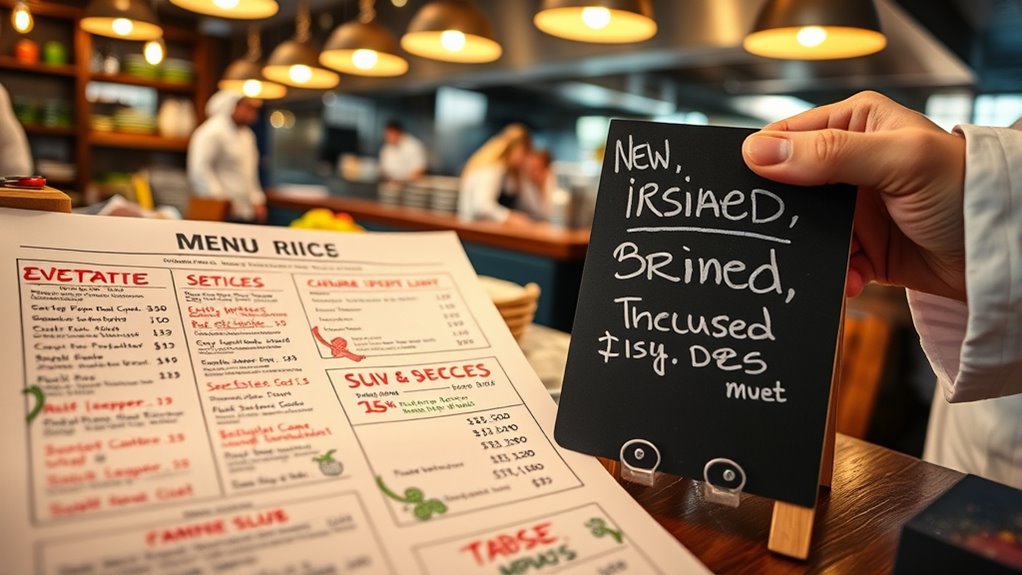
During periods of inflation, restaurants and food service providers must carefully adjust their pricing and menus to stay profitable without alienating customers. One effective strategy is implementing dynamic pricing, which allows you to adjust menu prices based on fluctuations in ingredient costs, demand, or time of day. This approach helps you respond swiftly to rising expenses while maintaining a competitive edge. For example, you might raise prices on popular dishes during peak hours or when ingredient costs spike, ensuring your margins stay intact. Dynamic pricing requires close monitoring of costs and sales patterns, but it offers the flexibility needed during inflationary periods.
Implement dynamic pricing during inflation to adjust menu prices based on ingredient costs and demand.
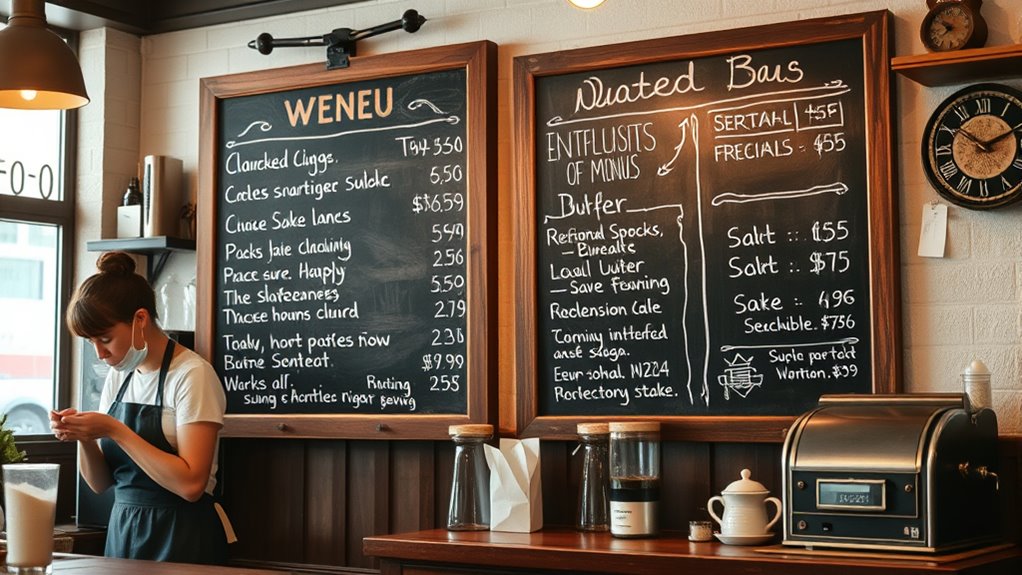
Alongside dynamic pricing, menu engineering becomes a vital tool. This involves analyzing your menu’s performance to identify high-profit items and those that may be dragging down overall profitability. By understanding which dishes generate the most profit relative to their popularity, you can make informed decisions about adjusting or promoting certain items. You might choose to highlight or redesign menu sections to emphasize high-margin options, encouraging customers to order more profitable dishes. Conversely, you could consider removing or reconfiguring low-margin offerings that no longer contribute meaningfully to your bottom line.
Adjusting pricing through menu engineering isn’t just about slapping higher prices on everything; it’s a strategic process. You need to evaluate ingredient costs, preparation time, and customer willingness to pay. For instance, if a particular appetizer’s ingredient costs have increased notably, you might tweak the recipe or raise its price slightly, but also guarantee it remains appealing. Using menu placement tactics—such as positioning high-margin items at the top or in prominent spots—can influence customer choices without overt price increases. This subtle manipulation helps you preserve customer satisfaction while improving profitability.
Another aspect of menu engineering during inflation is portion control. Slightly reducing portion sizes on certain dishes can help offset rising ingredient costs without drastically changing the customer experience. When combined with transparent communication about quality and value, this tactic can maintain customer loyalty. Additionally, offering bundle deals or fixed-price menus can help customers feel they’re getting a good deal while you protect profit margins.
Furthermore, staying informed about market trends and adjusting your strategies accordingly can help you stay ahead in challenging economic conditions. In essence, during inflation, a combination of dynamic pricing and menu engineering allows you to adapt swiftly and effectively. By analyzing sales data, adjusting prices strategically, and redesigning your menu to highlight high-margin items, you can navigate inflation’s challenges. These approaches help you stay profitable without sacrificing customer satisfaction, ensuring your restaurant remains resilient even in tough economic times.
Top picks for "pric menu adaptation"
As an affiliate, we earn on qualifying purchases.
Frequently Asked Questions
How Do Inflation Rates Specifically Impact Ingredient Sourcing?
Inflation rates cause ingredient cost fluctuations, making sourcing more expensive. You might notice higher prices for supplies and delays due to supply chain disruptions. These disruptions can lead to shortages, forcing you to find alternative ingredients or adjust your menu. Staying flexible and building strong supplier relationships helps you navigate these challenges, ensuring you can maintain quality while managing costs effectively during inflation periods.
What Are Effective Strategies for Communicating Price Changes to Customers?
You should prioritize customer transparency by clearly explaining the reasons behind price changes, emphasizing inflation’s impact. Use promotional communication to highlight ongoing value, special offers, or menu updates that justify the new prices. Be honest and approachable, reassuring customers that you’re committed to quality and service. This honest approach builds trust, minimizes frustration, and encourages understanding, making the shift smoother for everyone.
How Can Menus Be Creatively Adapted Without Reducing Value?
Adapting your menu is like painting a masterpiece—you can add flair without losing the core. Use creative plating to make dishes visually appealing, and play with portion sizing to maintain perceived value while managing costs. You might serve smaller portions with innovative presentation or highlight quality ingredients. These strategies keep customers feeling satisfied and valued, ensuring your menu remains enticing without compromising value or your bottom line.
What Technology Tools Assist in Dynamic Pricing Adjustments?
You can use technology tools like POS systems with real-time pricing capabilities to adjust menu prices instantly based on current costs. Predictive analytics tools help forecast market trends, so you can proactively modify prices before costs rise. These tools enable you to stay competitive, optimize profit margins, and respond swiftly to economic changes, ensuring your menu remains valuable without sacrificing quality or customer satisfaction.
How Do Inflation Trends Vary Across Different Food Service Sectors?
You’ll notice inflation trends differ across food service sectors; casual dining may face steady rises, while quick-service restaurants often experience more volatility. To adapt, you should focus on seasonal menu planning to optimize ingredient costs and negotiate better with suppliers for improved prices. These strategies help manage inflation impacts effectively, ensuring your menu remains appealing and profitable despite economic fluctuations.
Conclusion
During inflation, your proactive pricing and menu adaptations can protect profits and please patrons. By balancing boldness with flexibility, you’ll build resilience and retain loyalty. Stay savvy, strategic, and swift in your strategies, ensuring your business survives and thrives despite turbulent times. Remember, smart shifts in prices and menus demonstrate your dedication and drive, directing your success. Embrace these evolving essentials, and watch your business flourish through the flare of flexibility and foresight.
Halloween Picks
halloween
As an affiliate, we earn on qualifying purchases.