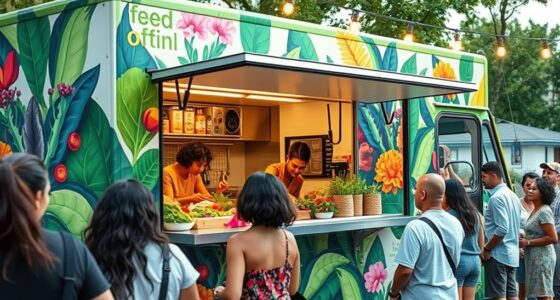
Retro-themed trucks use vintage design elements and nostalgic branding to create emotional connections with your audience. By evoking simpler times through classic colors, logos, and distinctive details, these trucks evoke feelings of authenticity and trust. They act as moving symbols of heritage, strengthening brand loyalty and familiarity. If you want to discover how nostalgia marketing can boost your brand’s appeal, keep exploring the strategies behind these timeless designs.
Key Takeaways
- Retro-themed trucks evoke nostalgia through vintage design elements, creating emotional connections with audiences.
- Incorporating classic logos and symbols taps into collective memories, enhancing brand authenticity.
- Using muted color palettes and simple details reinforces timeless appeal and stability.
- Retro trucks serve as moving billboards, strengthening brand trust and emphasizing heritage.
- Nostalgic visuals in marketing remind consumers of cherished past moments, boosting brand loyalty.
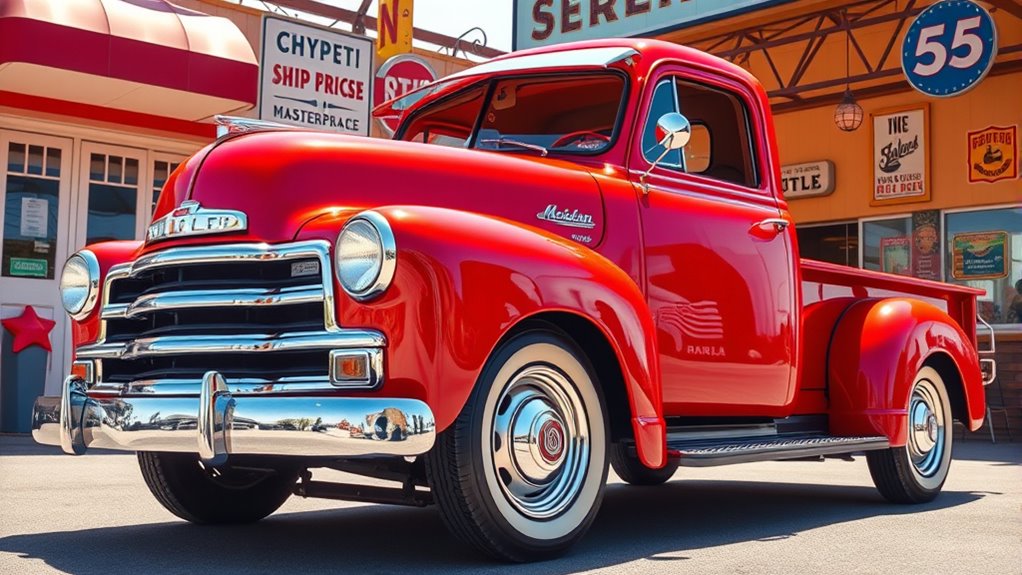
Retro-themed trucks have become a powerful tool in nostalgia marketing, capturing consumers’ attention by evoking feelings of simpler times. These vehicles use vintage branding to create a sense of authenticity and familiarity that resonates deeply with audiences. When you see a truck styled with retro colors and graphics, it immediately transports you back to a bygone era, making you feel connected to a past that feels both charming and timeless. The classic design elements—rounded edges, bold typography, and nostalgic logos—serve as visual cues that reinforce this emotional appeal.
Using vintage branding on these trucks isn’t just about aesthetic appeal; it’s about tapping into collective memories. When you encounter a truck adorned with retro logos or old-school emblems, it’s like stumbling upon a piece of history. This kind of branding often employs familiar symbols or motifs from the mid-20th century, which instantly trigger personal memories or cultural associations. The goal is to create a bridge between the past and present, making your experience feel genuine and heartfelt. The vintage branding adds an extra layer of credibility, suggesting that the company values tradition and craftsmanship, which attracts consumers seeking authenticity.
The classic design of retro trucks isn’t accidental. It’s carefully crafted to embody the style and spirit of a particular era. You’ll notice that these trucks often feature vibrant, yet muted color palettes—think pastel blues, faded reds, or cream tones—that evoke a sense of nostalgia. The design details are intentionally simple yet distinctive, making the trucks stand out without feeling overly modern or flashy. This classic design approach appeals to your desire for stability and familiarity, especially in a world that’s constantly changing. It offers a comforting reminder of a time when things seemed slower, more genuine, and less complicated.
In marketing campaigns, retro trucks become more than just vehicles; they transform into symbols of heritage and tradition. They serve as moving billboards that evoke emotional responses, encouraging you to associate the brand with quality, trust, and timeless appeal. By leveraging vintage branding and classic design, companies create a narrative that feels authentic and enduring. When you see a retro truck in action, it’s impossible not to feel a sense of nostalgia—reminding you that sometimes, the best way forward is to look back. This strategy not only captures attention but also fosters loyalty among consumers who long for those simpler, cherished moments from the past. Additionally, incorporating a recognizable vintage style enhances the overall nostalgic impact, making the marketing even more memorable.
Frequently Asked Questions
How Do Retro-Themed Trucks Impact Brand Loyalty?
Retro-themed trucks boost your brand loyalty by tapping into vintage aesthetics that resonate emotionally. When you see these trucks, you feel a sense of brand nostalgia, reminding you of simpler times and trusted qualities. This emotional connection encourages you to stay loyal, as the vintage design creates a memorable experience. By evoking nostalgia, these trucks make you more likely to choose the brand over competitors, strengthening your long-term relationship.
What Materials Are Used for Authentic Vintage Truck Designs?
You’ll want to choose vintage paint that’s weathered and rich, like a well-worn leather jacket, to give your truck that authentic feel. Pair this with authentic decals, carefully crafted to mimic those from the golden era, adding a nostalgic touch. These materials transform your truck into a rolling piece of history, making it look like it’s traveled through time itself, capturing that genuine vintage charm you’re after.
Are Retro Trucks More Expensive to Produce Than Modern Ones?
Retro trucks typically cost more to produce than modern ones because of detailed design elements and authentic materials, which increase manufacturing complexity. When you do a cost analysis, you’ll find that maintaining vintage aesthetics often requires specialized parts and craftsmanship, leading to higher expenses. These added complexities mean you’ll spend more on retro trucks upfront, but many value their nostalgic appeal and unique style that modern vehicles might lack.
How Do Retro Trucks Influence Customer Purchasing Behavior?
Retro trucks influence your purchasing behavior by tapping into vintage aesthetics and nostalgia appeal. When you see these trucks, you’re drawn to their classic design, feeling a sense of familiarity, authenticity, and emotional connection. This emotional pull encourages you to choose them over modern alternatives, making you associate the vehicles with timeless style and memories. Ultimately, retro trucks make you feel special, valued, and connected to a nostalgic past, prompting your purchase decision.
What Are the Environmental Considerations of Retro-Themed Marketing?
You should consider the environmental impact of retro-themed marketing by focusing on sustainable materials and eco-friendly manufacturing. Using recycled or biodegradable materials helps reduce waste, while eco-conscious production methods decrease carbon emissions. These practices demonstrate your commitment to sustainability, appealing to eco-aware consumers. By integrating environmentally friendly strategies into your retro marketing, you not only preserve nostalgia but also promote responsible business practices that benefit the planet.
Conclusion
You might think nostalgia marketing is just a gimmick, but it truly connects you to a simpler, more memorable past. Retro-themed trucks evoke feelings of familiarity and trust, making you feel more confident in the brands behind them. By embracing this trend, you can stand out in a crowded market and foster genuine loyalty. So, don’t dismiss nostalgia—use it to create lasting impressions that resonate deeply with your audience.