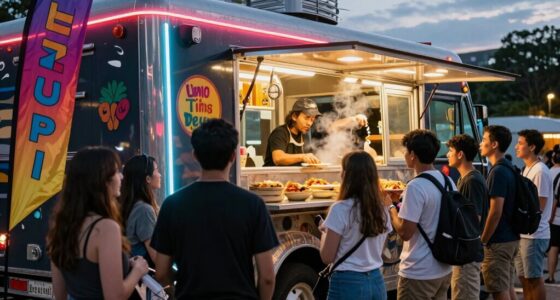

Did you know that vintage food trucks are experiencing a surprising resurgence in today’s street food scene? While they seem like a nostalgic nod to the past, they’re actually tapping into current values like authenticity and sustainability. But what exactly is driving this trend, and how are these old-school vehicles transforming modern dining experiences? There’s more to their comeback than just a sense of nostalgia—let’s explore how they’re shaping today’s food culture.

Get kitchen staples and gadgets delivered free with Prime
- Fast, free delivery on millions of items
- Prime Video, Amazon Music and more included
- Member-only deals all year
Key Takeaways
- They evoke nostalgia and authentic charm, attracting customers seeking a unique, vintage experience.
- Restoration techniques preserve historic aesthetics while adding modern safety and efficiency upgrades.
- Vintage branding and custom artwork create emotional connections and enhance visual appeal.
- Their Instagram-worthy appearance boosts social media engagement and word-of-mouth marketing.
- They represent craftsmanship and storytelling, aligning with consumer trends favoring authenticity and cultural expression.

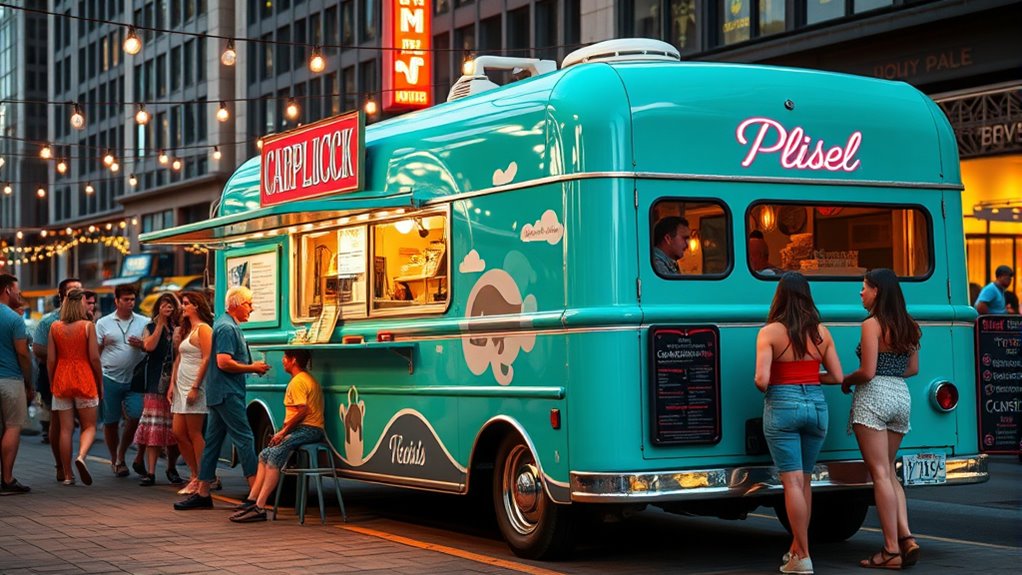
After years of decline, vintage food trucks are making a vibrant comeback, enthralling both nostalgic enthusiasts and new fans alike. This resurgence isn’t just about serving food; it’s about capturing a sense of history and craftsmanship that modern trucks often lack. To achieve this, owners focus heavily on restoration techniques, carefully refurbishing each truck to preserve its original charm while upgrading essential systems for safety and efficiency. You might find yourself marveling at the gleaming chrome details, restored wood interiors, or vintage signage that evoke a bygone era. These restoration techniques involve skillful work—stripping rust, repairing or replacing parts, and repainting with authentic colors to bring the truck back to its former glory. The goal isn’t just functionality but authenticity, making each truck a rolling piece of history.
Alongside restoration, branding strategies play a vital role in the revival of vintage food trucks. You understand that standing out in a crowded food scene requires more than just good food; it demands a compelling story and visual identity. Many owners lean into the vintage aesthetic, using retro logos, classic fonts, and nostalgic color schemes that immediately evoke a sense of familiarity and charm. This consistent branding helps create an emotional connection with customers, who often see these trucks as more than just places to eat—they’re mobile icons of a different time. You might notice trucks with custom murals, vintage-style signage, or themed menus that tie into the truck’s era. These branding strategies aren’t just superficial; they’re integral to building a memorable customer experience and fostering loyalty.
Furthermore, the combination of meticulous restoration and strategic branding creates a unique selling proposition. As a customer, you’re drawn to these trucks not merely because of their offerings but because of their story and aesthetic appeal. This emotional hook translates into social media buzz, word-of-mouth marketing, and repeat visits. Owners recognize that the authenticity of a vintage truck paired with a strong brand identity can elevate their business from a simple food stand to a nostalgic experience. This approach taps into current trends emphasizing craftsmanship, sustainability, and storytelling—elements that resonate deeply with modern consumers seeking genuine, memorable encounters.
In essence, the comeback of vintage food trucks hinges on the careful balance of restoration techniques that preserve historic charm and branding strategies that craft a compelling identity. You’re witnessing a movement that elevates street food into an art form—where each truck is a mobile tribute to the past, driven forward by innovative marketing and a passion for authenticity. This blend of old-world craftsmanship and modern branding ensures these vintage trucks aren’t just surviving—they’re thriving once again.
Conclusion
As you see, vintage food trucks aren’t just about food—they’re about creating memorable, authentic experiences. Take a truck that was once a classic ice cream van, now restored with modern touches and retro branding; it attracts loyal customers and social media buzz alike. By blending nostalgia with innovation, you can turn a vintage truck into a thriving business that connects emotionally with your audience, proving that history and creativity make a powerful combo.
Fall Picks
fall essentials
As an affiliate, we earn on qualifying purchases.