Many mobile kitchens neglect regular defrosting until ice buildup causes major issues like appliance damage, uneven temperatures, and food safety risks. Ignoring this routine leads to reduced efficiency, higher energy costs, and costly repairs. To stay ahead, you need to recognize signs like thick ice, strange noises, or slow cooling. Proper tools and step-by-step procedures can save you time and money, but if you keep ignoring it, things will only get worse. Keep going to find out more tips and tricks.
Key Takeaways
- Many mobile kitchens neglect regular defrosting, leading to ice buildup that hampers airflow and reduces appliance efficiency.
- Ignoring signs like thick ice or strange noises often results in costly repairs and potential appliance failure.
- Rushing or improper defrosting methods cause damage, seal failure, and shorten equipment lifespan.
- Infrequent defrosting increases energy consumption, raising operational costs and risking food safety issues.
- Lack of routine defrosting disrupts workflow, causes food spoilage, and can lead to kitchen downtime.
Why Regular Defrosting Is Critical for Mobile Kitchens
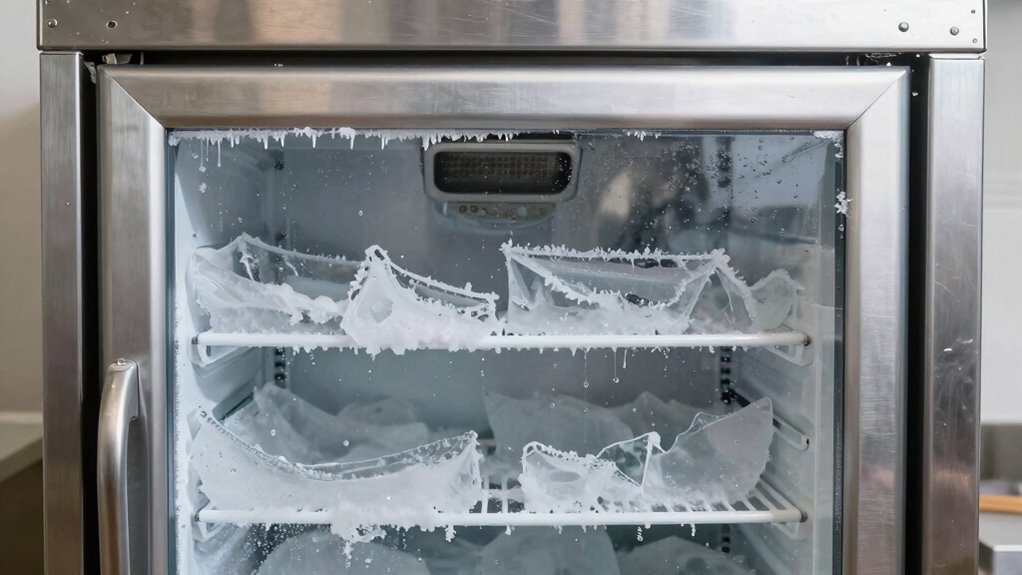
Regular defrosting is essential in mobile kitchens because ice buildup can severely impact appliance efficiency and safety. When ice accumulates, temperature fluctuations become more common, disrupting the consistent environment needed for safe food storage. These fluctuations force your appliances to work harder, increasing energy consumption and raising utility costs. By regularly defrosting, you guarantee your freezer maintains a stable temperature, preventing ice from insulating the interior and causing temperature dips or rises. This not only conserves energy but also preserves food quality, which is crucial in maintaining a safe and efficient kitchen environment. Incorporating outdoor kitchen features such as fire pits or outdoor ovens can also contribute to maintaining a well-functioning space by minimizing indoor heat and moisture buildup. Additionally, choosing high-performance appliances with advanced defrost features can further enhance efficiency and reduce manual maintenance. Proper power protection ensures your appliances are safeguarded against power surges that can occur during defrost cycles, helping to extend their lifespan. Regular defrosting also helps prevent costly repairs caused by excessive ice buildup that can damage components over time. Consistent defrosting helps you avoid sudden breakdowns, reduces energy waste, and keeps your mobile kitchen operating smoothly. Prioritizing regular defrosting is a smart move for safety, efficiency, and cost savings.
How to Recognize When Your Freezer Needs Defrosting
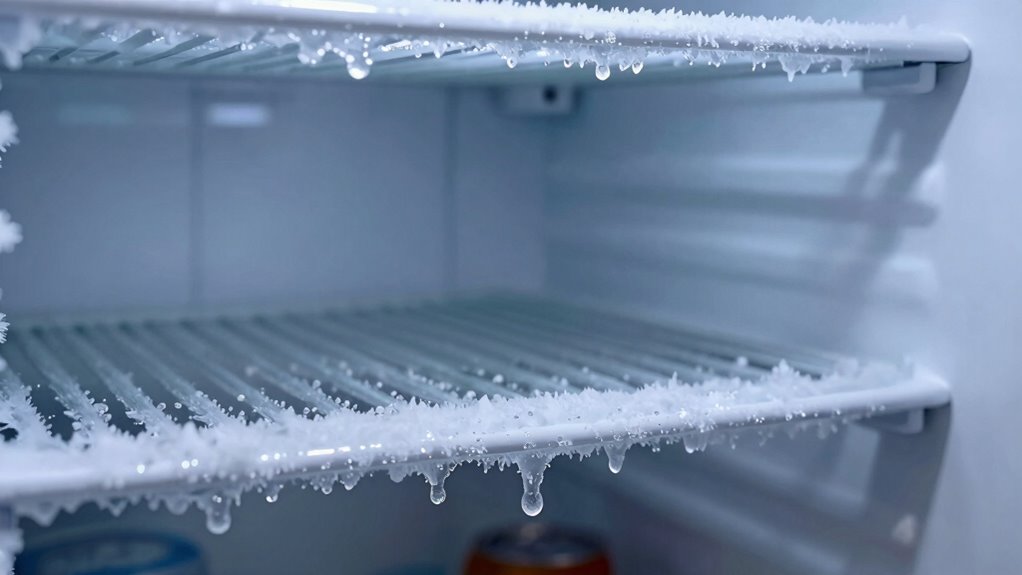
You’ll notice your freezer needs defrosting when thick ice coats the walls or shelves. Reduced efficiency, like longer freezing times, is another sign, along with strange noises or odors coming from the unit. Keep an eye out for these clues to prevent further issues and maintain proper function. Additionally, floating on water can indicate a seal failure that allows moisture to enter, leading to ice buildup and decreased performance. Proper air circulation within the freezer is essential to prevent excessive frost accumulation and ensure the appliance operates efficiently. Regularly checking and maintaining the door seals can help sustain optimal sustainability and performance. Being aware of ice buildup signs can help you catch problems early and avoid costly repairs. Monitoring moisture entry can help prevent damage caused by water intrusion and frost accumulation.
Visible Ice Buildup
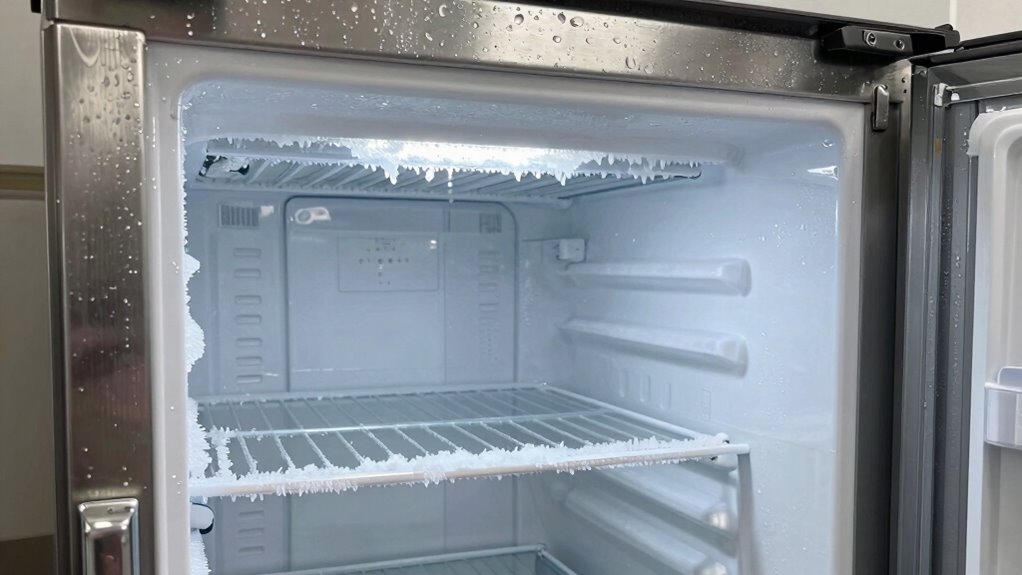
When ice begins to form on the walls and shelves of your freezer, it’s a clear sign that defrosting is overdue. Visible ice buildup, caused by ongoing frost formation, can interfere with proper airflow and storage. You’ll notice thick layers of ice that seem to grow each time you open the door, making it harder to access your supplies. Frost accumulation can appear as a cloudy film or solid sheets of ice along the interior surfaces. If you see ice chunks or a noticeable crust covering the freezer’s interior, it’s time to take action. Ignoring this buildup only worsens the problem, risking reduced efficiency and potential damage. Regularly checking for visible ice helps you stay ahead of larger issues down the line. Additionally, understanding tanning trends and proper skincare can help maintain healthy skin despite exposure to cold environments. Maintaining the correct temperature settings in your freezer can also prevent excessive frost buildup, ensuring optimal performance over time. Proper air circulation within the freezer is essential to minimize frost formation and keep your items properly frozen. Ensuring good door seals can also help prevent warm air from entering and contributing to frost buildup. Recognizing the importance of proper maintenance routines can prolong the lifespan of your appliance and improve its efficiency.
Reduced Freezer Efficiency
Ice buildup on freezer walls and shelves doesn’t just make access harder; it also hampers the appliance’s efficiency. When ice accumulates, your freezer struggles to maintain proper temperature control, risking frozen food thawing or freezing unevenly. You might notice your frozen food isn’t as solid or fresh as it used to be, which signals that the efficiency is compromised. Additionally, the compressor works harder to keep things cold, increasing energy consumption and wear on the appliance. If you see frost or ice thickening on the walls, it’s a clear sign your freezer needs defrosting. Addressing this promptly restores proper temperature control, helps your frozen food stay fresh longer, and prevents unnecessary strain on the freezer’s components. Regular maintenance, such as monitoring temperature fluctuations, can also help prevent excessive ice buildup and ensure optimal performance. Recognizing and acting on these signs is essential to maintain freezer efficiency and extend the lifespan of your appliance. Keeping your freezer well-maintained can also prevent ice buildup, which is crucial for ongoing performance. Additionally, understanding affiliate disclosure policies can help you make more informed decisions when purchasing maintenance products or accessories. Being aware of the signs of frost accumulation can help you catch problems early before they become costly repairs.
Unusual Noises or Odors
Unusual noises or odors coming from your freezer are clear signs that it may need defrosting. Noise detection can reveal issues like rattling, buzzing, or squealing sounds, indicating ice buildup or mechanical problems. These sounds often happen when the compressor struggles or when ice blocks fan movement. Odor control is equally important; stale or foul smells can signal excessive frost or spoiled food trapped in ice layers. If you notice these odors lingering even after cleaning, it’s a sign to defrost promptly. Addressing these symptoms quickly helps prevent further damage and maintains proper freezer function. Regularly listening for strange noises and monitoring odors helps you catch issues early, ensuring your mobile kitchen runs smoothly and efficiently. Additionally, paying attention to Vetted – Perfect Fit Living maintenance can help prevent frost buildup and extend the lifespan of your freezer. Proper defrosting techniques are essential for avoiding unnecessary wear and tear on your equipment. Being aware of ice accumulation and managing humidity levels inside your freezer can also help reduce the frequency of defrosting needed. Recognizing these signs early can also prevent costly repairs and keep your kitchen operating at peak performance.
What Are the Risks of Not Defrosting Properly?
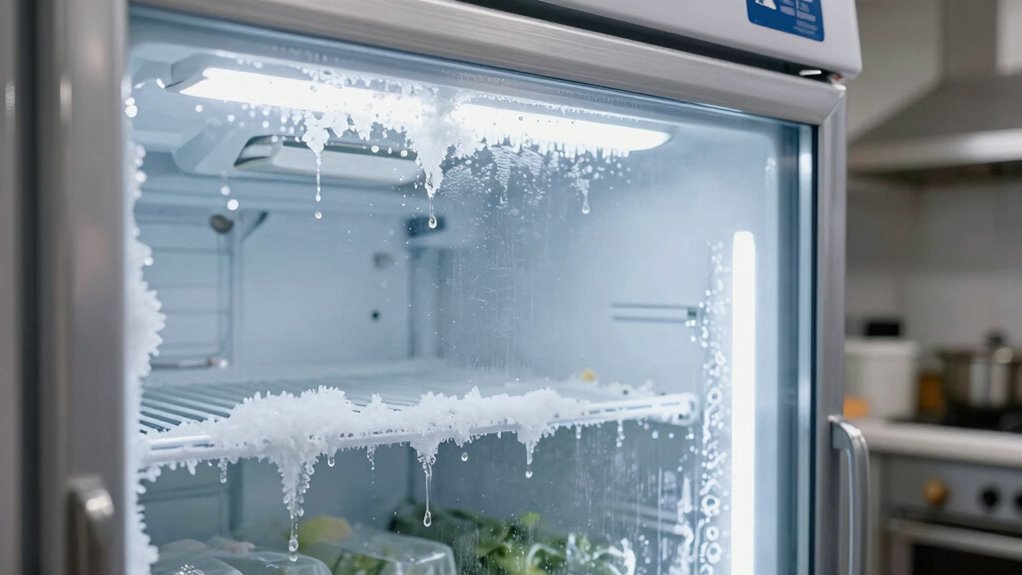
Failing to defrost your mobile kitchen’s appliances properly can lead to serious safety and operational issues. Ice formation and frost buildup block airflow, reduce efficiency, and increase energy consumption. Over time, this can cause motor strain, appliance failure, or even fires. Ignoring proper defrosting puts your team at risk and jeopardizes food safety. Consider the emotional toll: frustration from breakdowns, worry about safety, and the stress of unexpected repairs. Here’s how neglect impacts you:
| Risk | Effect | Emotional Impact |
|---|---|---|
| Ice formation | Reduced cooling, inefficiency | Anxiety over food safety |
| Frost buildup | Appliance damage | Frustration and stress |
| Overheating | Fire hazards | Fear and worry |
Proper defrosting isn’t just maintenance; it’s essential for safety and peace of mind.
Essential Tools for Efficient Freezer Defrosting
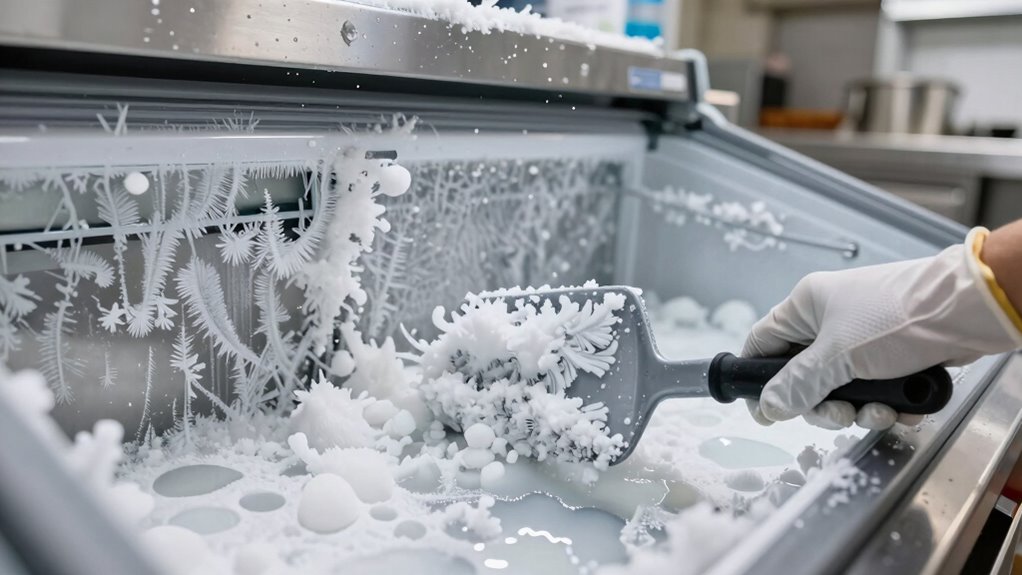
To keep your mobile kitchen running smoothly, having the right tools on hand makes all the difference during defrosting. Essential tools include a sturdy scraper or plastic spatula to remove ice buildup without damaging surfaces, and a reliable thermometer to monitor freezer temperatures. A hairdryer or heat gun can accelerate melting, saving time, but must be used carefully. Keep cleaning cloths and absorbent towels nearby to manage water runoff. Proper staff training ensures everyone knows how to use these tools efficiently, preventing damage and reducing downtime. Aligning your defrost routine with your cooking schedules minimizes disruptions, so having the right tools ready helps you execute quick, effective defrosts, maintaining food safety and equipment longevity.
How to Properly Defrost Your Freezer: A Step-by-Step Guide
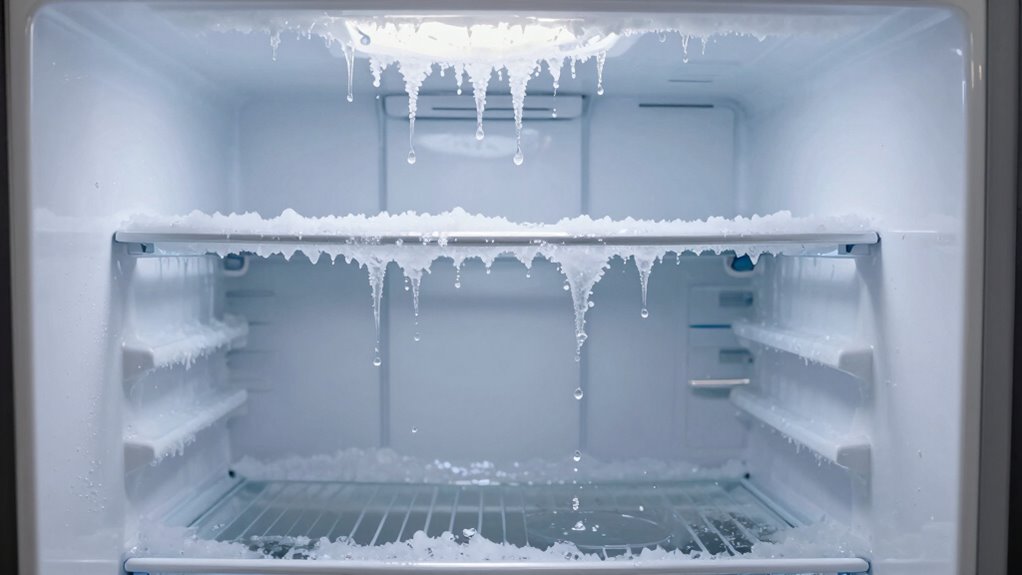
To properly defrost your freezer, start by preparing the appliance and removing all food safely. Then, thaw the freezer completely and clean it thoroughly to prevent future buildup. Following these steps guarantees your freezer runs efficiently and maintains food safety.
Prepare the Freezer
Are you ready to begin the defrost process? Before you do, it’s essential to prepare the freezer properly. First, clear out all food, including frozen snacks and items like ice cream storage. This prevents contamination and makes the process smoother. Second, unplug the unit to stop the compressor and allow ice to melt safely. Finally, place towels or absorbent cloths around the base to catch melting ice and water. This keeps your mobile kitchen clean and prevents water damage. Preparing the freezer in advance saves time and effort during defrosting. Remember, a well-prepared freezer ensures your food stays safe and your defrost routine goes smoothly, avoiding unnecessary delays or messes that could affect your operation.
Remove Food Safely
Wondering how to safely remove food from your freezer before starting the defrost process? First, check your frozen vegetables and other items, like ice cream storage, to verify they won’t spoil. Use insulated bags or containers to keep perishable foods cold during the transfer. Prioritize removing items that are near expiration or that you don’t plan to consume soon. Avoid stacking frozen vegetables or ice cream containers together, to prevent damage or cross-contamination. Once you’ve gathered everything, place the food in a cool, shaded area or cooler if needed. Handling food carefully prevents spoilage and maintains quality. Remember, keeping track of what you remove helps you plan your defrosting schedule efficiently.
Thaw and Clean Properly
When it’s time to defrost your freezer, starting with a proper thawing and cleaning process guarantees food safety and temperature control. First, unplug the unit and remove all food items. Then, follow these steps:
- Empty and clean: Take out shelves and drawers, and wash with warm, soapy water to eliminate ice buildup and bacteria.
- Allow thawing: Let ice melt naturally or use a gentle heat source to avoid damaging the freezer.
- Dry thoroughly: Wipe all surfaces dry to prevent mold and ensure proper temperature regulation when restarting.
This routine helps maintain food safety standards and optimal temperature control, preventing spoilage and equipment damage. Proper thawing and cleaning keep your mobile kitchen safe, efficient, and ready for future use.
Common Mistakes When Defrosting and How to Avoid Them
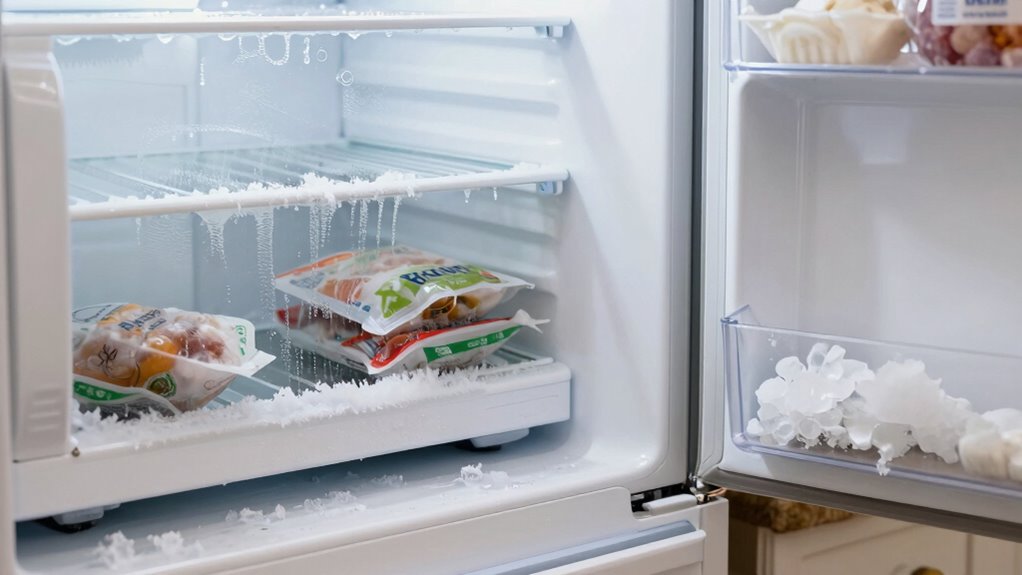
One common mistake during defrosting is rushing the process by using hot water or a blowtorch, which can damage the freezer’s components or cause food safety issues. This impatience often leads to rapid ice formation and unpredictable temperature fluctuations inside the unit. These fluctuations can weaken seals, warp liners, and create uneven cooling zones, making future defrosting more difficult. To prevent this, take your time and defrost gradually using gentle methods like natural thawing or warm water baths. Keep the temperature steady and avoid sudden changes to prevent ice buildup and protect your equipment. Patience guarantees a safer, more effective defrost process while extending the lifespan of your mobile kitchen’s freezer.
How to Schedule Regular Defrosting and Keep Your Storage Organized
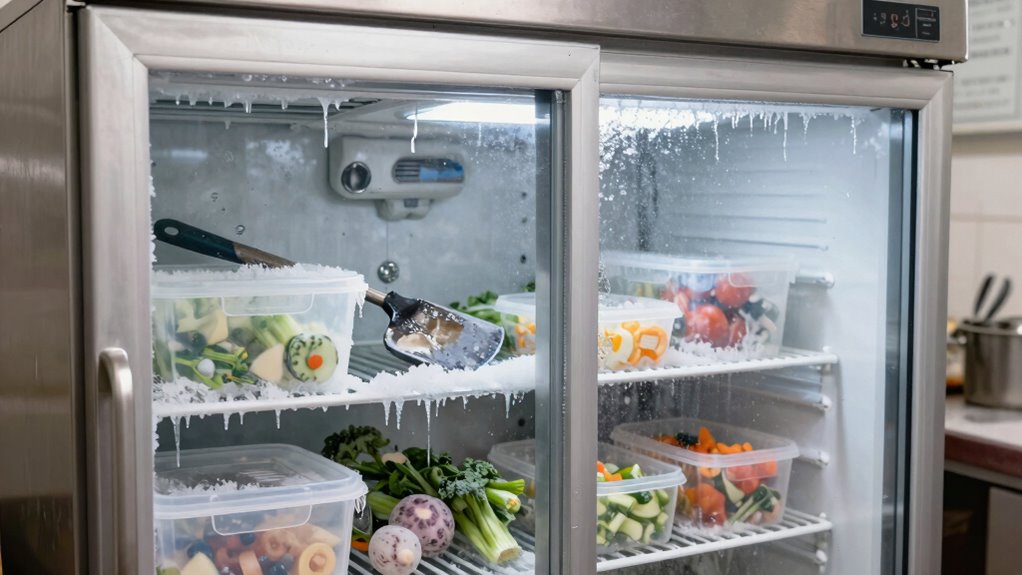
To keep your mobile kitchen’s freezer functioning efficiently, scheduling regular defrosting sessions is essential. Proper planning ensures storage optimization and prevents ice buildup that hampers performance. Here are three steps to stay on top of it:
Regular defrosting keeps your mobile kitchen freezer efficient and prolongs its lifespan.
- Set a recurring schedule based on your usage—every 3 to 6 months works for most.
- Monitor temperatures consistently to avoid overfreezing and identify ice buildup early.
- Organize storage by grouping similar items and leaving space for air circulation, making defrosting easier and faster.
Keeping track of your defrost routine helps you maintain optimal storage conditions and prolongs appliance lifespan. Regular defrosting prevents ice accumulation, supports temperature monitoring, and keeps your mobile kitchen running smoothly.
The Cost Benefits of Maintaining a Proper Defrost Routine
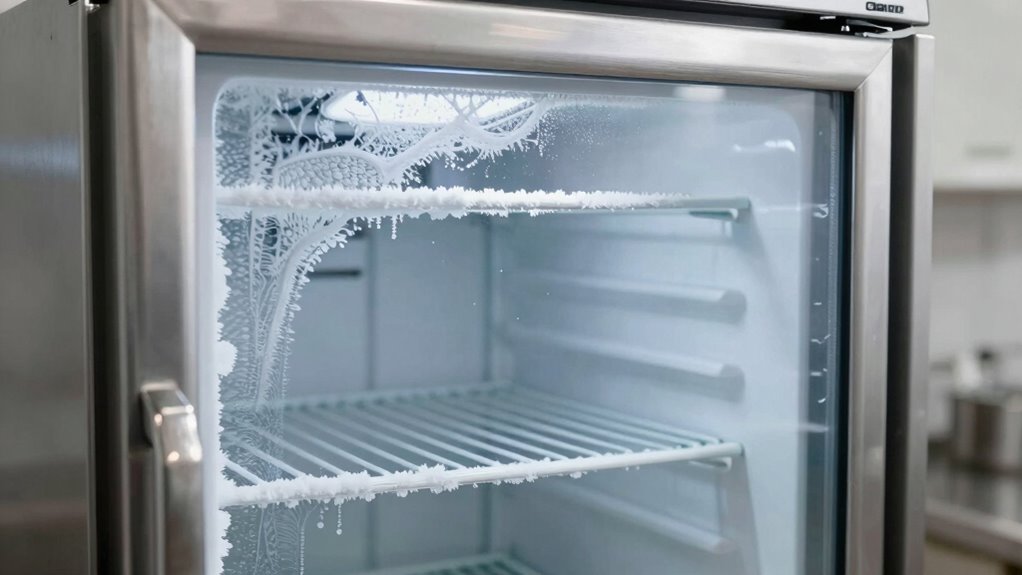
Maintaining a proper defrost routine can considerably reduce your mobile kitchen’s operational costs. Regular defrosting prevents ice buildup, which improves energy efficiency and reduces electricity bills. When frost accumulates, your freezer works harder to maintain the desired temperature, wasting energy. By sticking to a routine, you’ll see noticeable energy savings over time. Additionally, consistent defrosting extends the lifespan of your equipment. Ice buildup can strain compressors and other components, leading to premature failures and costly repairs. Proper maintenance guarantees your appliances operate smoothly and efficiently, saving you money in the long run. Investing in a regular defrost routine isn’t just about keeping things organized — it’s a smart way to improve equipment longevity and cut ongoing expenses.
Troubleshooting Freezer Defrosting Problems
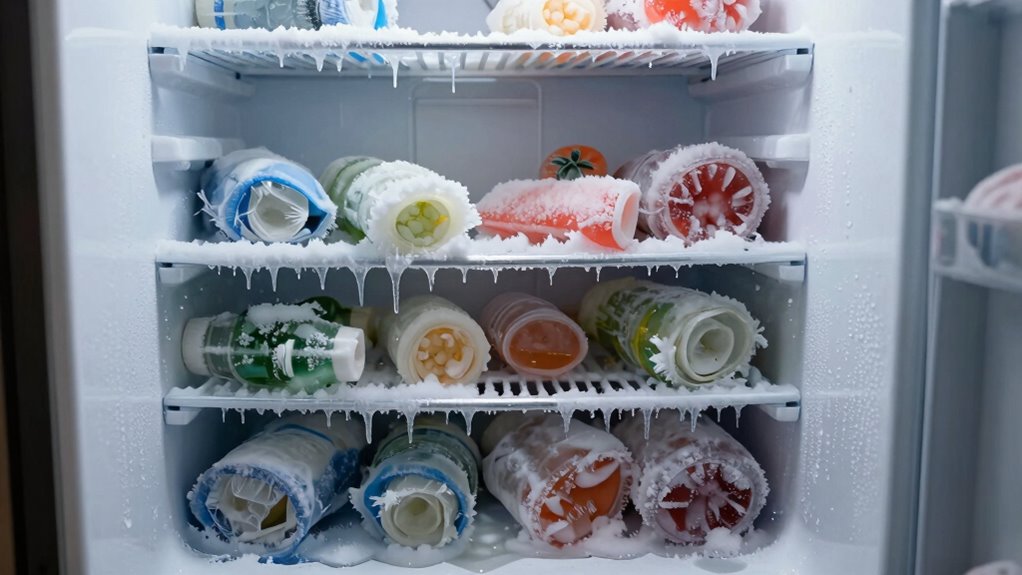
When your freezer isn’t defrosting properly, it can lead to excessive ice formation and reduced efficiency. Common issues include:
- Frequent Power Outages: Power interruptions can cause temperature fluctuations, leading to ice buildup and improper defrost cycles.
- Clogged or Faulty Defrost Drain: A blocked drain prevents melted ice from draining properly, causing ice accumulation.
- Malfunctioning Thermostat or Defrost Heater: If these components fail, your freezer won’t initiate defrost mode, leading to ice buildup over time.
To troubleshoot, check for power stability, inspect the drain for clogs, and test the thermostat and defrost heater. Addressing these issues promptly keeps your mobile kitchen running efficiently and avoids costly repairs.
Tips for Fast and Safe Defrosting in Mobile Kitchens
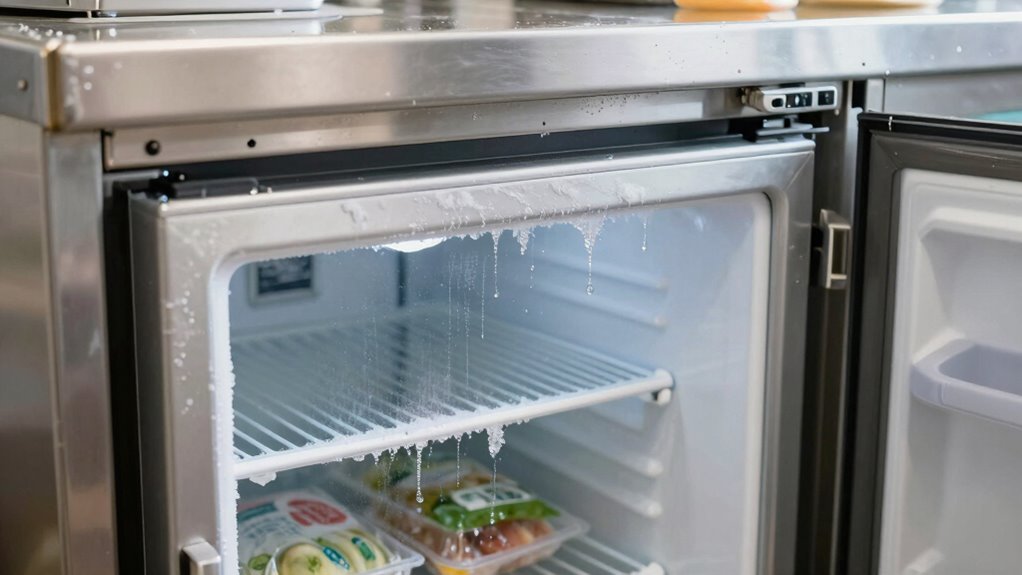
If your freezer is accumulating excessive ice, it’s important to defrost quickly and safely to keep your mobile kitchen running smoothly. Start by turning off the freezer and removing all food, especially creative recipes or ingredients for seasonal menu planning. Use a plastic spatula to gently loosen ice buildup—avoid metal tools to prevent damage. Placing towels around the base catches melting water, speeding up the process. For faster results, place a bowl of hot water inside the freezer and close the door; the steam softens ice. Once defrosted, wipe down surfaces and dry thoroughly before restarting. Regular maintenance prevents ice buildup, ensuring your kitchen remains efficient for preparing diverse dishes and seasonal menus. Safety and speed are key to keeping your mobile kitchen operational.
Frequently Asked Questions
How Often Should Mobile Kitchen Freezers Be Defrosted?
You should defrost your mobile kitchen freezer whenever you notice about a quarter inch of frozen buildup. Regular defrosting keeps the freezer running efficiently and maintains energy efficiency, preventing excess ice from making it work harder. Ignoring this routine can lead to higher energy costs and reduced freezer lifespan. Make it a habit to check and defrost as needed, ensuring your mobile kitchen stays efficient and reliable.
Can Improper Defrosting Damage My Freezer?
Improper defrosting can cause your freezer to collapse under the weight of frozen buildup, risking serious damage. When you neglect proper defrosting, ice thickens and insulates, forcing your compressor to work overtime, leading to undue strain. This strain can eventually burn out your compressor, ruining your freezer permanently. Always defrost your mobile kitchen freezer properly to prevent frozen buildup from overwhelming your equipment and causing costly repairs.
What Signs Indicate a Defrosting Emergency?
You know it’s a defrosting emergency when your freezer’s frost buildup exceeds half an inch, causing it to struggle with maintaining temperature. You might notice rising energy bills or inconsistent cooling, signaling poor efficiency. Regular maintenance tips, like defrosting before ice gets too thick, can improve energy efficiency and prevent damage. Keep an eye on frost levels and temperature fluctuations to avoid costly repairs and guarantee your mobile kitchen runs smoothly.
How Does Defrosting Extend Freezer Lifespan?
Coincidences happen when ice buildup causes temperature fluctuations, which can unexpectedly shorten your freezer’s lifespan. By regularly defrosting, you prevent excessive ice accumulation, reducing strain on the compressor and other parts. This routine helps maintain consistent temperatures, avoiding damage from overworking. Ultimately, taking the time to defrost protects your freezer, extends its life, and keeps your mobile kitchen running smoothly, saving you money and headaches.
Are There Eco-Friendly Defrosting Alternatives?
Yes, there are eco-friendly defrosting alternatives. You can use sustainable defrost methods like natural thawing with room temperature air or applying eco-friendly refrigerants that reduce environmental impact. These options minimize energy consumption and avoid harmful chemicals, helping your mobile kitchen stay eco-conscious. Regularly maintaining and defrosting your freezer with these methods extends its lifespan while supporting sustainability, making your operation more environmentally responsible.
Conclusion
Neglecting your freezer’s defrost routine might seem harmless at first, but it can quickly spiral into costly repairs or lost inventory. Imagine the chaos when frozen food thaws unexpectedly, or your equipment breaks down at the worst moment. Don’t let this happen. Stay vigilant, follow your schedule, and keep your mobile kitchen running smoothly. The next time you open that freezer, will it be a moment of control or chaos waiting to happen? The choice is yours.