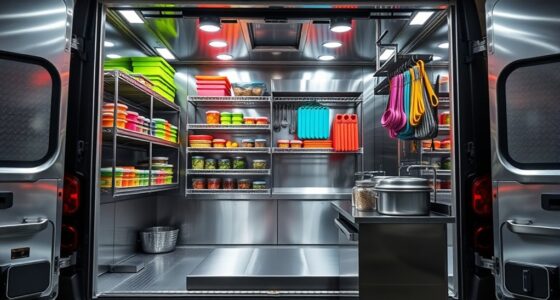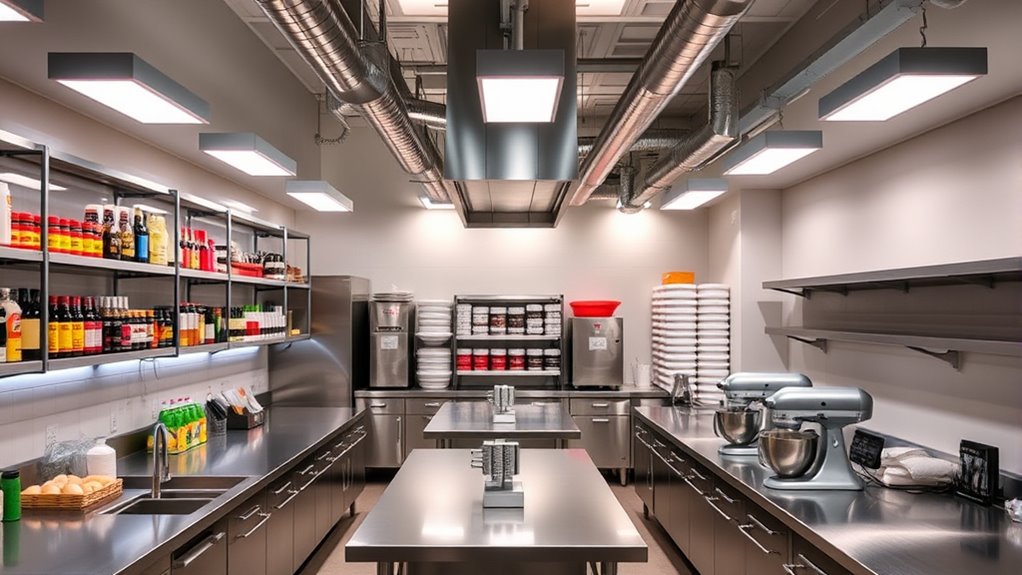

Setting up a commissary kitchen helps you cut costs, guarantee compliance with food safety standards, and streamline operations in a professional space. It offers advantages like shared equipment, easier maintenance, and easier licensing, but also comes with challenges such as high initial investment, scheduling conflicts, and potential safety concerns. Weighing these pros and cons can help you decide if it’s the right move for your business. If you continue, you’ll discover key tips for making it successful.

Get kitchen staples and gadgets delivered free with Prime
- Fast, free delivery on millions of items
- Prime Video, Amazon Music and more included
- Member-only deals all year
Key Takeaways
- Commissary kitchens ensure compliance with food safety standards, simplifying licensing and inspection processes.
- They offer centralized equipment and storage, improving operational efficiency and reducing setup costs.
- Sharing a facility can lead to cross-contamination risks if layout and sanitation are poorly managed.
- Licensing and regulatory requirements may be complex, requiring thorough planning and adherence to local laws.
- Using a commissary can limit flexibility for menu changes or expansion due to shared space constraints.

Are you ready to turn your food business idea into reality? Setting up a commissary kitchen can be an excellent way to get your venture off the ground, but it’s essential to understand what’s involved. One of the first steps is ensuring that your facility meets all the necessary food safety standards. Food safety isn’t just about keeping customers healthy; it’s also a legal requirement that protects your business from potential liabilities. This means your commissary must be designed and maintained according to health department guidelines, with proper sanitation, temperature controls, and pest management in place. You’ll need to familiarize yourself with licensing requirements specific to your location, as these are vital for operating legally and avoiding fines or shutdowns. Typically, you’ll have to obtain a commercial food license, which involves passing inspections that verify your kitchen meets all safety standards. These licensing requirements vary by city or state, so researching local regulations early on can save you time and frustration later. Understanding food safety regulations is crucial for maintaining compliance and ensuring the safety of your products.
Once you understand the basics of food safety and licensing, you can plan your commissary kitchen accordingly. Think about the layout—separating raw and cooked foods, providing dedicated storage areas, and installing proper ventilation and sanitation stations. A well-organized space not only helps with compliance but also makes daily operations smoother, saving you time and reducing the risk of contamination. It’s also wise to invest in quality equipment that’s easy to clean and maintain, as this directly supports food safety efforts. Remember, your compliance with licensing requirements isn’t just about passing inspections; it’s about building a reputation for safety and professionalism that customers trust.
Frequently Asked Questions
What Are the Initial Costs Involved in Establishing a Commissary Kitchen?
The initial costs for establishing a commissary kitchen mainly involve budget planning for equipment investments like ovens, refrigerators, and prep stations. You’ll also need to take into account permits, licensing, and facility setup costs. Expect to spend a significant amount upfront, but careful budgeting helps ensure you cover essential equipment and legal requirements. Planning ahead lets you balance expenses and avoid surprises, making your setup smoother and more efficient.
How Do Zoning Laws Affect Commissary Kitchen Setup?
Zoning laws substantially impact your commissary kitchen setup by dictating where you can operate. You’ll need to navigate zoning restrictions that may limit commercial food production in certain areas. Additionally, licensing requirements are vital, as they ensure your kitchen meets health and safety standards. Failing to comply with local zoning laws and licensing rules can delay your project or lead to fines, so research these regulations thoroughly before starting your setup.
What Safety Regulations Must Be Adhered to in a Commissary Kitchen?
You need to follow safety regulations like proper food storage and ensuring employee safety. Keep food at correct temperatures to prevent contamination, use sanitized equipment, and store ingredients properly. Protect employees with safety gear, maintain clean workspaces, and follow OSHA guidelines. Regularly train staff on safety protocols, handle chemicals carefully, and keep fire extinguishers accessible. Adhering to these rules helps you maintain a safe, compliant commissary kitchen.
Can a Commissary Kitchen Be Used for Multiple Food Businesses?
Yes, you can use a commissary kitchen for multiple food businesses. Shared facilities allow different entrepreneurs to operate under one roof, but you must meet licensing requirements for each type of food business. You’ll need to guarantee compliance with health and safety regulations, and obtain separate permits if necessary. Properly managing shared spaces helps prevent cross-contamination and keeps all businesses aligned with local food safety standards.
What Are the Best Practices for Maintaining Hygiene Standards?
If you want to keep your kitchen spotless, prioritize food contact sanitation and strict employee hygiene protocols. Regularly clean and sanitize all surfaces, utensils, and equipment to prevent contamination. Enforce handwashing and glove policies, and train staff consistently. But the real secret? Staying vigilant daily, because even a small lapse can jeopardize your entire operation. Maintain high standards consistently, and you’ll safeguard your reputation and customer trust.
Conclusion
Setting up a commissary kitchen might just be the single most game-changing decision you’ll ever make for your food business. It’s like opening a secret portal to endless profit, endless growth, and culinary greatness! Sure, it takes effort and investment, but the upside is so huge, it’s practically a no-brainer. Get started today, and watch your food empire skyrocket to legendary status—because with a commissary kitchen, the only limit is how big you dream!
Halloween Picks
halloween
As an affiliate, we earn on qualifying purchases.