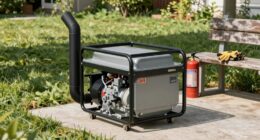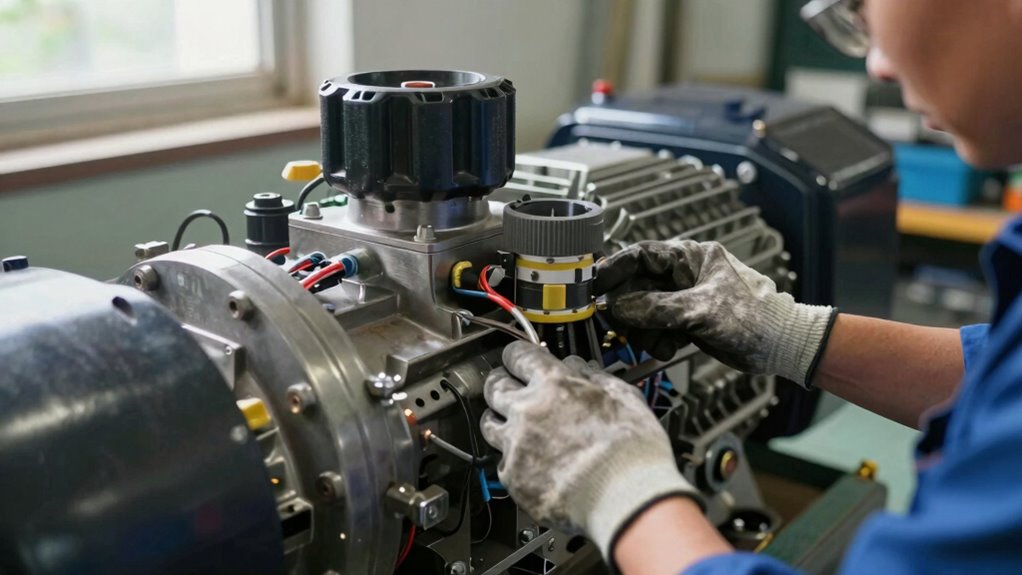
To reduce generator breakdowns, start a routine maintenance plan today. Perform regular visual inspections for damage, corrosion, and loose parts. Check and replace oils, fluids, and filters to keep the engine running smoothly. Inspect wiring, battery, and connections for wear or corrosion. Conduct load tests to verify performance and spot issues early. Address problems immediately and schedule professional service when needed. Keep consistent records and stay proactive—there’s more to guarantee your generator’s reliability if you continue exploring.
Key Takeaways
- Conduct regular visual inspections to identify early signs of wear, corrosion, or damage.
- Check and maintain fuel, oil, and fluids to prevent overheating and mechanical failures.
- Replace filters timely and perform load testing to ensure generator handles operational demands.
- Tighten and clean wiring and battery terminals to ensure reliable starting and prevent breakdowns.
- Follow a scheduled maintenance plan and consult professionals for complex repairs or persistent issues.
Why Regular Generator Maintenance Extends Its Lifespan

Regular generator maintenance is essential because it helps catch small problems before they become costly repairs or cause unexpected failures. Consistent maintenance improves generator safety by guaranteeing all components function properly, reducing the risk of accidents. Proper maintenance scheduling keeps your generator running smoothly and prevents unnecessary downtime. When you stick to a routine, you give your equipment a fighting chance to last longer. Regularly checking fluid levels, filters, and connections not only enhances performance but also extends its lifespan. Additionally, understanding device calibration helps ensure your generator operates at optimal efficiency. Incorporating preventive measures such as routine inspections can further reduce the likelihood of breakdowns. Proper maintenance procedures are vital for identifying issues early and maintaining overall power system reliability. Adhering to extension cord standards and ensuring weatherproof storage for your tools can also help maintain overall power system reliability. Skipping scheduled maintenance can lead to corrosion, wear, and tear, which shortens your generator’s durability. By staying proactive, you protect your investment, avoid emergency repairs, and ensure reliable power when you need it most. In short, routine upkeep is key to longevity and safe operation.
Perform a Visual Inspection of Your Generator
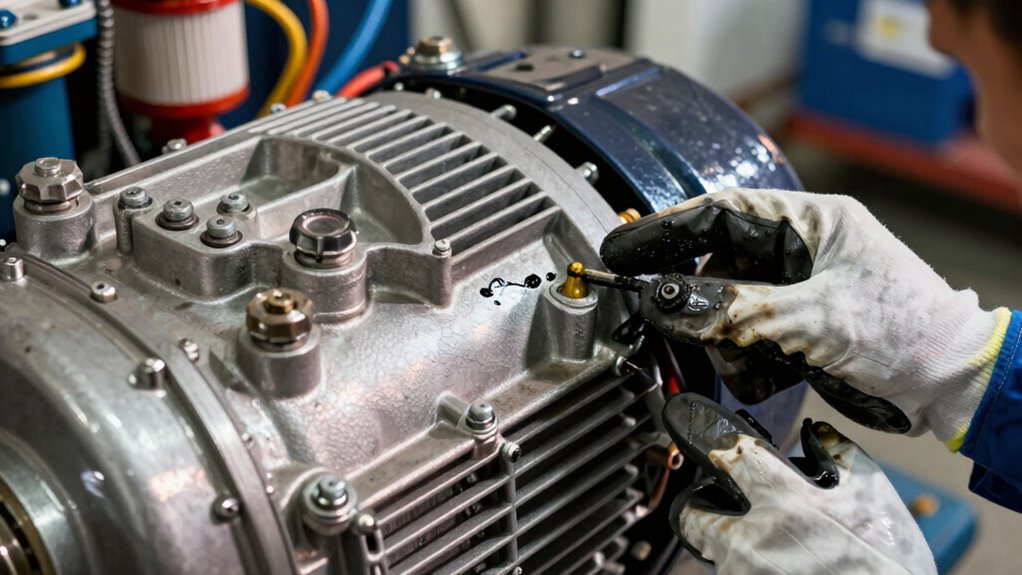
Start your visual inspection by looking for any visible damage like cracks, corrosion, or loose parts. Check the fuel and oil levels to guarantee they’re within the recommended range. Address any issues you spot immediately to keep your generator running smoothly. Additionally, inspecting the battery connections can help prevent power issues during e-bike charging. Regularly monitoring generator maintenance tasks like these can significantly extend its lifespan and performance. Understanding data storage principles, such as proper organization and secure backups, can also help optimize your generator’s efficiency and safety protocols over time.
Check for Visible Damage
Have you ever looked closely at your generator to spot potential issues? Performing a visual damage check is essential for an effective external inspection. Look for cracks, corrosion, or loose parts that could lead to breakdowns. Check the wiring for frays or burns, and examine the fuel tank for leaks or rust. A thorough visual inspection helps catch problems early before they worsen. Use the table below to guide your inspection:
| Area to Check | What to Look For | Why It Matters |
|---|---|---|
| Exterior casing | Cracks, rust, or dents | Protects internal components |
| Wiring | Frays, burns, loose connections | Ensures safe operation |
| Fuel tank | Leaks, rust, damage | Prevents fuel-related issues |
| Cooling vents | Blockages, debris | Keeps generator from overheating |
And remember, maintaining proper maintenance routines can significantly extend your generator’s lifespan.
Inspect Fuel and Oil Levels
After completing your visual inspection for damage, it’s important to check the fuel and oil levels to keep your generator running smoothly. Start by inspecting the fuel quality—look for discoloration, debris, or sediment that could clog the system. Confirm the fuel level is adequate for your upcoming use. Next, check the oil level using the dipstick; it should be within the recommended range. Pay attention to oil viscosity—if it appears thin or thick, consider changing it to maintain proper lubrication. Fresh, clean oil prevents engine wear and reduces the risk of breakdowns. Regularly monitoring these levels helps you spot potential issues early and ensures your generator operates efficiently when you need it most. Additionally, reviewing fuel choices and runtime options can help optimize performance during outages. Proper maintenance of electric motors in generators can also extend their lifespan and improve overall reliability. Incorporating routine checks of filter performance can further prevent dust and debris from affecting your generator’s operation. Regularly inspecting fuel and oil quality can also help detect contamination before it causes damage, which is essential for maintaining generator longevity and optimal functioning.
Check and Replace Oil and Fluids Regularly

Regularly checking and replacing your generator’s oil and fluids is essential to keep it running smoothly and prevent costly damage. An oil change at recommended intervals ensures the engine stays well-lubricated and minimizes wear. During a fluid check, inspect all reservoirs, including coolant and hydraulic fluids, for proper levels and signs of contamination. If fluids appear dirty or low, top them off or replace them promptly. This routine helps prevent overheating, corrosion, and mechanical failures. Staying informed about astrological influences can also promote peace of mind during stressful times, including equipment maintenance. Incorporating regular maintenance checks can help you catch potential issues early and ensure your generator operates reliably when needed. Additionally, using the right type of essential oils for maintenance-related purposes can promote a cleaner, more efficient engine environment. Understanding regional flavors and their impacts on performance can also guide you in choosing suitable lubricants and fluids. Establishing a maintenance routine based on manufacturer recommendations can further extend your generator’s lifespan and performance. Don’t wait for a breakdown—make fluid checks and oil changes part of your regular maintenance schedule for reliable, efficient operation.
Test and Change Air and Fuel Filters as Needed

How often should you test and change your generator’s air and fuel filters? Typically, you should inspect the air filter every 250 hours of operation or quarterly, whichever comes first. If it’s dirty or clogged, replace it to guarantee proper airflow and engine efficiency. The fuel filter needs attention every 500 hours or annually; check for debris or signs of clogging that can restrict fuel flow. A clean air filter prevents dust and dirt from entering the engine, reducing wear and tear. Meanwhile, a fresh fuel filter ensures clean fuel reaches the engine, preventing potential damage. Regularly testing and changing these filters as needed keeps your generator running smoothly, improves fuel efficiency, and minimizes the risk of unexpected breakdowns. For optimal performance, consider using high-quality storage and backup gear that can support your maintenance needs. Additionally, monitoring filter condition regularly helps catch issues early before they lead to costly repairs. Incorporating preventative maintenance into your routine can further enhance the lifespan of your equipment and save you money in the long run. Regular inspections also help identify potential problems before they escalate into costly repairs.
Inspect Your Battery and Wiring for Damage

You should regularly check your battery terminals for corrosion or looseness to guarantee reliable starting. Examine all wiring connections for signs of wear, fraying, or damage. Address any issues immediately to prevent potential generator failures.
Check Battery Terminals
Inspecting your battery terminals is a crucial step in maintaining your generator’s reliability. Start by examining the terminals for any signs of battery corrosion, which can hinder power flow and cause starting issues. If you notice a white or bluish-green substance, clean it off with a mixture of baking soda and water, then wipe dry. Next, check that the terminal connections are tight; loose terminals can lead to electrical problems and hinder performance. Use a wrench to tighten any loose connections, but avoid over-tightening, which can damage the terminals. Ensure both the battery and wiring are secure and free of damage. Properly maintained terminals help prevent unexpected breakdowns and keep your generator running smoothly.
Examine Wiring Connections
Even if your generator appears to be running smoothly, it’s essential to examine the wiring connections for damage or wear. Over time, wires can become frayed, loose, or corroded, risking connection security. Inspect all wiring for signs of deterioration, and replace any damaged sections. Consider wiring upgrades if your connections are outdated or unreliable, guaranteeing maximum performance. Tighten loose connections to prevent electrical failures and improve overall safety. Proper connection security minimizes the risk of shorts or breakdowns, especially during peak usage. Don’t overlook this step, as well-maintained wiring helps your generator operate efficiently and reliably. Regular inspections and upgrades ensure your wiring remains strong, reducing unexpected failures and extending the lifespan of your equipment.
Perform Load Testing to Verify Performance
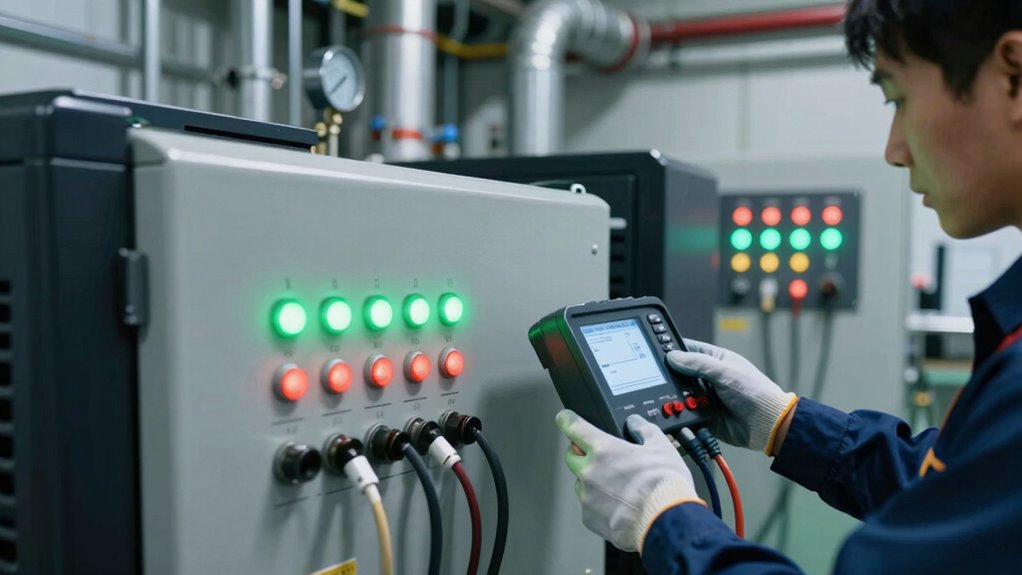
Performing load testing is crucial to guarantee your generator can handle its expected operational demands. It verifies performance and assures the system won’t fail under real load conditions. During the test, you simulate the maximum expected load while monitoring important parameters like voltage, current, and temperature. This process helps identify potential issues before they cause breakdowns. To streamline your efforts, consider this quick reference:
| Test Type | Key Metrics | Result Expectation |
|---|---|---|
| Light Load Test | Voltage stability | Consistent voltage under low load |
| Full Load Test | Current & temperature | Stable readings at max load |
| Peak Load Test | Performance margin | No sudden drops or fluctuations |
Use load testing to confirm your generator’s performance verification, preventing costly failures later.
Troubleshoot Common Generator Problems Early

Are you aware that catching generator issues early can save you time and money? Recognizing problems quickly is key to maintaining generator safety and preventing breakdowns. Start with troubleshooting basics, such as checking fuel levels, inspecting oil, and guaranteeing connections are secure. Listen for unusual noises or vibrations, which can signal underlying issues. If the generator stalls or fails to start, verify the battery and starter system. Regularly inspecting filters and coolant helps avoid overheating. Address small problems immediately before they escalate into costly repairs. Staying proactive with troubleshooting keeps your generator running smoothly and safely. Remember, early detection and simple checks can prevent emergencies, protect your equipment, and ensure reliable power when you need it most.
Know When to Call a Professional for Service

While regular maintenance can handle many minor issues, there are moments when calling a professional is essential. If you notice persistent problems like unusual noises, frequent shutdowns, or difficulty starting, it’s time to seek expert help. Prioritize generator safety by avoiding attempts to fix complex issues yourself, especially if electrical components are involved. Knowing when to call a professional can prevent further damage and ensure reliable operation. Keep emergency contacts handy, including your local generator service provider and emergency services, in case of urgent situations. If you’re unsure about the severity of an issue or if safety seems compromised, don’t hesitate to get professional service. Timely expert intervention keeps your generator running smoothly and helps you avoid costly repairs later.
Create a Maintenance Checklist to Stay on Track
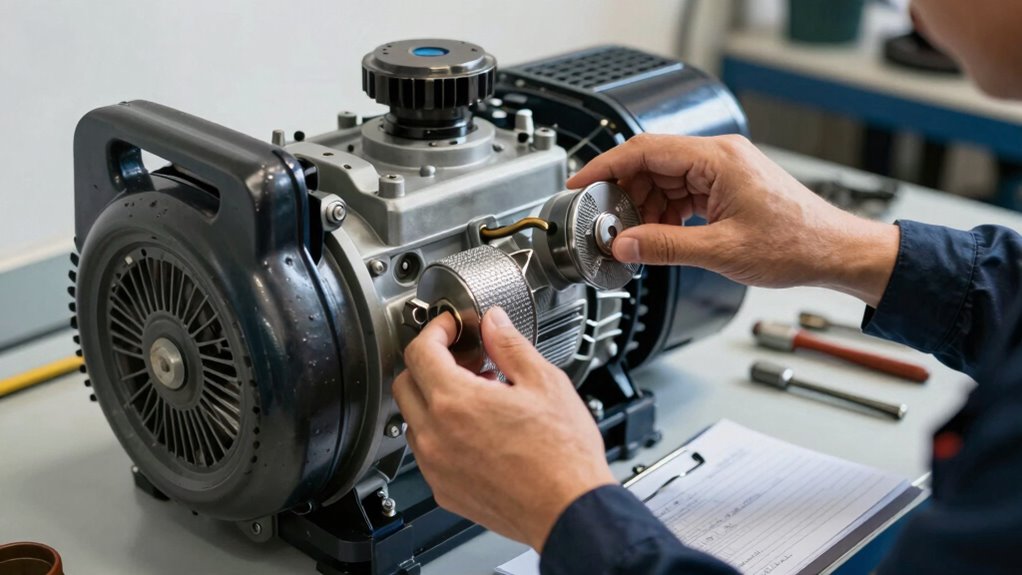
Creating a maintenance checklist is essential for keeping your generator in top condition and preventing unexpected breakdowns. With a clear plan, you’ll improve generator safety and assure reliable operation. Your checklist should include routine inspections, oil changes, filter replacements, and battery checks. Proper maintenance scheduling helps catch issues early, avoiding costly repairs or failures during critical times. Record every task and date completed, so nothing gets overlooked. Regularly review and update your checklist based on manufacturer recommendations and your generator’s usage. This organized approach keeps maintenance consistent, minimizes downtime, and extends your equipment’s lifespan. Staying on top of these tasks not only enhances safety but also guarantees your generator performs when you need it most.
Frequently Asked Questions
How Often Should I Schedule Professional Generator Inspections?
You should schedule professional generator inspections at least once a year, especially if you rely on your generator frequently. Regular check-ups help improve fuel efficiency and guarantee noise reduction, making your generator run smoothly and quietly. If your generator operates under heavy use or in extreme conditions, consider more frequent inspections, like every six months, to catch potential issues early and keep it performing at its best.
Can I Perform Maintenance Tasks Myself Without Technical Skills?
You can definitely perform basic generator maintenance tasks yourself with some DIY tips, but safety precautions are essential. While you might think you can handle it all, even minor mistakes can lead to big problems or injuries. Always disconnect power, wear protective gear, and follow the manufacturer’s instructions. If you’re unsure about complex tasks, it’s best to call a professional. Your safety and your generator’s longevity depend on proper care!
What Are Signs My Generator Needs Urgent Repairs?
You’ll want urgent repairs if your generator’s fuel efficiency drops, meaning it uses more fuel than usual, or if noise levels suddenly increase, signaling internal issues. Also, watch for difficulty starting, unusual vibrations, or inconsistent power output. Ignoring these signs can lead to breakdowns. Regularly inspecting these indicators helps you catch problems early, saving you time and money while keeping your generator running smoothly and quietly.
How Do Environmental Conditions Affect Generator Maintenance?
Environmental factors, like extreme temperatures, humidity, and dirt, directly impact your generator’s health, demanding diligent maintenance scheduling. Hot, humid conditions cause corrosion and overheating, while cold weather can hinder starting. Dirt and debris clog filters, reducing efficiency. You should regularly inspect, clean, and update your maintenance routine based on these environmental influences to prevent breakdowns. Adjusting your schedule to changing conditions ensures your generator stays reliable, ready to perform when you need it most.
Are There Specific Maintenance Routines for Different Generator Types?
Yes, maintenance routines vary depending on your generator type. For instance, with portable generators, you should regularly check fuel quality and drain old fuel to prevent clogging. For standby generators, focus on inspecting the battery lifespan and making sure it’s fully charged. Both types require routine oil changes, filter checks, and cleaning. Tailoring your routine to your specific generator guarantees peak performance and reduces the risk of breakdowns.
Conclusion
By sticking to this routine, you’ll keep your generator humming smoothly like a well-oiled symphony. Think of it as tending to a garden—you nurture it regularly, and it’ll bloom with dependable power when you need it most. Skipping these steps is like ignoring a leaky faucet; it might seem small now, but it can turn into a flood. Stay vigilant, perform your checks, and enjoy the peace of mind that comes with a reliable, long-lasting generator.