
Choosing the right fuel type for a food truck generator is essential for reliable, versatile, and cost-effective operation. The most common options include gasoline, propane, natural gas, and tri-fuel systems, each with distinct advantages and drawbacks. Gasoline is widely available but less efficient and more polluting, while propane offers cleaner burning and longer storage. Tri-fuel generators provide maximum flexibility but tend to be more expensive and complex. Continue reading for a detailed comparison of these options and the top models that utilize them.

Get kitchen staples and gadgets delivered free with Prime
- Fast, free delivery on millions of items
- Prime Video, Amazon Music and more included
- Member-only deals all year
Complete the kit


Key Takeaways
- Tri-fuel generators offer unparalleled flexibility, making them ideal for mobile food setups in varied locations.
- Dual-fuel options often balance cost and convenience, with propane being cleaner but sometimes less accessible than gasoline.
- Inverter generators excel in producing stable power with quieter operation, suitable for sensitive food equipment.
- Higher wattage models tend to be more expensive but provide the capacity needed for large food trucks and multiple appliances.
- Choosing the right fuel type depends heavily on availability, environmental considerations, and your specific power needs.
| Generac 12,500 Starting Watt Tri-Fuel Portable Generator with Electric Start |  | Best Overall for Versatility and Power | Fuel Types: Gasoline, Liquid Propane, Natural Gas | Starting Watts: 12,500 | Running Watts: 9,500 | VIEW ON AMAZON | See Our Full Breakdown |
| DuroMax XP11000iHT 11,000-Watt Tri-Fuel Portable Digital Inverter Generator |  | Best for Sensitive Electronics and Remote Start Convenience | Peak Watts: 11,000 | Running Watts: 9,000 | Fuel Types: Gasoline, Propane, Natural Gas | VIEW ON AMAZON | See Our Full Breakdown |
| Westinghouse 12000 Peak Watt Dual Fuel Portable Inverter Generator with Remote Electric Start |  | Best for Quiet, Long-Run Home Backup | Peak Power: 12,000W | Running Power: 9,000W | Fuel Type: Gasoline and Propane | VIEW ON AMAZON | See Our Full Breakdown |
| Westinghouse 14500 Peak Watt Dual Fuel Portable Generator with Remote Electric Start | 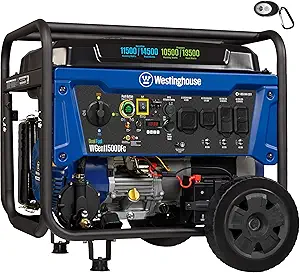 | Best for High Power and Extended Runtime | Peak Watts: 14,500 | Running Watts: 11,500 on gasoline | Fuel Type: Gasoline and Propane | VIEW ON AMAZON | See Our Full Breakdown |
| A-iPower 7600-Watt Dual Fuel Inverter Generator with Remote Start |  | Best Compact, Lightweight Dual Fuel Inverter | Wattage: 7600 watts | Fuel Type: Gasoline, Liquefied Petroleum Gas | Engine Displacement: 322 cc | VIEW ON AMAZON | See Our Full Breakdown |
| DuroMax XP28000iHT 28,000-Watt Tri Fuel Portable Digital Inverter Generator |  | Best for Maximum Fuel Flexibility and Heavy-Duty Use | Wattage: 28,000 watts | Fuel Type: Gasoline, Propane, Natural Gas | Power Source: Fuel Powered | VIEW ON AMAZON | See Our Full Breakdown |
| 6000W Peak Portable Inverter Generator with Electric Start and CO Sensor |  | Best for Moderate Power Needs and Portability | Peak Power: 5500W | Rated Power: 6000W | Fuel Type: Gasoline | VIEW ON AMAZON | See Our Full Breakdown |
| DuroStar DS13000MX 13,000-Watt Dual Fuel Portable Generator with Electric Start |  | Best for Whole-Home Backup and Dual Fuel Flexibility | Power Output: 13,000 Watts | Fuel Type: Gasoline and Propane | Start Type: Electric start | VIEW ON AMAZON | See Our Full Breakdown |
| WEN 14,500-Watt Tri-Fuel Generator with Electric Start, CO Watchdog, and Wheel Kit (TF-1450X) |  | Best for Versatile Fuel Use and Portability | Surge Watts (Gasoline): 14500 | Running Watts (Gasoline): 11500 | Fuel Type: Gasoline, Propane, Natural Gas | VIEW ON AMAZON | See Our Full Breakdown |
| Pulsar PGD105TiSCO Tri-Fuel Inverter Generator, 10500-Watt, Portable with Remote Start |  | Best for Heavy-Duty Flexibility and Remote Operation | Wattage: 10500 watts | Fuel Type: Gasoline, Propane, Natural Gas | Engine Displacement: 458 cc | VIEW ON AMAZON | See Our Full Breakdown |
| fuel type for food truck generator | Fuel Type | Outlets |
|---|---|---|
| Generac 12,500 Starting Watt T | — | Two 120V 20A GFCI, 120/240V 30A twist-lock, 120/240V 50A |
| DuroMax XP11000iHT 11,000-Watt | — | — |
| Westinghouse 12000 Peak Watt D | Gasoline and Propane | 120/240V 14–50R 50A, GFCI duplex 20A |
| Westinghouse 14500 Peak Watt D | Gasoline and Propane | Multiple including transfer switch-ready |
| A-iPower 7600-Watt Dual Fuel I | Gasoline, Liquefied Petroleum Gas | Multiple including 120/240V |
| DuroMax XP28000iHT 28,000-Watt | Gasoline, Propane, Natural Gas | — |
| 6000W Peak Portable Inverter G | Gasoline | — |
| DuroStar DS13000MX 13,000-Watt | Gasoline and Propane | — |
| WEN 14,500-Watt Tri-Fuel Gener | Gasoline, Propane, Natural Gas | Multiple including 120V/240V |
| Pulsar PGD105TiSCO Tri-Fuel In | Gasoline, Propane, Natural Gas | — |
More Details on Our Top Picks
Generac 12,500 Starting Watt Tri-Fuel Portable Generator with Electric Start
This Generac model stands out for its ability to run on three different fuels—gasoline, propane, or natural gas—making it highly adaptable for various backup or jobsite scenarios. Compared with the Westinghouse 12000DF, it offers slightly higher starting watts but comes in heavier at 219 lbs, which could complicate transport. The automatic voltage regulation ensures stable power, crucial for sensitive equipment, while COsense technology adds a safety layer. Its multiple outlets support diverse power needs, but the setup complexity and weight mean it’s best suited for those with a designated space or assistance for moving. The extended runtime of up to 14 hours on lower loads provides dependable operation for long outages or extended jobs.
Pros:- Tri-fuel capability enhances fuel flexibility and availability
- Automatic voltage regulation provides stable power output
- COsense technology improves safety during operation
- Long runtime ensures extended use without refueling
Cons:- Heavy weight at 219 lbs makes transportation difficult
- Complex setup due to multiple fuel types and outlets
- Price may be a barrier for budget-conscious buyers
Best for: Large families or contractors needing reliable, versatile power with multiple fuel options and safety features
Not ideal for: Small, mobile setups or users prioritizing lightweight, easy-to-transport generators
- Fuel Types:Gasoline, Liquid Propane, Natural Gas
- Starting Watts:12,500
- Running Watts:9,500
- Engine:500cc Generac OHV
- Fuel Tank Capacity:7.5 gallons
- Runtime at 50% load:9.5 hours
- Weight:219 lbs
- Outlets:Two 120V 20A GFCI, 120/240V 30A twist-lock, 120/240V 50A
Our verdict“This generator is ideal for users who need powerful, flexible fuel options and don’t mind weight or setup complexity.”
DuroMax XP11000iHT 11,000-Watt Tri-Fuel Portable Digital Inverter Generator
The DuroMax XP11000iHT provides a robust 11,000 peak watts and 9,000 running watts on three fuels, making it a strong contender for emergency and mobile power. Unlike the Generac, it emphasizes inverter technology, delivering clean power safe for sensitive devices like electronics or medical equipment. It includes remote electric start and CO alert technology, adding convenience and safety, similar to the Westinghouse 12000DF but with a slightly lower weight. Its inverter design generally results in quieter operation, but it remains heavy and may be cumbersome to move around. The price point is higher, reflecting its advanced safety features and inverter quality, so it’s best for those who value clean power and remote operation.
Pros:- Clean, stable power safe for sensitive electronics
- Remote electric start offers convenience
- Tri-fuel flexibility enhances adaptability
- Built-in safety features like CO alert
Cons:- Heavier and less portable than some inverter units
- Higher cost may deter budget-conscious buyers
- Setup may be complex for first-time users
Best for: Homeowners or professionals who need reliable, safe power for electronics and remote start functionality
Not ideal for: Users seeking ultra-lightweight or budget-friendly options for quick, one-off tasks
- Peak Watts:11,000
- Running Watts:9,000
- Fuel Types:Gasoline, Propane, Natural Gas
- Engine:459cc OHV
- Inverter Power:Yes
- Remote Start:Yes
- CO Alert Technology:Yes
- Weight:Approx. 210 lbs
Our verdict“This generator is well-suited for those prioritizing clean power, safety, and remote operation, despite its weight and higher price.”
Westinghouse 12000 Peak Watt Dual Fuel Portable Inverter Generator with Remote Electric Start
The Westinghouse iGen12000DFc offers a powerful 12,000W peak and 9,000W running wattage, making it suitable for large home backup or outdoor events. Its dual fuel capability allows switching between gasoline and propane, providing flexibility similar to the other models but with a focus on quiet operation—noise levels as low as 64 dBA, much quieter than the Generac or DuroMax. Its longer runtime of up to 19 hours at 25% load makes it ideal for extended outages, but it is larger and heavier, which could limit portability. The advanced features, including transfer switch readiness and remote start, justify its higher price, especially for users prioritizing low noise and extended run times.
Pros:- Quiet operation at as low as 64 dBA
- Long runtime up to 19 hours
- Powerful dual fuel inverter with transfer switch readiness
- Remote start for convenience
Cons:- Heavy and large, less portable for frequent movement
- Price is relatively high compared to simpler models
- Requires regular maintenance for peak performance
Best for: Homeowners seeking quiet, long-lasting backup power with transfer switch compatibility
Not ideal for: Portable users or those needing a lightweight generator for frequent transport
- Peak Power:12,000W
- Running Power:9,000W
- Fuel Type:Gasoline and Propane
- Fuel Tank Capacity:7.9 gallons
- Runtime at 25% load:up to 19 hours
- Noise Level:as low as 64 dBA
- Outlets:120/240V 14–50R 50A, GFCI duplex 20A
- Features:Remote start, digital data center, parallel capability
Our verdict“This generator excels for those needing quiet, long-duration power backup with transfer switch support, despite its size and cost.”
Westinghouse 14500 Peak Watt Dual Fuel Portable Generator with Remote Electric Start
The Westinghouse 14500 offers impressive peak wattage and runtime, with 14,500 watts on gasoline—more than the others—making it suitable for large homes, heavy-duty jobs, or prolonged outages. Its dual fuel capability adds flexibility, similar to the other Westinghouse models, but this one provides the highest wattage capacity. While its power output is best-in-class, it is also quite heavy and large, which limits portability. The low THD makes it safe for sensitive electronics, and remote electric start simplifies operation. However, the size and weight mean it’s more suited for stationary use or situations where mobility isn’t a priority. It’s an investment for those who need maximum power and runtime.
Pros:- Highest peak wattage among the lineup
- Long runtime on gasoline up to 19 hours
- Dual fuel flexibility for convenience
- Low THD for electronics safety
Cons:- Very heavy and large, difficult to move
- High price point reflects its power capacity
- Not designed for frequent portability
Best for: Large households or contractors requiring maximum wattage for heavy loads and extended operation
Not ideal for: Users needing a lightweight, easy-to-move generator for frequent transport or quick setups
- Peak Watts:14,500
- Running Watts:11,500 on gasoline
- Fuel Type:Gasoline and Propane
- Fuel Tank Capacity:9.5 gallons
- Runtime:up to 19 hours
- Engine:550cc 4-Stroke OHV
- Low THD:Yes
- Outlets:Multiple including transfer switch-ready
Our verdict“This generator is best suited for power-demanding applications where maximum output and runtime outweigh portability concerns.”
A-iPower 7600-Watt Dual Fuel Inverter Generator with Remote Start
The A-iPower 7600-watt inverter generator offers a portable solution with a 322cc engine, ideal for users who prioritize ease of transport without sacrificing significant power. Its dual fuel capability—gasoline and liquefied petroleum gas—provides flexible fueling options for camping, small job sites, or backup at home. It produces clean power suitable for sensitive electronics, similar to the Westinghouse 12000DF but at a smaller scale, and includes remote start for added convenience. Its 3.6-gallon tank limits runtime to about 10 hours, which is shorter than larger models, but the lightweight design makes it accessible for users who need mobility. It’s an excellent choice for those who want a balance between power and portability.
Pros:- Compact and lightweight for easy transport
- Dual fuel capability with gasoline and LPG
- Clean power suitable for sensitive electronics
- Remote start adds convenience
Cons:- Limited runtime of about 10 hours on a small tank
- Lower power capacity compared to larger models
- Fuel capacity may require frequent refueling for extended use
Best for: Campers, small business owners, or homeowners needing portable power with dual fuel options
Not ideal for: Large-scale jobs or users needing long, continuous runtime without frequent refueling
- Wattage:7600 watts
- Fuel Type:Gasoline, Liquefied Petroleum Gas
- Engine Displacement:322 cc
- Tank Volume:3.6 gallons
- Runtime:about 10 hours
- Starting Wattage:7600 watts
- Outlets:Multiple including 120/240V
Our verdict“This inverter generator suits those seeking portable, dual fuel power for light to moderate needs, accepting shorter runtime for mobility.”
DuroMax XP28000iHT 28,000-Watt Tri Fuel Portable Digital Inverter Generator
The DuroMax XP28000iHT stands out for its impressive 28,000 peak watts, making it ideal for large-scale backup power needs. Its tri-fuel capability allows switching between gasoline, propane, and natural gas, providing unmatched flexibility—especially compared to models like the WEN TF-1450X, which only supports gasoline and propane. This generator’s quiet inverter technology ensures sensitive electronics stay protected, but its weight and complex natural gas setup can pose challenges for portability and quick setup. It’s best suited for operators who need high power and fuel versatility in a semi-permanent or emergency setup, rather than casual or lightweight applications.
Pros:- Supports three fuel types for maximum flexibility
- Quiet, clean inverter power suitable for sensitive electronics
- Remote start and natural gas hookup included
Cons:- Heavy and difficult to transport
- Setup complexity for natural gas connection
Best for: Businesses or large food trucks requiring high, flexible power sources and long-term reliability
Not ideal for: Small food trucks or mobile vendors who need a lightweight, easy-to-move generator
- Wattage:28,000 watts
- Fuel Type:Gasoline, Propane, Natural Gas
- Power Source:Fuel Powered
- Voltage:240 volts
- Engine Displacement:999 cc
- Additional Features:CO Sensor, Digital Display, Electric Start, Heavy Duty, Low Oil Shutdown
Our verdict“This generator is perfect for those needing maximum fuel flexibility and high wattage in a semi-permanent installation.”
6000W Peak Portable Inverter Generator with Electric Start and CO Sensor
The 6000W Peak Portable Inverter Generator offers reliable power for smaller food trucks and outdoor events, with a pure gasoline operation that keeps things straightforward and less costly than tri-fuel models like the WEN TF-1450X. Its electric start adds convenience, though it is heavier and noisier, which could be a concern for vendors needing quick setup or quiet operation. While it lacks the fuel flexibility of tri-fuel options, its simplicity makes it a strong choice for those prioritizing ease of use and affordability over maximum power or versatility.
Pros:- Powerful 5500W peak output for essential appliances
- Electric start for quick, easy operation
- Built-in CO sensor enhances safety
Cons:- Limited to gasoline fuel
- Heavier and less portable for frequent movement
Best for: Food truck operators who prioritize straightforward operation and moderate power on gasoline
Not ideal for: Vendors needing multiple fuel options or higher wattage for large equipment
- Peak Power:5500W
- Rated Power:6000W
- Fuel Type:Gasoline
- Start Type:Electric start
- Safety Features:CO sensor, low oil, overheat protection
Our verdict“Ideal for small to medium food trucks needing reliable gasoline power with simple operation.”
DuroStar DS13000MX 13,000-Watt Dual Fuel Portable Generator with Electric Start
The DuroStar DS13000MX offers a substantial 13,000 watts, making it suitable for larger food trucks or emergency home backup. Its dual fuel capability with gasoline and propane provides flexibility, comparable to the WEN TF-1450X, but with a more robust power output. Its all-metal construction ensures durability in tough environments, yet its size and weight may limit portability for mobile vendors. The electric start simplifies operation, but the need for proper ventilation and the additional setup for propane hoses can be drawbacks for casual users.
Pros:- High power output suitable for whole-house backup
- Dual fuel capability for flexibility and longer run times
- Electric start for convenience
Cons:- Heavy and less portable without assistance
- Requires proper ventilation due to CO safety features
Best for: Food vendors or operators needing high power with dual-fuel flexibility for longer runs and reliability
Not ideal for: Small or mobile vendors needing lightweight, portable generators with low weight
- Power Output:13,000 Watts
- Fuel Type:Gasoline and Propane
- Start Type:Electric start
- Transfer Switch Ready:Yes
- Construction:All-metal
Our verdict“This generator fits those needing high wattage, durability, and dual-fuel options for more extensive setups.”
WEN 14,500-Watt Tri-Fuel Generator with Electric Start, CO Watchdog, and Wheel Kit (TF-1450X)
The WEN TF-1450X makes a compelling case for versatility with its tri-fuel capability, supporting gasoline, propane, and natural gas, unlike the dual-fuel DuroStar. Its 14,500 surge watts suit larger food trucks or emergency setups, complemented by features like a CO watchdog sensor and a wheel kit for mobility. However, its noise level of 62 dB might bother quieter environments, and the setup complexity for natural gas or propane can be daunting for first-time users. Still, it balances power, safety, and portability well for demanding mobile applications.
Pros:- Supports gasoline, propane, and natural gas fuels
- High surge wattage for heavy-duty appliances
- Includes safety features and mobility accessories
Cons:- Relatively loud at 62 dB
- Complex initial setup for natural gas and propane
Best for: Food trucks needing flexible fuel options, portability, and safety features for all-day outdoor use
Not ideal for: Vendors seeking ultra-lightweight options or those with very strict noise restrictions
- Surge Watts (Gasoline):14500
- Running Watts (Gasoline):11500
- Fuel Type:Gasoline, Propane, Natural Gas
- Engine:4 Stroke, 458 cc
- Runtime at half load:up to 12 hours
- Outlets:Multiple including 120V/240V
Our verdict“This generator excels for mobile vendors who value fuel versatility, safety, and portability in demanding environments.”
Pulsar PGD105TiSCO Tri-Fuel Inverter Generator, 10500-Watt, Portable with Remote Start
The Pulsar PGD105TiSCO offers a balanced mix of power, fuel flexibility, and convenience, with a maximum output of 10,500 watts. Its tri-fuel system supports gasoline, propane, and natural gas, similar to the WEN TF-1450X, but with a slightly higher power capacity for demanding applications. The inclusion of remote start and a digital display makes operation straightforward, especially in larger or more complex setups. Its weight and noise level—at 62 dB—are considerations, but overall, it suits vendors who need reliable, versatile power with remote operation features.
Pros:- Supports gasoline, propane, and natural gas
- Remote start and digital display for ease of use
- Powerful 10,500-watt capacity for demanding appliances
Cons:- Heavier and bulkier than smaller models
- Higher price point due to features
Best for: Food trucks or mobile vendors who require flexible fuel options and remote start for convenience
Not ideal for: Vendors seeking ultra-lightweight equipment or operating in very noise-sensitive areas
- Wattage:10500 watts
- Fuel Type:Gasoline, Propane, Natural Gas
- Engine Displacement:458 cc
- Runtime at half load:up to 12 hours
- Additional Features:Remote start, digital display
Our verdict“This generator is ideal for operators needing versatile fuel options combined with remote operation in larger mobile setups.”

How We Picked
These products were selected based on their fuel compatibility, power output, usability, build quality, and value. Priority was given to models that clearly specify their fuel types and offer reliable performance in a mobile food setting. We also evaluated ease of use, maintenance, and safety features, ensuring each generator meets the demands of food truck operators. The ranking reflects a balance between versatility, durability, and cost-effectiveness, helping buyers identify options that suit both casual and professional use.| fuel type for food truck generator | Fuel Type |
|---|---|
| Generac 12,500 Starting Watt T | — |
| DuroMax XP11000iHT 11,000-Watt | — |
| Westinghouse 12000 Peak Watt D | Gasoline and Propane |
| Westinghouse 14500 Peak Watt D | Gasoline and Propane |
| A-iPower 7600-Watt Dual Fuel I | Gasoline, Liquefied Petroleum Gas |
| DuroMax XP28000iHT 28,000-Watt | Gasoline, Propane, Natural Gas |
| 6000W Peak Portable Inverter G | Gasoline |
| DuroStar DS13000MX 13,000-Watt | Gasoline and Propane |
| WEN 14,500-Watt Tri-Fuel Gener | Gasoline, Propane, Natural Gas |
| Pulsar PGD105TiSCO Tri-Fuel In | Gasoline, Propane, Natural Gas |
Factors to Consider When Choosing Fuel Type For Food Truck Generator
When choosing a fuel type for your food truck generator, several key factors influence the decision. Understanding your typical operating environment, fuel availability, and power requirements will help narrow down the best choice. Additionally, consider the initial cost, ongoing fuel expenses, and environmental impact. The right fuel type can streamline your food truck’s operations and reduce downtime, but it’s important to weigh these broader considerations carefully.Fuel Availability and Accessibility
One of the most practical factors is how easily you can access the fuel. Gasoline is widely available at most fueling stations, making it convenient for daily use. Propane, while cleaner and longer-lasting, may require special tanks and fittings, which could be less accessible depending on your location. Natural gas is less common in mobile settings but could be an option if your operation is stationary near a supply line. Knowing your fuel sources helps avoid costly downtime or fueling complications.
Cost of Fuel and Operating Expenses
Initial generator cost and ongoing fuel expenses are critical considerations. Gasoline tends to be cheaper upfront but has higher consumption rates and emissions. Propane offers cleaner burning and longer storage but can be more expensive per unit. Tri-fuel generators, while versatile, often come with a higher purchase price and may require additional setup. Factoring in fuel efficiency and supply costs will help determine the best long-term value for your operation.
Environmental Impact and Safety
Fuel choice directly affects your environmental footprint and safety protocols. Propane and natural gas burn cleaner, producing fewer emissions and less odor, which can be advantageous in food environments. Gasoline, by contrast, emits more pollutants and poses greater fire risks if not handled properly. Additionally, consider safety features like automatic shutoff or fuel leak detection, especially if your crew is inexperienced with certain fuel types.
Power Needs and Generator Size
Matching your generator’s capacity with your equipment load is essential. Larger, high-wattage models often support multiple appliances simultaneously, but they tend to be more expensive and heavier. Smaller inverter units might suffice for basic needs but could struggle with high-demand equipment. Your choice of fuel type should align with your expected power consumption and operational flexibility, ensuring consistent performance without overspending.
Ease of Use and Maintenance
Some fuel types require special handling or maintenance routines. Gasoline generators are straightforward but need regular oil changes and carburetor cleaning. Propane and natural gas systems may need modifications for safe operation, and tri-fuel units add complexity with multiple fuel lines and switches. Consider your technical comfort and the availability of support when selecting a fuel type, as ease of maintenance can impact your overall efficiency and downtime.
Frequently Asked Questions
Is a tri-fuel generator worth the extra cost for a food truck?
Tri-fuel generators provide maximum flexibility by allowing you to switch between gasoline, propane, and natural gas, which can be advantageous in varied operational environments. However, they tend to be more expensive upfront and involve more complex maintenance. If your operation requires versatility—such as working in different locations or with varying fuel supplies—investing in a tri-fuel model can be justified. For more casual or fixed operations, dual-fuel or single-fuel options may offer better value and simplicity.
Which fuel type is safest for food trucks?
Propane and natural gas are generally considered safer due to their cleaner burning properties and lower flammability risk when handled properly. Propane tanks are designed with safety features and are less likely to spill or leak compared to gasoline. Gasoline, while more accessible, poses higher fire and explosion risks if not stored and managed carefully. Selecting a generator with safety features like automatic shutoff and leak detection enhances safety regardless of the fuel chosen.
Can I switch fuel types easily on a generator?
Switching fuel types depends on the generator’s design. Tri-fuel models are specifically built for multiple fuels, allowing easy switching with the turn of a valve. Dual-fuel generators designed for gasoline and propane may require manual adjustments or additional accessories. Always consult the manufacturer’s instructions, as improper switching can damage the unit or compromise safety. Consider your operational needs and whether frequent fuel switching justifies investing in a multi-fuel system.
How does fuel choice impact generator maintenance?
Fuel type influences the maintenance routine and component longevity. Gasoline engines may require more frequent carburetor cleaning and oil changes due to fuel varnish buildup. Propane and natural gas generate less carbon deposits, leading to potentially lower maintenance demands. Tri-fuel generators add complexity with multiple fuel lines, which must be checked regularly for leaks or blockages. Overall, cleaner fuels tend to reduce maintenance time and extend the lifespan of critical parts.
What should I consider if I want a quiet generator for my food truck?
Inverter generators, often powered by gasoline or propane, are typically quieter and produce more stable power, making them ideal for food trucks where noise levels matter. Propane-powered units tend to be quieter than gasoline counterparts because they burn cleaner and at lower noise levels. When noise is a priority, look for models with noise-reduction features or sound enclosures, regardless of fuel type, to maintain a comfortable environment for customers and staff.
Conclusion
For food truck operators prioritizing overall reliability and ease of use, the Generac 12,500 Starting Watt Tri-Fuel Portable Generator stands out as the best choice, offering maximum flexibility across fuel sources. Those seeking the best value without sacrificing performance might prefer the DuroMax XP11000iHT 11,000-Watt Tri-Fuel Generator, which balances cost and versatility. For newcomers or smaller setups, a compact inverter like the 6000W Peak Portable Inverter Generator provides quiet operation and simple fuel options. Meanwhile, operators needing maximum power capacity should consider the DuroMax XP28000iHT for large-scale food trucks. Ultimately, your choice should reflect your specific operational needs, fuel access, and budget constraints.