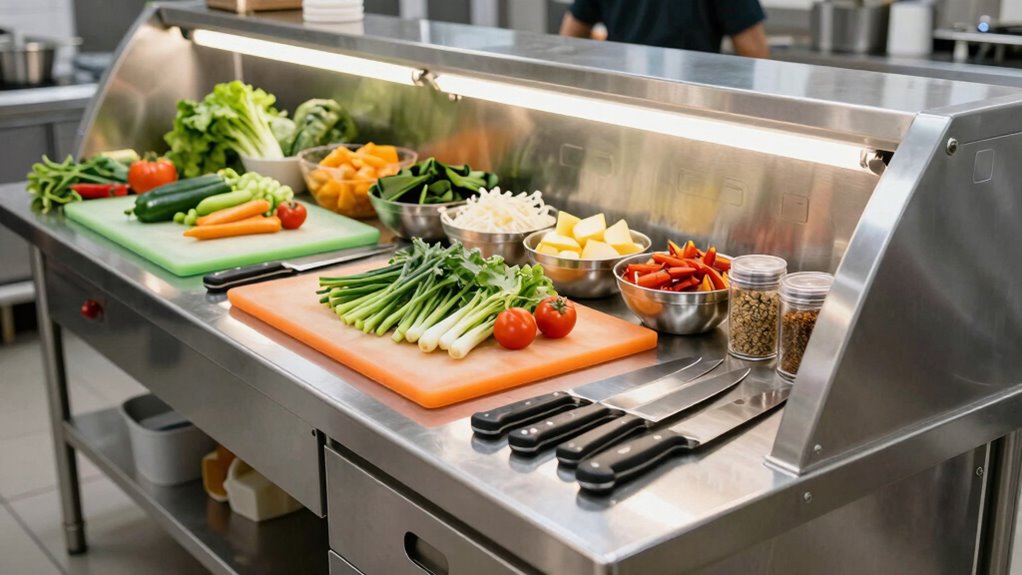
To shave minutes off every order, design your prep table with a logical layout that places frequently used ingredients and tools within arm’s reach. Arrange items based on usage order, keep raw ingredients separate, and use clear labels for quick identification. Minimize unnecessary movement by organizing equipment efficiently and customizing shelves to fit your workflow. If you want to optimize your setup further, keep exploring these strategies to boost your speed and accuracy.
Key Takeaways
- Arrange ingredients by usage frequency, placing high-demand items at the front for quick access.
- Customize prep tables with labeled containers and adjustable shelves to streamline workflow.
- Position utensils and tools within arm’s reach, minimizing movement during order assembly.
- Use visual cues and consistent organization to reduce errors and speed up team response.
- Regularly review and update layout to eliminate bottlenecks and optimize efficiency.
How to Design a Prep Table That Speeds Up Service
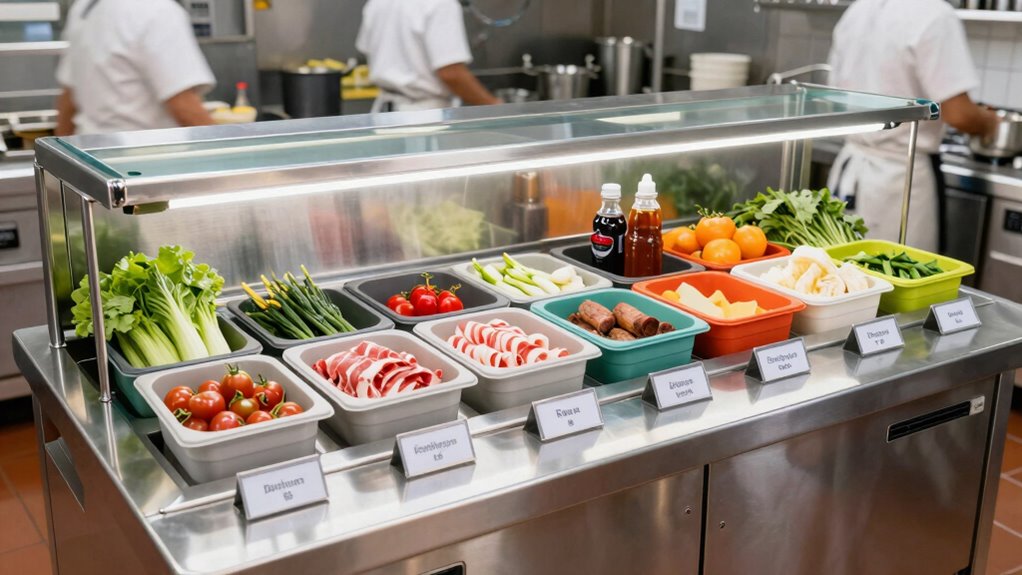
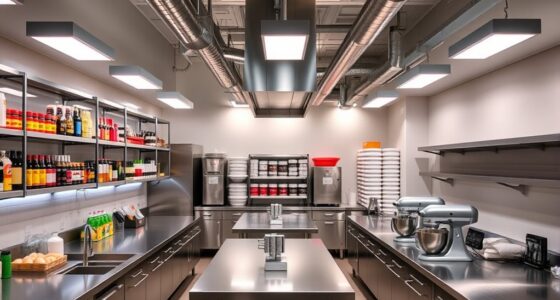
Have you ever wondered how a well-designed prep table can streamline your kitchen’s workflow? The key is thoughtful ingredient placement. Arrange ingredients based on their use frequency and cooking order, so staff can pick and assemble quickly without unnecessary movement. Place frequently used items at the front or center for easy access, reducing prep time. Keep raw ingredients separate from ready-to-serve components to prevent cross-contamination and confusion. Confirm tools and utensils are within arm’s reach, so staff doesn’t waste time searching. A logical layout minimizes steps, speeds up staff workflow, and keeps the kitchen organized. Good kitchen ergonomics also contribute to reducing fatigue and improving overall efficiency. When every ingredient and tool has a designated spot, your team works more efficiently, helping you deliver orders faster and maintain high-quality service. Additionally, efficient organization plays a crucial role in boosting overall productivity and reducing order errors.
Key Elements of an Efficient Prep Station
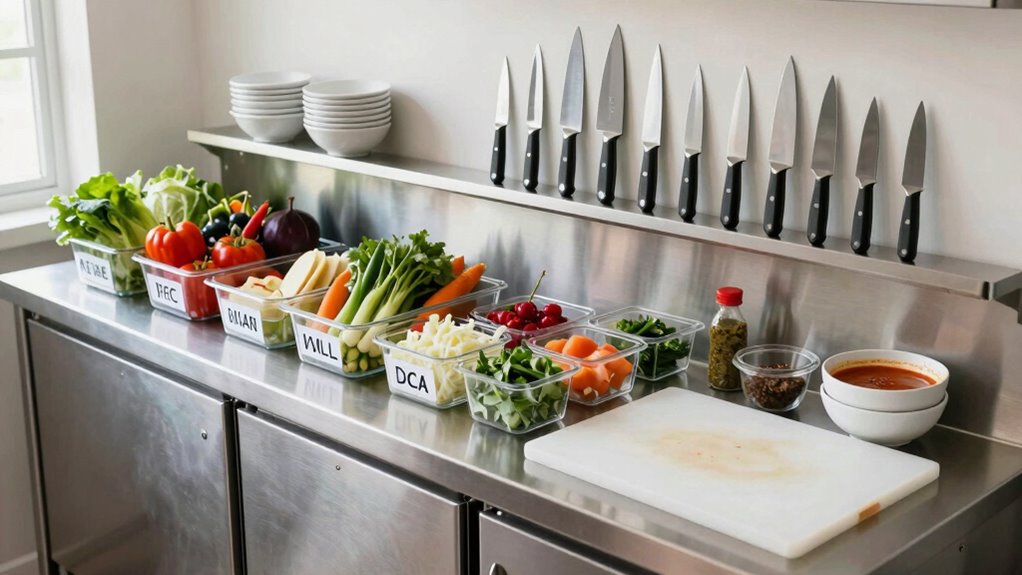
What makes a prep station truly efficient? It’s all about strategic ingredient placement and workflow optimization. First, arrange ingredients in the order they’re used, reducing movement. For example:
- Place toppings and condiments near the finishing area for quick access.
- Keep raw ingredients separated and close to the prep area to prevent cross-contamination.
- Position commonly used tools and utensils within arm’s reach, minimizing unnecessary steps.
- Consider the contrast ratio of your workspace lighting to reduce glare and improve visibility, enhancing overall efficiency.
This setup minimizes clutter and streamlines your workflow, saving time with every order. When ingredients are logically organized, you avoid searching or unnecessary movement, making your prep faster and more accurate. An efficient prep station isn’t just about space; it’s about thoughtful layout that keeps your work smooth and seamless.
Strategies to Minimize Movement and Prevent Errors
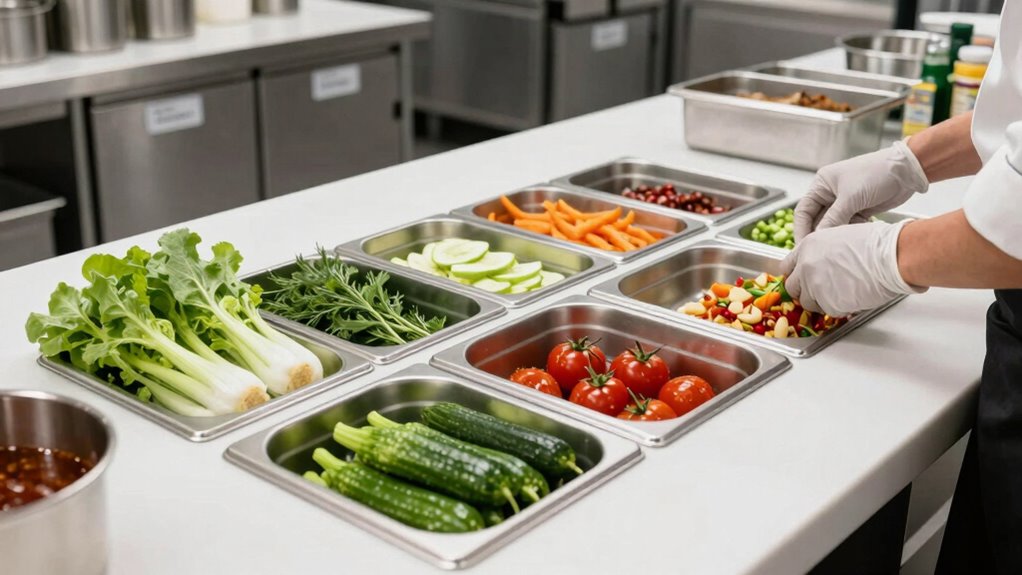
Implementing strategic placement of ingredients and tools is essential to minimize movement and reduce errors in your prep station. Good inventory management guarantees that items are organized logically, so staff doesn’t waste time searching or reaching across the station. Keep frequently used ingredients within arm’s reach and arrange tools in a consistent, easy-to-access manner. Proper staff training reinforces this setup, teaching team members to follow the layout and handle items correctly. This approach also aligns with automotive performance parts principles, where optimized setups enhance overall efficiency. This reduces mistakes, such as using the wrong ingredient or spilling, and speeds up the prep process. Regularly review your station layout and inventory system to identify inefficiencies. A well-trained team working in a thoughtfully organized space will move less, make fewer errors, and complete orders faster. Incorporating DIY safety tips can also help prevent accidents and maintain a smooth workflow. Additionally, utilizing top rated vacuums of 2024 can help keep the prep area clean and free of debris, supporting a safer and more efficient environment. Conducting regular audits of your setup, similar to Gold IRA market reviews, can ensure continued optimal efficiency and help identify productivity bottlenecks.
Arranging Equipment and Items for Quick Access
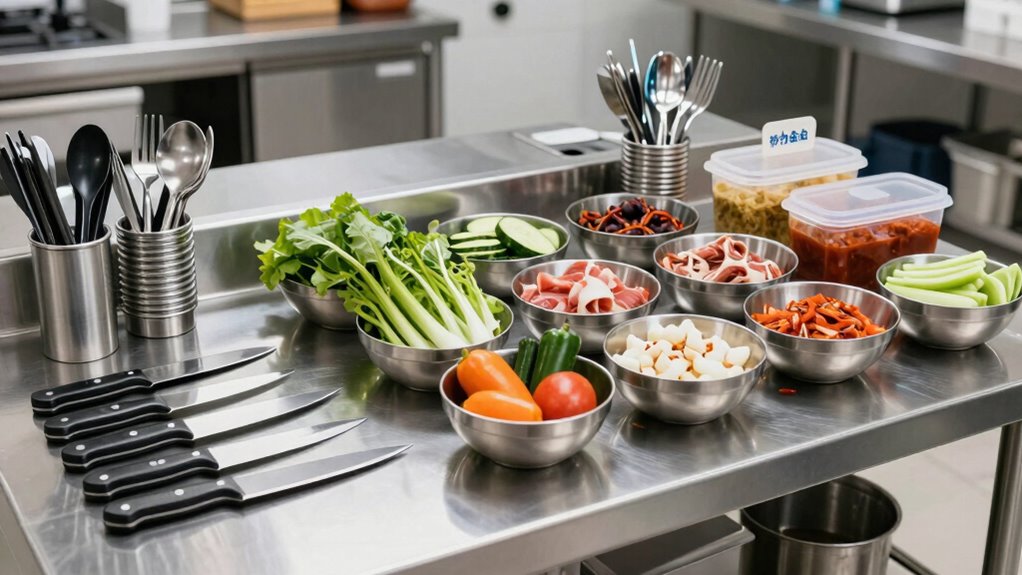
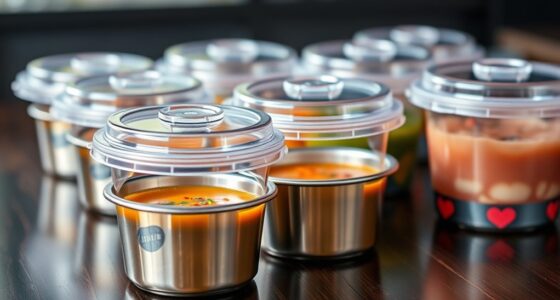
To guarantee efficiency in your prep station, arranging equipment and items for quick access is essential. Proper ingredient placement and utensil organization streamline your workflow, reducing search time. Start by positioning frequently used ingredients at the front or center of your prep table, so you can grab them instantly. Next, organize utensils in easy-to-reach containers or racks, placing knives, spoons, and spatulas within arm’s reach. Finally, keep smaller tools like timers or scales nearby but out of the way to avoid clutter. Visualize your station with these items:
Arrange ingredients and utensils within easy reach to maximize efficiency and keep your prep station organized.
- Ingredients grouped by use frequency
- Utensils arranged in dedicated holders
- Small tools kept in a designated tray
Incorporating wall art trends such as visual cues or labels can also help guide your team quickly around the station. Additionally, considering soundproofing techniques can help maintain a quiet environment, minimizing distractions and improving focus during busy hours. This setup minimizes movement, speeds up prep, and keeps your station tidy.
Customizing Your Prep Table for Maximum Efficiency
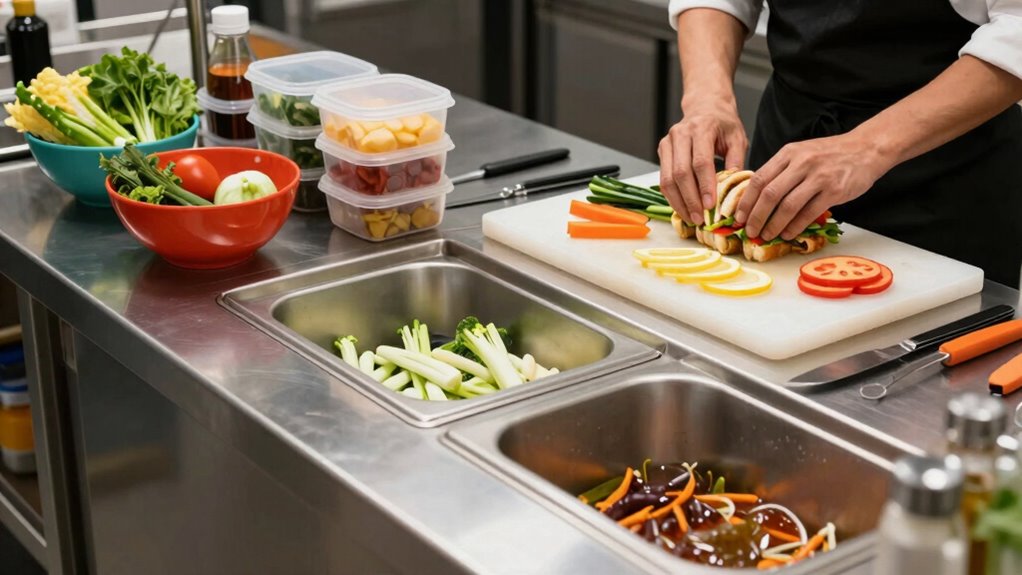
Have you ever wondered how to make your prep station work even harder for you? Customizing your prep table for maximum efficiency starts with smart ingredient organization. Arrange ingredients based on how frequently they’re used, placing the most common items within easy reach to save time. Clear labels and dedicated containers help staff quickly identify ingredients, reducing errors and delays. Proper staff training is essential—ensure everyone understands the layout and the importance of maintaining organization. Encourage consistent restocking and cleaning routines to keep the station optimized. Adjust shelves, dividers, and inserts to suit your menu and workflow. When your prep table is tailored to your needs, every second counts, and your team can serve faster and more accurately. Incorporating content experimentation into your process helps identify what layout strategies lead to the best long-term efficiency.
Frequently Asked Questions
What Materials Are Best for Durable Prep Table Surfaces?
You should choose materials with high durability for your prep table surfaces, like stainless steel or solid surface countertops. These materials resist scratches, stains, and corrosion, making surface maintenance easier over time. Stainless steel, in particular, withstands rigorous use and is simple to clean, while solid surfaces offer seamless finishes that prevent bacteria buildup. Prioritizing robustness ensures your prep table stays functional and hygienic, saving you time and effort during busy shifts.
How Often Should Prep Tables Be Sanitized?
You should sanitize prep tables at least after every shift and more frequently during busy periods, following a strict cleaning schedule. Regular sanitation guarantees food safety and prevents cross-contamination. Implement a routine sanitation frequency, ideally after each use or every few hours, depending on your volume. Consistent cleaning maintains hygiene standards, keeps your workspace safe, and helps you serve fresh, safe food efficiently.
Can Prep Tables Be Modified for Specific Menu Items?
Yes, you can modify prep tables for specific menu items by exploring customization options. Adjusting compartments, adding dividers, or integrating ergonomic improvements makes the workspace more efficient. These modifications help streamline prep work, reduce cross-contamination, and enhance employee comfort. Tailoring your prep table guarantees it fits your menu’s unique needs, speeds up service, and maintains high hygiene standards, ultimately boosting overall productivity and customer satisfaction.
What Are Common Mistakes to Avoid in Prep Station Design?
You should avoid poor layout optimization and inadequate storage solutions, which can slow down your prep process. Don’t clutter your station with unnecessary items—keep frequently used tools within easy reach. Overcrowding can cause delays and mistakes, so plan your space carefully. Make certain your storage solutions are organized and accessible, reducing movement and saving time. Regularly evaluate and tweak your design to maintain efficiency and smooth workflow.
How Do I Train Staff to Use the Prep Table Efficiently?
To train staff to use the prep table efficiently, start by clearly demonstrating the ideal workflow and emphasizing staff delegation. Show them how to organize ingredients for quick access and maintain cleanliness. Encourage questions and practice to reinforce habits. Regularly review procedures, providing feedback to optimize workflow. This approach guarantees everyone understands their roles, reduces delays, and keeps the prep station running smoothly, saving valuable minutes on every order.
Conclusion
By optimizing your prep table layout, you can shave minutes off every order and boost your efficiency. Studies show that well-organized stations can increase productivity by up to 30%. When you minimize movement and arrange tools for quick access, you’ll serve faster and reduce errors. Remember, customizing your prep space isn’t just about saving time—it’s about creating a smoother workflow that keeps customers happy and your team running seamlessly.