
To speed up load-in and load-out at large events, you need detailed planning, clear communication, and organized staff roles. Create equipment lists, map out your site, and assign specific tasks in advance. Use efficient sequencing with phased unloading and rehearse beforehand to anticipate issues. Focus on safety and environmental practices to prevent delays and damage. Keep refining your procedures, and you’ll discover even more ways to streamline your event setup and teardown.

Get kitchen staples and gadgets delivered free — and shop member deals
- Fast, free delivery on millions of items
- Access to Prime Big Deal Days deals on October 6–7
- Prime Video, Amazon Music and more included
Key Takeaways
- Detailed equipment lists and maps streamline access and reduce confusion during setup and teardown.
- Pre-assigned roles and clear schedules ensure staff know their responsibilities and act efficiently.
- Developing and rehearsing a load-in/load-out plan minimizes delays and identifies potential issues early.
- Establishing designated pathways and zones prevents congestion, enabling quicker movement of equipment.
- Using tracking systems and phased unloading optimizes equipment management and accelerates processes.
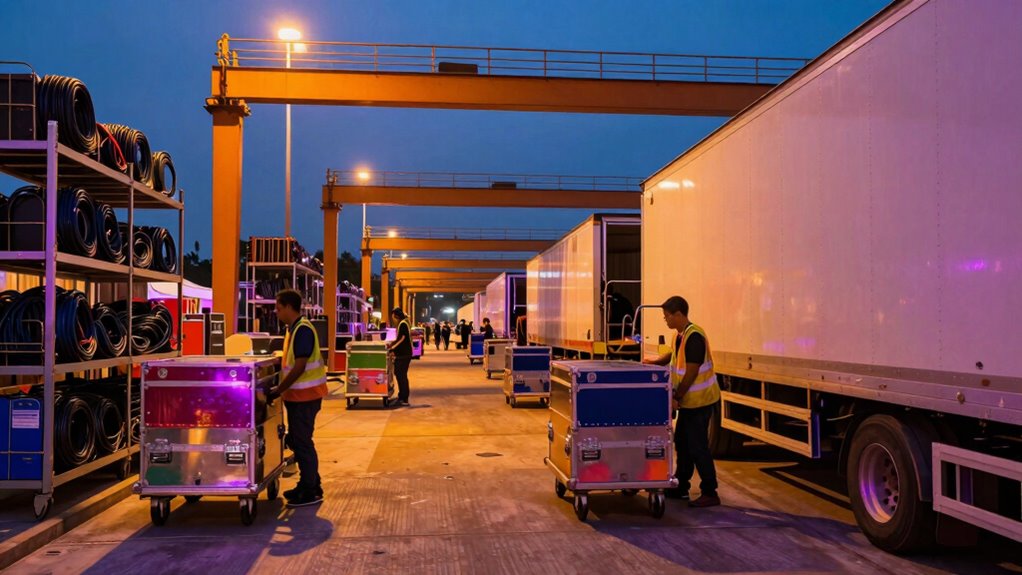
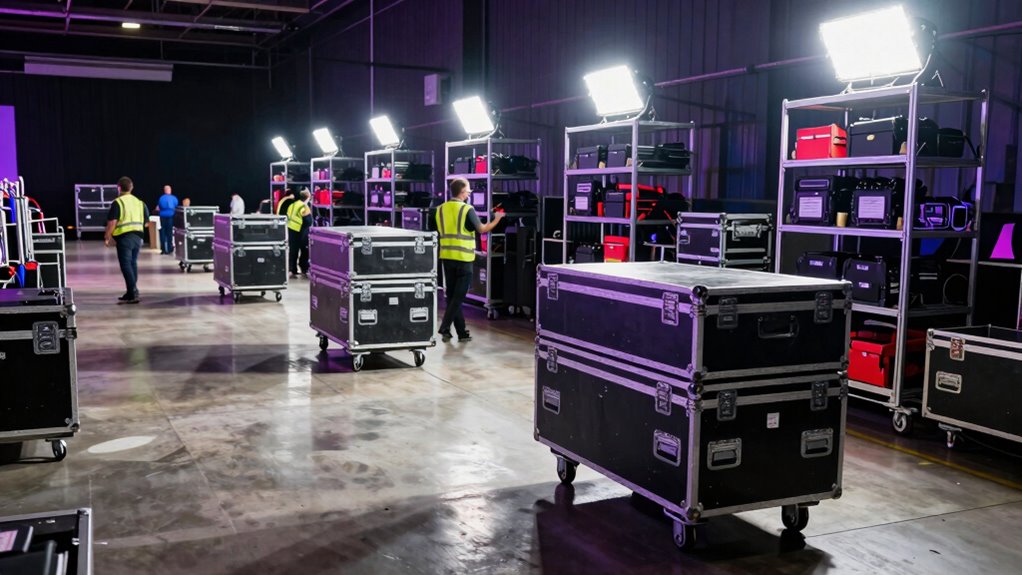
Loading in and out at large events can be complex, but proper planning makes the process smoother and safer. The key to a swift load-in and load-out lies in meticulous equipment coordination. You need to know exactly what gear is coming in, when, and where it belongs. This means creating detailed equipment lists and maps that everyone on your team can access. Clear communication about the placement of items reduces confusion and prevents delays. When equipment is organized by type, size, and destination, your team can work more efficiently, avoiding the bottlenecks that often happen when things are disorganized.
Effective equipment organization and clear communication streamline large event load-in and load-out processes.
Equally important is staff scheduling. You want to guarantee you have enough personnel on hand for each phase of the process, from unloading to setup and teardown. Proper staff scheduling involves assigning specific roles to team members based on their expertise and experience. For example, some staff should focus solely on unloading and equipment placement, while others handle technical setup or crowd control. This division of labor minimizes overlaps and keeps the workflow steady. It’s vital to communicate the schedule well in advance, so everyone knows their responsibilities and arrival times. Having a clear schedule also allows you to anticipate busy periods and allocate staff accordingly, avoiding the chaos that comes with understaffing.
Pre-assigning tasks and positions is another way to speed things up. When your team knows exactly what they need to do and where they need to be, there’s less time wasted figuring out roles on the spot. Use walkie-talkies or headsets to maintain real-time communication during the event, so adjustments can be made quickly if unexpected issues arise. Efficient equipment coordination and well-planned staff scheduling work hand-in-hand—they keep the process moving smoothly from start to finish. Having a dedicated team responsible for overseeing these aspects ensures nothing slips through the cracks. Additionally, understanding the importance of biodiversity and implementing environmentally conscious practices can help reduce the ecological footprint of large events, ensuring sustainability alongside efficiency. Incorporating sustainable practices into your planning can also enhance your event’s reputation and foster community support.
Furthermore, implementing a phased approach helps streamline load-in and load-out. For example, unload heavy equipment first, then move to smaller items, and finally, stage everything in its designated spot. During load-out, reverse this sequence to maximize efficiency. Regularly rehearse your plan before the event so your team can identify potential hiccups and refine their approach. When everyone is aligned and prepared, the entire process becomes faster, safer, and less stressful. Proper planning and coordination are crucial to avoid delays and damage during these critical phases. In addition, integrating equipment tracking systems can significantly improve the accuracy of gear management during busy periods. To further enhance efficiency, establishing clear loading zones and designated pathways helps prevent congestion and ensures smooth movement of equipment. Ultimately, your goal is to minimize downtime, prevent damage, and guarantee everyone’s safety—achievable through diligent equipment coordination and strategic staff scheduling.
event load-in load-out equipment list
As an affiliate, we earn on qualifying purchases.
As an affiliate, we earn on qualifying purchases.
Frequently Asked Questions
How Do Weather Conditions Affect Load-In and Load-Out Times?
Weather conditions can profoundly impact your load-in and load-out times. Weather disruptions like rain, snow, or high winds may cause delays, making equipment harder to move safely. You might encounter equipment delays as you wait for better conditions or secure protective measures. To stay on schedule, plan for weather variability, have contingency plans, and communicate potential delays to your team, ensuring safety and efficiency despite the weather.
What Roles Do Volunteers Play in Speeding up Logistics?
Volunteers are the secret weapon that transforms chaos into efficiency during large events. Your role in volunteer coordination and task delegation is essential; you turn a chaotic crowd into a well-oiled machine. By assigning specific roles and clear instructions, you guarantee everyone works like clockwork. Your leadership accelerates load-in and load-out, making what seems impossible become swift and smooth, ultimately saving time and energy for everyone involved.
Are There Specific Times of Day Best for Efficient Load-In/Out?
You should schedule load-in and load-out during off-peak hours, typically early mornings or late evenings, to take advantage of less traffic and fewer delays. Timing strategies like these help streamline the process and reduce congestion. Additionally, enhancing equipment placement and use during these times ensures smooth operations, saving you time and effort. Proper planning around these ideal windows makes large event logistics much more efficient.
How Is Traffic Management Coordinated During Large Events?
You coordinate traffic management by setting up effective crowd control and security checkpoints. You direct vehicle flow with designated lanes and timing, reducing congestion. Security checkpoints are strategically placed to quickly screen arrivals while maintaining safety. You also communicate clearly with event staff and drivers, using signage and personnel to guide movement. This organized approach guarantees smooth entry and exit, minimizes delays, and keeps everyone safe during large events.
What Technology Tools Streamline the Load-In/Load-Out Process?
You can streamline load-in and load-out by using technology tools like automated check-ins and RFID tracking. Automated check-ins speed up the process by quickly verifying credentials and permissions, reducing wait times. RFID tracking helps monitor equipment and vehicle movements in real-time, preventing congestion and delays. Together, these tools enhance efficiency, minimize errors, and guarantee a smoother, faster shift during large event setups and tear-downs.
large event staging and setup tools
As an affiliate, we earn on qualifying purchases.
As an affiliate, we earn on qualifying purchases.
Conclusion
To keep load-in and load-out running smoothly at large events, planning and coordination are key. Make sure everyone knows their roles, stick to a schedule, and communicate clearly. Using efficient equipment and staging strategies can save you time and headaches. Remember, a well-oiled machine operates smoothly, so don’t leave things to chance. When everyone pulls together, you’ll find that what once seemed a mountain becomes just a hill to climb.
event staff communication headsets
As an affiliate, we earn on qualifying purchases.
As an affiliate, we earn on qualifying purchases.
As an affiliate, we earn on qualifying purchases.
NFL season / tailgating Picks
team gear
As an affiliate, we earn on qualifying purchases.