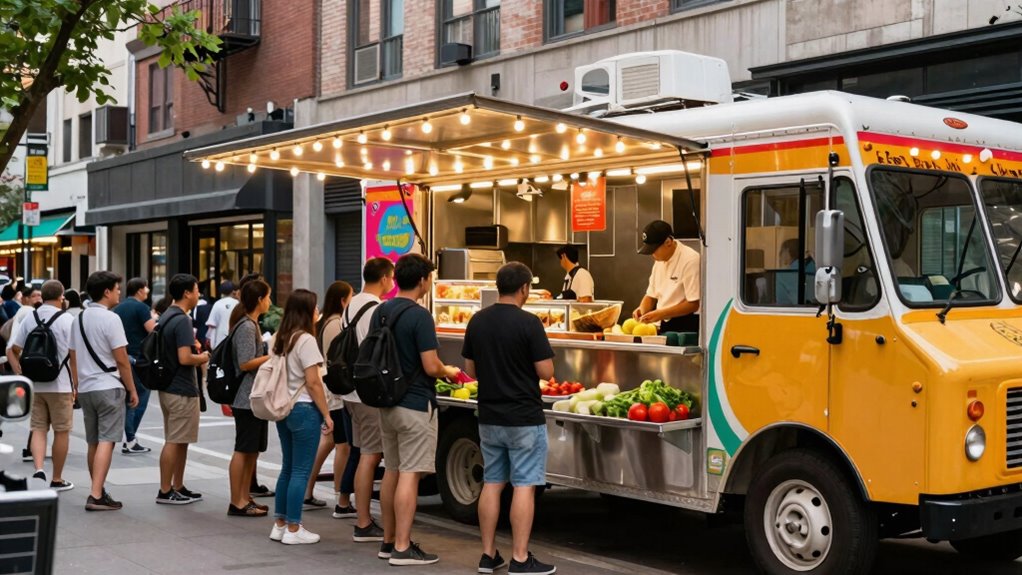
To find a food truck concept that can survive both busy and slow days, focus on creating strong, consistent branding that catches customers’ attention and fosters loyalty. Develop a flexible menu with quick, popular items for busy periods and specialty dishes for slower days. Engage with your community and use promotions to maintain customer flow. Building a resilient business requires adapting your offerings and keeping your brand memorable—discover more strategies to stand out in any situation.

Get kitchen staples and gadgets delivered free with Prime
- Fast, free delivery on millions of items
- Prime Video, Amazon Music and more included
- Member-only deals all year
Key Takeaways
- Develop a versatile menu with quick, popular items and seasonal specials to adapt to varying customer flow.
- Create strong, consistent branding that builds recognition and loyalty during both busy and slow periods.
- Incorporate flexible pricing, discounts, and combo deals to attract customers on slow days and boost sales during peak times.
- Engage with the community and foster personalized interactions to maintain customer interest regardless of traffic volume.
- Focus on innovative branding and distinctive offerings to stand out and ensure business resilience across fluctuating demand.
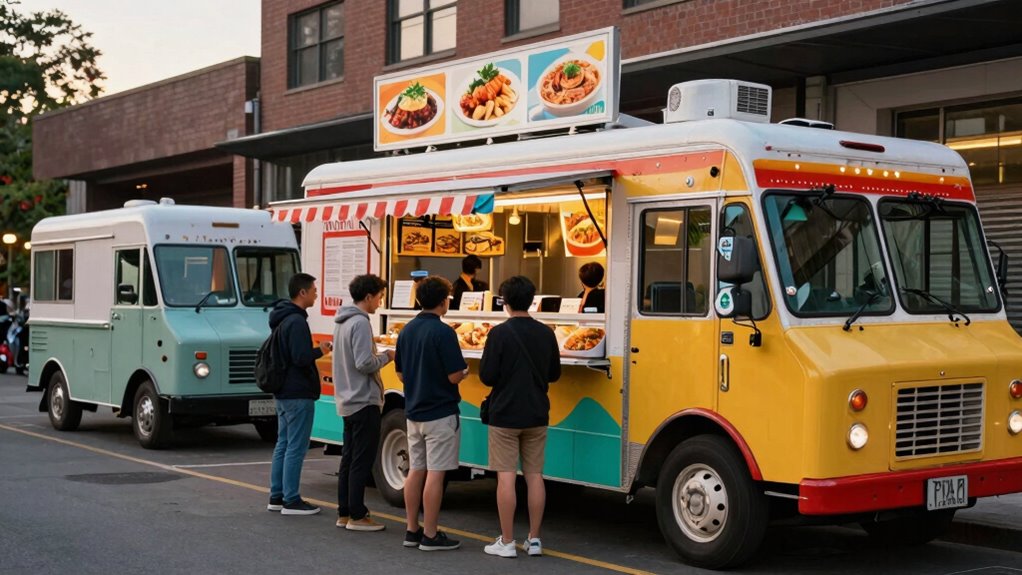
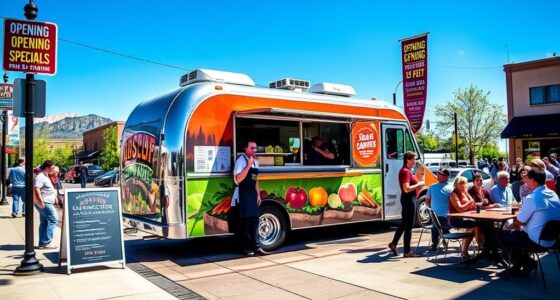
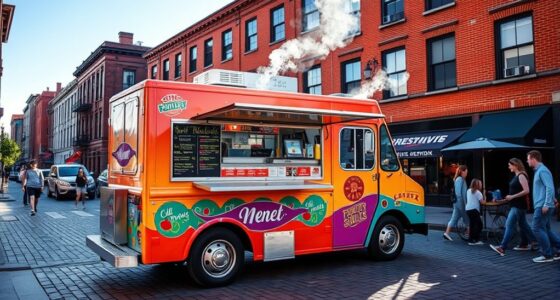
Launching a food truck can be an exciting venture, but surviving in this competitive industry requires more than just great food. You need a concept that stands out, one that attracts customers whether it’s a busy weekend or a slow weekday. To do this, focus on crafting an innovative branding strategy that makes your truck memorable. Your branding should be eye-catching, consistent, and reflective of your personality or niche. When people see your truck, they should immediately connect with what you offer, sparking curiosity and loyalty. Think about colors, logos, and messaging that set you apart from other food trucks. An innovative branding approach helps maintain visibility and keeps customers coming back, even during slow days.
Create eye-catching, consistent branding that reflects your personality to attract loyal customers on busy and slow days.
Equally important is developing a unique menu that appeals to a broad audience but still reflects your identity. A menu that’s versatile can help you adapt to varying customer flow. For busy days, you might offer quick, popular items that generate high turnover. On slower days, you can introduce specialty dishes or seasonal items that invite customers to explore something new. Having a unique menu allows you to differentiate your truck from competitors, giving customers a reason to choose you over others. It’s also smart to keep your menu manageable; a limited but well-curated selection enables faster service and better quality, which keeps customers satisfied and more likely to return. Additionally, understanding the importance of brand recognition can help you build a loyal customer base that values your truck regardless of day-to-day fluctuations. Incorporating consistent branding strategies across all touchpoints enhances customer recall and trust.
To survive the unpredictable nature of your business, consider how your branding and menu can create a sense of consistency and anticipation. When customers recognize your branding, they’re more likely to seek you out even during slow periods. Your unique menu keeps them engaged, enthusiastic to try new items or revisit favorites. During busy days, your branding can amplify excitement and draw in crowds, while on leaner days, it can foster loyalty through personalized service or exclusive offerings. Planning for these fluctuations means you should also have flexible pricing or promotional strategies that encourage visits during slow times, such as discounts or combo deals. Furthermore, leveraging community engagement can strengthen your presence and foster loyalty among local customers, making your truck a valued part of the neighborhood. Developing a consistent branding strategy is essential for creating a memorable impression that endures through the ups and downs of your business cycle. Moreover, understanding consumer behavior can help you tailor your offerings to better meet customer needs during different business cycles.
Ultimately, your ability to adapt your branding and menu to different customer flows will determine your truck’s longevity. Focus on standing out with innovative branding and a distinctive menu that appeals to a wide audience, and you’ll create a resilient concept capable of thriving on both busy and slow days. This approach ensures that no matter the day, your truck remains a go-to spot, building a loyal customer base that sustains your business long-term.
Products Worth Considering

Cuisinart Portable Tabletop Propane Patio Heater, 11,000 BTU, Red

Ninja HydraSense Intelligent Water Filtration System, WF1001WH1

Instant Pot Rio 6-Quart 7-in-1 Electric Pressure Cooker, Black
As an affiliate, we earn on qualifying purchases.
Frequently Asked Questions
How Do I Determine the Best Menu for Fluctuating Customer Traffic?
To determine the best menu for fluctuating customer traffic, focus on menu innovation that offers flexible options. Pay attention to customer preferences, noting which items sell well during busy and slow days. Keep your menu simple yet adaptable, allowing you to add or remove dishes based on demand. Regularly gather feedback and track sales to refine your offerings, ensuring you meet customer needs regardless of how busy or slow your truck gets.
What Pricing Strategies Work for Both Busy and Slow Days?
You should implement dynamic pricing to adapt to fluctuating customer traffic, raising prices slightly during busy days and offering discounts on slow days. Pair this with loyalty programs to encourage repeat business, regardless of the day. This combination helps balance revenue, keeps customers engaged, and guarantees your food truck stays profitable whether it’s bustling or quiet. Regularly monitor sales data to fine-tune your strategies for peak results.
How Can I Effectively Promote My Food Truck During Slow Periods?
To promote your food truck during slow periods, leverage social media by sharing daily specials, behind-the-scenes content, and upcoming events to engage your audience. Additionally, build local partnerships with nearby businesses or events to increase visibility and attract new customers. Offer discounts or promotions during slow days to encourage visits. Consistent online presence combined with strategic collaborations helps keep your food truck top of mind, even when foot traffic dips.
What Are the Best Ways to Manage Inventory for Variable Sales?
To manage inventory effectively during variable sales, you should closely monitor your supply chain to adjust orders based on sales trends. Keep a detailed inventory log to identify waste and prevent overstocking. Implement waste management strategies like portion control and regular stock checks. These practices help you minimize waste, optimize stock levels, and guarantee you’re prepared for both busy and slow days, maintaining profitability and smooth operations.
How Do I Plan Staffing Levels for Unpredictable Customer Flow?
Think of staffing like tuning an instrument—you need flexibility to hit the right notes. Use customer flow prediction tools to gauge busy and slow periods, then schedule staff accordingly. During slow days, cut back hours or switch roles, and during busy times, bring in extra hands. This proactive approach keeps service smooth and staff morale high, even when customer flow is unpredictable.
Conclusion
Remember, your food truck is like a ship sailing through calm and stormy seas. By choosing a versatile concept that adapts to busy crowds and quiet days, you’re steering your vessel with confidence. Keep your menu flexible, stay attuned to your customers’ needs, and be ready to pivot like a skilled sailor adjusting sails. With this approach, your food truck will weather every tide, emerging stronger and more resilient in the bustling food scene.