To test your food truck idea without making big investments, start by participating in local events or setting up pop-up stalls to gather real customer feedback on your menu, pricing, and overall concept. Focus on observing what works well and where improvements are needed. Build strong branding and leverage social media to generate buzz. Partner with local vendors for cost-effective sourcing and feedback. Keep refining based on customer responses and industry trends to guarantee your plan is solid before fully launching.

Get kitchen staples and gadgets delivered free with Prime
- Fast, free delivery on millions of items
- Prime Video, Amazon Music and more included
- Member-only deals all year
Key Takeaways
- Set up temporary pop-up stalls or participate in local events to gather real customer feedback and assess interest.
- Conduct tastings and solicit direct feedback to refine menu options before investing in a food truck.
- Use social media to test demand and gauge potential customer engagement with your concept.
- Collaborate with local vendors to trial ingredients, pricing, and menu ideas cost-effectively.
- Observe customer reactions and preferences during testing to identify necessary adjustments before large investments.
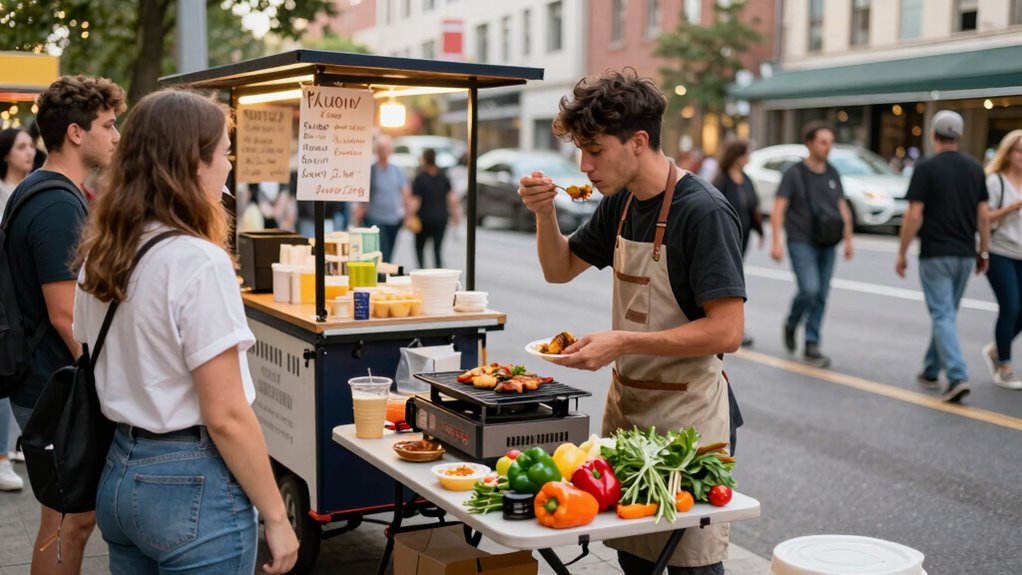
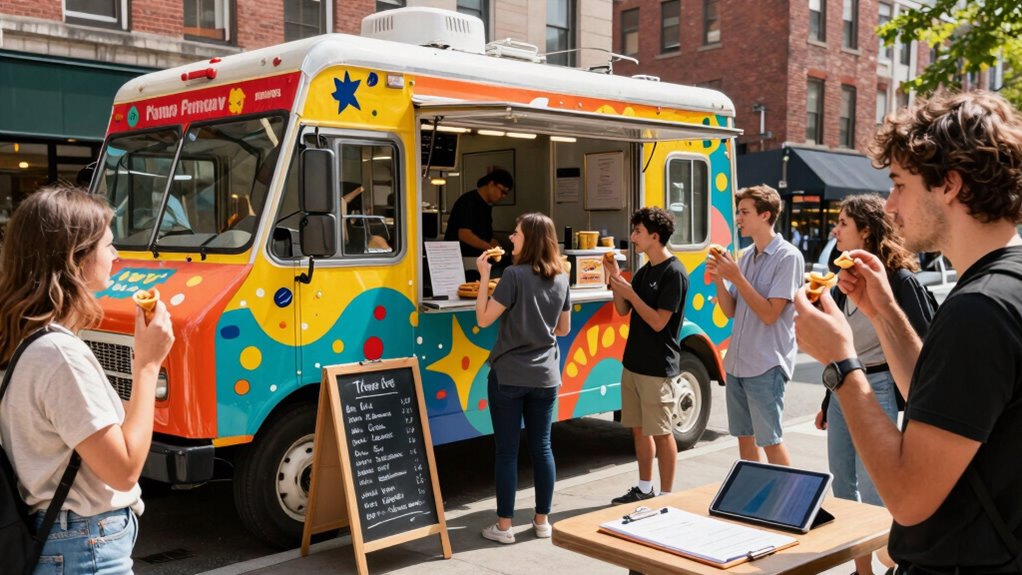
Starting a food truck can be an exciting venture, but before investing time and money, you need to test your idea to see if it has potential. The key is to gather real feedback and gauge demand without jumping straight into a full-scale launch. One effective way to do this is by setting up a temporary food stall or participating in local events. This allows you to observe how people respond to your menu, pricing, and overall concept in a real-world setting. During these tests, pay close attention to what customers enjoy most and where you might improve. This hands-on approach helps you refine your offerings before committing significant resources.
Test your food truck idea with pop-ups and local events to gather real customer feedback and refine your offerings.
Another essential step is to develop strong branding strategies early on. Your branding isn’t just about a catchy name or logo; it’s about creating a memorable identity that resonates with your target audience. Use social media to generate buzz and connect directly with potential customers. Share behind-the-scenes content, menu previews, and customer testimonials to build excitement and loyalty. Consistent branding across all platforms helps establish recognition, making it easier for your truck to stand out once you’re ready to go full-time. It also provides a foundation for marketing partnerships down the line. Additionally, understanding psychological assessments can help you tailor your marketing and branding efforts to better connect with your target demographic.
Vendor partnerships play an important role in testing your food truck idea without heavy upfront costs. Instead of investing in expensive equipment or ingredients initially, you can collaborate with local suppliers or farmers to source ingredients on consignment or through direct partnerships. This reduces financial risk and allows you to experiment with different recipes or menu items. Partnering with established vendors or local markets can also give you access to more customers and increase your exposure. These partnerships often come with built-in support networks, mentorship, and opportunities for co-marketing, which can be invaluable when you’re just starting out. Building relationships with vendors can also provide valuable market insights that help you adapt your offerings to customer preferences. Moreover, leveraging cost-effective sourcing methods can significantly improve your profitability during the testing phase. Incorporating customer feedback from these collaborations further enhances your chances of creating a menu that appeals to your target market. Furthermore, engaging with vendors can help you stay updated on industry trends, ensuring your offerings remain relevant and competitive.
Products Worth Considering

Le Creuset Signature 6.5-Quart Deep Round Dutch Oven with Light Gold Crucible Knob, Enameled Cast Iron, Bleu Riviera

Ninja Professional XL Food Processor, 12-Cup, 1200 Peak Watts, NF701

Le Creuset Enamemed Cast Iron Oval Dutch Oven, 5 qt., White/Crucible
As an affiliate, we earn on qualifying purchases.
Frequently Asked Questions
How Much Does Initial Food Truck Testing Typically Cost?
Initial food truck testing usually costs between $1,000 and $5,000, depending on your approach. You should do a thorough cost analysis to understand expenses like ingredients, ingredients, permits, and equipment. Focus on menu experimentation by testing different dishes in small batches to gauge customer preferences without overspending. This way, you minimize risks and refine your concept before making a larger investment in your food truck venture.
What Permits Are Needed for Testing a Food Truck Idea?
Think of permits as your food truck’s passport to the city. You’ll need a permits overview that covers health permits, mobile food vendor licenses, and fire safety certificates. Licensing requirements vary by state and city, so check with local health departments and city agencies. Securing these allows you to test your concept legally, ensuring smooth operations and avoiding fines. Always verify specific rules where you plan to test your food truck idea.
How Long Should a Test Run Last Before Deciding?
You should run your test for at least 2-3 weeks to gather meaningful insights. During this time, focus on menu customization based on customer feedback and refine your offerings. Use this period to train staff thoroughly, ensuring smooth operations. Monitor sales, customer reactions, and operational challenges daily. This timeframe gives you a solid understanding of your food truck’s potential, helping you make informed decisions before investing in larger equipment or expansion.
Can Social Media Effectively Gauge Customer Interest?
Did you know that 73% of marketers believe social media engagement is crucial for gauging customer interest? You can definitely use social media to test your food truck idea—posting polls, sharing menu previews, and encouraging feedback helps you understand potential demand. Online surveys via platforms like Instagram or Facebook provide direct insights. This approach allows you to refine your concept before investing heavily, making social media an effective tool for early testing.
What Are Common Mistakes During Food Truck Testing?
One common mistake is neglecting menu customization based on customer feedback, which can lead to low sales. You might also overlook staffing challenges, underestimating the number of staff needed during busy hours. Failing to adapt your menu or plan your staffing accordingly can hinder your test’s success. Always stay flexible, listen to customer input, and prepare for fluctuating demand to guarantee your food truck test provides valuable insights.
Conclusion
Testing your food truck idea before making big investments is smart—over 60% of new food trucks fail within the first year, often due to lack of market validation. By starting small with pop-up events, catering, or social media sales, you gather real customer feedback without risking a fortune. This approach helps you refine your concept and guarantee there’s demand. Remember, careful testing can boost your chances of success and turn your food truck dream into a thriving business.