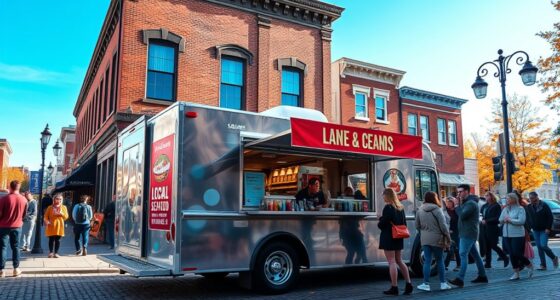
To open a food truck in Birmingham, Alabama, you need to secure permits, including a business license, vendor permit, and proof of insurance, all costing around $300 to $1,000. Budget roughly $24,000 to $90,000 for your truck and initial expenses, and choose busy locations like downtown or event venues. Develop a menu featuring local flavors and promote your brand through social media. Keep compliance in mind, and if you explore further, you’ll find detailed steps to launch successfully.

Get kitchen staples and gadgets delivered free with Prime
- Fast, free delivery on millions of items
- Prime Video, Amazon Music and more included
- Member-only deals all year
Key Takeaways
- Obtain Birmingham business license, vendor permit, and necessary health and safety compliance documents before operation.
- Budget $24,000-$90,000 for truck purchase and $7,000-$25,000 for first-year startup costs.
- Target high-traffic areas like downtown, UAB Medical District, and event venues for customer reach.
- Develop a menu featuring regional southern flavors, vegetarian options, and Alabama specialties, ensuring compliance with health standards.
- Use social media marketing, especially Facebook, to promote your food truck and engage local customers effectively.
Navigating Permits and Licensing Requirements in Birmingham

Managing permits and licensing in Birmingham can seem complicated, but understanding the key requirements makes the process smoother. First, you need a valid Birmingham Business License or proof of application before obtaining a vendor permit. You’ll also submit government-issued photo IDs for all owners or managers, along with proof of legal residency or work authorization. Business formation documents, such as articles of incorporation or partnership agreements, are required depending on your business structure. Additionally, you must provide proof of general liability insurance with at least $1 million coverage, naming Birmingham as an insured party. You’ll also need your Alabama tax ID number, sales tax certificates, and compliance documents. Ensuring these are in place helps streamline your application, so you can focus on launching your food truck business confidently. Proper documentation is essential to avoid delays or rejections during the approval process. It’s also beneficial to stay informed about local regulations that may impact your licensing requirements.
Understanding Costs and Budgeting for Your Food Truck Business
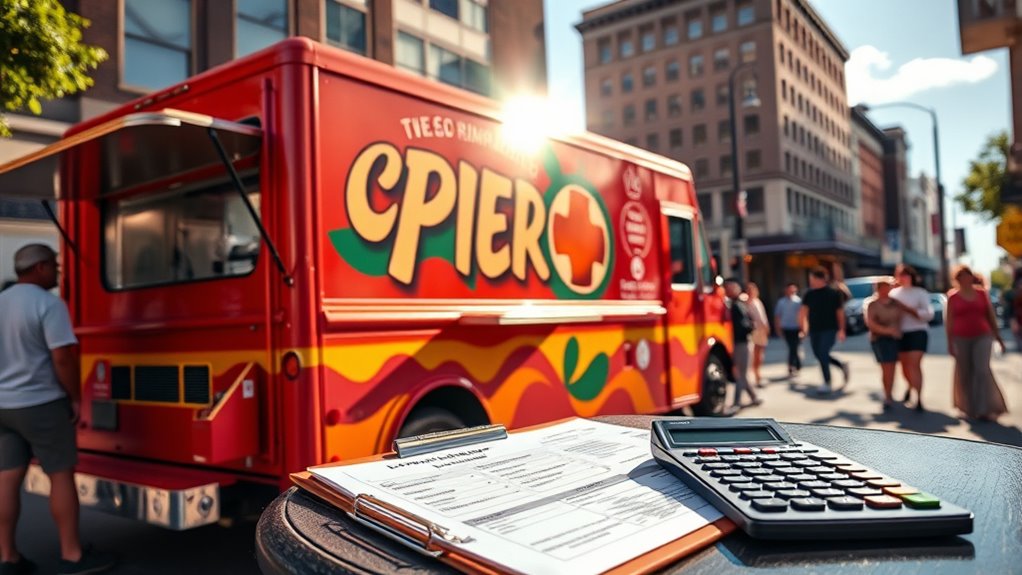
Understanding the costs involved in starting and running your food truck is key to creating a solid financial plan. Your initial investment can range from $24,000 to $90,000, depending on size and customization. Additional first-year expenses, like equipment, signage, and inventory, typically cost $7,000 to $25,000. Licensing and permits in Birmingham can run from $300 to $1,000, with some one-time fees. Ongoing expenses include vehicle maintenance, fuel, and food supplies, which can total several thousand dollars annually. To visualize costs:
| Startup Costs | Recurring Expenses |
|---|---|
| $24,000 – $90,000 (truck purchase) | $500 – $1,500 (maintenance) |
| $7,000 – $25,000 (initial setup) | $1,200 – $2,000 (fuel) |
| $300 – $1,000 (permits & licenses) | Monthly food & marketing costs |
Proper budgeting guarantees your food truck’s success. Additionally, understanding the potential costs for marketing and promotional activities can help you allocate funds effectively and attract more customers, especially considering cost management strategies that are essential in the food truck industry.
Choosing Prime Locations for Optimal Customer Reach

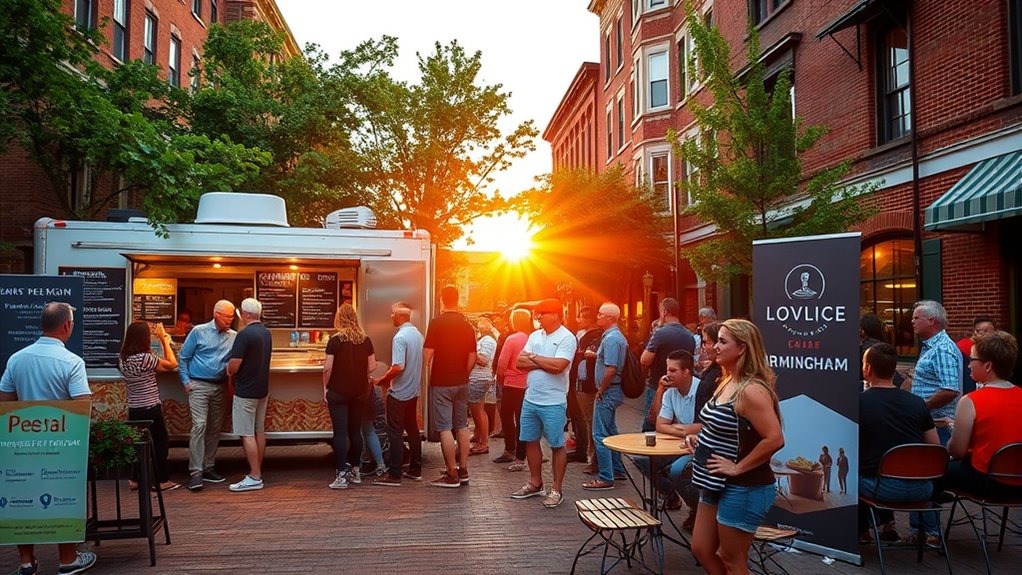
Selecting the right locations is essential for maximizing your food truck’s customer reach and sales. In Birmingham, focus on high-traffic areas like downtown 2nd Avenue, the UAB Medical District, and busy event venues. These spots attract large crowds during lunch, evenings, and weekends, boosting impulse buys. Consider neighborhoods with dense office buildings, hospitals, colleges, and nightlife districts to target diverse customer groups. Parks, plazas, and community spaces also provide excellent daytime sales opportunities. To succeed, make certain you comply with city permits and zoning laws, avoiding fines or relocation issues. Positioning near Water Parks or collaborating with local events can increase visibility and foot traffic. Strategic placement in busy areas will help you build a loyal customer base and grow your business.
Developing a Menu That Appeals to Local Tastes and Regulations
To create a menu that resonates with Birmingham locals, focus on incorporating regional southern and barbecue flavors that reflect the city’s culinary heritage. Highlight classics like smoked meats, fried green tomatoes, and collard greens, using fresh, locally sourced ingredients. Include vegetarian and vegan options to meet growing demand. Feature signature Alabama drinks like sweet tea and sides such as cornbread. Guarantee all items meet Jefferson County health standards and Birmingham’s safety regulations, using approved commissaries for prep. Keep the menu simple, emphasizing quick-serve, portable dishes that can be prepped off-site. Additionally, incorporating the horsepower of electric dirt bikes concept can inspire energy-efficient cooking methods or portable power solutions for your food truck operations. Use the following table to inspire your offerings:
| Dish Type | Example |
|---|---|
| Barbecue | Pulled pork sandwich |
| Southern Classics | Fried green tomatoes |
| Vegetarian/Vegan | Veggie po’boy |
| Sides | Collard greens, cornbread |
| Beverages | Sweet tea, Alabama lemonade |
Effective Marketing Strategies to Grow Your Food Truck Brand
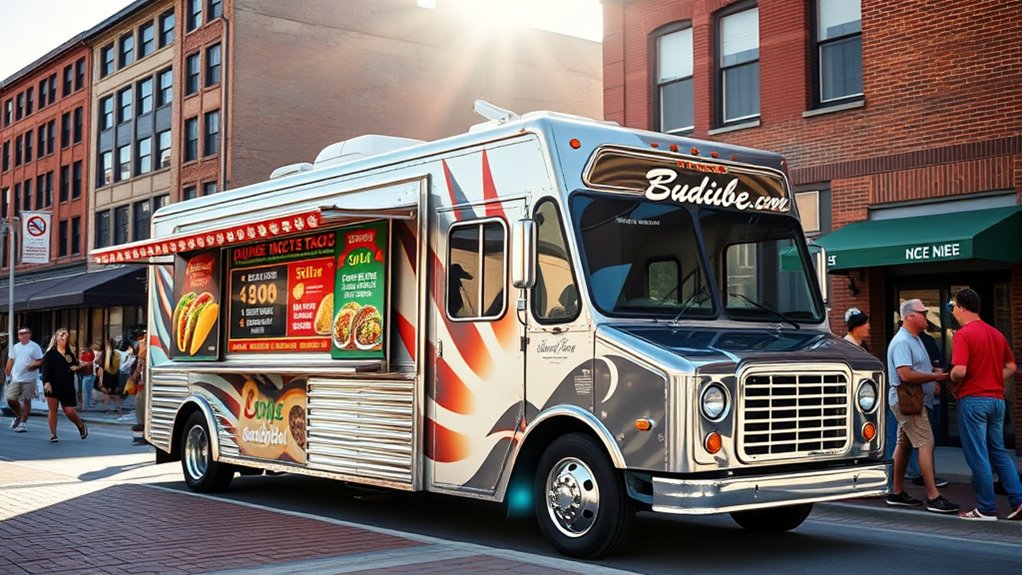
Harnessing social media platforms is essential for growing your food truck brand in Birmingham. With 68% of food trucks promoting regularly, social media boosts visibility and sales. Facebook is the most popular, with 75% actively marketing there, reaching a broad audience. Consistent social media engagement can increase customer spending by 15% and drive 40% of new customers through ads. To maximize impact, consider these strategies:
- Share daily updates, specials, and behind-the-scenes content
- Use targeted Facebook ads to reach local audiences
- Encourage customer reviews and social sharing
- Host online contests or giveaways to boost engagement
Social media marketing has been shown to significantly impact customer loyalty, with over 50% of food trucks leveraging platforms to build repeat business. Building a strong online presence also involves understanding cookie consent management to ensure compliance and improve user experience on your promotional sites.
Ensuring Compliance With Health and Safety Standards

Ensuring compliance with health and safety standards is essential for food truck operators in Birmingham to operate legally and maintain customer trust. Starting January 2, 2025, you’ll need to pass a city fire inspection before applying for licenses or permits, which now costs $100 and requires a minimum 10-foot distance between units at events. Some events may also require a fire inspector on-site. Additionally, adherence to Alabama Department of Public Health rules is mandatory, including washable surfaces, proper waste disposal, and overhead protection for food areas. You must develop a sanitation plan, guarantee proper facilities for handwashing, and meet water and wastewater standards. Ongoing inspections verify compliance, and failure to meet standards can lead to permit suspension. Staying current with these requirements safeguards your operation and customer safety. Incorporating AI security measures can help monitor compliance and streamline inspection processes, ensuring ongoing adherence to regulations.
Frequently Asked Questions
What Are the Specific Zoning Restrictions for Food Trucks in Birmingham?
Think of Birmingham’s zoning rules as a city’s handshake—setting boundaries that keep everyone in harmony. You can’t operate within 150 feet of restaurants or schools, ensuring fair play. Temporary zones near parks need approval, and operating outside designated areas requires special permits. Always respect these boundaries to avoid conflicts, and remember, following these zoning restrictions keeps your food truck journey smooth and compliant, like a well-orchestrated city symphony.
How Can I Find Approved Commissaries Within Birmingham?
To find approved commissaries in Birmingham, start by checking with the Jefferson County Health Department, which issues permits and guarantees compliance. You can also explore industry listings and shared-use kitchen platforms for verified options. Networking with local food truck operators and entrepreneurial hubs helps uncover recommendations. Make sure to verify each commissary’s permits, facilities, and proximity—ideally within 100 miles—to ensure it meets your operational needs and maintains compliance.
Are There Any Restrictions on Operating Hours for Food Trucks?
You might think operating hours are flexible, but in Birmingham, strict rules apply. If you have a City Center permit, you’re limited to Monday through Friday, 6 AM to 6 PM. With a general permit, you can work nearly round the clock, from 6 AM to 2 AM daily. Outside these hours, operating in public rights-of-way is illegal. Stay within these times, or face penalties—your success hinges on obeying these critical regulations.
What Insurance Requirements Are Mandatory Beyond General Liability?
You need more than just general liability insurance to operate your food truck legally. Alabama law requires commercial auto insurance covering accidents, property damage, and liability while on the road. Additionally, you must have products and completed operations coverage, personal and advertising injury protection, damage to rented premises coverage, and business personal property insurance. Depending on your operation, consider optional coverages like workers’ compensation, equipment breakdown, and food spoilage to better protect your business.
How Do I Handle Waste Disposal and Sanitation Compliance?
Think of your food truck as a moving oasis, ensuring cleanliness and compliance. You must install wastewater tanks bigger than your potable supply, then discharge only at approved facilities, avoiding contamination. Keep trash in secure containers, never in public spaces. Operate from a licensed commissary, discard leftovers safely, and use easy-to-clean equipment. Following these steps helps you meet sanitation standards, keeping your truck hygienic and your operation running smoothly.
Conclusion
Starting your food truck in Birmingham is like planting a seed—you’ll need permits, a solid budget, and a great location to grow. Focus on crafting a menu that locals love, and use marketing strategies that make your brand stand out. Stay compliant with health standards, and you’ll be well on your way. With dedication and smart planning, your food truck can thrive just like a blooming flower in spring.
NFL season / tailgating Picks
team gear
As an affiliate, we earn on qualifying purchases.