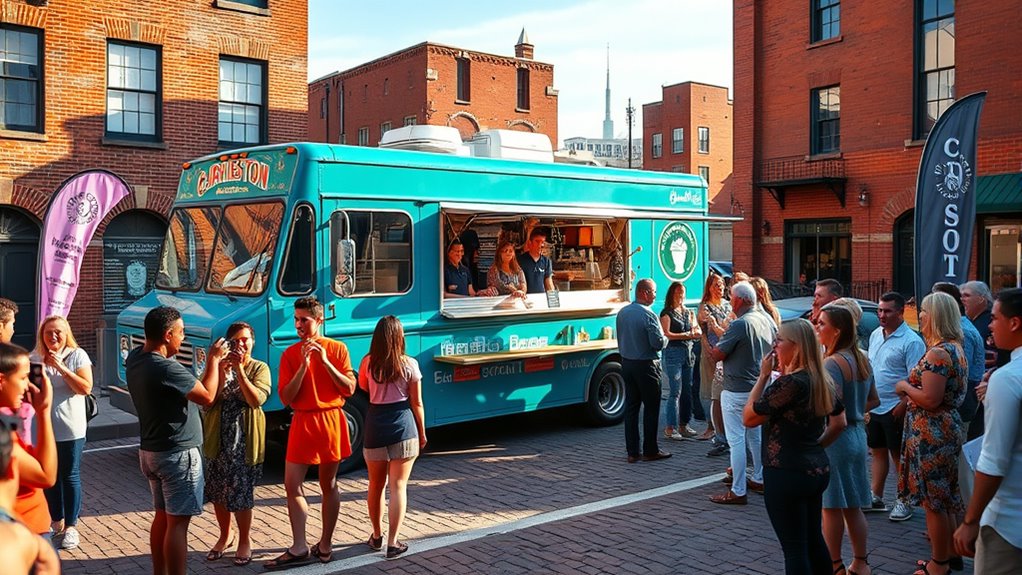
To open a food truck in Charleston, you’ll need permits like the health department’s Retail Food Establishment Permit, a Charleston business license, and a Mobile Food Vendor permit, along with registering for taxes. Costs vary from $50,000 to $175,000 for your truck and around $6,000 for supplies. Prime spots include Patriots Point and Citadel Mall. Craft a safe, appealing menu and use social media for marketing. Keep exploring to discover more tips for a successful launch.

Get kitchen staples and gadgets delivered free with Prime
- Fast, free delivery on millions of items
- Prime Video, Amazon Music and more included
- Member-only deals all year
Key Takeaways
- Obtain necessary permits including EIN, business registration, health inspections, Charleston Business License, and Mobile Food Vendor permit.
- Budget $50,000–$175,000 for vehicle, outfitting, permits, insurance, inventory, wages, and contingency funds.
- Choose prime locations like Patriots Point, Citadel Mall, West Ashley Farmer’s Market, and partner with local events.
- Develop a safe, appealing menu with local ingredients, allergen info, and equipment-compatible, quick-prep items.
- Use social media, participate in festivals, implement loyalty programs, and collaborate with influencers for effective marketing.
Navigating Permits and Licensing in Charleston
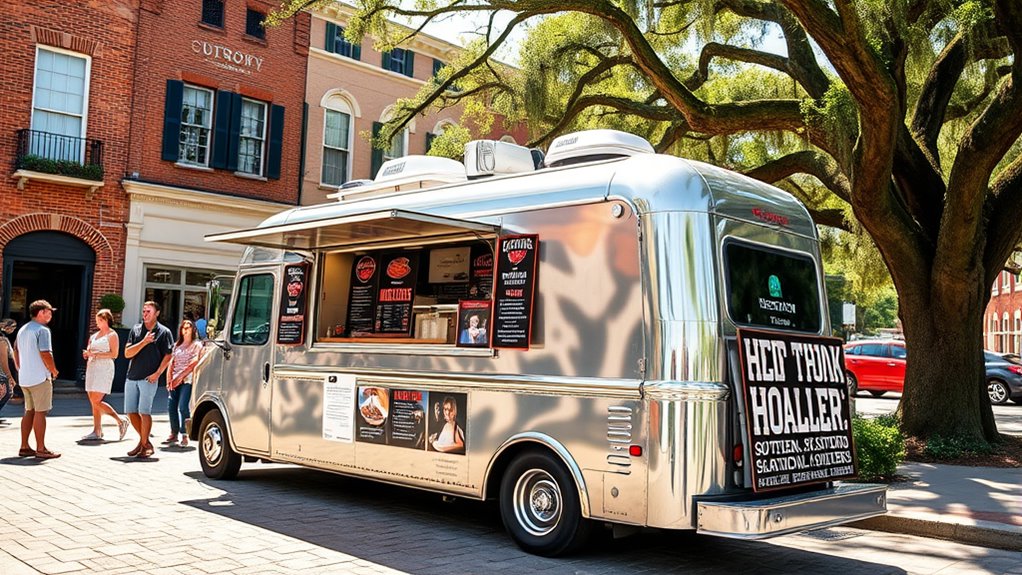
To legally operate a food truck in Charleston, you must navigate a series of permits and licensing requirements at the federal, state, and local levels. First, obtain a Federal Employer Identification Number (EIN) from the IRS for tax purposes. Then, register your business entity—whether an LLC, LLP, or Corporation—with the South Carolina Secretary of State, paying the applicable fees. You’ll also need to register for state sales tax and business personal property tax through the South Carolina Department of Revenue. At the local level, apply for a Charleston Business License and a Mobile Food Vendor permit via the city’s CSS portal. Make sure to pass health inspections for the Retail Food Establishment Permit from DHEC, and coordinate with Charleston Fire Department for safety compliance. Additional licenses may be required based on specific menu items or services, so it’s important to verify all local regulations to ensure full compliance. Keep all permits current to avoid penalties or interruptions, and be aware of regulatory requirements for food trucks that may vary depending on your menu and location.
Estimating Costs for Starting Your Mobile Food Business
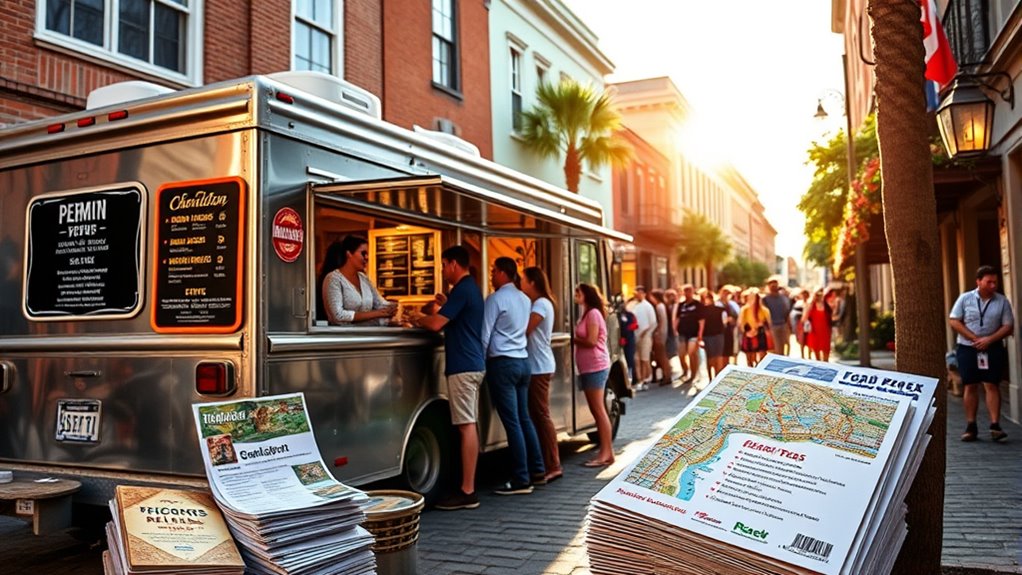
Starting your mobile food business requires a clear understanding of the costs involved. Vehicle expenses vary widely, with new trucks costing between $50,000 and $175,000, and outfitting the kitchen adding roughly $45,000. Fully equipped trucks often total $50,000 to $60,000. Renting can lower upfront costs but increases ongoing expenses. Permits, licenses, and regulatory fees may total up to $30,000, depending on local requirements. Insurance costs around $1,000 annually. Initial inventory, supplies, and marketing materials typically add $6,000 to $7,600. Budget for the first three to six months of wages, approximately $6,000. Don’t forget contingency funds for unexpected expenses, repairs, or permit renewals, which are essential for a smooth startup. Understanding local regulations is crucial to ensure compliance and avoid costly fines. Additionally, investing in brand reputation and customer trust can significantly impact your long-term success.
Finding Prime Locations for Your Food Truck
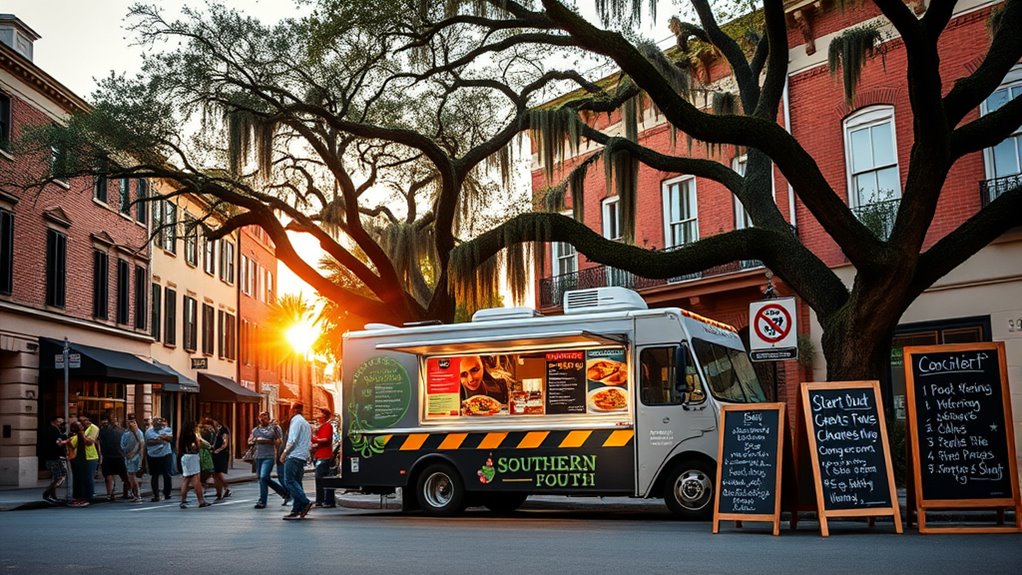
Finding the right location is essential for your food truck’s success in Charleston, as high-foot-traffic areas can markedly boost sales and visibility. Popular spots like Patriots Point in Mt. Pleasant draw crowds from 11 am to 5 pm, while Mixson Kitchen in North Charleston offers variety from 11 am to 8 pm. The Citadel Mall area provides steady exposure from 12 pm to 6 pm, and Hanahan Market B attracts lunch and dinner crowds from 3 pm to 7 pm. The West Ashley Farmer’s Market, open evenings, appeals to niche vegan and healthy vendors. Key factors include proximity to malls, parks, universities, offices, and events. Ensuring parking, vendor space, and compliance with local regulations is critical. Partnering with nearby businesses or attending festivals can further increase your visibility and sales. Charleston’s diverse culinary scene offers numerous opportunities for strategic location choices and collaborations. Additionally, understanding the modern farmstead aesthetic can help you design a visually appealing setup that attracts customers and complements your branding.
Crafting a Safe and Appealing Menu
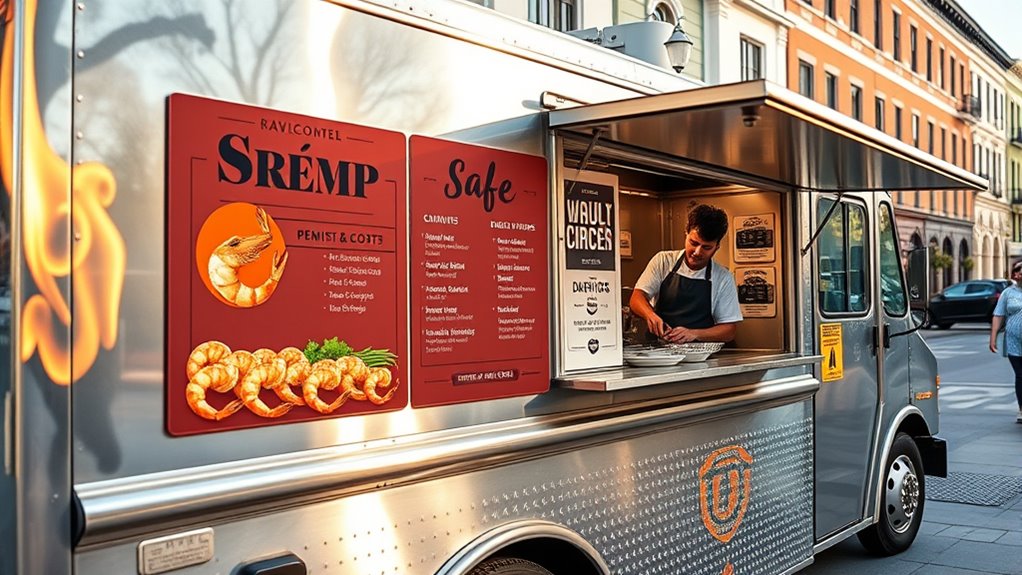
Crafting a safe and appealing menu for your Charleston food truck requires careful attention to health regulations and customer needs. You must ensure all ingredients and preparation methods comply with South Carolina Department of Agriculture standards, focusing on hygiene, storage, and avoidance of cross-contamination. Use safe sourcing for perishables and design your menu to fit your truck’s sanitation and waste removal capabilities. Clearly identify allergens and offer options for common dietary restrictions like gluten-free, vegan, or nut-free, with proper signage. Keep portion sizes manageable to reduce waste and consider seasonal, local ingredients to enhance freshness and control costs. Choose menu items compatible with your truck’s equipment, emphasizing quick, simple preparations that can be safely held at proper temperatures. Monitoring payment security measures ensures that customer transactions remain protected and trustworthy.
Effective Marketing Strategies to Attract Customers
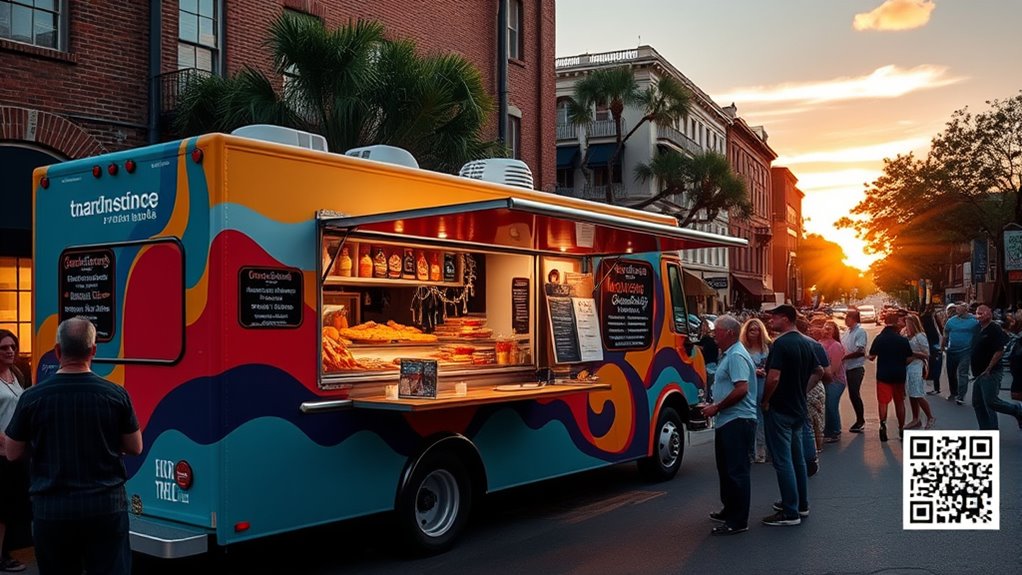
To attract more customers to your Charleston food truck, implementing effective marketing strategies is essential. Social media is your best tool—68% of food truck owners use it regularly, with Facebook leading at 75%. Platforms like Instagram, TikTok, and Snapchat help you engage younger audiences and boost sales by an average of 20%. Participating in local events and festivals increases visibility; 80% of trucks attend at least three annually. These events drive foot traffic and foster community loyalty. Loyalty programs and email marketing also build repeat business, with over half of trucks using these tactics. Additionally, integrating digital tools like GPS tracking and mobile apps makes it easier for customers to find you and engage. Use engaging content and collaborate with local influencers to amplify your reach and create lasting customer relationships. Market penetration strategies are crucial for expanding your customer base and sustaining growth in the competitive Charleston food scene. Moreover, understanding the importance of cybersecurity can help protect your digital marketing assets and customer data as your online presence grows.
Frequently Asked Questions
How Long Does the Permit Approval Process Typically Take in Charleston?
You’re probably wondering how long the permit approval takes in Charleston. Usually, standard vendor permits process in 2 to 4 weeks, but if you need health inspections through the South Carolina Department of Agriculture, expect 4 to 6 weeks. Special event permits might take months. Make sure your application is complete and accurate to avoid delays, and monitor your status online to stay on top of the process.
Are There Restrictions on Operating Hours for Food Trucks in Charleston?
You might think Charleston’s food trucks can run 24/7, but nope, they’re actually limited to operating from 7 a.m. to 7 p.m. daily. This isn’t just a suggestion; it’s a strict rule. You must stick to these hours, display your permit visibly, and avoid violations that could revoke your license. So, while you may dream big, the city keeps a close eye on your schedule.
Can I Operate My Food Truck in Residential Neighborhoods?
You can’t operate your food truck routinely in residential neighborhoods without special permits. Charleston’s zoning laws restrict commercial activities like food trucks in residential zones to protect neighborhood quality. You’d need permission, likely through special events or private property agreements, and must follow strict regulations on operating hours, signage, and vehicle placement. Operating without the proper approvals can result in fines and permit revocation, so always check with local authorities first.
What Are the Specific Health and Safety Standards Required by SCDA?
You need to follow SCDA health and safety standards strictly. Make certain your food truck operates out of a licensed commissary and maintains daily cleaning routines. Keep hot foods above 135°F and cold foods below 41°F. Use NSF-certified equipment, provide adequate handwashing facilities, and monitor temperatures regularly. All food handlers must have valid certifications. Also, abide by proper waste disposal, obtain necessary permits, and comply with fire safety and sanitation regulations.
How Do I Find and Apply for Participating in Local Festivals or Events?
Finding and applying for local festivals is like catching butterflies—careful and intentional. You start by checking festival websites, Eventbrite, and social media for upcoming events. Then, you fill out vendor applications online, ensuring you include all required permits and documentation. Act quickly to secure your spot, and stay engaged with organizers through social media. Keep your profile updated and respond promptly to confirmations to maximize your chances.
Conclusion
Starting your food truck in Charleston is like planting a seed—careful planning and the right conditions will help it flourish. By steering permits, managing costs, choosing prime locations, crafting a tempting menu, and implementing smart marketing, you set the stage for success. Keep your passion fueled and your vision clear, and your food truck will become a shining star on Charleston’s culinary sky—drawing in hungry crowds like moths to a flame.
Halloween Picks
halloween
As an affiliate, we earn on qualifying purchases.