
Starting a food truck in Jersey City involves obtaining permits from local authorities, including health, fire, and vending licenses, which require regular renewal and fees. Costs can range from $20,000 to over $150,000 depending on your vehicle and equipment, and you’ll need to budget for permits, supplies, and marketing. Jersey City offers designated parking zones and locations for trucks, and developing a compliant menu with strong marketing boosts success. If you continue to explore, you’ll find tips to smoothly launch and grow your business.
Key Takeaways
- Obtain necessary permits from Jersey City health, fire, and zoning authorities, and ensure regular renewal to stay compliant.
- Budget for vehicle purchase, customization, permits, licensing, insurance, and ongoing operational costs.
- Secure parking permits for designated Jersey City food truck zones and plan routes to avoid violations.
- Develop a compliant menu focusing on safety, allergen info, and appealing offerings tailored to local preferences.
- Use social media, local events, and loyalty programs to market your food truck and attract a steady customer base.
Navigating Permits and Licenses for Jersey City Food Trucks
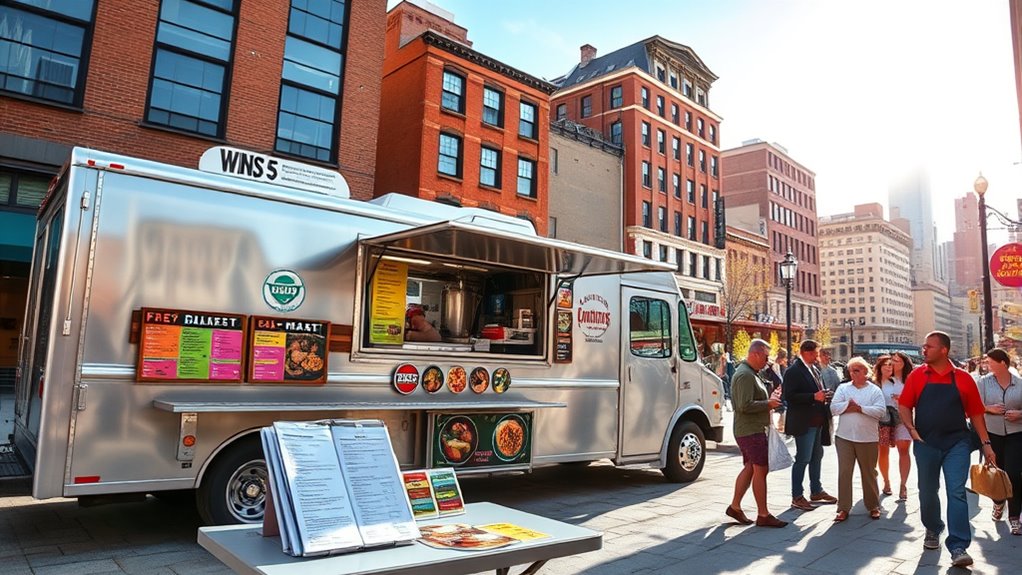
Starting a food truck in Jersey City requires obtaining the necessary permits and licenses to operate legally. First, you must register your business with the New Jersey Division of Revenue and Enterprise Services (DORES), selecting a structure like LLC or sole proprietorship. You’ll also need an Employer Identification Number (EIN) from the IRS if you have employees or are incorporated. After registration, apply for a food truck license from New Jersey authorities and secure health permits from the Jersey City Department of Health and Human Services. Fire safety inspections and permits are often required, especially if using gas or cooking equipment. Additionally, you may need sales tax licenses, temporary vending permits, vehicle registration with the MVC, and zoning approval to park and vend legally. Ensuring compliance with local regulations is crucial to avoid fines or operational delays, so check with city officials for any additional requirements. It’s also advisable to familiarize yourself with the regulations governing mobile food vendors to ensure full compliance.
Estimating Costs and Budgeting for Your Mobile Venture
To start your food truck journey, you need to carefully estimate your startup costs and ongoing expenses. Understanding the breakdown of vehicle, equipment, permits, and licensing helps you create a realistic budget. Keeping track of operational costs like fuel, supplies, and marketing assures your venture stays profitable over time. Additionally, budgeting for initial setup costs such as projector and sound system investments can help ensure your business is well-equipped from the start.
Startup Expenses Breakdown
Estimating your startup expenses is a crucial step in launching a successful food truck in Jersey City. Your vehicle costs can vary widely, with used trucks starting around $20,000 and new or custom models exceeding $150,000. Additional customization, including kitchen equipment like grills, fryers, and refrigeration, can add $5,000 to $20,000. Year-round operation may require insulation and heating, increasing initial costs. Leasing options range from $46,700 to over $187,440, depending on truck and gear. Don’t forget branding—professional wraps cost several thousand dollars. Permits and licenses, including health and business licenses, typically run $10,000 to $30,000 upfront. Plus, budget for safety equipment, POS systems, initial inventory, and marketing materials to set a strong foundation. Proper planning and detailed budgeting are essential for success can help prevent unexpected expenses and ensure your food truck venture is financially sustainable.
Ongoing Operational Budget
Managing your ongoing operational budget is essential to keep your food truck profitable and compliant. Expect annual legal and permit costs over $28,000 in New Jersey, including Jersey City-specific fees. You’ll need to budget for health permit renewals and commissary rental, which can cost $1,000–$1,500 monthly. Higher insurance rates in Jersey City also impact expenses, along with vehicle inspection and emissions compliance fees. Food and supply costs vary with your menu but include ingredients, packaging, and disposables, plus inventory management software ($20–$200/month). Fuel costs for generators and truck movement range from $500–$1,000 monthly. Don’t forget maintenance, safety equipment, POS systems, parking fees, and contingency funds for unexpected repairs. Allocating funds for marketing, such as truck wraps, is also crucial to build your brand. Establishing a detailed budget plan helps ensure all ongoing expenses are accounted for and manageable over time. Additionally, understanding the bank and finance options available can assist in securing funding or managing cash flow effectively.
Finding Prime Locations and Parking Zones in Jersey City
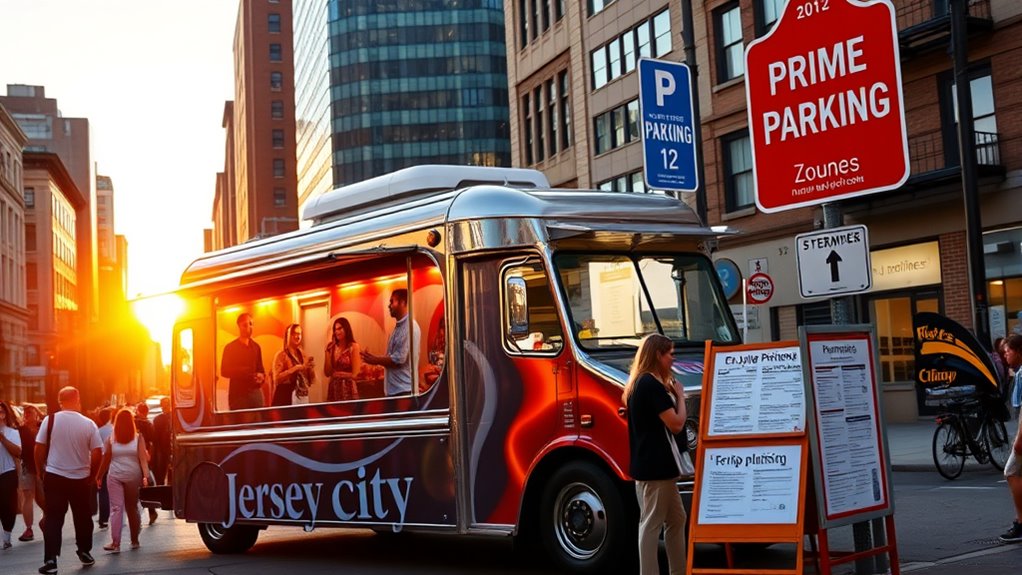
Finding prime locations for your food truck in Jersey City requires understanding the city’s designated parking zones and regulations. Jersey City has specific Itinerant Food Vendor Parking Zones on Jersey Avenue, John F. Kennedy Boulevard, Bergen Avenue, and Montgomery Street, where permits are mandatory. The zones operate from 5:00 a.m. to 9:00 p.m., and Zone 1, covering top locations, costs $11,000 for a permit. Be aware that some zones, like York Street, have been removed. Parking rules vary by neighborhood, with restrictions related to street cleaning, meters, and resident permits. Always check signage for specific permits, restrictions, and hours. Consider parking near commissary kitchens and explore seasonal or partnership options within local food truck networks to maximize your prime spots. It is also important to note that supported browsers include Google Chrome, Mozilla Firefox, and Microsoft Internet Explorer. Additionally, understanding parking regulations can help you avoid fines and ensure smooth operation of your food truck.
Crafting a Compliant and Appealing Menu

Creating a menu that complies with Jersey City’s health regulations while still attracting customers requires careful planning. You need to balance appealing options with strict safety standards. Guarantee your menu features items that meet food handling and labeling rules, including allergen info and nutritional transparency. Use a simple, safe layout suited for your limited space, and source ingredients that are easy to store and handle safely. Keep detailed records of food sources, inspections, and staff training to stay compliant and prepared for health checks. Ensuring the menu is adaptable to potential regulatory changes is also essential for ongoing compliance and success. Food safety Obtain permits, train staff, and follow hygiene practices. Focus on simple, attractive, compliant items. Carefully source perishable ingredients, track storage, and maintain comprehensive records of inspections, licenses, and procedures. Incorporating organized storage solutions can help streamline compliance and efficiency in your food truck operations.
Effective Marketing Strategies to Grow Your Food Truck Business
To grow your food truck business, implementing effective marketing strategies is essential for attracting new customers and building loyalty. Leveraging social media is a top method; 68% of food truck owners use platforms like Facebook to connect with their audience. Social campaigns can boost sales by 20%, and active engagement encourages customers to spend 15% more. Incorporate GPS tracking and mobile apps to improve accessibility, with app usage rising 45% in 2023. Participating in local festivals and community events increases visibility and foot traffic, helping you reach diverse audiences. Loyalty programs, like digital rewards, can lead to a 30% increase in repeat visits. Using data analytics allows targeted marketing, optimizing your efforts for better results and customer retention. Market growth in the food truck industry, valued at approximately $1.1 billion in 2020 with a CAGR of 6.4%, underscores the importance of adopting innovative marketing approaches to remain competitive and capitalize on the expanding industry. Additionally, understanding trailer music insights can inspire creative branding videos or promotional content to attract more customers.
Ensuring Ongoing Compliance and Business Maintenance
To keep your food truck operating smoothly, you need to stay on top of permit renewal procedures and maintain thorough records of all compliance activities. Regularly updating licenses and ensuring documentation are in order helps you avoid penalties and keeps inspections hassle-free. Staying proactive with these regulations guarantees your business remains lawful and ready for any surprises. Many permits require annual renewal, so setting reminders and maintaining organized files can prevent lapses in compliance. Monitoring regulatory requirements related to health and safety standards is also crucial for ongoing compliance.
Permit Renewal Procedures
Ensuring your food truck remains compliant requires timely renewal of permits before they expire. You must submit a completed renewal form with current business info and supporting documentation, including proof of water potability and a valid Food Manager’s Certification. Renewal fees, often around $100, must be paid on time to avoid lapses. Remember, permits in Jersey City are valid from April 1 to March 30, so plan ahead to prevent disruptions. During renewal, you’ll verify compliance with health and safety standards, update inspection records, and report any menu changes. You can submit applications online or in person. Staying proactive guarantees your permit stays active, preventing fines, suspension, or losing your ability to serve your community. Permits must be renewed annually to maintain legal operation. – Keep your permits visible to avoid penalties. – Address any deficiencies promptly to stay compliant. – Protect your business by renewing early and often. Additionally, understanding the trustworthiness of Patchology can help you stay informed about reputable sources for skincare products if you plan to incorporate customer amenities or demos at your food truck.
Recordkeeping and Regulations
Maintaining thorough records of your business and regulatory compliance is essential for smooth operations and avoiding penalties. You need to keep copies of all business registrations, including LLC, corporation, or sole proprietorship documents filed with the NJ Division of Revenue and Enterprise Services (DORES). Retain tax registration and filing records with DORES and the IRS, including your Employer Identification Number (EIN). Keep track of all permits and licenses, like mobile food vendor permits, renewal dates, and fee receipts. Store a current Certificate of Insurance (COI) for insurance coverage. Additionally, archive financial documents such as income statements, receipts, and payroll records for 3-7 years. Staying organized helps guarantee you meet health, safety, zoning, and employee regulations, avoiding costly violations and keeping your business compliant. Proper recordkeeping is a crucial part of ongoing compliance, enabling you to respond quickly to any inspections or audits. Regularly reviewing and updating your records ensures you stay aligned with changing regulations and industry standards.
Frequently Asked Questions
How Long Does the Permit Approval Process Typically Take in Jersey City?
You’re probably wondering how long the permit approval process takes in Jersey City. Typically, it takes about 30 to 60 days, depending on how quickly you submit complete applications and schedule inspections. Factors like health, fire, and zoning approvals can add time, especially if there are delays or limited slots. Staying organized and proactive helps speed things up, but expect a wait of roughly one to two months.
Are There Any Restrictions on the Types of Cuisine Allowed?
You might wonder if there are restrictions on your cuisine options. In Jersey City, there aren’t specific bans on particular food types, but your menu must comply with health, fire safety, and zoning laws. Some cuisines needing special permits, like frozen desserts or bottled drinks, face additional rules. Plus, limited licenses and parking zones could indirectly restrict your cuisine choices, especially if your menu involves complex equipment or niche food styles.
Can I Operate My Food Truck at Private Events Without Special Permits?
You might think operating at private events is a breeze, but it’s not that simple—you still need permits. While you don’t need city-issued event permits, you must get a Mobile Food Vendor Permit, health permits, and fire safety approvals. Always confirm with the event organizer and get everything in writing. Insurance is also essential to cover liabilities. Skipping these steps can lead to serious legal troubles, so stay compliant.
What Are the Best Practices for Managing Food Safety During Busy Hours?
You should focus on maintaining strict temperature controls, like keeping cold foods below 41°F and hot foods above 135°F, especially during busy hours. Use separate utensils to prevent cross-contamination, regularly sanitize surfaces, and perform frequent temperature checks. Organize your workflow to minimize cross-contact and guarantee quick reheating when needed. Also, train staff on proper hygiene and emergency procedures so everyone stays focused on safety during high-pressure times.
How Do I Renew or Update My Permits and Licenses Annually?
Did you know that nearly 50% of food truck operators face license renewal delays? To renew or update your permits annually, start early by gathering all required documentation, like current certifications and proof of water potability. Submit your renewal application before the expiration date to avoid penalties. Contact the Jersey City Department of Health for guidance, and keep track of your renewal deadlines to make certain uninterrupted operation.
Conclusion
Starting your food truck in Jersey City is an exciting adventure, but remember, staying compliant and strategic is key. With the right permits, a solid budget, prime locations, and a mouthwatering menu, you’ll turn your food truck into a bustling hotspot. Keep marketing creatively and maintain your license diligently. Follow these steps, and you’ll dominate the city’s vibrant street food scene—your success will be as unstoppable as a freight train barrelling through the city!