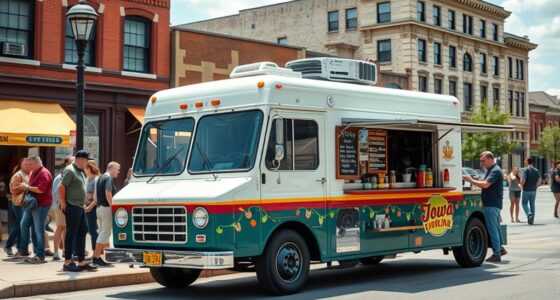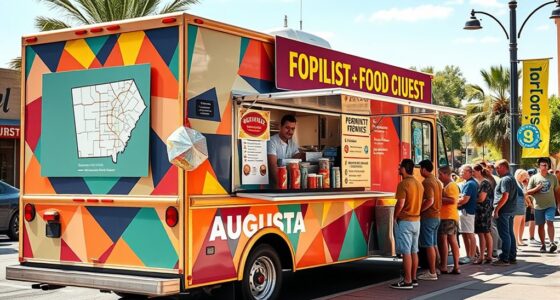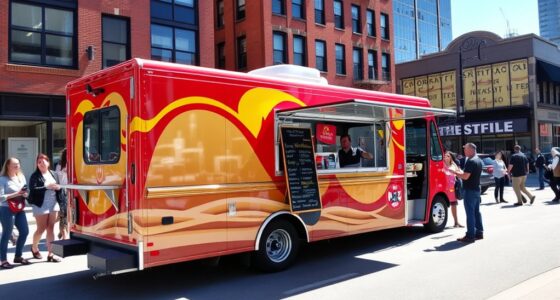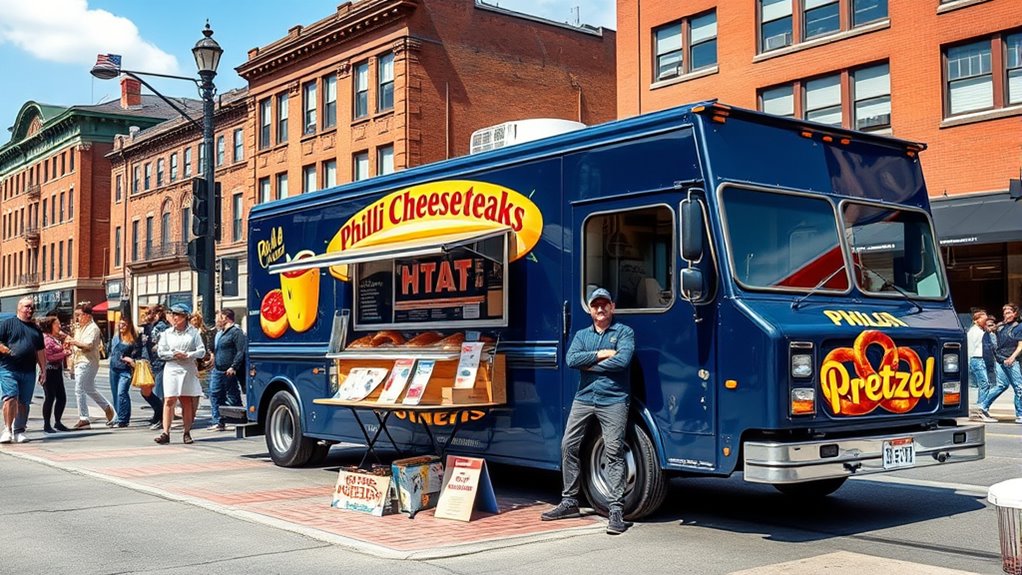

To open a food truck in Philadelphia, you’ll need permits like the Mobile Food Facility Permit and a retail license, with costs ranging from $1,800 to $28,000. Budget around $30,000 to $175,000 for a truck and equipment, and choose high foot-traffic spots like parks and event venues. Develop a menu with local favorites and popular bites. Effective marketing through social media and community events can boost your success—keep exploring for more detailed tips.

Get kitchen staples and gadgets delivered free with Prime
- Fast, free delivery on millions of items
- Prime Video, Amazon Music and more included
- Member-only deals all year
Key Takeaways
- Obtain necessary permits including Mobile Food Facility Permit, retail license, and Business Income Tax ID, with costs ranging from $1,800 to $28,000.
- Startup costs vary from $30,000 to $175,000 depending on truck type, equipment, permits, and outfitting expenses.
- Prime locations include busy streets, parks, festivals, universities, and transit hubs, subject to city regulations and permits.
- Develop a diverse menu featuring iconic Philly dishes, comfort foods, healthy options, and multicultural street foods to attract broad customers.
- Use social media, participate in local events, and implement loyalty programs to boost visibility, customer retention, and marketing ROI.
Navigating Philadelphia’s Permitting and Licensing Process
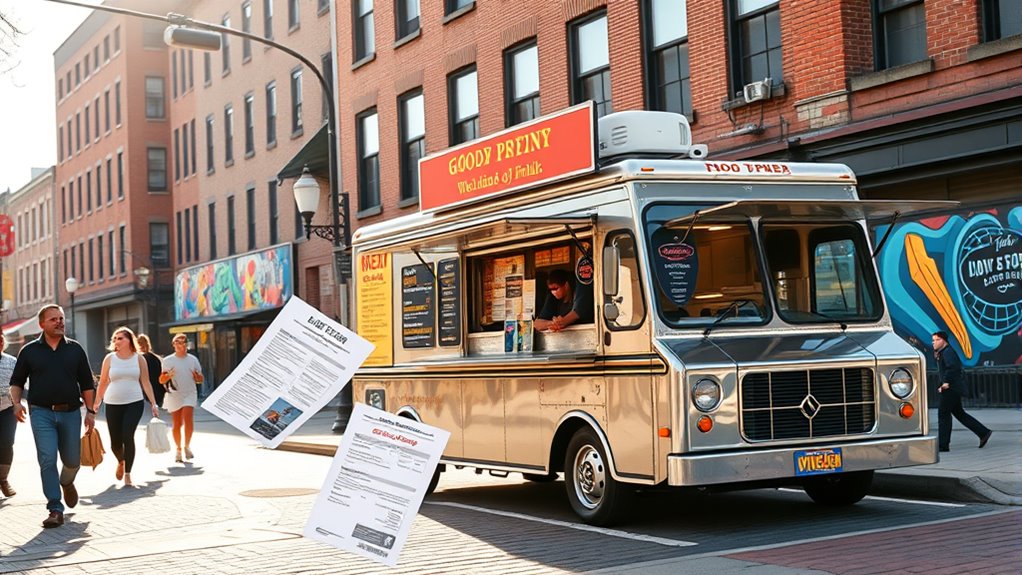
Understanding Philadelphia’s permitting and licensing process can seem complex, but grasping the key requirements makes it manageable. First, you need a Mobile Food Facility Permit (MFFP), which varies depending on your food’s complexity, and a Food Establishment Retail, Non-permanent Location License for your truck or cart. You’ll also require a Commercial Activity License from the city. All businesses must obtain a Business Income and Receipts Tax ID, renewed annually. Vehicle registration and inspection are mandatory for legal operation. To start, submit a detailed plan review application with scaled drawings, menu, and facility details. The Department of Agriculture or Philadelphia Health Department reviews your plans, schedules an inspection, and may request revisions. Regularly monitoring for warning signs of a checked-out partner can help maintain healthy relationships, which is essential for your peace of mind. Renew permits yearly, and ensure your food handlers have the necessary licenses to stay compliant.
Estimating Startup and Equipment Expenses
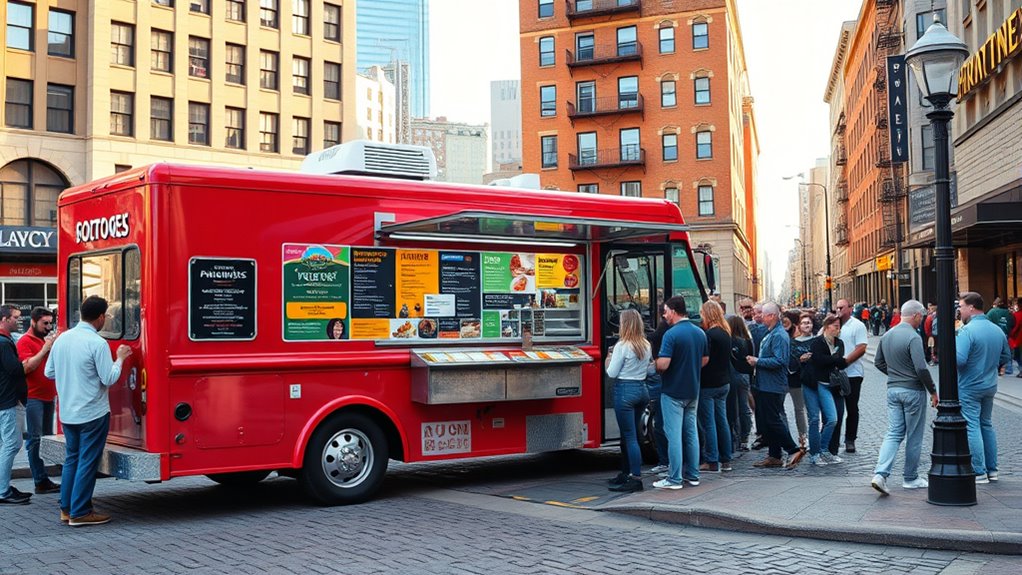
Estimating startup and equipment expenses for your food truck involves understanding the significant costs associated with purchasing, modifying, and outfitting your vehicle. New trucks typically cost between $50,000 and $175,000, depending on size and customization, while used trucks range from $30,000 to $100,000 but may require more repairs. Custom kitchen equipment can add up to $45,000, especially if you’re installing appliances and meeting health standards. Renting a truck is an option to lower upfront costs. Don’t forget permits, licenses, and compliance fees, which can total around $1,800 to $28,000. Initial inventory, supplies, insurance, maintenance, and marketing expenses also need to be factored in, with costs varying based on your menu, scale, and branding efforts. Location-specific licensing fees can also significantly impact your overall startup budget. Additionally, understanding the costs associated with outfitting your truck ensures you stay within your financial plan.
Identifying Prime Locations for Your Food Truck

Choosing the right location is vital for your food truck’s success in Philadelphia. Focus on high foot traffic areas like busy streets, parks, and popular event venues. Near universities such as University City, you’ll find plenty of students looking for quick bites. Philadelphia hosts outdoor festivals, markets, and concerts, creating temporary yet dense crowds perfect for boosting sales. Business districts and transportation hubs have steady daytime foot traffic, offering consistent customers. Locations near sports arenas or theaters also attract crowds before and after events. Since city regulations are relatively flexible, you can explore diverse spots, including seasonal and special event permits for temporary high-traffic locations. Just remember to verify local permissions and monitor competitor activity to stay ahead. Additionally, Philadelphia’s food truck scene is growing rapidly, providing ample opportunities for new vendors to establish a presence in the local market.
Crafting a Menu That Appeals to Local Tastes
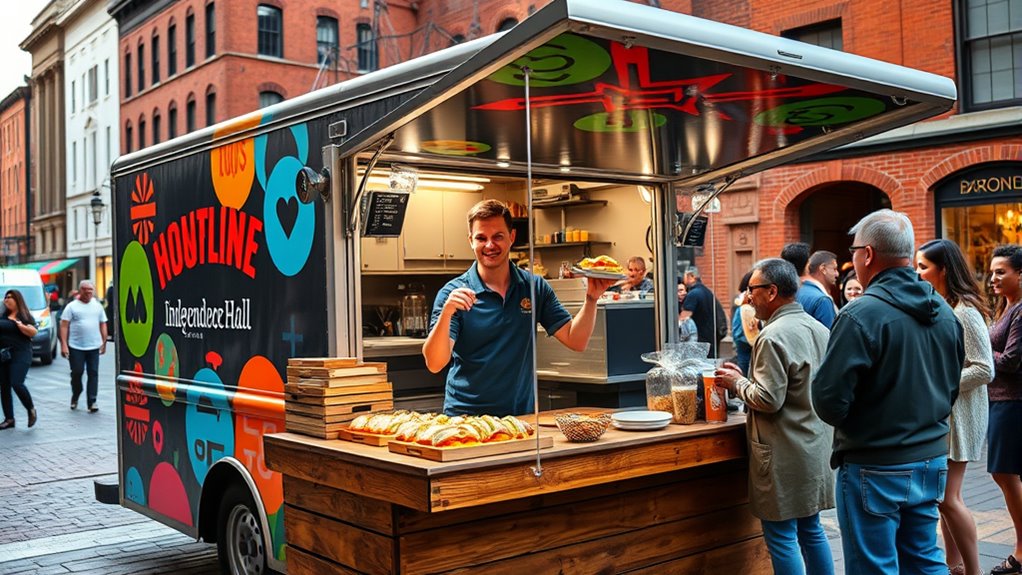
To truly resonate with Philadelphia’s diverse food scene, your menu must blend local flavors with broad appeal. Incorporate iconic dishes like the Philly cheesesteak to satisfy local demand. Add popular North American comfort foods, such as smash burgers and grilled cheese, to attract wider customers. Include healthy options like falafel wraps, vegan dishes, and fresh salads to meet rising health-conscious trends. Consider regional specialties with modern twists or personalized touches to stand out. Ethnic street foods, like Indian or Vietnamese, appeal to the multicultural population. Use the table below to craft a balanced menu:
| Local Flavors | Broader Appeal |
|---|---|
| Philly cheesesteak | Gourmet burgers |
| Regional specialties | Artisanal donuts |
| Ethnic street foods | Healthy salads |
| Vegan/vegetarian options | Customizable add-ons |
| Seasonal/local produce | Dessert offerings |
Effective Marketing Strategies to Grow Your Food Truck Business
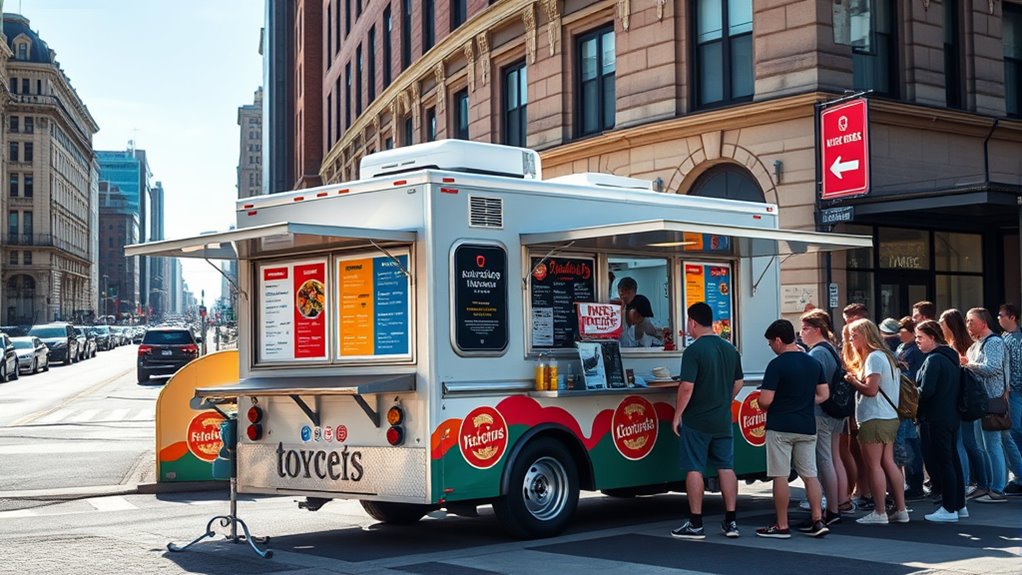
Effective marketing is essential for expanding your food truck’s reach and attracting a steady stream of customers. Leveraging social media is key—68% of food truck owners use it regularly, with Facebook being the most popular platform. Engaging customers online can boost sales by 20%, and customers spend about 15% more at trucks that actively promote themselves. Targeted social media ads help nearly 40% of customers discover your truck. Participating in festivals and community events increases visibility and foot traffic, with 80% of trucks attending at least three annually. Implementing loyalty programs encourages repeat visits, resulting in a 30% increase in customer retention. Additionally, utilizing data analytics and mobile apps improves marketing ROI, simplifies location tracking, and enhances customer experience—driving growth and long-term success. Digital tools like GPS and review platforms enable better customer targeting and feedback management. Recognizing the importance of color accuracy and other visual factors can also help create more appealing promotional materials and signage, attracting more customers.
Frequently Asked Questions
How Long Does It Typically Take to Get All Permits Approved in Philadelphia?
You’re probably wondering how long it takes to get all your permits approved in Philadelphia. Typically, the process takes about 6 to 8 weeks, but it can be longer if your application isn’t complete or if inspections get delayed. To speed things up, make sure your application is thorough and submit all required documents upfront. Staying in close contact with the department and scheduling inspections early also helps avoid delays.
Are There Any Specific Restrictions for Vending Near Schools or Hospitals?
Vending near schools and hospitals is like walking a tightrope—you need balance. Philadelphia bans vending within certain distances of schools during school hours and near hospital entrances to protect safety and access. You must keep at least 15 feet away from emergency zones and entrances. Special permits are often required, and violations can lead to fines. Staying informed and compliant helps you operate smoothly without crossing these critical boundaries.
What Are the Best Ways to Manage Seasonal Fluctuations in Sales?
To manage seasonal fluctuations, you should introduce seasonal menu items that appeal year-round, like hearty winter dishes or invigorating summer drinks. Focus on popular, easy-to-prepare options during busy times and partner with local events to boost sales. Adjust your inventory, staff, and marketing efforts accordingly, using social media and special promotions to keep customers engaged. This approach helps maintain steady sales, even during slow seasons.
How Can I Ensure Consistent Food Quality Across Multiple Locations?
To guarantee consistent food quality across multiple locations, you should develop detailed recipes and preparation protocols that everyone follows. Train your staff regularly on food safety and recipe adherence, using checklists and digital tools to monitor compliance. Use standardized equipment and ingredient sourcing from trusted suppliers. Collect and analyze sales and customer feedback data to make informed adjustments, and conduct routine audits to maintain high standards everywhere you operate.
Are There Grants or Financial Assistance Programs Available for New Food Trucks?
Did you know nearly $2.4 million has been granted to local food justice projects since 2019? For new food trucks, there are several grants and assistance programs in Philadelphia. The Merchants Fund offers up to $20,000 for small businesses facing hardships, and the Food Justice Initiative provides project grants up to $50,000 for community-led food projects. State and federal programs also support small business growth, vehicle upgrades, and food security efforts.
Conclusion
Starting your food truck in Philadelphia means balancing permits and costs, location and menu, marketing and growth. It’s a busy city where rules shape your success, yet opportunity awaits beyond the paperwork. You’ll navigate the complexities, craft delicious offerings, and find prime spots—each step a puzzle piece. In the end, your passion fuels the journey, transforming city streets from challenges into chances, turning dreams into a thriving, vibrant food truck business.
NFL season / tailgating Picks
team gear
As an affiliate, we earn on qualifying purchases.