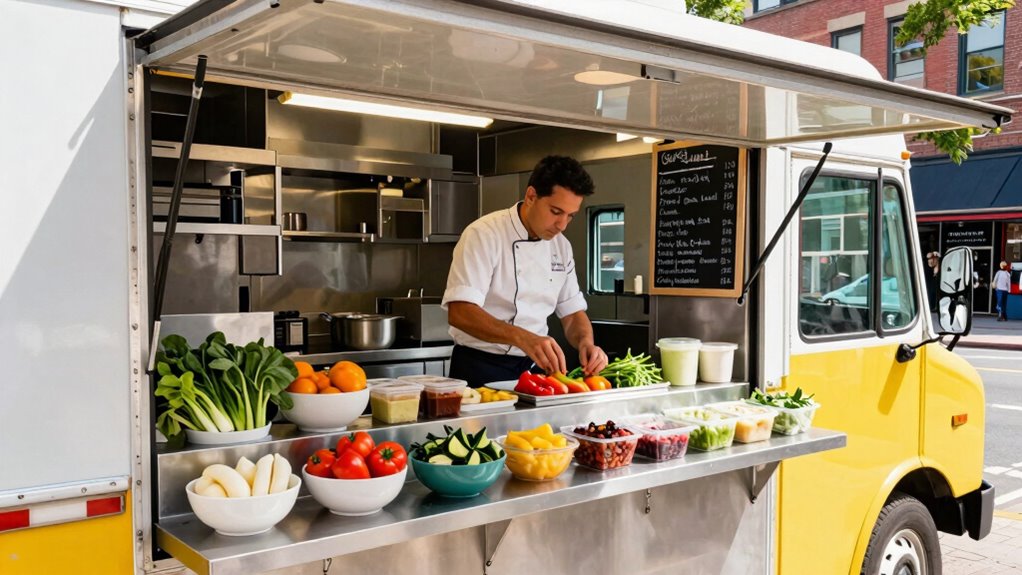

You can cut food waste without shrinking your menu by implementing smart inventory systems that track ingredients closely and planning prep work accurately. Incorporate flexible menu options that adapt to ingredient availability, using surplus items creatively. Choose eco-friendly packaging, and partner with local organizations to donate leftovers. Train your staff to handle ingredients efficiently and leverage technology to streamline stock management. Keep exploring ways to optimize waste reduction while maintaining a diverse menu to serve your customers better.

Get kitchen staples and gadgets delivered free with Prime
- Fast, free delivery on millions of items
- Prime Video, Amazon Music and more included
- Member-only deals all year
Key Takeaways
- Implement daily inventory checks to identify surplus ingredients early and adjust menu items accordingly.
- Incorporate near-expiry ingredients into creative, seasonal dishes to maximize usage without reducing menu options.
- Use sustainable packaging and encourage responsible disposal to minimize waste from leftovers and packaging materials.
- Partner with local charities to donate safe surplus food, reducing waste while supporting the community.
- Train staff on proper storage, handling, and waste reduction techniques to optimize ingredient use without shrinking the menu.
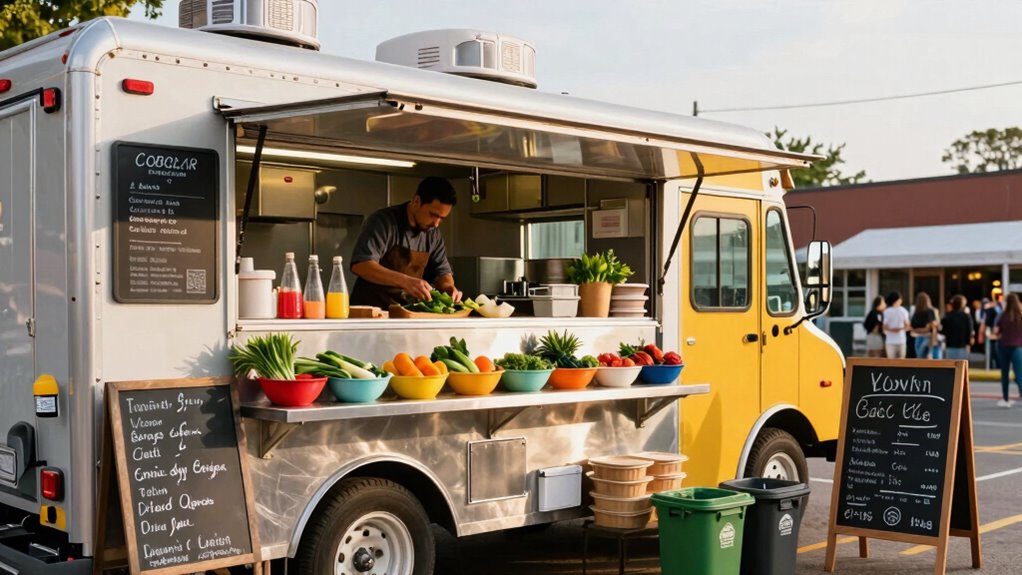
Have you ever wondered how food trucks handle their leftover ingredients and meals? Managing food waste is a challenge, especially when you want to keep your menu diverse and appealing. The key lies in smart inventory management and sustainable packaging. By carefully tracking what you buy and use, you can reduce excess stock that might otherwise go to waste. Implementing inventory management systems helps you know exactly how much of each ingredient you need, preventing over-purchasing and spoilage. This way, you can plan your prep and shopping more accurately, cutting down on unused ingredients at the end of each day.
Smart inventory management helps food trucks reduce waste and plan more efficiently.
Sustainable packaging also plays a vital role in minimizing waste. When you package leftovers or meals for customers to take home, choose eco-friendly options that are recyclable or compostable. This not only aligns with eco-conscious values but also encourages customers to dispose of their waste responsibly. Using sustainable packaging can reduce the amount of non-biodegradable waste your truck produces, making your operation more environmentally friendly and appealing to eco-conscious patrons.
You don’t have to shrink your menu to cut food waste—rather, focus on versatility and flexibility. For instance, if you notice certain ingredients are nearing their expiry, get creative and incorporate them into other dishes. This approach minimizes leftovers and keeps your menu fresh and exciting. Additionally, establishing a routine for daily inventory checks allows you to identify what’s surplus early on, giving you time to adapt your offerings or repurpose ingredients creatively. Incorporating food waste reduction strategies into your daily routine can further enhance your efforts. Regular staff training on inventory management techniques can also help ensure everyone is aligned with waste reduction goals. Staying informed about sustainable practices can inspire new ideas for waste minimization.
Partnering with local organizations or shelters is another effective strategy. Donating surplus food reduces waste and benefits the community. Make sure to follow proper safety protocols to ensure food remains safe for consumption. This not only helps you manage surplus but also boosts your reputation as a responsible and community-oriented business. Additionally, understanding the importance of proper storage** can significantly extend the shelf life of ingredients and prevent unnecessary spoilage. Incorporating technological tools** can further streamline your inventory process, making waste reduction even more efficient.
Finally, educating your staff about waste reduction practices encourages everyone to contribute. Training them on proper storage, handling, and the importance of sustainability creates a culture of efficiency. Combining good inventory management, sustainable packaging, creative menu planning, and community engagement helps you cut food waste without sacrificing variety. It’s about making smarter choices that benefit your business, your customers, and the environment—proving that you don’t need to shrink your menu to be sustainable.
eco-friendly food packaging for food trucks
As an affiliate, we earn on qualifying purchases.
As an affiliate, we earn on qualifying purchases.
Frequently Asked Questions
How Can Food Trucks Predict Daily Customer Demand Accurately?
You can predict daily customer demand accurately by leveraging predictive analytics and analyzing customer flow patterns. Use historical sales data, weather forecasts, and event schedules to identify trends. Monitoring real-time customer flow helps you adjust inventory accordingly, reducing waste. Implementing these tools enables you to forecast demand more precisely, ensuring you prepare just enough food to meet customer needs without overstocking, maintaining efficiency and minimizing waste.
What Are the Best Practices for Recycling Food Waste on the Go?
You should implement waste segregation by clearly separating compostable food scraps from other waste. Use composting techniques suited for on-the-go environments, like portable compost bins or collaborating with local compost facilities. Regularly train staff to properly sort waste, ensuring organic materials are composted and non-biodegradable waste is disposed of correctly. This approach minimizes landfill waste, promotes sustainability, and keeps your food truck eco-friendly on every shift.
How Do Food Trucks Manage Inventory to Prevent Overstocking?
Managing inventory on a food truck is like steering a ship through a narrow channel. You keep a close eye on inventory tracking and practice strict stock rotation, ensuring fresh ingredients are used first. You monitor sales trends daily, adjusting orders accordingly to avoid overstocking. This proactive approach helps you minimize waste, control costs, and keep your menu vibrant without risking spoilage or shortages.
Can Digital Tools Help Reduce Food Waste in Food Trucks?
Digital tools can definitely help reduce food waste in food trucks. By using digital tracking, you can monitor inventory levels and sales trends in real-time, preventing over-ordering. Waste analytics then analyze this data to identify patterns and areas where waste occurs most often. This insight allows you to adjust portion sizes, optimize ingredient use, and make smarter purchasing decisions, all of which cut waste without shrinking your menu.
What Partnerships Can Food Trucks Form to Donate Leftover Food?
Think of your food truck as a bridge, connecting fresh food to community needs. Partner with local shelters or food banks through donation programs, ensuring leftover meals reach those in need. Community collaborations strengthen your impact, turning excess ingredients into hope rather than waste. One truck’s donation program saved hundreds of meals last year, proving that strategic partnerships can make a huge difference while reducing waste and supporting your community.
inventory management system for food trucks
As an affiliate, we earn on qualifying purchases.
As an affiliate, we earn on qualifying purchases.
Conclusion
By implementing smart inventory management and flexible menu options, you can substantially cut food waste without shrinking your menu. Embracing these strategies isn’t just practical; research suggests that adaptive menus reduce waste by up to 30%. So, next time you’re tempted to stick with traditional methods, consider that a little flexibility and data-driven planning might just be the key to sustainability and success in your food truck business.
As an affiliate, we earn on qualifying purchases.
As an affiliate, we earn on qualifying purchases.
NFL season / tailgating Picks
team gear
As an affiliate, we earn on qualifying purchases.