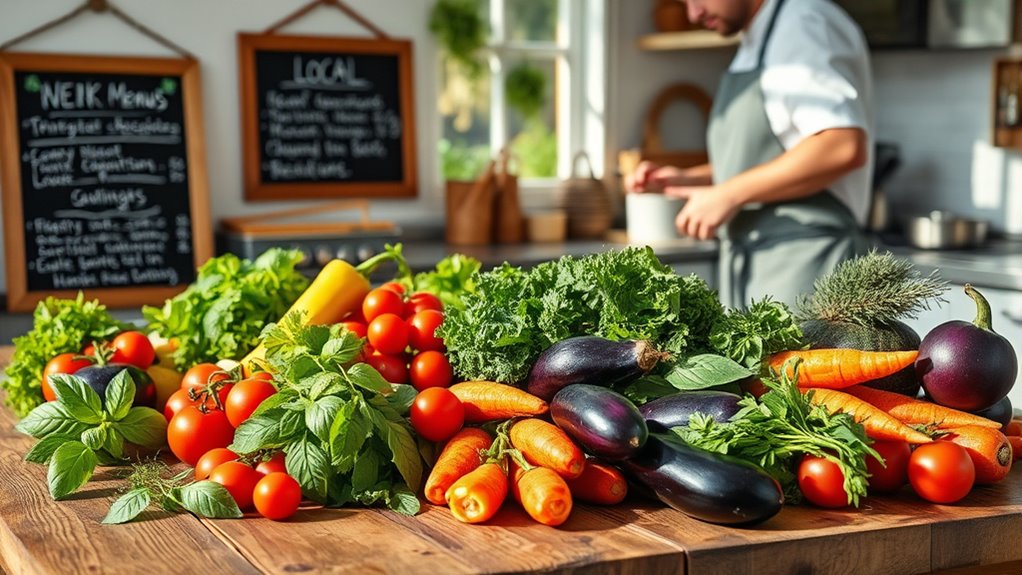

Integrating seasonal menus into your operation helps reduce environmental impact, support local farmers, and attract eco-conscious customers. By focusing on ingredients at their peak ripeness, you’ll minimize waste and energy use while boosting freshness and flavor. This approach encourages diversified offerings and strengthens community ties through local sourcing. If you keep exploring, you’ll discover more strategies to make your menus sustainable and appeal to environmentally aware diners.

Get kitchen staples and gadgets delivered free with Prime
- Fast, free delivery on millions of items
- Prime Video, Amazon Music and more included
- Member-only deals all year
Key Takeaways
- Align menus with seasonal ingredients to reduce energy use and greenhouse gas emissions associated with out-of-season production.
- Support local farmers and producers by sourcing seasonal ingredients, strengthening community resilience and economy.
- Minimize food waste through better menu planning, creative reuse, and selecting produce at peak ripeness.
- Promote eco-conscious dining by offering fresh, minimally processed ingredients aligned with seasonal availability.
- Enhance biodiversity and ecological balance by encouraging diverse, seasonal food options and sustainable agricultural practices.
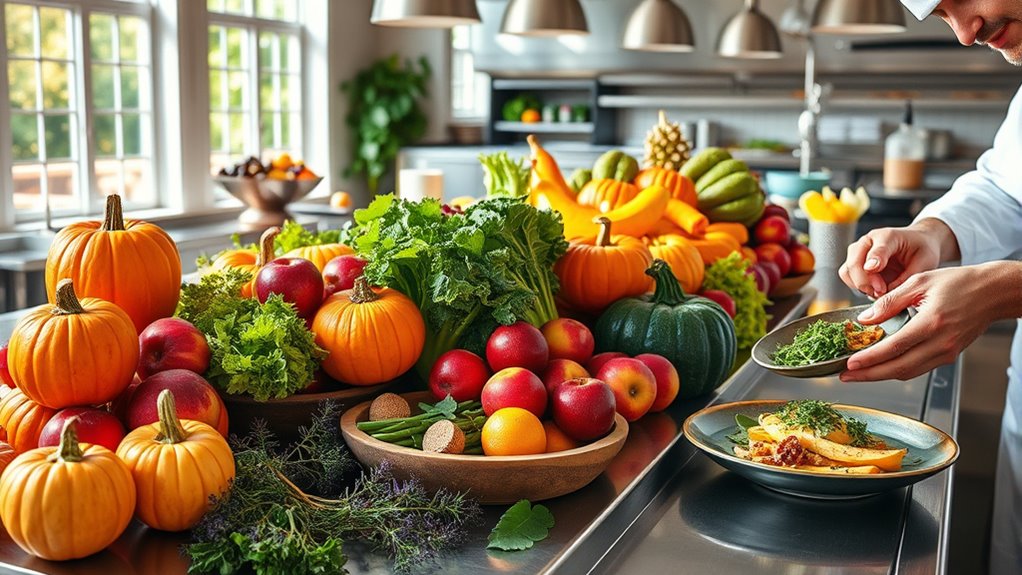
Have you ever considered how choosing seasonal menus can boost sustainability? When you prioritize seasonal ingredients, you’re making a conscious decision to support local sourcing, which has significant environmental and economic benefits. Local sourcing means sourcing ingredients from nearby farms and producers, reducing the need for long-distance transportation that contributes to greenhouse gas emissions. This not only cuts down on carbon footprint but also promotes local economies and fosters stronger community ties. By aligning your menu with what’s in season, you also naturally cut down on waste. Seasonal ingredients are typically fresher, more abundant, and easier to harvest at peak ripeness, which means less spoilage and fewer discarded products. This approach minimizes waste in your kitchen, helping you operate more efficiently and sustainably. Additionally, choosing seasonal menus can encourage seasonal eating habits that support biodiversity and ecological balance. Implementing seasonal menus encourages you to plan meals around what’s readily available, which means less reliance on out-of-season produce that often requires energy-intensive methods like greenhouse cultivation or extensive transportation. When you source locally, you gain more control over the quality and freshness of ingredients, reducing the need for preservatives or artificial additives that extend shelf life but add to environmental concerns. Furthermore, focusing on seasonal ingredients allows you to diversify your menu throughout the year, which can attract more customers interested in sustainable dining options. As you switch with the seasons, you’re also supporting local farmers and producers, creating a more resilient food system that benefits everyone involved. Waste reduction plays an essential role in this process. By planning menus around seasonal ingredients, you can better forecast quantities, avoiding over-purchasing and excess inventory that might spoil or go unused. This proactive approach means less food waste, which is critical considering the environmental impact of organic waste decomposition in landfills. You can also utilize leftovers or imperfect produce in creative ways, further reducing waste. Incorporating more whole foods and minimizing processed ingredients aligns with sustainable practices, reducing packaging waste and energy consumption associated with food production. Adopting seasonal menus isn’t just about changing what’s on your plate; it’s about creating a more sustainable food environment. You’ll find that supporting local sourcing and focusing on waste reduction not only benefits the planet but can also enhance your reputation among eco-conscious customers. By making these mindful choices, you contribute to a healthier, more resilient food system and demonstrate a commitment to sustainability that resonates beyond your kitchen. Ultimately, integrating seasonal menus helps you serve delicious, fresh dishes while being kinder to the environment and supporting your community.
seasonal produce storage containers
As an affiliate, we earn on qualifying purchases.
As an affiliate, we earn on qualifying purchases.
Frequently Asked Questions
How Can Seasonal Menus Reduce Overall Food Waste?
By planning your menu around seasonal ingredients, you can substantially cut food waste. When you use produce at its peak, it’s fresher and lasts longer, reducing spoilage. Thoughtful menu planning ensures you buy only what’s needed, minimizing excess. Plus, seasonal ingredients are often more affordable, helping you avoid unnecessary waste from unsold or unused items. Overall, integrating seasonal menus makes your food waste lower and your sustainability efforts stronger.
What Are the Challenges in Sourcing Seasonal Ingredients Locally?
Sourcing seasonal ingredients locally can feel like chasing a mirage. You might face seasonality barriers that limit your options, making it tough to find fresh, local supplies year-round. Relying on local suppliers means you’re at their mercy for availability, which can disrupt your menu planning. Additionally, limited local harvests can cause delays or higher costs, challenging your ability to maintain consistent, sustainable offerings.
How Do Seasonal Menus Impact Long-Term Food Sustainability Goals?
Seasonal menus directly support your long-term food sustainability goals by promoting farm-to-table practices, reducing transportation emissions, and encouraging local sourcing. You can leverage culinary innovation to create diverse, appealing dishes that highlight seasonal ingredients, making sustainability appealing to guests. This approach fosters a stronger connection between your cuisine and the environment, ensuring you contribute to a more sustainable future while maintaining freshness and supporting local farmers.
Can Seasonal Menus Be Adapted for Large-Scale Restaurant Operations?
You can adapt seasonal menus for large-scale restaurant operations by streamlining smart menu planning and sourcing sustainable, seasonal ingredients. Focus on flexible recipes that highlight fresh, local produce, making ingredient sourcing easier and more efficient. By coordinating with local suppliers and planning menus around peak seasons, you guarantee consistency, reduce waste, and promote sustainability, all while satisfying guests with vibrant, varied seasonal flavors.
What Training Is Needed for Staff to Implement Seasonal Menus Effectively?
You need to provide staff education on seasonal ingredients, menu flexibility, and sustainability benefits. Train them on sourcing local produce, adjusting recipes, and communicating menu changes to guests. Regular workshops and hands-on demonstrations help staff stay confident in implementing seasonal menus. By fostering menu flexibility, your team can adapt quickly to ingredient availability, ensuring freshness and sustainability while maintaining excellent service. Proper training helps your staff excel in this eco-friendly approach.
As an affiliate, we earn on qualifying purchases.
Conclusion
By embracing seasonal menus, you might think you’re doing your part for sustainability, but the real irony is that relying on local produce can sometimes be more resource-intensive than sourcing globally. Still, choosing what’s in season keeps your menu fresh and your carbon footprint in check — or so they say. So go ahead, celebrate the seasons, and enjoy the paradox: making eco-friendly choices can feel like a deliciously complex game of balance.
As an affiliate, we earn on qualifying purchases.
As an affiliate, we earn on qualifying purchases.
Halloween Picks
halloween
As an affiliate, we earn on qualifying purchases.