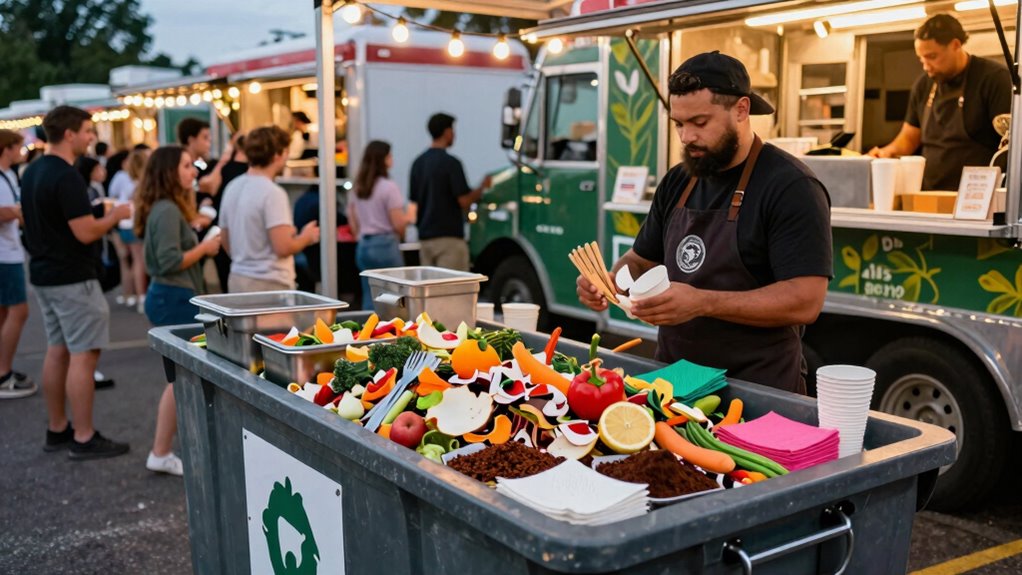

At large events, composting for food trucks involves setting up designated bins clearly labeled for compostable waste like food scraps and biodegradable packaging. You’ll need to educate your staff and customers on proper sorting, using signage and staff guidance. Regular monitoring guarantees contamination is minimized. Incorporating composting into your sustainability goals shows your commitment to environmental responsibility. To make your waste management more effective and impactful, continue exploring best practices and tips.
Open a free Amazon Business account
Business pricing, bulk buying and tax-exempt orders.
As an affiliate, we earn on qualifying purchases.
Key Takeaways
- Food trucks designate clearly labeled compost bins for food scraps, biodegradable packaging, and coffee grounds at large events.
- Staff are trained to sort waste properly and actively promote composting to customers.
- Visible signage educates staff and customers on composting practices and contamination prevention.
- Regular monitoring ensures only appropriate items are composted, maintaining system effectiveness.
- Composting is integrated into the event’s sustainability goals, demonstrating environmental responsibility and inspiring others.
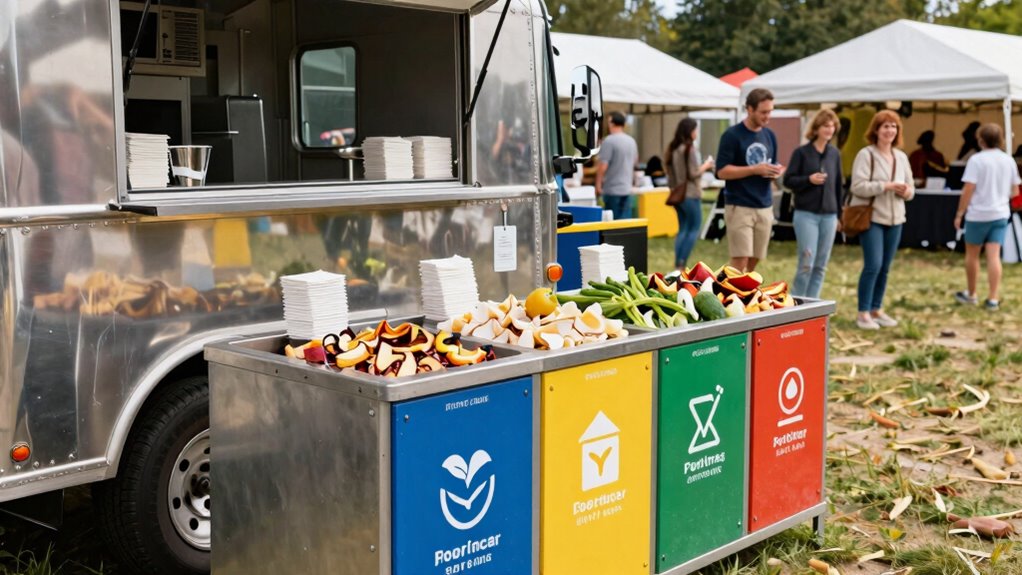
Hosting a food truck at a large event offers a fantastic opportunity to serve delicious meals, but it also comes with environmental responsibilities—particularly when it comes to waste. One of the best ways to address this is by implementing composting practices that align with your waste reduction strategies. Composting isn’t just about throwing scraps into a bin; it’s about creating a system that minimizes landfill waste and promotes sustainability. To start, you need to understand what materials are compostable and how to set up an efficient process that both staff and customers can follow easily.
Implement composting practices to reduce landfill waste and promote sustainability at large events.
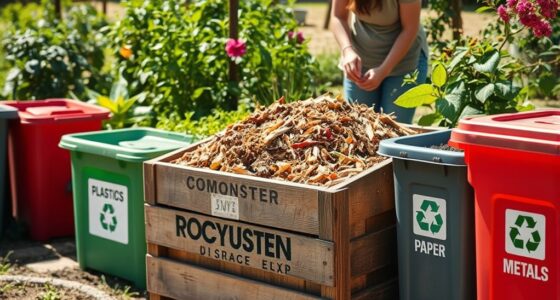
Your first step should involve establishing clear recycling initiatives that include composting. Make sure you have designated bins for compostable waste, such as food scraps, coffee grounds, and biodegradable packaging. Label these bins clearly, so everyone knows what belongs where. This reduces contamination and guarantees that compostable materials don’t end up in regular trash or recycling bins. Educating your staff about these initiatives is vital—they should know how to sort waste properly and encourage customers to do the same. Promoting visible signage and offering brief explanations can boost participation and make the process seamless. Additionally, proper waste segregation is essential for maintaining an effective composting system and preventing cross-contamination. Understanding compostable materials is also key to ensuring that only suitable items are composted and that the process runs smoothly.
Waste reduction strategies at large events often depend on pre-planning. Think about sourcing packaging made from compostable materials and offering reusable utensils and containers whenever possible. These choices not only cut down on single-use plastics but also make the composting process easier. You’ll want to coordinate with local composting facilities in advance to understand what materials they accept and how to prepare waste accordingly. This proactive approach helps prevent contamination and ensures your waste is processed properly. Additionally, understanding waste sorting and ensuring that staff are trained to do so can further improve composting efficiency and reduce contamination risks. Incorporating waste diversion as part of your sustainability goals can also demonstrate your commitment to environmental responsibility.
For successful composting, you’ll need to monitor your waste streams regularly. Keep bins accessible and visibly marked, and have staff assigned to oversee waste sorting during busy times. This vigilance ensures that only suitable items are composted, and it helps you track your waste reduction progress. Incorporating composting into your event’s overall sustainability goals can be a powerful message to customers, showcasing your commitment to environmental responsibility. It also encourages others to adopt similar practices.
Ultimately, composting at large events requires planning, education, and cooperation. By integrating recycling initiatives and waste reduction strategies into your daily operations, you turn waste into an opportunity for positive environmental impact. Not only will you lessen your footprint, but you’ll also inspire others to follow suit, creating a more sustainable future for food trucks and large events alike.
As an affiliate, we earn on qualifying purchases.
Frequently Asked Questions
How Is Composting Waste Transported From the Event Site?
You coordinate transport logistics by arranging waste collection with composting services before the event ends. Once the compostable waste is gathered, the service picks it up directly from your food truck or designated collection points. This process guarantees efficient waste transport from the event site to composting facilities. Regular communication with the waste collection provider helps you stay on schedule, making sure your composting efforts are seamless and environmentally friendly.
What Types of Food Waste Are Suitable for Composting?
You can compost kitchen scraps and food peelings, as they break down easily and enrich compost. Avoid composting meats, dairy, or oily foods, which can attract pests and cause odors. Focus on fruit and vegetable scraps, coffee grounds, and eggshells. Properly managing these waste types guarantees healthy compost and minimizes environmental impact at large events. Always separate compostable waste from non-compostables to maintain an efficient process.
How Do Food Trucks Separate Compostable From Non-Compostable Waste?
Did you know that 30% of food waste ends up in landfills instead of compost? To manage this, you separate compostable from non-compostable waste by setting up clearly labeled bins for each. You can use color-coded containers or signage to guide staff and customers. Effective food waste management hinges on simple composting logistics, ensuring compostables are diverted properly, reducing landfill waste, and promoting sustainable practices at large events.
Are There Any Additional Costs for Composting Services?
Yes, there can be additional costs for composting services. The pricing structure often depends on factors like the volume of waste and the frequency of pickups, which you should clarify with your provider. Service coverage might also impact costs, especially if you need extensive or specialized collection areas. Be sure to review all details to understand any extra fees, ensuring your event’s waste management stays within your budget.
How Is Compost Quality Monitored and Maintained?
You monitor compost quality through regular quality testing to guarantee it’s free from compost contamination. By checking for proper decomposition and absence of non-biodegradable materials, you maintain high standards. Implementing strict sorting practices and educating staff help prevent contamination. Consistent testing and diligent oversight keep the compost healthy, ensuring it meets environmental standards and can be safely used or disposed of, maintaining the integrity of your composting process.
As an affiliate, we earn on qualifying purchases.
Conclusion
By composting at large events, you’re not only reducing waste but also making a real impact—did you know that food trucks generate up to 30% more waste than traditional restaurants? Embracing composting helps you cut down on landfill contributions and promotes sustainability. With proper planning and a bit of effort, you can turn your food truck into an eco-friendly powerhouse, inspiring others to follow suit and making big events greener for everyone involved.
reusable utensils for food trucks
As an affiliate, we earn on qualifying purchases.
As an affiliate, we earn on qualifying purchases.
compostable coffee grounds containers
As an affiliate, we earn on qualifying purchases.
As an affiliate, we earn on qualifying purchases.
Flea & tick season Picks
flea and tick prevention
As an affiliate, we earn on qualifying purchases.