

Upgrading to energy-efficient kitchen equipment can help you cut down on energy use and save money on utility bills. By choosing appliances with Smart features, like Energy Star-rated dishwashers and induction cooktops, you’ll reduce waste and improve performance. Incorporating renewable energy sources such as solar helps further lower your household’s carbon footprint. Additionally, switching to LED lighting is an easy way to save energy. Keep exploring to discover how combining these upgrades creates a more sustainable, cost-effective kitchen.

Get kitchen staples and gadgets delivered free with Prime
- Fast, free delivery on millions of items
- Prime Video, Amazon Music and more included
- Member-only deals all year
Key Takeaways
- Replace outdated appliances with Energy Star-rated models for improved efficiency and performance.
- Incorporate smart sensors to automatically monitor and optimize appliance energy usage.
- Upgrade to induction cooktops and high-efficiency dishwashers to reduce energy and water consumption.
- Install LED lighting and smart controls to minimize lighting energy waste.
- Combine renewable energy sources like solar panels with efficient appliances for a sustainable kitchen setup.
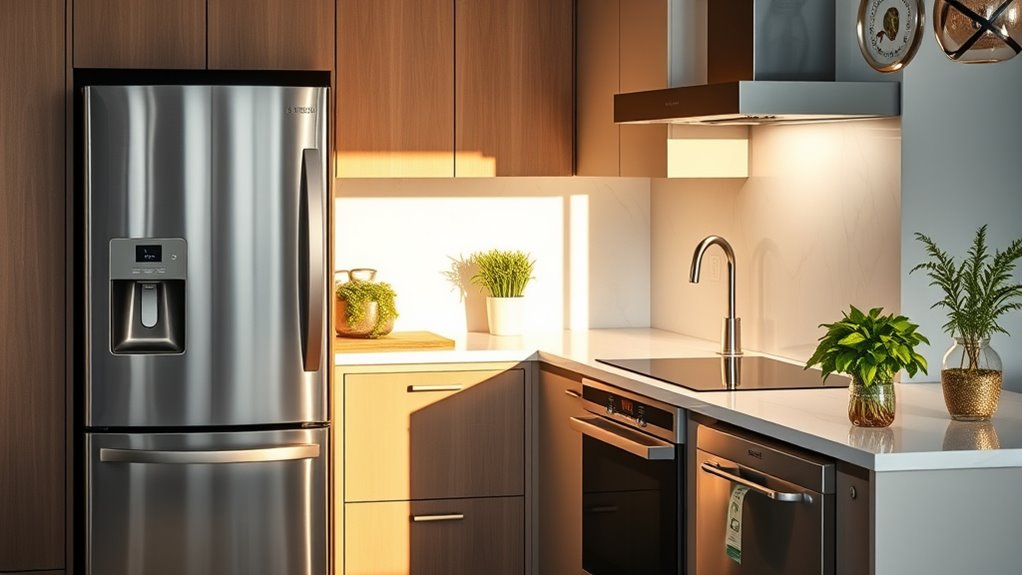
Upgrading to energy-efficient kitchen equipment can substantially reduce your household’s energy consumption and lower utility bills. One of the most effective ways to do this is by investing in appliances with smart sensor integration. These sensors automatically detect when a device is in use, adjusting power levels or turning off when not needed. For example, smart refrigerators can monitor usage patterns and optimize refrigeration cycles, preventing unnecessary energy drain. Similarly, smart cooktops can detect pot presence and heat only as much as necessary, avoiding wasted energy. This seamless automation not only conserves energy but also enhances convenience, allowing you to focus on cooking rather than managing appliances.
Smart sensors in appliances reduce energy use and boost convenience through automatic adjustments and optimized operation.
In addition to smart sensors, integrating renewable energy sources into your kitchen setup can amplify energy savings. Installing solar panels to generate electricity allows you to power your appliances with clean, renewable energy, reducing reliance on fossil fuels and decreasing your carbon footprint. You might also consider solar water heaters for your kitchen sink or dishwasher, which can significantly cut energy use dedicated to water heating. Over time, these investments pay off by lowering your electricity bills and providing a sustainable energy supply for your household.
When choosing new appliances, look for those with high Energy Star ratings. These appliances meet strict efficiency standards and often come with smart features that optimize performance. For instance, energy-efficient dishwashers use less water and power while still delivering thorough cleaning, and induction cooktops heat faster with less energy wastage. Combining these appliances with smart sensor technology ensures you’re using the minimum necessary energy without sacrificing functionality.
Another smart move is to upgrade your lighting. LED bulbs and smart lighting systems can be integrated into your kitchen, allowing you to control lighting remotely or set schedules that match your routines. Dimming lights or turning them off when not needed further conserves energy. When paired with renewable energy sources, your entire kitchen becomes a model of sustainability and efficiency.
Ultimately, the key is to adopt a comprehensive approach that combines smart technology with renewable energy. This way, you not only cut down on energy consumption but also contribute to a cleaner environment. As you make these upgrades, you’ll notice immediate savings on your utility bills and enjoy the peace of mind that comes from knowing you’re reducing your household’s environmental impact. Upgrading your kitchen with these smart, sustainable solutions transforms it into a modern, energy-conscious space that benefits your wallet and the planet alike.
A comprehensive approach that integrates smart technology and renewable energy sources is the most effective way to maximize energy savings and environmental benefits.
Frequently Asked Questions
What Is the Typical ROI Period for Energy-Efficient Kitchen Equipment?
The typical payback period for energy-efficient kitchen equipment ranges from 1 to 3 years, depending on usage and equipment type. You’ll see a quick investment return as your energy bills decrease markedly. By upgrading now, you reduce ongoing costs and improve your kitchen’s efficiency. Keep in mind, the sooner you invest, the sooner you enjoy savings, making this a smart financial decision for your business.
How Do Maintenance Costs Compare Between Traditional and Energy-Efficient Appliances?
You’ll find that energy-efficient appliances generally have lower maintenance costs, with repair frequency reducing by up to 30%. This means fewer breakdowns and less downtime, leading to significant cost savings over time. Traditional appliances often require more frequent repairs and part replacements, which can add up quickly. Investing in energy-efficient equipment not only saves energy but also helps you cut maintenance expenses, making it a smarter, cost-effective choice.
Are There Specific Certifications to Look for When Purchasing Energy-Efficient Kitchen Gear?
When buying energy-efficient kitchen gear, look for certifications like Energy Star and NSF Certification. Energy Star indicates the appliance meets strict energy-saving standards, helping you cut costs and reduce environmental impact. NSF Certification guarantees the product is safe and sanitary, especially for food contact surfaces. These certifications help you make informed choices, ensuring you get reliable, high-quality equipment that saves energy and maintains safety standards in your kitchen.
Can Existing Kitchen Infrastructure Support New Energy-Efficient Equipment?
Your existing kitchen infrastructure might support new energy-efficient equipment if your kitchen layout allows proper installation and your power supply is compatible. Check whether the electrical outlets and wiring can handle the upgraded appliances’ voltage and current requirements. If your kitchen layout is flexible, you could reconfigure space to accommodate new gear. Always verify power supply compatibility beforehand to guarantee seamless integration without needing major renovations.
What Financing Options Are Available for Upgrading to Energy-Efficient Appliances?
Think of financing options as a bridge to your energy-efficient kitchen upgrade. You can explore various financing programs like low-interest loans or lease agreements that make the leap easier. Rebate options from utility companies or government programs can also lighten the load by offering cash-back incentives. By tapping into these resources, you turn the upgrade into a manageable journey, saving money while making your kitchen more sustainable.
Conclusion
Upgrading to energy-efficient kitchen equipment is like planting a seed that grows savings and sustainability over time. By making smart choices today, you’re not just reducing energy bills—you’re nurturing a greener future. Think of your kitchen as a well-oiled machine, where every upgrade is a gear turning smoothly towards efficiency. Embrace these changes and watch your kitchen transform into a powerhouse of sustainability, proving that small actions can create a ripple effect of positive change.
Halloween Picks
halloween
As an affiliate, we earn on qualifying purchases.