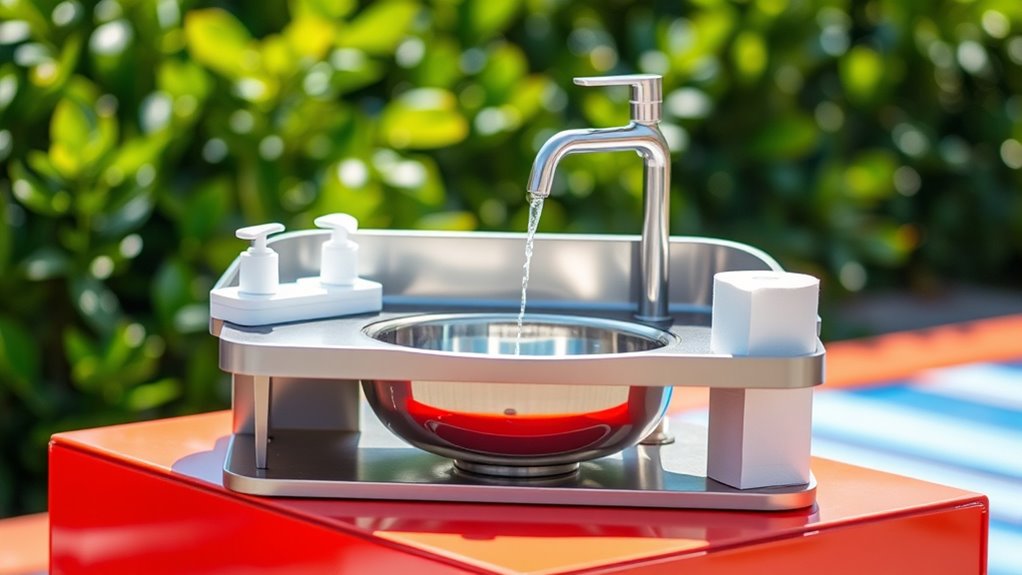

Portable handwashing stations are essential for maintaining hygiene in areas lacking permanent facilities, especially in outdoor events, emergency zones, or remote communities. They help you manage water efficiently with features like touchless faucets and soap dispensers, reducing contamination risk. These units promote regular handwashing, support public health, and can be scaled to meet community needs. Keep exploring to discover how these solutions can effectively bridge sanitation gaps and improve health outcomes.
Key Takeaways
- Portable handwashing stations enable hygiene in remote, outdoor, or emergency settings lacking permanent sanitation infrastructure.
- Features like touchless faucets and soap dispensers reduce contact and improve hand hygiene effectiveness.
- Water management components, such as waste collection tanks and water-efficient designs, extend usage and prevent contamination.
- Deploying multiple stations supports large-scale events or communities, bridging sanitation gaps and promoting health.
- These solutions reinforce good hygiene habits, reducing disease transmission and improving overall public health outcomes.
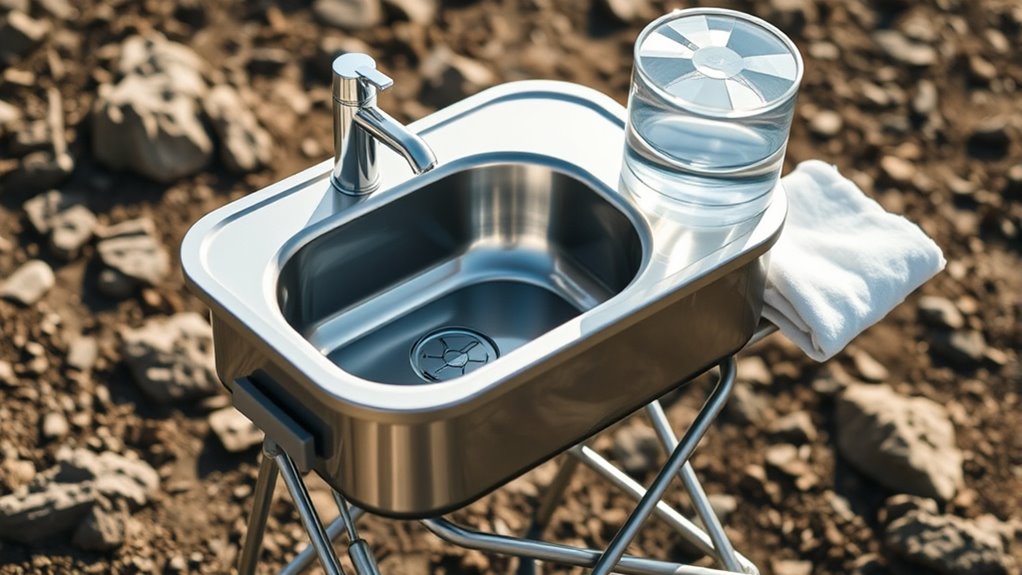
In many settings, maintaining proper hand hygiene and managing water efficiently can be challenging, especially when access to permanent facilities is limited. Without reliable sanitation infrastructure, the risk of disease transmission rises considerably. Portable handwashing stations become essential tools in these environments, helping you reduce the spread of germs and protect public health. When you have access to a well-designed portable system, you can encourage regular handwashing, which is one of the most effective ways to prevent illnesses like diarrhea, cholera, and other waterborne diseases. These stations are easy to set up in locations such as outdoor events, emergency zones, construction sites, or remote communities, where permanent facilities might not exist or are insufficient.
Effective water management plays a critical role in disease prevention. Portable systems often include features like touchless faucets or foot-operated pedals, minimizing contact and decreasing contamination risks. You can also find units with integrated soap dispensers and waste water collection tanks, ensuring a hygienic environment. Managing water supplies efficiently means you can extend usage, reduce waste, and ensure consistent availability even in resource-constrained settings. This is particularly important in emergency situations where supply chains may be disrupted, and maintaining proper hygiene can save lives. When you prioritize water efficiency and sanitation, you foster better health outcomes for everyone involved. Reliable backup power can also support continuous operation of these systems during outages or emergencies.
Using portable handwashing stations also supports community engagement and education about hygiene practices. When people see accessible facilities, they’re more likely to wash their hands regularly, which reinforces good habits and promotes disease prevention. It’s a simple but powerful way to improve overall sanitation standards in areas lacking infrastructure. Additionally, portable units are adaptable and scalable; you can deploy multiple stations depending on the size of the population or event, ensuring everyone has access to hygiene facilities. This flexibility helps bridge gaps in sanitation infrastructure, making a tangible difference in public health.

Portable Hand Washing Station with Electronic Faucet Adjustable Outdoor Sink Station & Camping Dish Washing Station – Portable Sink for Camping, RV, Workshops & Garages – Includes Drain Hose (White)
ONE-TOUCH ELECTRONIC FAUCET: Upgrade your outdoor hygiene with this advanced portable sink hand wash station. A simple button…
As an affiliate, we earn on qualifying purchases.
As an affiliate, we earn on qualifying purchases.
Frequently Asked Questions
How Long Does a Portable Handwashing Station Typically Last?
A portable handwashing station typically lasts around 6 months to a year, depending on usage and maintenance. Your shelf life for the station depends on the quality of materials and how well you care for it. It’s important to follow a regular replacement schedule, checking for cracks or leaks, and replacing parts as needed to guarantee hygiene and safety. Proper upkeep can extend its usability and effectiveness.
What Maintenance Is Required for Portable Water Management Systems?
You should regularly check your portable water management system for leaks and perform leak inspections to prevent water loss. Maintain proper chlorine levels to ensure water safety, testing weekly and adjusting as needed. Clean filters and tanks periodically to prevent contamination. Also, examine hoses and fittings for cracks or damage, replacing parts promptly. These steps help keep your system functioning efficiently and ensure safe, clean water for users.
Are Portable Handwashing Units Suitable for Outdoor Emergencies?
Yes, portable handwashing units are ideal for outdoor emergencies, with studies showing they improve hand hygiene compliance by up to 70%. They provide convenient outdoor sanitation, ensuring essential hand hygiene even in challenging environments. These units are designed for durability and ease of use, making them perfect for disaster zones, outdoor events, or remote areas. You can rely on them to maintain hygiene standards and prevent disease transmission effectively.
How Much Water Does a Portable Handwashing Station Use per Wash?
A portable handwashing station typically uses about 1 to 2 liters of water per wash. This water consumption guarantees effective hand hygiene without wasting resources. When you use a portable unit, you can control water flow and minimize usage, making it ideal for outdoor emergencies. By conserving water, you maintain good hygiene standards while being mindful of limited water supplies, which is vital in outdoor or emergency settings.
Can Portable Systems Be Sanitized for Reuse in Multiple Locations?
Yes, portable systems can be sanitized for reuse in multiple locations if you follow proper sanitization protocols. You should thoroughly clean and disinfect all parts that come into contact with users, ensuring no bacteria or residue remain. Adhering to recommended sanitization protocols guarantees reuse safety, preventing cross-contamination. Regularly inspect the system for cleanliness and maintain proper disinfectant concentrations to keep the portable handwashing station safe and effective for each new location.

20L Water Container with Spigot Water Jug for Outdoor Handwashing Emergency
【Large Capacity】: Portable Water Bottle has screw lid which is great for storing water and transporting water, meeting…
As an affiliate, we earn on qualifying purchases.
As an affiliate, we earn on qualifying purchases.
Conclusion
By choosing portable handwashing and water management solutions, you help reduce the spread of germs and save lives. Did you know that proper hand hygiene can cut respiratory illnesses by nearly 20%? With over 3 million deaths annually linked to water-related diseases, investing in portable systems becomes essential. Stay proactive—embrace these innovations to protect yourself and your community. Every small step counts in making a healthier, safer world for everyone.

kleankin Portable Camping Sink, Handwashing Station Basin with 4.5 Gal (17 L) Tank, 6.3 Gal (24 L) Recovery Tank, Rolling Wheels & Soap Dispenser for RV, Outdoor Events, Gatherings, HDPE, White
Outdoor Convenience: This hand wash station makes water easily accessible outdoors. Great for outdoor social events, worksites, camping,…
As an affiliate, we earn on qualifying purchases.
As an affiliate, we earn on qualifying purchases.
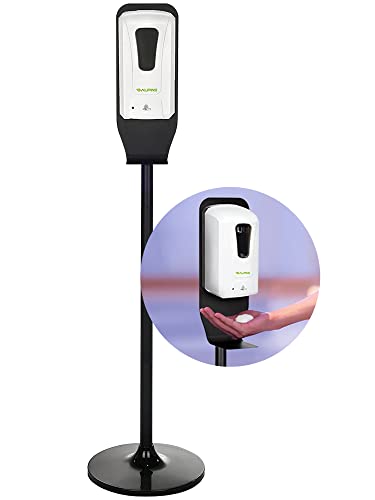
Alpine Automatic Hand Sanitizer Dispenser – Touchless Soap Dispenser with Floor Stand for Restaurant, Hospital, School, Hotel, Kitchen and Bathroom -1200mL Foam White
✔️TOUCHLESS SOAP DISPENSER: Alpine Automatic Sanitizer Dispenser Makes it Simple and Easy To Get a Shot of Hand…
As an affiliate, we earn on qualifying purchases.
As an affiliate, we earn on qualifying purchases.