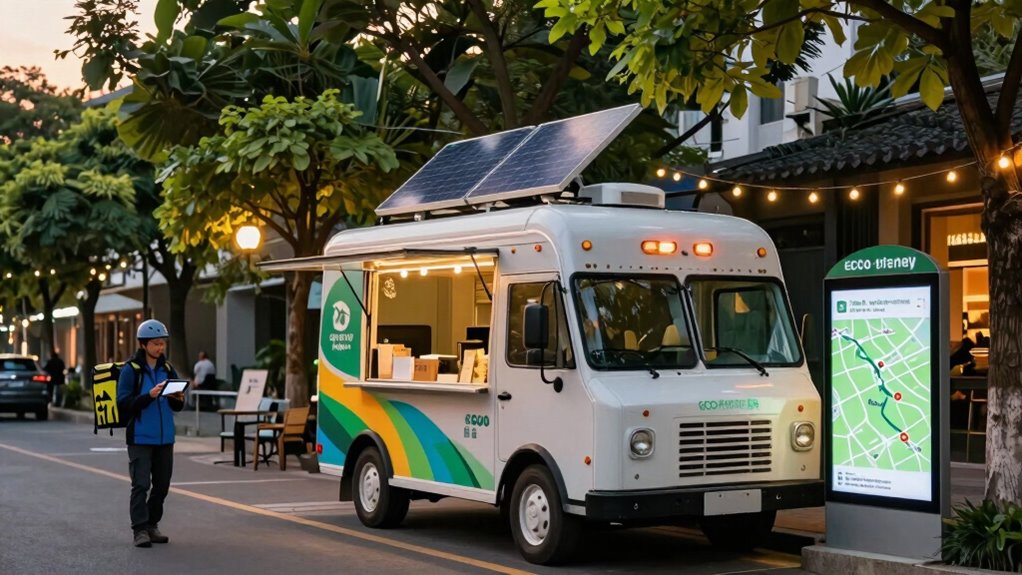

Carbon-aware route planning is becoming more practical for food trucks because it helps you reduce emissions, cut costs, and meet growing sustainability standards. By optimizing routes with real-time traffic and charging station data, you can save fuel and time while supporting eco-friendly practices. Electric vehicle options and advanced routing tools make it easier to stay compliant with regulations and attract eco-conscious customers. Keep exploring to discover how these strategies can boost your business and sustainability efforts.
Listen free for 30 days with Audible
Thousands of audiobooks and originals — cancel anytime.
As an affiliate, we earn on qualifying purchases.
Key Takeaways
- Advances in routing technology and real-time data make eco-friendly planning accessible for food trucks without requiring expert skills.
- Growing city incentives and stricter emissions regulations encourage adoption of electric vehicles and sustainable routing strategies.
- Optimized routes reduce fuel and energy costs, boosting profit margins for mobile food vendors.
- Charging infrastructure data integration ensures food trucks can efficiently plan routes with necessary charging stops.
- Demonstrating eco-conscious practices enhances brand reputation and appeals to environmentally aware customers.
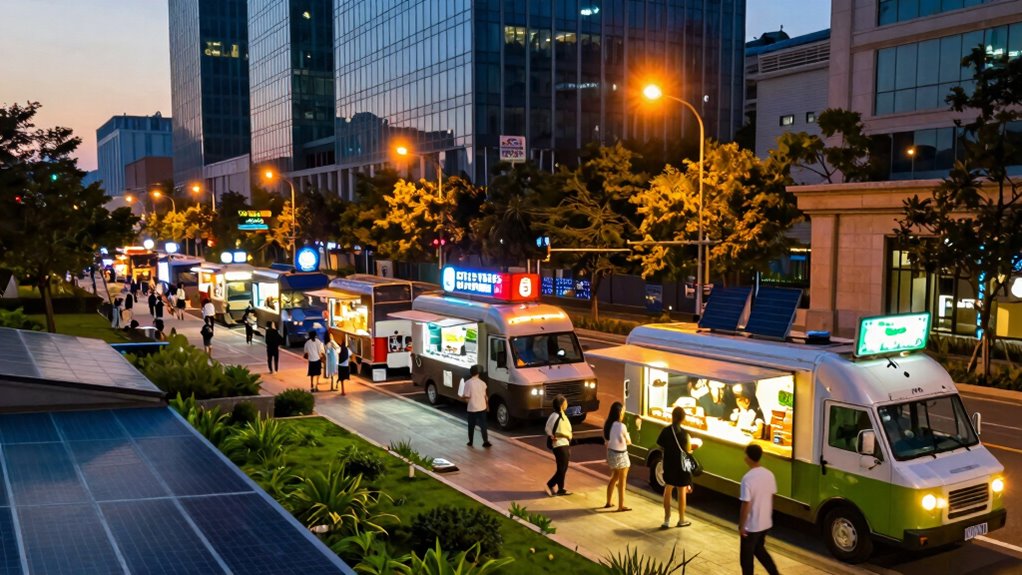
As food trucks steer through busy city streets, they have an opportunity to reduce their environmental impact by adopting carbon-aware route planning. This approach isn’t just about saving the planet; it also makes good business sense. When you leverage route optimization techniques, you can find the most efficient paths, saving fuel, reducing emissions, and cutting costs. Switching to electric vehicles further amplifies these benefits, since they produce zero tailpipe emissions and are often cheaper to operate over time. As cities become more conscious of air quality and sustainability, implementing carbon-aware strategies isn’t just a trend—it’s quickly becoming an industry standard.
Electric vehicles are a game-changer for food trucks aiming to lower their carbon footprint. They allow you to eliminate tailpipe emissions entirely, which is especially important as urban areas tighten regulations on pollution. But simply switching to electric isn’t enough; you need to plan your routes carefully. That’s where route optimization comes into play. By analyzing real-time traffic data, charging station locations, and delivery schedules, you can create smarter routes that minimize unnecessary travel. This reduces energy consumption and ensures your truck spends more time serving customers than idling in traffic or searching for charging spots. Additionally, electric vehicle adoption is gaining momentum as cities implement stricter emissions standards and incentivize eco-friendly transportation. Furthermore, integrating real-time traffic data into your planning can significantly enhance your route efficiency, making the process even more effective and accessible. Utilizing advanced routing tools can further streamline this process and provide valuable insights for your daily operations. Incorporating cloud-based data management can also help you track and analyze your operational metrics more effectively, leading to ongoing improvements.
The practicality of carbon-aware route planning is growing because technology makes it more accessible than ever. You don’t need to be a tech expert to start; many tools now offer user-friendly interfaces that integrate GPS data, weather forecasts, and energy consumption models. These tools help you identify the most eco-friendly routes, considering factors like elevation changes, traffic congestion, and charging station availability. As a result, your food truck can operate more sustainably without sacrificing efficiency or customer reach. This is particularly advantageous in densely populated areas where traffic jams are common, and emissions regulations are strict.
Furthermore, adopting carbon-aware route planning aligns with the increasing consumer demand for environmentally responsible businesses. Customers are more likely to support food trucks that demonstrate a commitment to sustainability. By showcasing your efforts—like using electric vehicles and optimizing routes—you can differentiate yourself from competitors and attract a loyal customer base. Plus, the cost savings from optimized routes and lower energy use can improve your profit margins, making eco-friendly practices financially viable.
In essence, the combination of electric vehicles and route optimization makes carbon-aware route planning a practical, forward-thinking strategy for food trucks. It’s a way to operate more sustainably, save money, and appeal to eco-conscious customers—all while steering city streets efficiently. As technology advances and regulations tighten, embracing these practices isn’t just smart; it’s essential for staying competitive and responsible in today’s urban food scene.
electric vehicle charging station for food trucks
As an affiliate, we earn on qualifying purchases.
As an affiliate, we earn on qualifying purchases.
Frequently Asked Questions
How Does Carbon Awareness Impact Daily Food Truck Operations?
Carbon awareness impacts your daily food truck operations by encouraging eco-friendly choices, like sustainable sourcing and eco-friendly packaging. You’ll plan routes more efficiently to reduce fuel consumption, lowering your carbon footprint. This not only helps the environment but also appeals to eco-conscious customers. Incorporating carbon awareness into your routine makes your business more sustainable, cost-effective, and aligned with growing demand for environmentally responsible practices.
What Tools or Apps Assist With Carbon-Aware Route Planning?
You can use eco-friendly navigation apps like Google Maps with optimized routing features or specialized tools like Routific and Circuit Route Planner, which help reduce emissions. These apps assist you in planning efficient routes, incorporating emission reduction strategies, and avoiding heavy traffic. By leveraging these tools, you enhance your food truck’s sustainability, lower fuel costs, and contribute to environmentally conscious operations, making your daily routes smarter and greener.
Are There Cost Benefits to Implementing Carbon-Aware Planning?
Absolutely, you’ll save money while saving the planet—talk about a win-win! Implementing carbon-aware planning boosts fuel savings by optimizing routes, which cuts down on costly fuel consumption. Plus, reducing emissions isn’t just good for the environment; it can also lead to fewer regulatory fees or taxes. So, your food truck not only serves up deliciousness but also delivers cost benefits through smarter, greener routes.
How Do Weather Conditions Influence Carbon-Efficient Routes?
Weather patterns considerably influence your route optimization by affecting travel times and fuel efficiency. Rain, snow, wind, or extreme temperatures can slow you down or increase fuel consumption, making it harder to plan the most carbon-efficient route. By monitoring weather conditions, you can adjust your routes proactively, avoiding delays and reducing emissions, ensuring your food truck runs smoothly and sustainably.
Can Carbon-Aware Planning Improve Customer Satisfaction?
Yes, carbon-aware planning can boost customer satisfaction by demonstrating your commitment to sustainability, which enhances your environmental reputation. When you choose eco-friendly routes, you reduce emissions, showing customers you care about the planet. This can foster stronger customer loyalty, as people increasingly support businesses that prioritize environmental responsibility. By aligning your routes with eco-conscious practices, you not only improve efficiency but also build trust and positive connections with your customers.
route optimization software for food trucks
As an affiliate, we earn on qualifying purchases.
As an affiliate, we earn on qualifying purchases.
Conclusion
Embracing carbon-aware route planning isn’t just about saving the planet—it’s about making your food truck business smarter and more efficient. Think about it: by choosing eco-friendly routes, you might also cut fuel costs and boost your reputation among eco-conscious customers. While some skeptics say it’s just a trend, the growing tech and environmental evidence suggest otherwise. So, why not give it a shot? It’s a win for your business and the planet.
electric food truck conversion kit
As an affiliate, we earn on qualifying purchases.
As an affiliate, we earn on qualifying purchases.
real-time traffic GPS device for delivery vehicles
As an affiliate, we earn on qualifying purchases.
As an affiliate, we earn on qualifying purchases.
NFL season / tailgating Picks
team gear
As an affiliate, we earn on qualifying purchases.