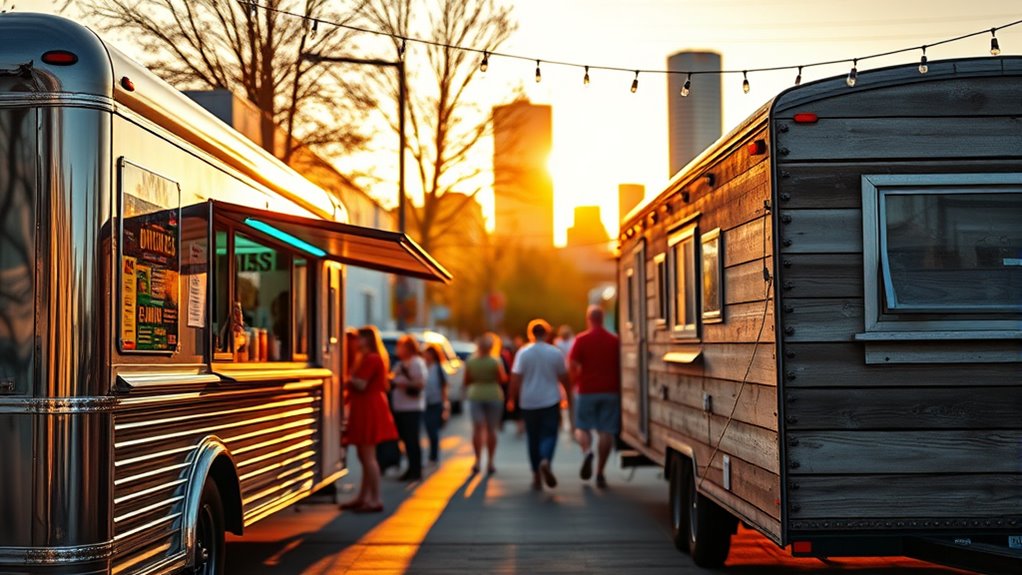

Choosing between a food truck and a trailer depends on your priorities. If you want mobility and flexible locations, a food truck makes it easy to move around and reach various customers. But if you prefer lower upfront costs and simpler operation, a trailer could be the better choice. Consider your branding, maintenance, and local regulations as well. Keep exploring to find out how each option can best fit your food business goals.

Get kitchen staples and gadgets delivered free with Prime
- Fast, free delivery on millions of items
- Prime Video, Amazon Music and more included
- Member-only deals all year
Key Takeaways
- Food trucks offer greater mobility and flexibility for location changes and event attendance.
- Trailers typically have lower initial costs and operating expenses, making them more budget-friendly.
- Trucks are better suited for urban environments and navigating tight spaces.
- Customization options and maintenance access may be easier with trailers, depending on design.
- Ensure compliance with local permits, licenses, and regulations for both vehicle types before purchasing.
Mobility and Location Flexibility
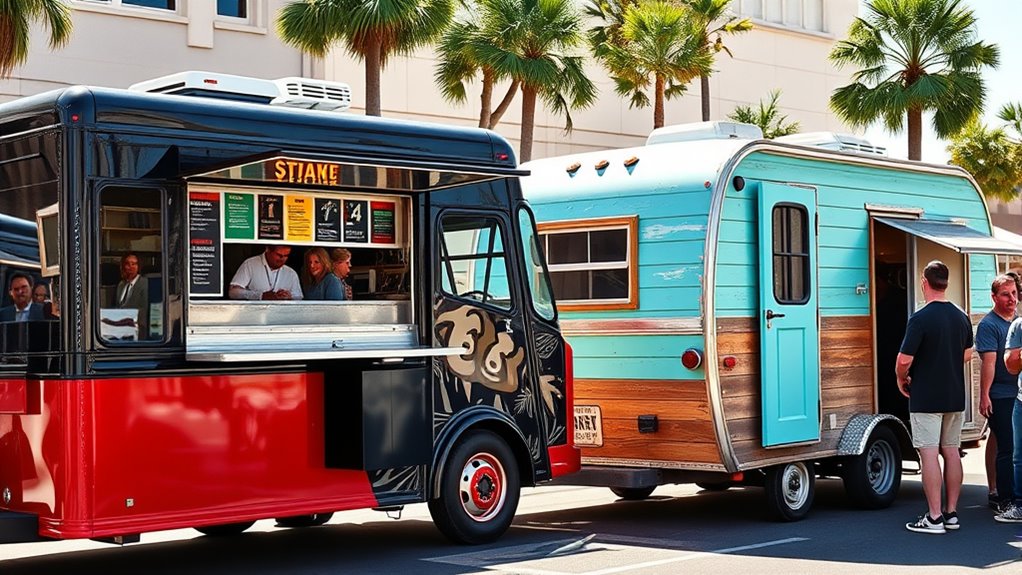
When it comes to mobility and location flexibility, a food truck offers significant advantages over a trailer. You can quickly relocate your food truck to different events or busy areas, making event planning more dynamic and responsive. Unlike a trailer, which often requires a tow vehicle and setup time, a truck can navigate city streets and tight spaces with ease. This agility allows you to attend multiple events in a single day without hassle. Additionally, managing staff becomes simpler since you can move staff between locations efficiently. Food trucks give you the freedom to adjust your operations based on demand and foot traffic, ensuring better customer reach and more opportunities to grow your business. The maneuverability of a food truck is especially valuable in crowded urban environments, where space and accessibility are limited.
Initial Investment and Operating Costs

While a food truck offers impressive mobility, it also requires a larger initial investment compared to a trailer. When considering cost comparison, a truck’s purchase price, customization, and equipment tend to be higher. You’ll need to factor in additional expenses like licensing and insurance, which can add up quickly. Operating costs such as fuel, maintenance, and repairs are also higher due to the vehicle’s size and usage. Additionally, regular maintenance and potential repairs are crucial to keep a bike in good condition, which can be an ongoing expense. Conversely, trailers typically have lower upfront costs and can be more economical to operate. To make the best decision, you should focus on your financial planning, weighing the upfront expenses against ongoing costs. This way, you’ll determine which option aligns with your budget and long-term business goals more effectively.
Branding and Customer Engagement
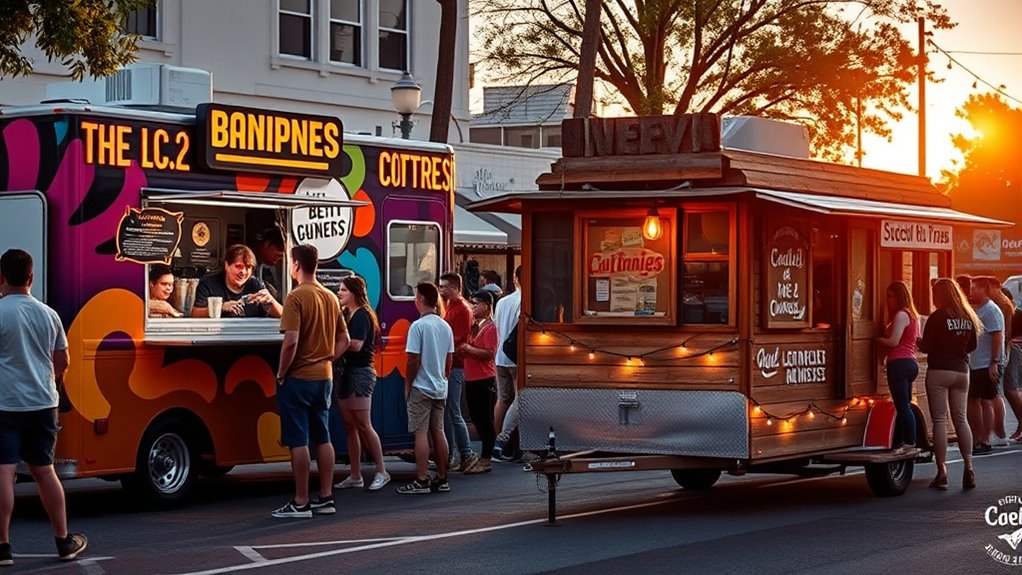
Your choice between a food truck and a trailer substantially impacts your ability to build a strong brand and engage customers. A truck’s mobility allows you to attend events, festivals, and busy neighborhoods, boosting your visibility. Use social media to share your location, daily specials, and customer stories, strengthening your online presence. Loyalty programs, whether digital or punch cards, encourage repeat business and foster a sense of community. With a truck, you can create a recognizable brand through consistent branding elements like logos, colors, and signage, making it easier for customers to remember you. Engaging directly with customers in person and online helps build relationships, turning casual passersby into loyal fans. Understanding local laws can also influence how you operate and promote your business effectively. Ultimately, your ability to connect and promote your brand hinges on how effectively you leverage your vehicle’s mobility.
Maintenance and Customization Options
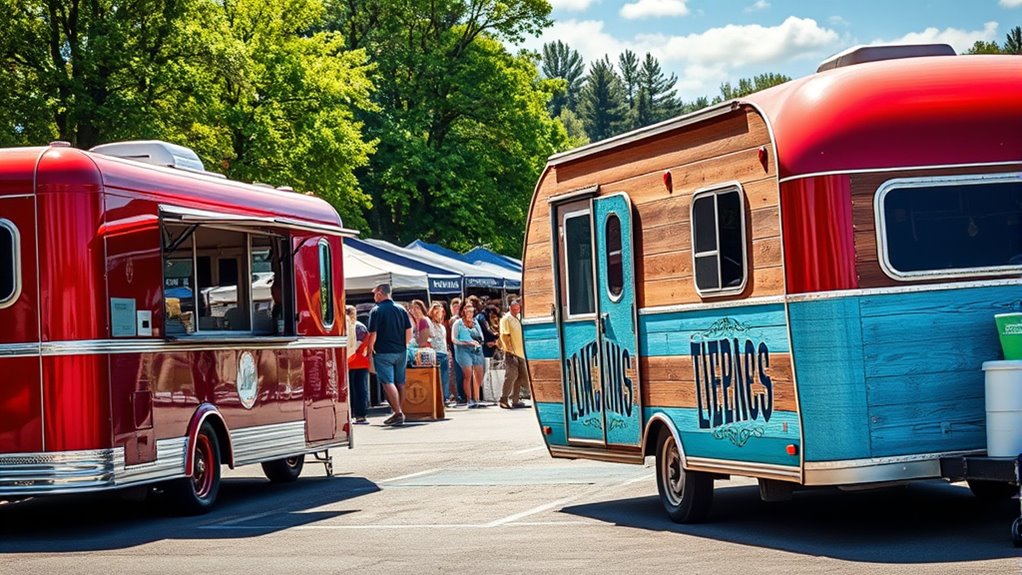
Maintenance and customization options play a crucial role in how well you can keep your food vehicle in top shape and tailor it to your brand. Regular upkeep of kitchen equipment ensures efficiency and safety, reducing downtime during busy hours. Custom signage allows you to stand out and attract customers easily. When choosing between a food truck and a trailer, consider how easily you can access and upgrade these features. Additionally, understanding brand reputation can help ensure your vehicle maintains its integrity and appeal over time.
Regulatory Requirements and Permitting
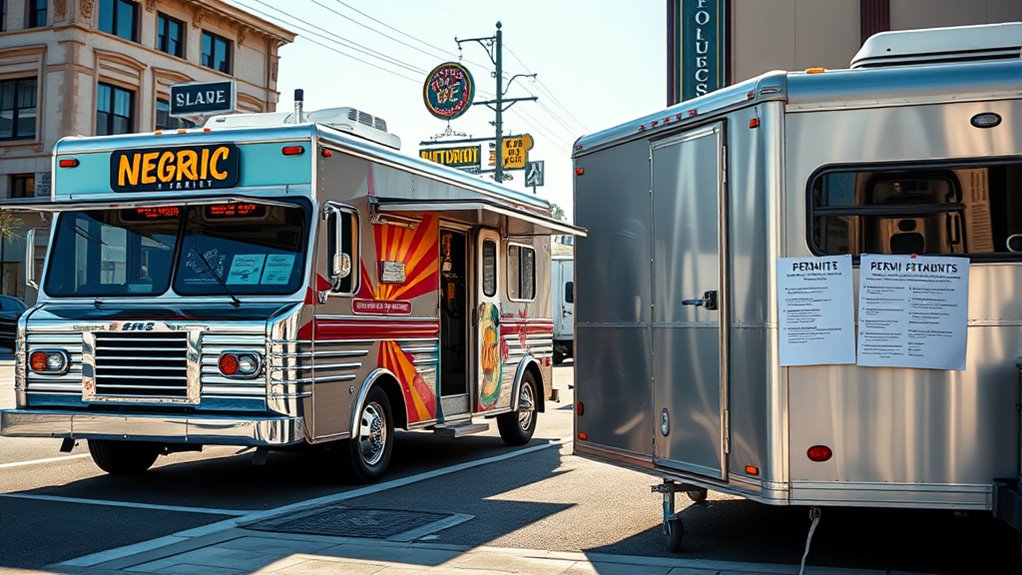
Managing regulatory requirements and securing permits is a critical step before launching your food business. You’ll need to navigate various health regulations and licensing requirements specific to your location. To stay compliant, consider these key steps:
- Research local health department rules for food safety and sanitation standards.
- Obtain the necessary food service permits and business licenses.
- Register your vehicle, whether it’s a food truck or trailer, with relevant transportation authorities.
- Ensure your equipment and setup meet safety codes and inspection standards.
- Be aware of specific regulatory requirements and permit processes that vary by jurisdiction to avoid potential delays.
Failing to meet these requirements can lead to fines or shutdowns. Be proactive by contacting local agencies early in the planning process, so you’re fully prepared to operate legally and efficiently.
Frequently Asked Questions
Which Option Offers Better Long-Term Profitability?
When considering long-term profitability, you need to weigh cost implications and operational flexibility. A food truck often has higher initial costs but offers greater flexibility to move locations, attracting more customers. Trailers typically cost less and may have lower maintenance expenses, but they limit your mobility. Your choice impacts your ability to adapt and grow, so consider how each option aligns with your business goals and the markets you want to serve.
How Do the Interior Layouts Differ for Trucks and Trailers?
You’ll find that interior design differs markedly between trucks and trailers. Trucks often have a more compact layout, with efficient use of space and optimized storage capacity for essential equipment. Trailers typically offer more room, allowing for flexible interior design and additional storage options. Your choice impacts how you organize your workspace, so consider how storage capacity and layout will meet your operational needs and workflow for smooth food service.
Can I Customize Both Food Trucks and Trailers Equally?
Oh, sure, you can customize both equally—if you enjoy hitting walls with your dreams! In reality, food trucks often offer more design flexibility and customization options because of their built-in mobility and integrated systems. Trailers, while customizable, usually have more limitations due to their structure. So, if you crave endless design freedom, a truck might be your best bet; trailers might leave you feeling a bit confined.
Are There Specific Weather Considerations for Each Option?
Weather impact plays a big role in your decision, as each option handles seasonal adaptability differently. Food trucks often offer better insulation and climate control, helping you operate smoothly in extreme weather. Trailers might require additional modifications for insulation or heating, making them less adaptable. Consider your local climate and seasonal needs to guarantee your business can stay open and comfortable year-round, no matter the weather conditions.
What Are the Resale Values for Trucks Versus Trailers?
You should consider the resale market and depreciation rates when evaluating trucks versus trailers. Typically, trucks hold their value better and have a stronger resale market due to wider demand and durability. Trailers may depreciate faster and have a narrower resale market, making them less attractive for long-term investment. Your choice impacts how easily you can sell or upgrade in the future, so weigh these factors carefully.
Conclusion
Ultimately, choosing between a food truck and a trailer is like picking between a trusted partner and a trusty steed—you’ll want what best suits your dreams and needs. Think about your budget, flexibility, and how you want to connect with customers. Whichever path you choose, remember that this decision shapes your journey, fueling your passion like fire in your belly. Trust your instincts, and let your culinary adventure unfold wherever the road takes you.
Halloween Picks
halloween
As an affiliate, we earn on qualifying purchases.