Before raising prices, you should evaluate customer perception by reviewing feedback and social media comments to gauge how value is seen. Compare competitor prices and offerings to stay competitive. Check your costs and profit margins to make certain your new prices cover expenses. Monitor market trends and customer demand to identify the best timing. Keep a close eye on sales data to see how changes impact demand. If you want to master these insights, there’s more to consider.
Listen free for 30 days with Audible
Thousands of audiobooks and originals — cancel anytime.
As an affiliate, we earn on qualifying purchases.
Key Takeaways
- Customer feedback and reviews to gauge perceived value and acceptance of potential price changes
- Competitor pricing, menu offerings, and market trends to ensure competitive and strategic adjustments
- Cost analysis including ingredients, fuel, and maintenance to confirm price coverage and margin sustainability
- Sales data and demand patterns to identify optimal timing and impact of price increases
- Market demand and customer segments to tailor pricing strategies and maximize profitability
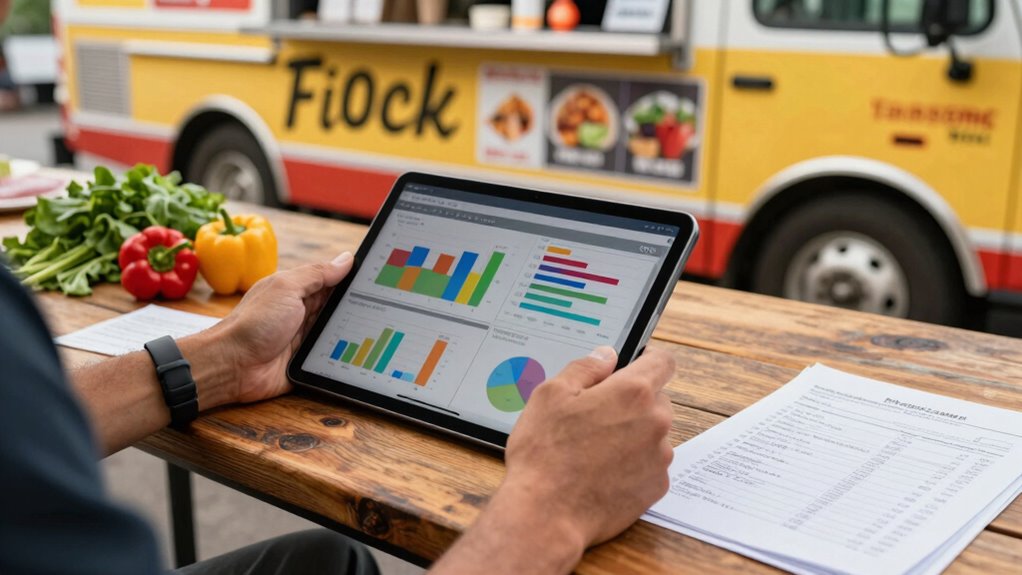
Pricing your food truck effectively can make or break your business, so understanding the right strategies is essential. Before you even think about raising prices, you need to carefully evaluate several key factors that influence your success. One of the most critical considerations is customer perception. How your customers view your prices impacts whether they’ll continue patronizing your truck or look elsewhere. If your prices are perceived as fair and aligned with the quality of your food and service, you’re more likely to retain loyal customers. Conversely, if they see your prices as too high without a clear value proposition, they might turn away. To gauge this perception, pay attention to customer feedback, social media comments, and reviews. Are people mentioning that your prices are reasonable? Do they feel they’re getting good value? These insights help you understand whether a price increase would be welcomed or received with resistance.
Customer perception of value is key—monitor feedback and reviews to determine if your prices are fair and justified.
In addition, competitor analysis is crucial. You need to know what others in your area are charging for similar offerings. Research nearby food trucks, restaurants, and vendors selling comparable menu items. If competitors have recently raised their prices, it might indicate that the market can bear higher costs, and your customers are already accustomed to paying more. On the other hand, if your competitors are competing fiercely on price, a sudden increase could put you at a disadvantage. Comparing menu prices, portion sizes, and overall value helps you determine where your pricing stands and whether a bump is justified. It’s not just about matching prices but understanding how your offerings compare in quality, service, and atmosphere. This analysis provides context for what your customers are willing to pay and what they expect. Additionally, understanding market trends can help you anticipate future shifts in customer preferences and pricing expectations. Staying aware of these trends can also help you identify emerging opportunities for strategic pricing adjustments. Moreover, analyzing potential customer segments can help tailor your pricing strategy to different groups within your target market.
Beyond perception and competition, look at your own costs and profit margins. Are your current prices covering expenses comfortably while ensuring a reasonable profit? If costs like ingredients, fuel, or maintenance increase, you might need to adjust prices gradually rather than making abrupt hikes. Keeping an eye on cost fluctuations can help you plan ahead and avoid surprises. Remember, transparency can also influence customer perception. If you plan to raise prices, consider communicating the reasons clearly—such as rising costs or improvements in quality—to maintain trust. Additionally, customer feedback can be a valuable indicator of whether your pricing aligns with customer expectations and willingness to pay.
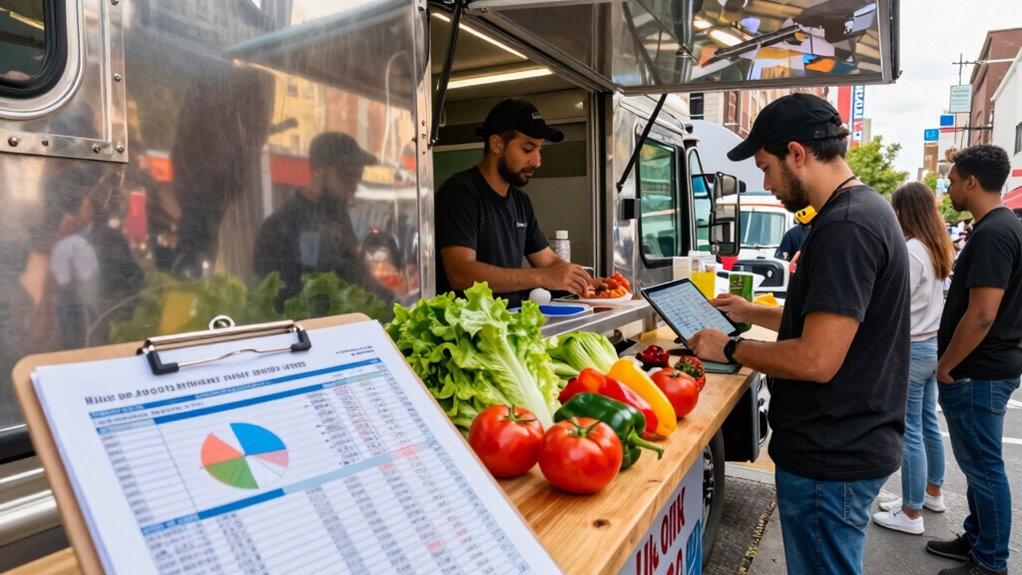
Lastly, track your sales trends and demand levels. If you notice a consistent increase in customers or higher demand during certain times, it might be a sign that your market can support higher prices. Conversely, if sales drop after price changes, you’ll need to reassess. By measuring these factors—customer perception, competitor analysis, costs, and sales—you set a solid foundation for making informed decisions when it’s time to raise your prices.
food truck price monitoring tools
As an affiliate, we earn on qualifying purchases.
As an affiliate, we earn on qualifying purchases.
Frequently Asked Questions
How Often Should I Review My Food Truck’s Pricing?
You should review your food truck’s pricing regularly, ideally monthly or quarterly, to stay aligned with market changes. Use cost analysis to understand your expenses and adjust prices accordingly. Incorporate pricing psychology by observing customer reactions to small changes. Frequent reviews help you stay competitive and guarantee profitability, allowing you to respond quickly to ingredient cost fluctuations or shifts in customer demand. Consistent updates keep your pricing strategy effective and customer-friendly.
What Customer Feedback Is Most Useful for Price Adjustments?
Did you know that 85% of customers say they’re willing to pay more for menu diversification? Focus on customer feedback about your menu, quality, and service to gauge if price adjustments are justified. Pay attention to comments on value, loyalty, and menu options, as these insights help you decide whether to raise prices or improve offerings. Engaging with feedback strengthens customer loyalty and guides smart pricing decisions.
How Do Competitor Prices Influence My Pricing Decisions?
Competitor prices heavily influence your pricing decisions by shaping your market positioning and brand perception. You need to analyze what others charge to guarantee your prices reflect the value you offer and stand out appropriately. If your prices are too high compared to competitors, customers might see your brand as premium or overpriced; if too low, they may question quality. Adjusting your prices thoughtfully helps maintain a strong, competitive brand presence.
What Sales Metrics Best Indicate a Need to Raise Prices?
You should track sales volume, revenue, and customer feedback to see if a price increase is needed. Rising ingredient costs and shrinking profit margins signal it’s time to contemplate raising prices. When sales decline or profits stagnate despite high demand, it’s a clear indicator. Monitoring these metrics helps you identify the right moment to adjust prices, ensuring your food truck remains profitable without losing customer loyalty.
How Can I Test New Prices Without Losing Customers?
You can test new prices through dynamic pricing strategies, adjusting your rates during different times or days to see how customers respond. Use customer segmentation to target specific groups, offering tailored prices to gauge reactions without risking your entire customer base. Monitor sales closely during these tests, and gather feedback to refine your approach. This way, you minimize losses and find the most advantageous price point that balances profit and customer loyalty.
customer feedback analysis software
As an affiliate, we earn on qualifying purchases.
As an affiliate, we earn on qualifying purchases.
Conclusion
Remember, like a seasoned captain steering through unpredictable waters, your pricing decisions should be guided by careful measurement and awareness. By understanding your costs, customer preferences, and competition, you chart a course toward profitability without losing your way. Keep your eyes on the horizon, and don’t be swayed by the siren call of quick gains. When you measure wisely, you’ll navigate the food truck landscape with confidence, ensuring your journey is both profitable and sustainable.
menu pricing calculator for food trucks
As an affiliate, we earn on qualifying purchases.
As an affiliate, we earn on qualifying purchases.
food truck profit margin analysis
As an affiliate, we earn on qualifying purchases.
As an affiliate, we earn on qualifying purchases.
Flea & tick season Picks
flea and tick prevention
As an affiliate, we earn on qualifying purchases.