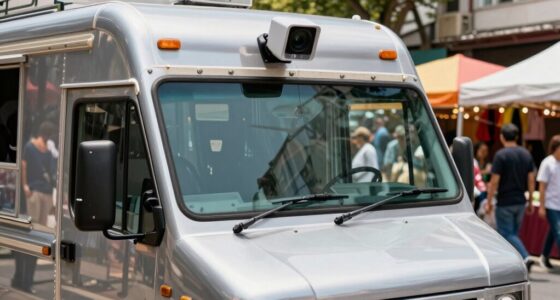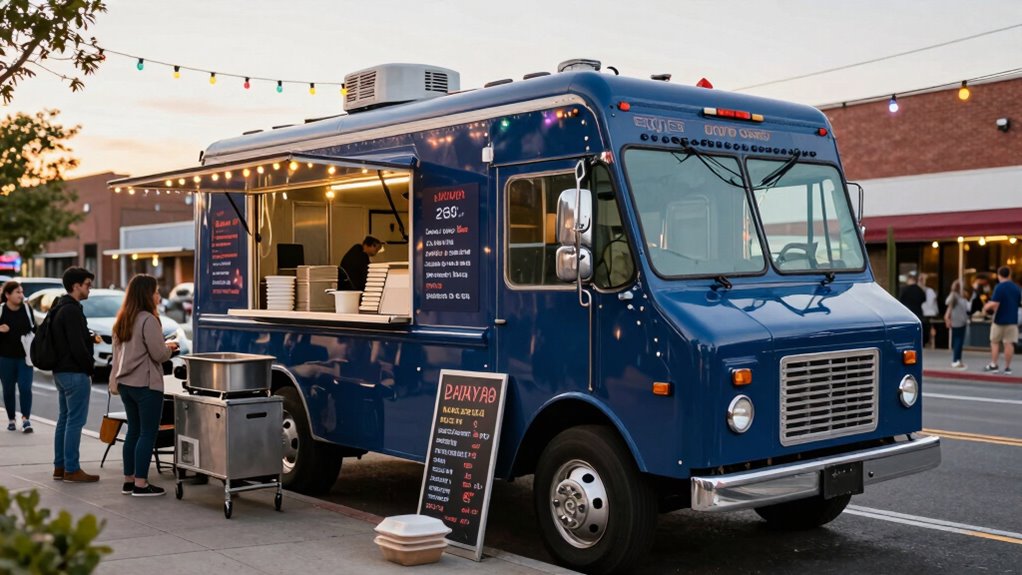

Before shifting to a brick-and-mortar, focus on optimizing your current mobile setup by sharpening your marketing strategies, such as targeted social media and location-specific offers. Streamline fleet management to reduce costs and improve efficiency, while gathering customer data to tailor your menu and marketing efforts. Building a strong brand presence and operational foundation now helps you identify peak locations and customer preferences. Keep refining these elements, and you’ll see how they set the stage for future growth opportunities.

Get kitchen staples and gadgets delivered free with Prime
- Fast, free delivery on millions of items
- Prime Video, Amazon Music and more included
- Member-only deals all year
Key Takeaways
- Optimize mobile operations and marketing strategies to build a loyal customer base and increase sales.
- Streamline fleet management to ensure efficiency, maintenance, and reliable service across multiple trucks.
- Use data insights to identify peak locations, times, and customer preferences for targeted growth.
- Strengthen brand recognition through consistent branding and engaging digital content.
- Focus on operational efficiency and customer engagement to validate the concept before considering a brick-and-mortar location.
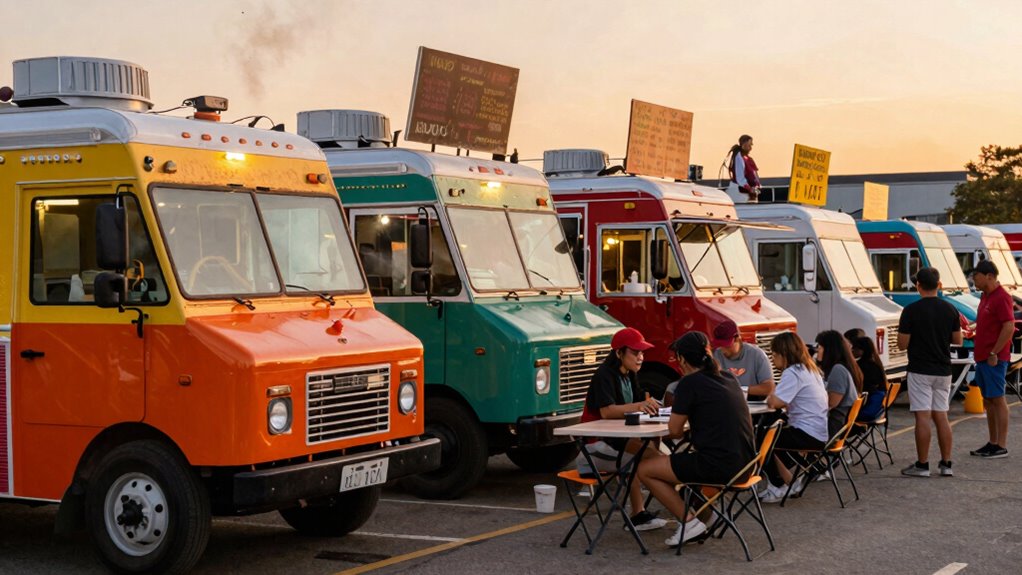
Are you ready to take your food truck business to the next level? Expanding your operation often begins with understanding what growth truly looks like before jumping into a brick-and-mortar location. At this stage, your focus is on maximizing your current mobile setup and preparing for larger-scale operations, which means honing your mobile marketing strategies and streamlining fleet management. These elements are critical in scaling your business efficiently and sustainably.
Mobile marketing becomes your most powerful tool as you grow. Unlike traditional advertising, it allows you to reach your target audience directly, whether through social media, email campaigns, or geofencing. You’ll want to develop a consistent brand presence across all platforms, sharing your location schedules, menu updates, and special offers to keep customers engaged and returning. Using data from your mobile marketing efforts, you can identify peak locations and times, helping you decide where to park next and which events to attend. This approach boosts visibility without the overhead costs of a fixed storefront.
Fleet management is equally vital as your operation expands beyond a single truck. You might start with just one or two vehicles, but managing multiple units requires organization and efficiency. This includes tracking maintenance schedules, fuel consumption, and driver schedules to minimize downtime and control expenses. Digital tools and fleet management software can help you keep everything streamlined, ensuring your trucks are always ready to serve and that your staff is scheduled effectively. Efficient fleet management not only saves money but also enhances your brand’s reliability, making customers trust your consistency.
Before a brick-and-mortar becomes realistic, your goal is to build a solid foundation of brand recognition and operational efficiency. Mobile marketing keeps your customers informed and engaged, turning followers into loyal patrons. Meanwhile, effective fleet management allows you to scale smoothly, reducing logistical headaches and ensuring your trucks are where they need to be, when they need to be there. This phase is about proving your concept, increasing sales, and understanding customer preferences, all while maintaining flexibility. Additionally, understanding content creation and branding can significantly boost your marketing efforts and customer engagement.
Furthermore, data analysis plays a crucial role in making informed decisions about your growth trajectory and customer trends. Ultimately, expansion at this stage isn’t about rushing into permanent locations but about laying the groundwork for future growth. It’s about smartly using technology to stay connected with your customers and managing your fleet so that your business runs seamlessly. When the time comes to consider brick-and-mortar options, you’ll have a robust, well-oiled operation that’s ready to transition into a more permanent space, with a loyal customer base and a proven track record of success.
fleet management software for food trucks
As an affiliate, we earn on qualifying purchases.
As an affiliate, we earn on qualifying purchases.
Frequently Asked Questions
How Do Food Trucks Choose Their Initial Locations?
You choose your initial food truck locations based on high foot traffic areas, events, and spots with limited competition. To build customer loyalty, you focus on consistent branding strategies and quality food. Observing where your target audience gathers helps you pick the best spots, while engaging with customers and offering unique menu items encourages repeat visits. These tactics help establish your presence and grow your food truck’s reputation early on.
What Permits Are Needed for Food Truck Expansion?
You’ll need to secure several permits for expansion, including health permits to guarantee compliance with food safety standards and parking regulations for your new locations. Check with local health departments to obtain necessary health permits, and consult city or county officials about parking rules to avoid fines. Planning ahead for these permits helps you expand smoothly, avoiding delays and legal issues as you grow your food truck business.
How Do Food Trucks Finance Their Growth Stages?
Think of your food truck’s growth as steering a ship through changing tides—you need steady funding. You can finance your expansion through personal savings, small business loans, or equipment leasing. Building strong fleet management helps optimize operational costs, while brand partnerships boost visibility and credibility. These strategies work together, providing the financial wind and support needed to navigate your growth stages smoothly toward a larger, more permanent location.
What Are Common Challenges During Food Truck Expansion?
During food truck expansion, you often face challenges like maintaining menu innovation while scaling, which can strain your resources. Customer engagement might dip if you don’t adapt your marketing strategies across new locations. Balancing quality with growth is essential, as you risk diluting your brand. Additionally, staffing and logistical hurdles can arise, making it imperative to plan carefully to sustain your unique appeal and keep customers excited about your offerings.
How Do Food Trucks Maintain Quality With Increased Demand?
To maintain quality with increased demand, you focus on menu consistency and staff training. You standardize recipes and procedures to guarantee each dish tastes the same, no matter the location. Investing in thorough training helps your staff execute those standards efficiently. Regular quality checks and feedback loops keep everyone aligned, so your customers enjoy the same great experience, even as your business grows.
mobile marketing tools for food trucks
As an affiliate, we earn on qualifying purchases.
As an affiliate, we earn on qualifying purchases.
Conclusion
As you consider expanding from a food truck to a brick-and-mortar location, remember that this shift requires careful planning and a clear vision. For example, a successful food truck owner might first test new dishes on the street, then use that feedback to design a full-scale restaurant menu. This phased approach minimizes risk and builds a loyal customer base. Ultimately, patience and strategic growth pave the way for a smooth, sustainable leap into a permanent spot.
As an affiliate, we earn on qualifying purchases.
geofencing marketing for food trucks
As an affiliate, we earn on qualifying purchases.
As an affiliate, we earn on qualifying purchases.
NFL season / tailgating Picks
team gear
As an affiliate, we earn on qualifying purchases.