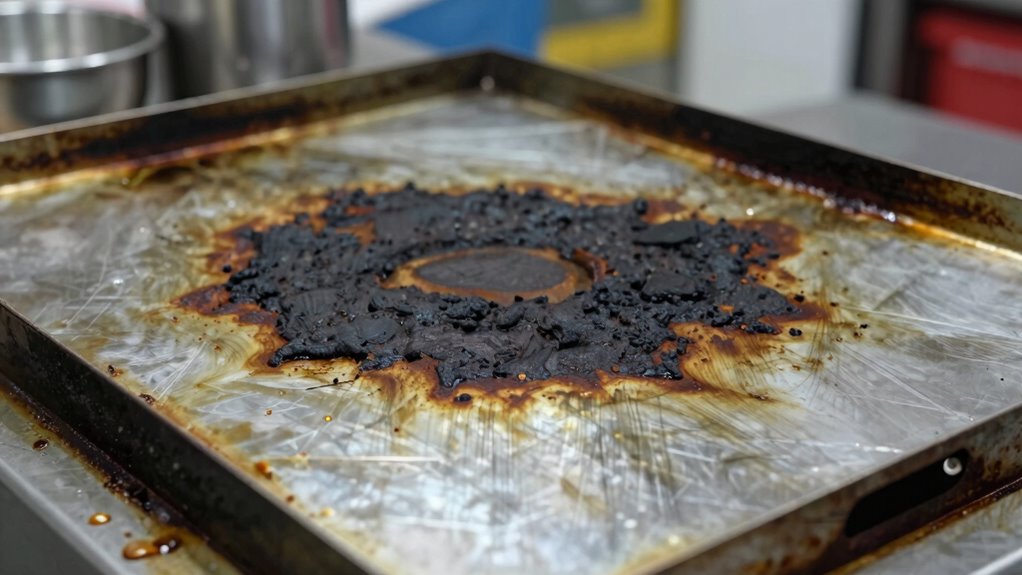

Using aggressive cleaning shortcuts like steel wool or metal brushes can quickly damage your commercial griddle, causing scratches, gouges, and surface deterioration. These harsh methods weaken the protective layer, trap grime, and embed metal particles that promote rust. Over-scrubbing accelerates wear and leads to costly repairs. To keep your griddle in top shape, it’s better to use gentle tools and proper techniques—stick around to learn how proper maintenance can save you money in the long run.
Key Takeaways
- Using metal tools like steel wool causes scratches, gouges, and embeds particles, leading to surface damage and rust over time.
- Relying on harsh chemical cleaners can weaken surface layers and leave residues that trap grime, accelerating deterioration.
- Skipping regular seasoning and inspections allows rust, grease buildup, and surface wear to develop prematurely.
- Over-scrubbing or aggressive cleaning destroys protective coatings, reducing the griddle’s lifespan and efficiency.
- Taking shortcuts in cleaning routines increases the risk of surface damage, corrosion, and costly repairs down the line.
Why Harsh Scrubbing Damages Your Griddle Surface
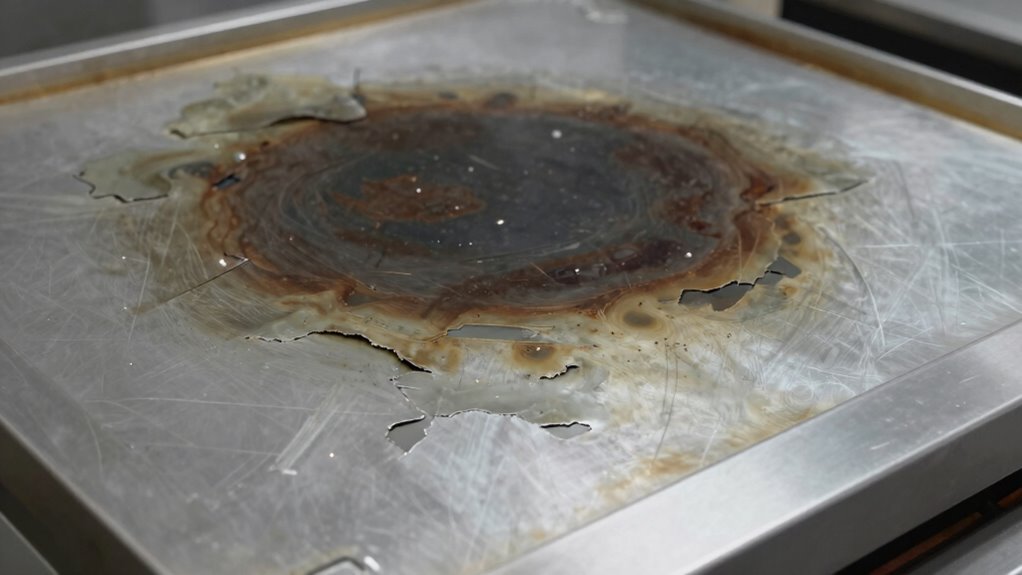
Harsh scrubbing might seem like the quick fix for a dirty griddle, but it actually does more harm than good. When you scrub aggressively, you risk damaging the surface, which hampers surface preservation. Over time, this rough treatment causes scratches and gouges that create uneven spots, making cleaning less effective. Instead of improving cleaning efficiency, harsh scrubbing can trap grime in tiny crevices, making it harder to remove later. Proper cleaning techniques are better for maintaining the integrity of your griddle’s surface. By conserving the smooth, even finish, you ensure food releases easily and cleaning becomes more straightforward. Ultimately, taking care with your cleaning approach helps sustain your equipment’s lifespan and keeps it operating at peak performance.
How Cleaning Shortcuts Can Cost You Later
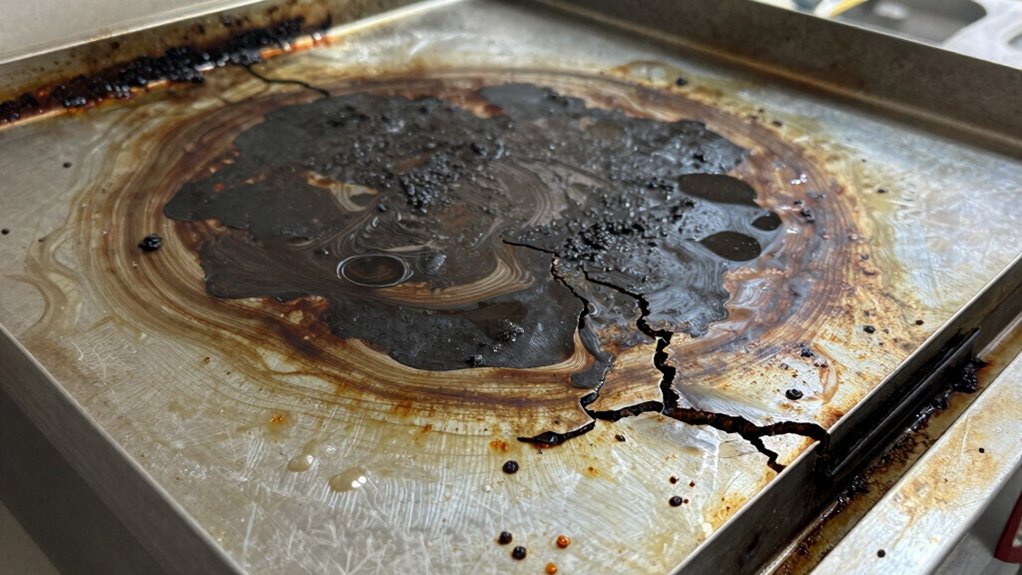
Taking shortcuts when cleaning your commercial griddle might seem like a time-saver, but it often leads to costly problems down the line. Skipping proper cleaning routines can cause grease buildup, corrosion, and uneven heating, which degrade the surface and make future repairs necessary. Cleaning shortcuts like neglecting deep cleaning or rushing through the process might save time now, but they set the stage for costly repairs later. Over time, accumulated residue can damage components, requiring expensive replacements or professional servicing. Rushing through cleaning routines also increases the risk of damaging the surface, leading to more frequent issues. Additionally, neglecting maintenance routines can accelerate wear and tear, further reducing the lifespan of your equipment. Proper cleaning and maintenance help preserve the contrast ratio of your griddle, ensuring it continues to operate efficiently. Regular inspections and adherence to manufacturer guidelines are essential for maintaining optimal equipment performance. Implementing consistent cleaning processes and understanding proper maintenance techniques can greatly extend the life of your equipment. Furthermore, understanding how to properly utilize multi-unit setups can optimize overall efficiency and reduce the risk of damage. Ultimately, these shortcuts may seem convenient initially, but they compromise your equipment’s longevity and efficiency, costing you more money in repairs and replacements in the long run.
Risks of Over-Scrubbing and Steel Wool
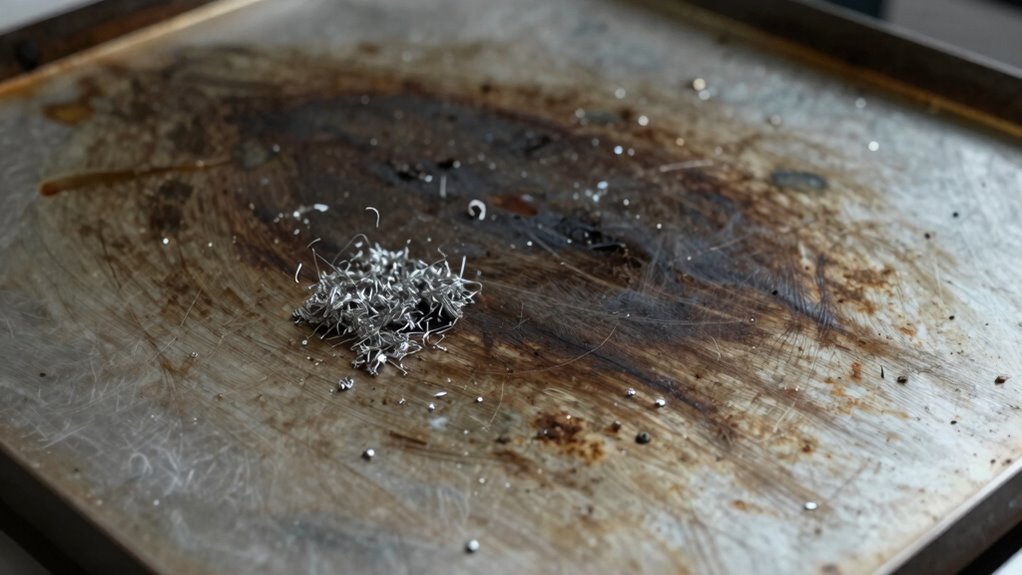
While skipping proper cleaning routines can cause significant damage over time, over-scrubbing and using steel wool present their own set of risks. Steel wool hazards include scratching the surface, which can create tiny grooves that trap dirt and grease, making future cleaning harder. Over scrubbing dangers involve removing protective coatings or seasoning layers, leaving the griddle vulnerable to rust and corrosion. Using steel wool can also embed metal particles into the surface, contaminating food and damaging the appliance. A proper cleaning method can help mitigate these risks and maintain your griddle’s longevity. Visualize these risks as:
- Deep scratches that weaken the surface
- Residue buildup in tiny grooves
- Loss of seasoned non-stick layers
- Increased vulnerability to rust
- Potential metal contamination
Avoid these hazards by choosing gentler cleaning tools that preserve your griddle’s integrity over time, especially since safe cleaning techniques can help you learn proper maintenance techniques. Incorporating appropriate cleaning tools can further reduce the likelihood of damage and prolong the lifespan of your equipment.
Choosing the Best Tools for Gentle Griddle Cleaning
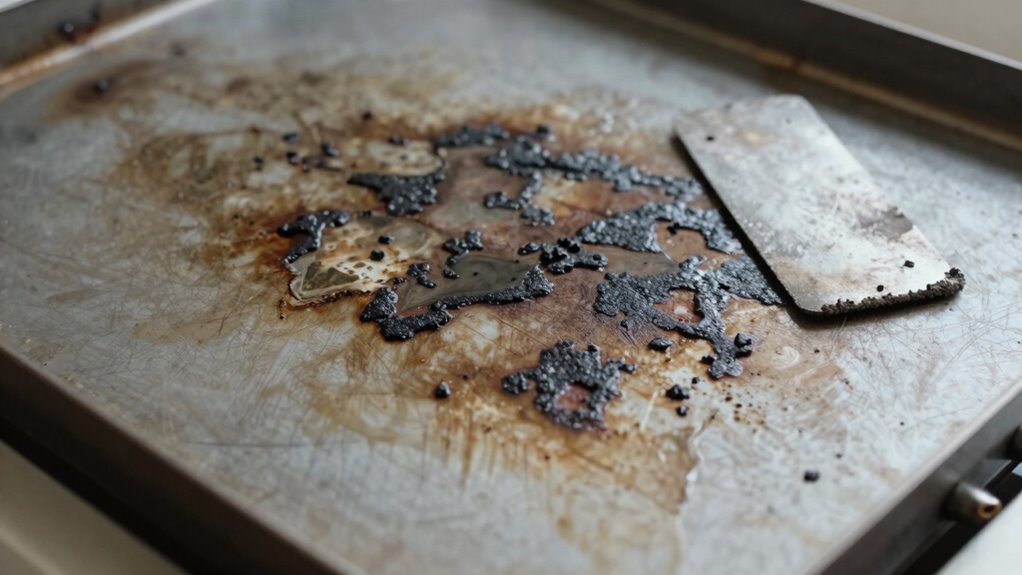
Choosing the right tools is essential for cleaning your griddle gently and effectively. Opt for eco friendly cleaning options that protect your equipment and the environment. Soft, non-abrasive scrapers or nylon scrub pads are excellent alternatives to harsh abrasives, reducing the risk of surface damage. Microfiber cloths or natural fiber brushes can also help lift grease without scratching. Avoid steel wool or metal brushes, which may seem effective but can cause long-term harm. Instead, consider gentle, abrasive tool alternatives designed specifically for delicate surfaces. These tools clean thoroughly without stripping the protective coating or causing pitting. When selecting cleaning tools, prioritize materials that are durable yet gentle, ensuring your griddle stays in top condition over time. Incorporating natural cleaning tools can extend the lifespan of your equipment and maintain its performance. Additionally, choosing tools that are non-abrasive helps preserve the surface integrity and prevents costly repairs. Using appropriate cleaning techniques can further enhance the longevity and performance of your griddle. Properly maintaining your equipment also involves understanding cleaning schedules to prevent buildup and damage over time.
Step-by-Step: Safe and Effective Griddle Cleaning Techniques
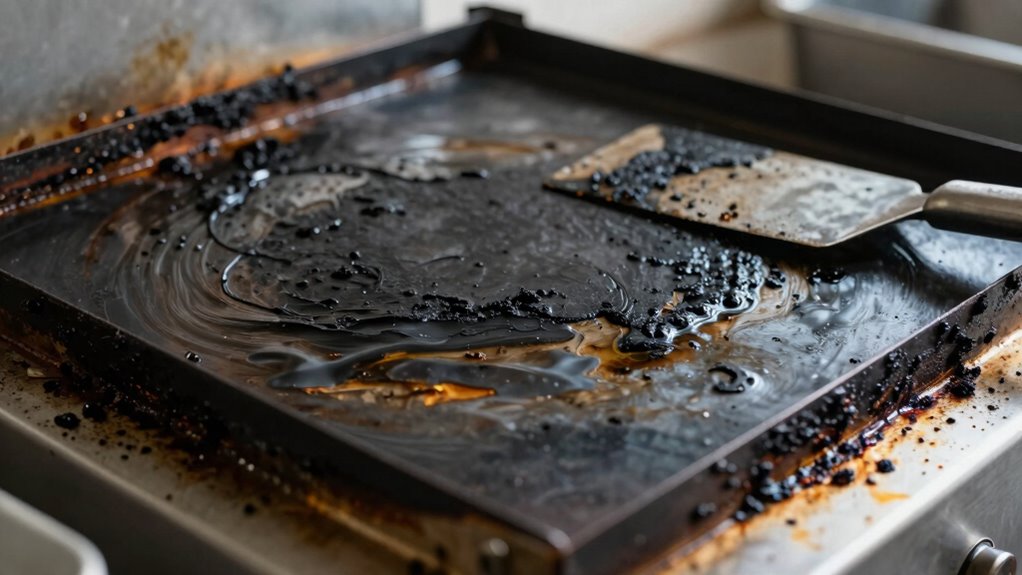
To clean your griddle safely and effectively, start by letting it cool slightly after use—hot surfaces can cause burns and make cleaning more difficult. Once cooled, focus on the cooking surface, which is the heart of your operation. Use a metal scraper or spatula to remove food debris, then wipe with a damp cloth. For stubborn spots, apply a gentle cleaning solution suited for your griddle type. Maintain proper cleaning frequency: daily for busy kitchens, weekly for less frequent use. Visualize the process:
- Scraping away leftover food
- Wiping with a damp cloth
- Applying a mild cleaning solution
- Rinsing thoroughly
- Drying with a clean towel
This routine helps preserve your cooking surface, ensuring longevity and ideal performance over time. Regular cleaning also helps detect grease buildup, which can impair efficiency and safety if neglected. Additionally, using the right cleaning tools and techniques can prevent damage to the surface, extending the lifespan of your griddle. Incorporating knowledge from related electric bikes, such as proper maintenance and cleaning methods, can also provide insights into maintaining your equipment efficiently. Understanding the importance of routine upkeep can further enhance your cleaning practices and equipment longevity. Paying attention to proper cleaning techniques can make a significant difference in preventing long-term damage and ensuring your equipment stays in top condition.
Why Regular Maintenance Keeps Your Griddle in Top Shape
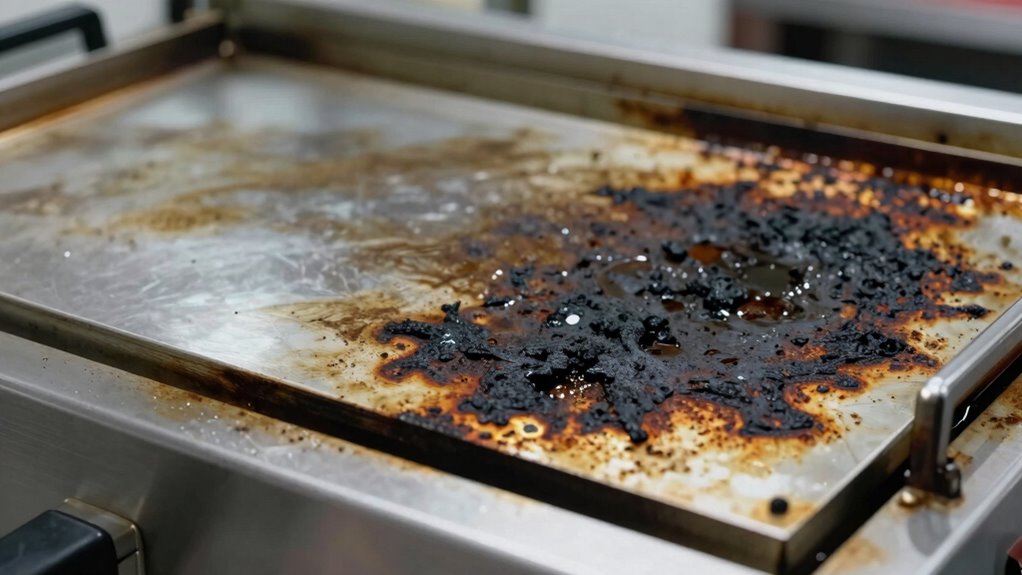
Have you ever wondered why consistent maintenance is vital for your griddle’s performance? Regular upkeep prevents buildup, reduces wear, and guarantees even heating. It also promotes eco friendly cleaning, minimizing harmful chemical use while protecting the environment. Proper maintenance enhances commercial kitchen safety by preventing grease fires and slips. When you stay consistent, your griddle lasts longer and performs better, saving you money. Maintaining your equipment with essential guidelines ensures optimal operation and longevity.
Common Cleaning Mistakes to Avoid
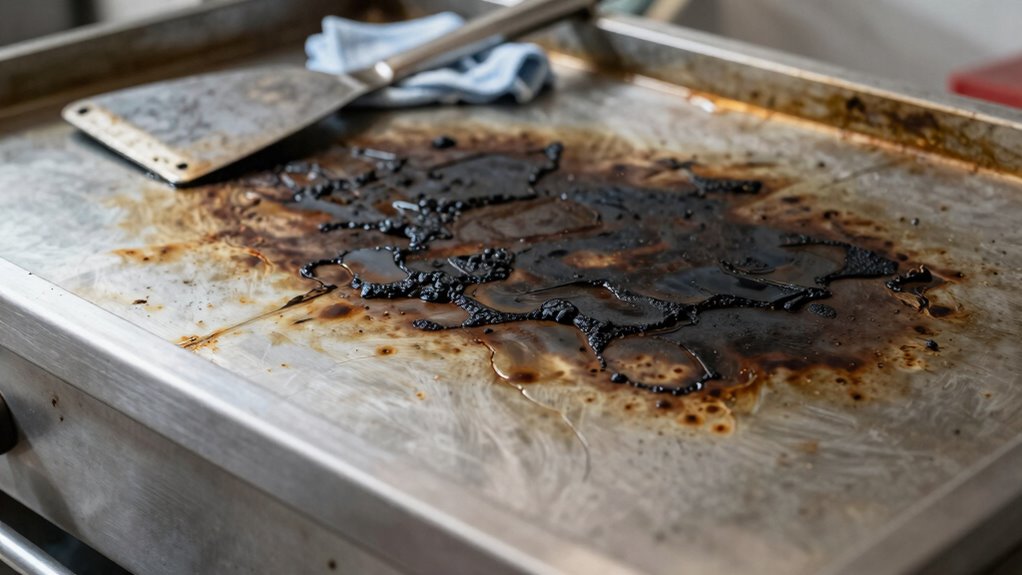
Avoid using harsh cleaning agents that can damage your griddle’s surface, and don’t skip regular maintenance, which keeps it in good condition. Be careful not to scrub too aggressively, as this can cause scratches and wear. Staying mindful of these mistakes helps extend your griddle’s lifespan and performance. Additionally, regular inspections can help identify early signs of surface deterioration, preventing costly repairs. Incorporating proper cleaning techniques plays a crucial role in maintaining your griddle’s longevity and efficiency. Proper cleaning techniques are essential to preserve cooking surface quality and ensure optimal performance over time. Using the right tools and accessories, such as soft scrapers and appropriate cleaning pads, can further protect your equipment during routine maintenance.
Using Harsh Cleaning Agents
Using harsh cleaning agents might seem like an effective way to quickly get rid of grease and grime, but they can actually do more harm than good. These strong chemicals can trigger unwanted chemical reactions, damaging the griddle’s surface. Over time, they penetrate surface porosity, weakening the material and causing pitting or warping. You might picture:
- A bubbly chemical reaction bubbling up from tiny surface cracks
- The surface becoming rough and uneven
- Residues lingering, attracting more grime
- The metal corroding, losing its shine
- Layers of the surface breaking down, exposing the metal underneath
Instead of protecting your griddle, harsh agents accelerate deterioration. Use gentle, non-abrasive cleaners designed for commercial griddles to preserve its integrity and extend its lifespan.
Neglecting Regular Maintenance
Neglecting regular maintenance is one of the quickest ways to ruin your commercial griddle over time. When you skip routine cleaning and inspections, grease buildup and corrosion can develop, leading to uneven cooking and compromised food quality. This not only affects customer satisfaction but also hampers operational efficiency, as you’ll spend more time troubleshooting issues or repairing the equipment. Regular maintenance guarantees the griddle stays in peak condition, preventing costly breakdowns and extending its lifespan. Without scheduled cleaning and upkeep, you risk reduced heat consistency and increased energy consumption. Prioritize consistent maintenance to keep your griddle functioning smoothly, provide better service to your customers, and avoid unnecessary expenses caused by neglect.
Scrubbing Too Aggressively
While regular maintenance is essential, how you clean your griddle matters just as much. Scrubbing too aggressively can cause surface damage, making it harder to keep clean and shortening the appliance’s lifespan. Instead of using harsh abrasives or metal scrubbers, opt for softer tools. Imagine:
- Scrubbing with steel wool, scratching the surface
- Using excessive force, gouging the metal
- Relying on harsh chemicals that weaken the coating
- Skipping proper heating to loosen grime
- Taking shortcuts instead of thorough cleaning
These cleaning shortcuts might seem faster but ultimately harm your griddle. Over time, surface damage accumulates, leading to uneven cooking and costly repairs. Proper, gentle cleaning preserves the integrity of the surface and keeps your equipment in top shape longer.
Tips to Extend the Life of Your Commercial Griddle
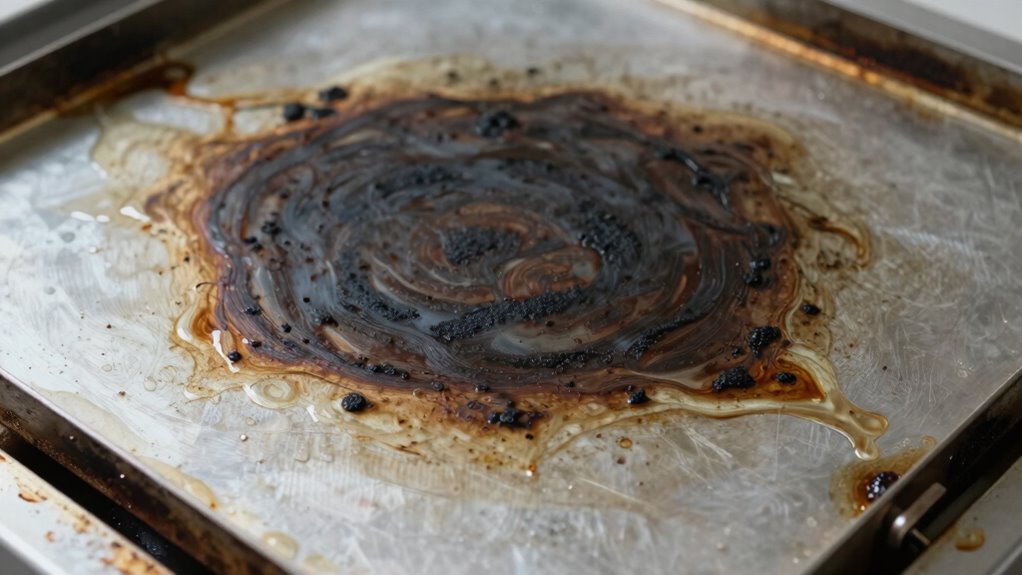
Proper maintenance is essential for prolonging the lifespan of your commercial griddle. Implementing simple cleaning hacks can considerably improve your equipment lifespan. Start by cleaning the surface after each use with a non-abrasive scraper and a damp cloth. Regularly season your griddle to prevent rust and buildup. Use the following table for quick reference:
| Cleaning Hack | Frequency | Benefit |
|---|---|---|
| Wipe with a damp cloth | After every shift | Prevents residue buildup |
| Deep clean with vinegar | Weekly or bi-weekly | Removes grease and grime |
| Season your griddle | After cleaning, weekly | Protects surface, enhances lifespan |
These steps ensure your griddle remains in ideal condition, extending its operational life and maintaining peak performance.
Frequently Asked Questions
How Often Should I Clean My Commercial Griddle?
You should clean your commercial griddle daily to maintain its performance and longevity. After each use, scrape off food debris and wipe it down, making sure you preserve the seasoned surface for better cooking. Remember, cleaning too aggressively or using harsh chemicals can strip away your griddle seasoning. Keep the cooking temperature moderate during cleaning, and re-season the surface regularly to prevent damage and guarantee the best results over time.
What Are the Best Cleaning Products for Griddles?
You should opt for a mild, non-abrasive cleaner like a specialized griddle cleaner or a gentle degreaser. For stubborn cooking oil residue, a vinegar solution works wonders, while a stainless steel scrubber can handle surface rust removal without damaging the surface. Steer clear of harsh chemicals that could eat away at your griddle’s surface and ruin it faster—after all, you’re aiming for a long-lasting, shiny cooking surface!
Can I Use Household Cleaners on My Commercial Griddle?
You shouldn’t use household cleaners on your commercial griddle because of household cleaner hazards that can damage the surface or leave harmful residues. DIY cleaning myths suggest these products are safe, but they often aren’t formulated for commercial equipment. Instead, use proper commercial-grade cleaning products designed for griddles, and follow manufacturer instructions to prevent long-term damage and guarantee safe, effective cleaning.
How Do I Remove Stubborn Grease Without Damaging the Surface?
Did you know stubborn grease can take up to 24 hours to fully break down? To remove it without damaging your griddle, use a non-abrasive scraper and a commercial-grade degreaser suited for your surface. Apply the degreaser, let it sit, then gently scrape away the grease. This method guarantees effective grease removal while preserving the surface, extending your griddle’s lifespan. Avoid harsh chemicals or abrasive tools to prevent damage.
What Signs Indicate My Griddle Needs Professional Repair?
You’ll know your griddle needs professional repair if you notice uneven heating, persistent sticking, or cracks on the surface. If food starts to burn or doesn’t cook evenly, it’s a clear sign. Don’t ignore strange noises or a drop in temperature. When these issues occur, seek a professional inspection to evaluate the griddle surface properly. Timely repair guarantees safety, efficiency, and extends your equipment’s lifespan.
Conclusion
Skipping proper cleaning routines might seem quick, but it can lead to costly repairs—up to 50% more expenses over time. Using harsh scrubbing tools damages your griddle’s surface, shortening its lifespan. By adopting gentle cleaning methods and regular maintenance, you can keep your equipment in top shape for years. Remember, investing just a few extra minutes now saves you hundreds later. Protect your investment and guarantee consistent performance—your griddle will thank you!