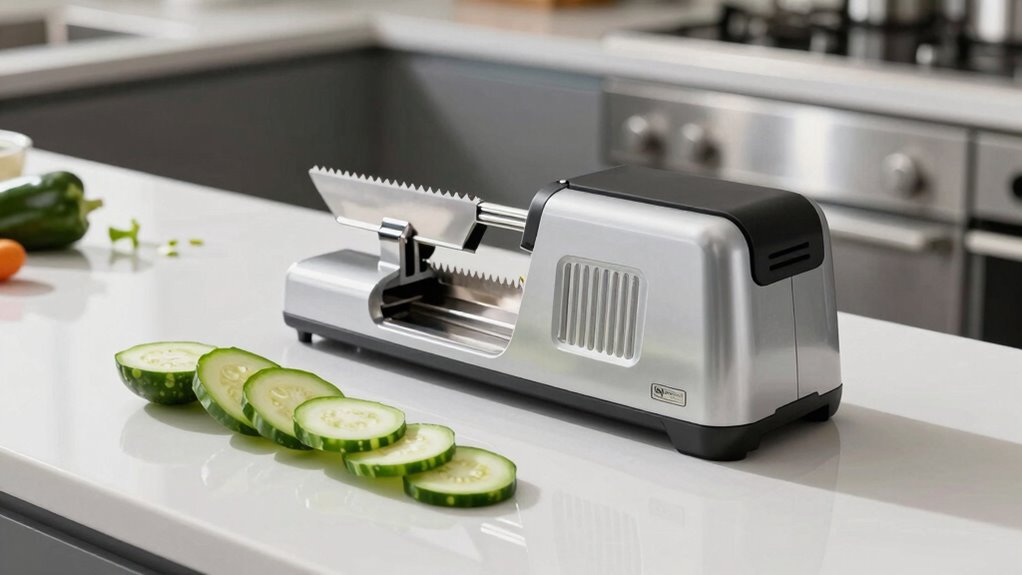

Taking shortcuts when cleaning your slicer can leave behind hidden bacteria in cracks, crevices, and blades, which inspectors see as serious violations. Rushing or skipping disassembly might seem faster but creates unsafe hotspots that put food safety at risk. If you ignore proper sanitation, bacteria can multiply unnoticed, risking health and your reputation. Keep in mind, understanding the right cleaning steps and avoiding shortcuts is key—staying compliant becomes much easier once you discover how.

Get kitchen staples and gadgets delivered free — and shop member deals
- Fast, free delivery on millions of items
- Access to Prime Big Deal Days deals on October 6–7
- Prime Video, Amazon Music and more included
Key Takeaways
- Shortcuts often skip disassembly and thorough cleaning, leaving bacteria hidden in cracks and crevices.
- Rushing cleaning processes can result in residual food debris and microbial growth.
- Using unapproved cleaning agents or neglecting sanitization increases contamination risks.
- Incomplete sanitation practices can cause bacteria to spread, triggering food safety violations.
- Inspectors detect hygiene shortcuts that compromise food safety and may lead to penalties.
commercial food slicer cleaning brush
As an affiliate, we earn on qualifying purchases.
As an affiliate, we earn on qualifying purchases.
Why Food Slicers Are a Food Safety Concern
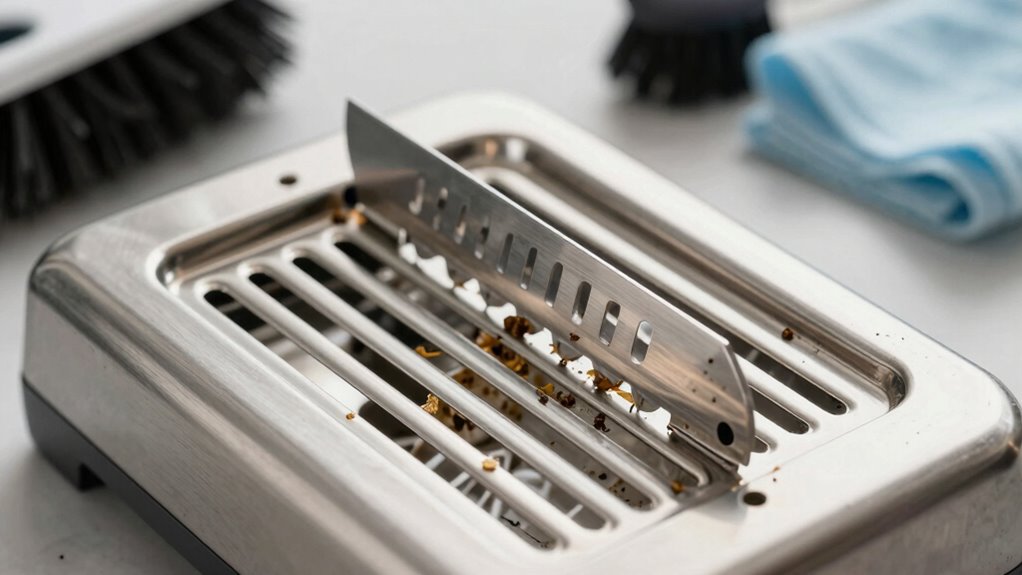
Have you ever considered how easily food slicers can harbor harmful bacteria? These appliances are prime spots for foodborne pathogens to thrive, especially if not cleaned thoroughly. Many believe that quick rinses or partial cleaning are enough, but hygiene myths like these can be dangerous. Slicers often have cracks, crevices, and blades that trap tiny food particles, creating a breeding ground for bacteria. If you skip proper sanitation, you risk cross-contamination between different foods, leading to foodborne illnesses. Proper cleaning protocols are essential to ensure all hidden areas are sanitized effectively. Additionally, understanding the design flaws of slicers can help highlight why they are difficult to clean thoroughly. Recognizing that food safety isn’t just about quick fixes is vital. Proper, detailed cleaning is essential to prevent the spread of harmful pathogens and guarantee safe food handling. Incorporating hygienic practices into routine cleaning can significantly reduce the risk of contamination.
As an affiliate, we earn on qualifying purchases.
Common Mistakes That Lead to Cross-Contamination
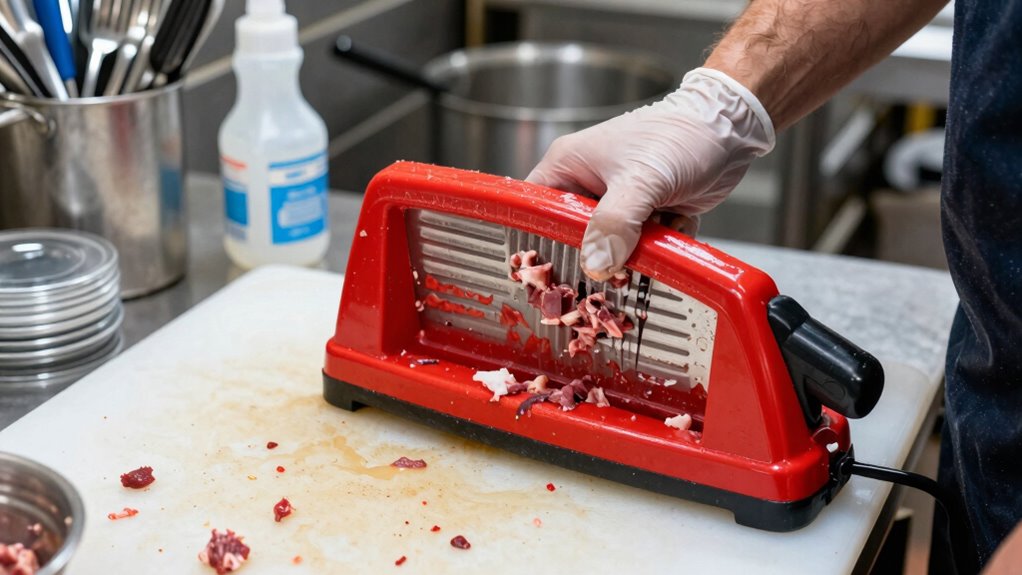
One of the most common mistakes that lead to cross-contamination is failing to thoroughly clean and sanitize slicers between uses. Skipping proper cleaning shortcuts can leave food residues and bacteria, risking contamination. To prevent this, you must focus on effective cross contamination prevention practices. Rushing through cleaning or using inadequate tools allows bacteria to linger and spread. Additionally, neglecting to properly dispose of waste can contribute to bacterial growth and contamination risks. Regularly inspecting your equipment and understanding proper cleaning procedures are essential for maintaining food safety standards.
| Mistake | Result | Solution |
|---|---|---|
| Not disassembling slicer fully | Missed spots for bacteria removal | Follow complete disassembly |
| Using the same cloth for multiple tasks | Cross-contamination spread | Use separate, sanitized cloths |
| Rushing cleaning process | Insufficient sanitation | Allocate enough time for thorough cleaning |
| Ignoring small crevices | Bacteria hide and multiply | Pay attention to all parts |
Avoid these mistakes to enhance cross contamination prevention and ensure slicer cleanliness.
As an affiliate, we earn on qualifying purchases.
Proper Cleaning Procedures Every Slicer Should Follow
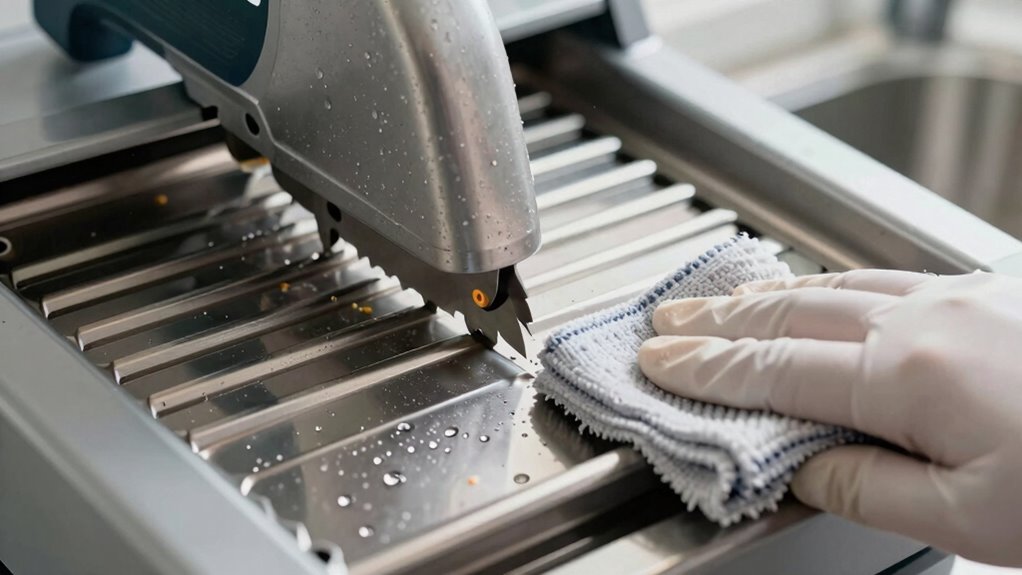
Proper cleaning of your slicer isn’t just about wiping down surfaces; it requires a step-by-step process to guarantee every part is sanitized effectively. Begin with disassembling removable parts to verify thorough slicer maintenance. Use warm, soapy water to clean blades, food chambers, and guides, paying attention to crevices where debris can hide. Rinse all components thoroughly and dry them completely before reassembling. Follow strict hygiene protocols by sanitizing all surfaces afterward with approved food-safe solutions. Regularly inspecting and maintaining your slicer ensures it operates safely and reduces contamination risks. Proper cleaning procedures are essential for preventing bacterial growth and ensuring compliance with health standards. Incorporating all-terrain strollers for outdoor use into your cleaning routine can help ensure durability and longevity of your equipment when used in rugged environments. Additionally, understanding the role of contrast ratio in image quality can help you assess and improve your equipment’s performance over time. Being aware of multi-unit setups allows for more efficient cleaning processes when managing multiple slicers simultaneously. Routine health checks are vital for early detection of potential issues that could compromise food safety. Adhering to these Proper cleaning procedures helps you meet health standards and keeps your equipment in top condition. Consistent slicer maintenance is essential for food safety and long-term performance.
heavy-duty slicer cleaning cloths
As an affiliate, we earn on qualifying purchases.
As an affiliate, we earn on qualifying purchases.
Signs Your Slicer Needs Better Hygiene
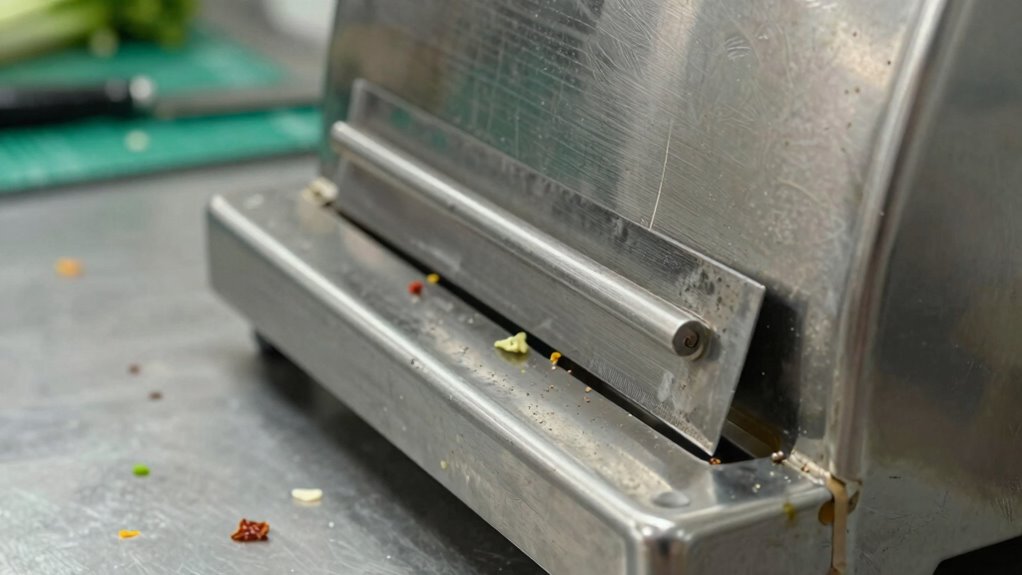
If you notice lingering odors or visible residue on your slicer, it’s a clear sign that your hygiene practices might need improvement. Poor slicer maintenance can lead to bacteria buildup, which compromises hygiene compliance. Keep an eye out for sticky surfaces or discoloration, as these indicate incomplete cleaning. Unpleasant smells also suggest leftover food particles or mold, signaling you need to revisit your cleaning routine. Regularly inspecting your slicer and adhering to proper hygiene protocols ensures cleanliness and prevents health violations. Additionally, inclusive casting in cleaning staff can promote diverse perspectives on maintaining hygiene standards. A thorough cleaning process that includes disassembly and proper sanitation methods is essential for effective hygiene. Using appropriate cleaning tools can significantly improve the sanitation process and reduce bacterial risks. Implementing standardized cleaning procedures can help ensure consistency and thoroughness in hygiene practices. Proper hygiene protocols are fundamental in preventing cross-contamination and ensuring food safety. If these signs appear, it’s time to double down on your cleaning efforts to maintain hygienic standards and avoid potential violations during inspections.
The Shortcut That Inspectors Are Wary Of: And Why It’s Risky
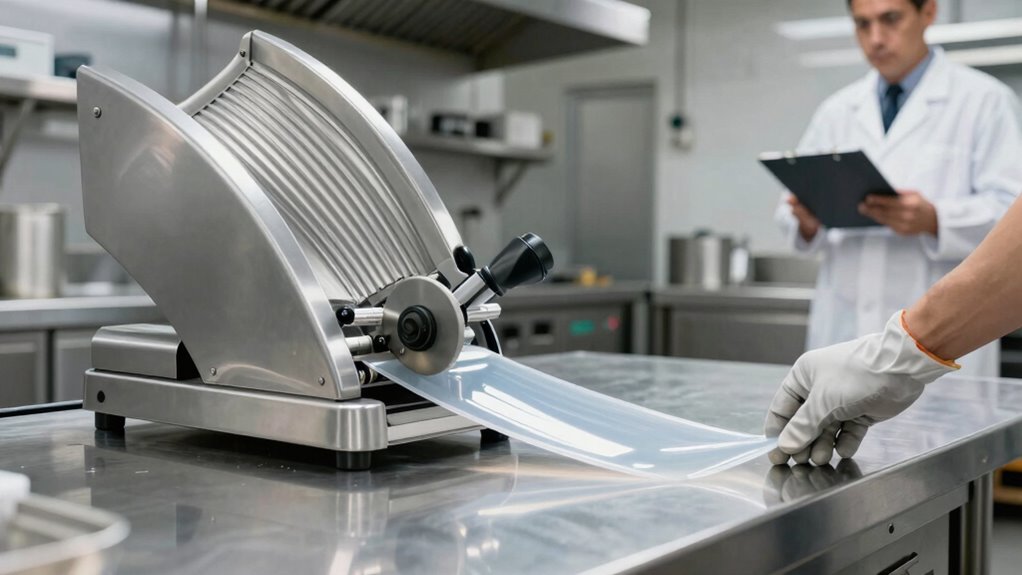
While quick fixes might seem tempting when cleaning slicers, taking shortcuts can raise serious red flags for inspectors. Skipping proper slicer maintenance or rushing through inspection protocols compromises safety and cleanliness. Inspectors are wary of shortcuts like neglecting thorough disassembly or using unapproved cleaning agents, which can hide residue or bacteria. These risky practices undermine the integrity of your hygiene routine and could lead to failed inspections.
- Rushing cleaning without disassembly
- Using incompatible cleaning tools or chemicals
- Ignoring detailed inspection procedures
Such shortcuts suggest a lack of attention to detail and can indicate poor hygiene standards. They compromise the effectiveness of your cleaning process and put your operation at risk of violations. Stay diligent in following proper protocols to ensure safety and compliance.
Training Staff to Clean Slicers Correctly
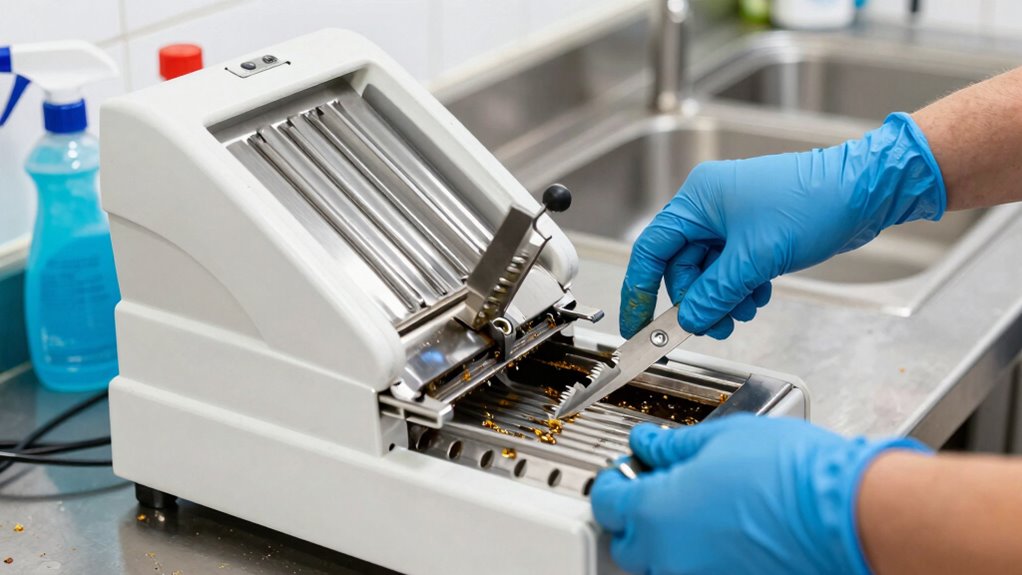
To guarantee your staff clean slicers properly, you need to teach them correct disassembly techniques that allow thorough cleaning without damage. Effective sanitization methods are essential to eliminate bacteria and prevent cross-contamination. Consistent training keeps everyone up-to-date on best practices, reducing risks and satisfying inspectors. Incorporating outdoor sanitation practices can also help maintain a clean environment around food prep areas. Additionally, understanding proper cleaning tools and their use can improve the effectiveness of your sanitation process. Regularly reviewing your risk management strategies can help identify potential vulnerabilities in your cleaning procedures and ensure ongoing compliance. Exploring regional flavors and insights into different cleaning methods can further optimize your approach. Recognizing the importance of cultural activities in local regions can also inspire innovative sanitation practices tailored to specific community needs.
Proper Disassembly Techniques
Proper disassembly is vital for effective and safe cleaning of slicers, and training staff on this process guarantees consistency and safety. When disassembling, focus on carefully removing blades, guards, and other components without damaging them. Correct technique maintains knife condition and prevents safety hazards. Remember to:
- Follow manufacturer instructions for disassembly to avoid equipment damage.
- Check that blades are sharpened and properly aligned before reassembly.
- Calibrate the slicer after reassembly to guarantee consistent slicing and proper knife edge positioning.
This approach helps maintain equipment calibration and ensures all parts are correctly reassembled. Training staff to disassemble slicers correctly minimizes risks, prolongs equipment lifespan, and guarantees that cleaning doesn’t compromise safety or functionality.
Effective Sanitization Methods
Training staff to clean slicers correctly is essential to guarantee food safety and equipment longevity. Implementing innovative sanitization techniques ensures thorough removal of contaminants and reduces the risk of bacteria buildup. Use chemical sterilizers properly, following manufacturer instructions, to maximize their effectiveness. Proper application of chemical sterilizers can eliminate germs on all slicer surfaces, including hard-to-reach areas. Encourage staff to follow detailed cleaning procedures, including disassembly and targeted sanitization steps, to prevent cross-contamination. Regularly review sanitization protocols to incorporate new products or methods that improve cleanliness. By emphasizing these effective sanitization methods, you reduce inspection concerns and maintain high hygiene standards, ultimately safeguarding consumer health and extending your slicer’s service life.
Consistent Staff Training
Consistent staff training is essential for guaranteeing slicers are cleaned effectively every time. When employees understand proper procedures, accountability improves, reducing the risk of cross-contamination. Training should emphasize following strict cleaning schedules, so no step is overlooked. To reinforce this, consider:
- Regular refresher courses to keep staff updated on best practices
- Clear documentation of cleaning procedures for accountability
- Ongoing supervision to ensure adherence to protocols
Tools and Tech to Keep Your Slicers Hygienic
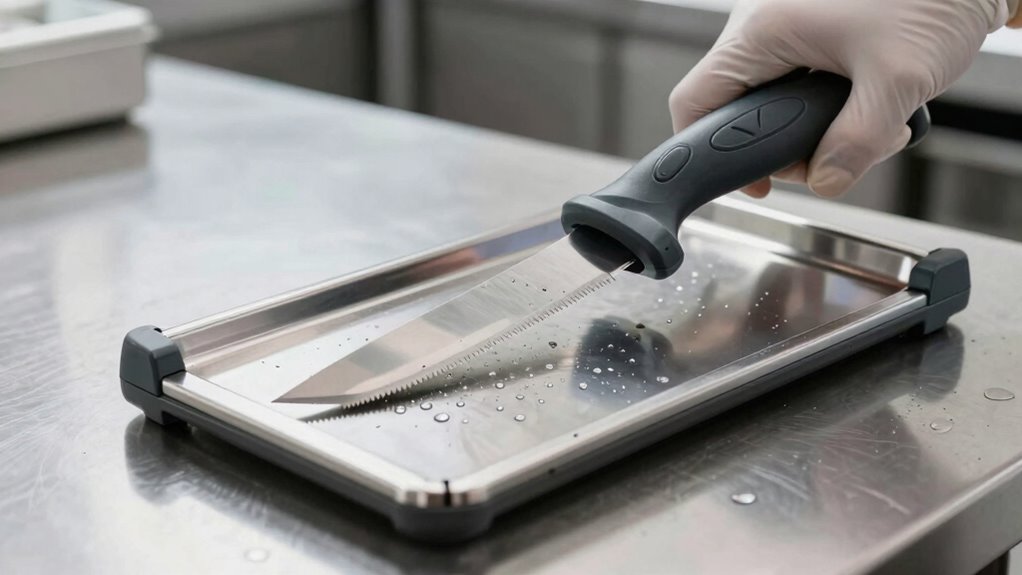
Keeping slicers hygienic requires the right tools and technology. Modern equipment like automated cleaning systems, antimicrobial blades, and high-pressure wash stations help you meet hygiene standards efficiently. These tools reduce manual effort and improve consistency, ensuring thorough cleaning after each use. Effective cleaning techniques are essential to prevent bacteria buildup and maintain optimal hygiene. Slicer maintenance becomes easier with tools that target hard-to-reach areas, preventing bacteria buildup. Additionally, understanding the importance of vinyl preservation can inspire more mindful cleaning practices that protect both your equipment and your collection.
Implementing regular calibration procedures ensures that your equipment functions optimally and maintains hygiene standards over time. Using these innovations not only simplifies your cleaning routines but also minimizes the risk of contamination, helping you stay compliant and confident in your hygiene practices.
How Poor Slicer Hygiene Affects Food Quality and Safety
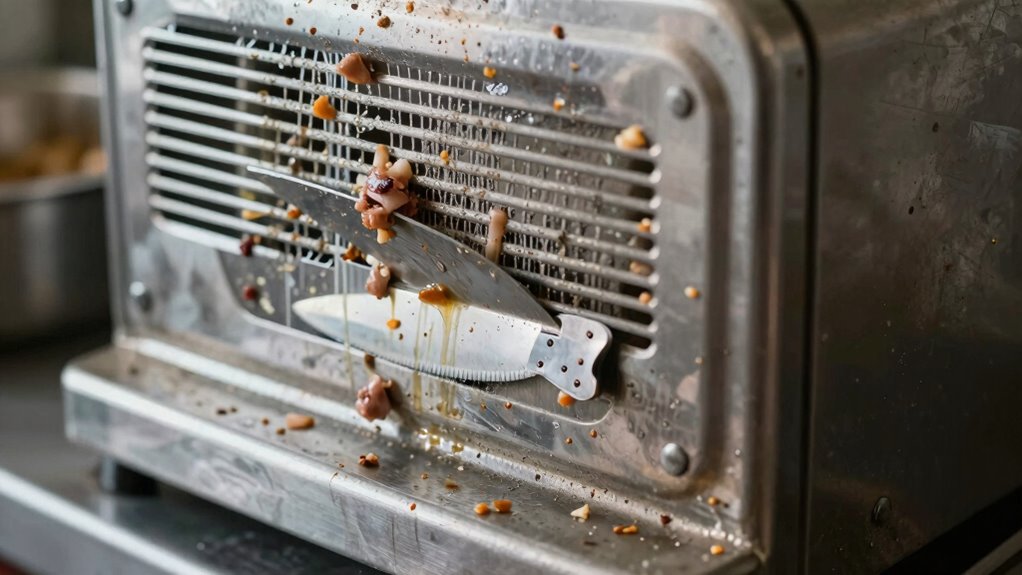
Poor hygiene practices on slicers can quickly compromise food safety and quality. Hygiene shortcuts, like skipping thorough cleaning, increase contamination risks that can lead to foodborne illnesses. When slicers aren’t properly sanitized, bacteria, mold, and residue can transfer onto food, affecting taste and safety. This contamination can cause serious health issues and damage your reputation. To avoid these risks, guarantee that you:
- Regularly deep clean all slicer components
- Use proper sanitizing solutions to eliminate bacteria
- Follow strict cleaning schedules without shortcuts
Neglecting these steps allows harmful microbes to thrive, jeopardizing consumer health and violating safety standards. Good hygiene on slicers isn’t just about compliance; it’s about protecting your customers and maintaining high-quality food. Poor hygiene practices directly threaten both food safety and your business’s integrity.
Frequently Asked Questions
What Legal Penalties Exist for Failing to Maintain Proper Slicer Hygiene?
Failing to maintain proper slicer hygiene can lead to serious legal liabilities, including hefty fines, fines, or even business closure. Regulatory compliance is essential, and inspectors may issue violations or citations if standards aren’t met. You’re responsible for ensuring your slicers are clean and sanitary, avoiding potential legal penalties. Regular cleaning not only protects public health but also keeps your business compliant with health regulations, preventing costly legal consequences.
How Often Should Food Slicers Be Professionally Inspected?
Have you wondered how often you should get your food slicer professionally inspected? You should schedule inspections at least quarterly, especially to verify slicer calibration and guarantee proper cleaning frequency. Regular professional checks catch potential issues early, preventing contamination risks and ensuring compliance with health standards. Don’t wait until problems arise—staying proactive with slicer inspections keeps your operation safe and your equipment functioning at its best.
Are There Specific Cleaning Products Recommended for Slicers?
For slicers, follow strict cleaning protocols using product recommendations like food-safe sanitizers and non-abrasive cleaners. Avoid harsh chemicals that can damage the equipment or leave residues. Use warm water and a mild detergent for initial cleaning, then apply approved sanitizers to guarantee thorough sanitation. Always check manufacturer guidelines for specific cleaning product recommendations to maintain safety, functionality, and compliance with inspection standards.
Can Improper Slicer Cleaning Lead to Foodborne Illness Outbreaks?
Improper slicer cleaning can definitely lead to foodborne illness outbreaks because it increases cross-contamination risks. When you neglect proper slicer maintenance, bacteria and food residues can linger, contaminating fresh products. Regularly cleaning and sanitizing the equipment helps prevent these risks, ensuring safe food handling. Always follow recommended cleaning procedures and use appropriate products to keep your slicer hygienic and reduce the chance of illness outbreaks.
How Do Slicer Hygiene Practices Vary Across Different Food Service Industries?
You’ll notice that slicer hygiene practices vary across food service industries because of differences in slicer design and employee training. In some sectors, slicers are built with easy-to-clean features, making sanitation straightforward, while others lack such design considerations. Additionally, thorough employee training guarantees proper cleaning routines are followed, reducing contamination risks. Consistent hygiene practices across industries depend on both effective slicer design and well-trained staff.
Conclusion
Skipping proper cleaning is like ignoring a leak in a boat—you might think it’s just a small issue, but over time, it can sink your reputation and risk customer health. Regular, thorough cleaning keeps your slicers safe and your food quality high. Don’t let shortcuts be the reason inspectors raise red flags. Instead, invest in proper training and tools—because in food safety, every detail counts to keep everyone afloat and satisfied.
NFL season / tailgating Picks
team gear
As an affiliate, we earn on qualifying purchases.