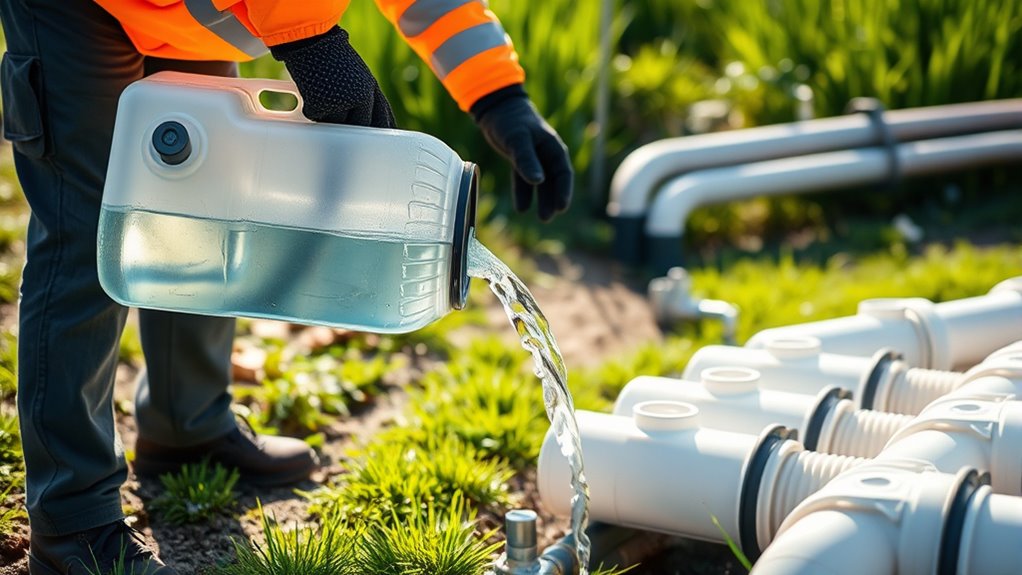

To properly dispose of wastewater, guarantee it is directed to municipal treatment plants or approved collection systems, avoiding illegal dumping. Use septic systems correctly and maintain them to prevent leaks or overflows. Reuse greywater safely for non-potable purposes like irrigation, after appropriate filtration. Reduce water use, fix leaks, and adopt water-efficient fixtures to lessen wastewater volume. Maintaining proper disposal practices protects health and the environment—continue to explore ways to improve your wastewater management habits.
Key Takeaways
- Ensure wastewater is directed to municipal treatment facilities or approved septic systems to prevent environmental contamination.
- Regularly maintain septic tanks and greywater systems to avoid leaks, backups, and health hazards.
- Reuse greywater for non-potable purposes like irrigation after proper filtration and treatment.
- Comply with local regulations to prevent illegal dumping and protect water sources.
- Promote water conservation practices to reduce wastewater volume and lessen treatment strain.
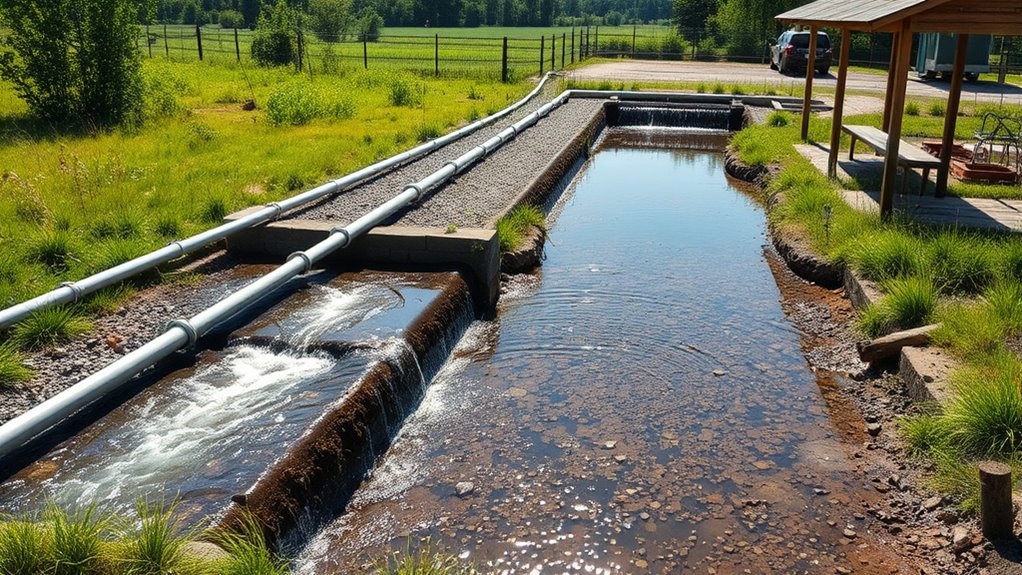
Proper wastewater disposal is crucial for protecting public health and the environment. When you manage wastewater correctly, you prevent the spread of disease, reduce pollution, and conserve valuable resources. One of the key steps in responsible wastewater management is understanding sewage treatment. Sewage treatment involves a series of processes designed to remove contaminants from household and industrial wastewater before releasing it back into the environment. By ensuring sewage undergoes proper treatment, you help eliminate harmful pathogens, nutrients, and pollutants that could otherwise contaminate water sources, harm aquatic life, or pose health risks to communities.
Proper wastewater disposal protects health, reduces pollution, and conserves resources through effective sewage treatment.
In addition to sewage treatment, greywater reuse has become a practical and sustainable approach to wastewater management. Greywater refers to relatively clean wastewater generated from activities such as bathing, laundry, and handwashing. Instead of letting this water go to the sewer system, you can reuse it for non-potable purposes like irrigation or flushing toilets. Implementing greywater reuse systems reduces the volume of wastewater entering sewage treatment facilities, easing their burden and conserving freshwater supplies. You should consider installing greywater systems that filter and treat greywater to ensure it’s safe for reuse, which helps prevent potential health hazards and environmental issues.
To effectively practice proper wastewater disposal, you need to be aware of local regulations and best practices. Many communities require that sewage be directed to municipal treatment plants, where professional treatment ensures that wastewater is properly processed. You should avoid illegal dumping or septic system overflows, as these actions can cause environmental contamination and health risks. Regular maintenance of septic tanks and greywater systems is crucial to prevent leaks, backups, or failures that could release untreated waste into the soil or water bodies.
Furthermore, educating yourself about the importance of reducing water use can profoundly impact wastewater management. Simple actions like fixing leaks, installing water-efficient fixtures, and choosing sustainable landscaping practices help decrease the volume of wastewater you generate. This, in turn, reduces the strain on sewage treatment facilities and promotes environmental protection.
Frequently Asked Questions
How Do I Identify if My Wastewater Is Contaminated?
You can tell if your wastewater is contaminated by looking for contamination indicators like foul odors, discoloration, or cloudiness. To be certain, conduct water quality testing, which can reveal harmful bacteria, chemicals, or pathogens. Regular testing helps you identify issues early, ensuring safe disposal. If tests show pollutants or abnormal readings, it’s a sign your wastewater needs proper treatment before disposal.
What Are the Health Risks of Improper Wastewater Disposal?
Ignoring wastewater disposal is like playing with fire—you risk serious health problems. You could get infections from contamination sources like sewage leaks or chemicals. These risks include waterborne diseases, skin irritations, and long-term health issues. Prevention strategies, such as proper treatment and safe disposal, help keep you safe. By staying vigilant and addressing contamination sources early, you protect your health and prevent hazardous exposure.
Can Household Wastewater Be Safely Reused?
Yes, household wastewater can be safely reused through greywater recycling, which involves treating water from sinks, showers, and laundry for non-potable uses like irrigation. To guarantee safety, you must maintain your septic system properly, preventing leaks and contamination. Regular septic system maintenance and following guidelines for greywater reuse minimize health risks, making it an eco-friendly way to conserve water while protecting your health and the environment.
What Are the Legal Penalties for Illegal Dumping?
If you illegally dump wastewater, you face serious legal consequences, including hefty fines and possible jail time. Penalty enforcement varies by location but generally aims to deter improper disposal practices. Authorities take illegal dumping seriously because it harms the environment and public health. You should always follow proper wastewater disposal laws to avoid these penalties and protect your community. Ignoring regulations risks significant legal trouble and environmental damage.
How Often Should Wastewater Systems Be Inspected or Maintained?
You should inspect and maintain your wastewater system regularly to prevent costly issues. Experts recommend scheduling system flushing and septic tank testing at least once every three years for homes and more frequently for commercial setups. Regular inspections help identify potential problems early, ensuring your system functions properly and complies with regulations. Staying proactive not only safeguards your property but also protects the environment from illegal disposal risks.
Conclusion
So, next time you flush or pour, remember you’re the hero—or villain—in this watery soap opera. Proper disposal keeps our rivers clear and our toilets happy, but a careless splash here and there turns your home into a toxic waste site. Think of wastewater as your pet goldfish—treat it with respect, or it’ll turn into a monstrous swamp that even mermaids avoid. Be responsible, or prepare for a future where your backyard’s a bubbling, foul-smelling disaster zone.