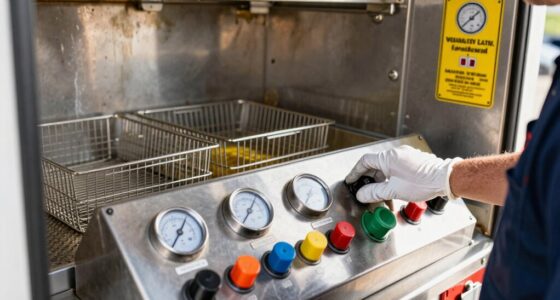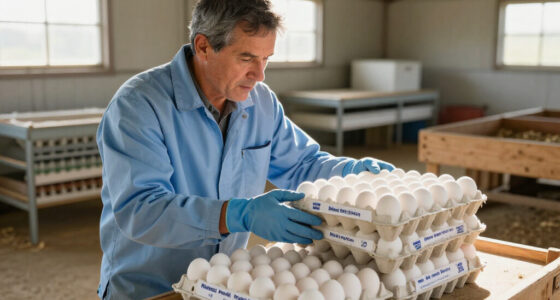

To implement HACCP in your food truck, start by conducting a hazard analysis to identify potential risks at each stage of food preparation and service. Establish critical control points, especially for temperature control and sanitation, and develop procedures for monitoring these points. Train your staff on hygiene practices, record all procedures, and take corrective actions when necessary. If you keep exploring, you’ll discover how to maintain a safe, trustworthy operation that protects your customers and your reputation.
Key Takeaways
- Conduct a hazard analysis to identify potential contamination points specific to the food truck’s menu and operations.
- Establish critical control points (CCPs) for temperature management and sanitation throughout food preparation.
- Train staff thoroughly on hygiene practices, proper glove use, and sanitation procedures to prevent cross-contamination.
- Implement routine monitoring and record-keeping of temperatures, cleaning schedules, and corrective actions taken.
- Continuously review and update the HACCP plan to address new hazards and ensure ongoing compliance.
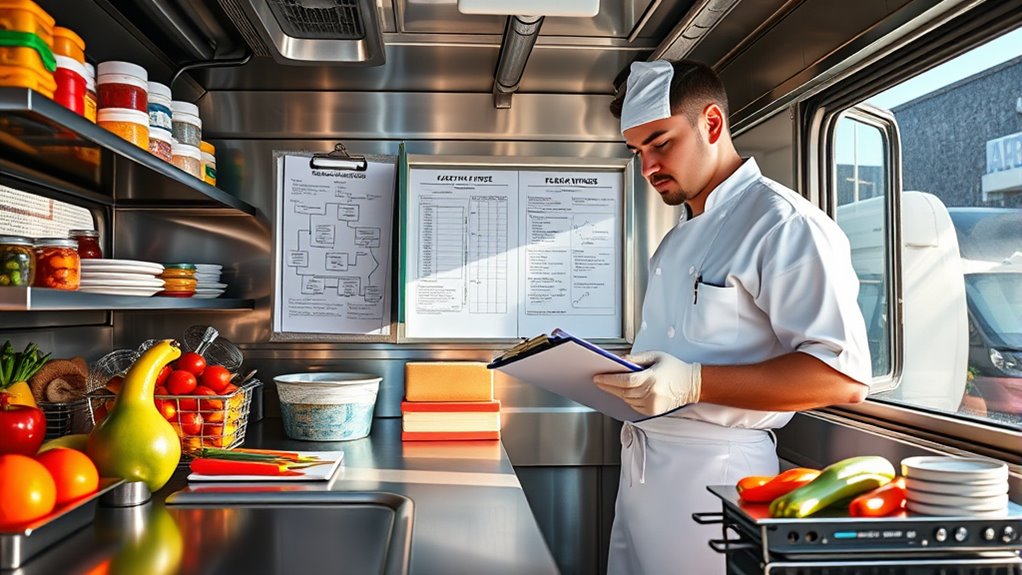
Implementing HACCP in a food truck is essential for ensuring food safety and maintaining customer trust. When you adopt this systematic approach, you’re actively identifying potential hazards and establishing controls to prevent foodborne illnesses. It’s not just about compliance; it’s about creating a safe environment where your customers feel confident in the quality of your food. To do that effectively, you need to focus on proper sanitation procedures and consistent practices that eliminate risks.
Implementing HACCP enhances food safety and builds customer confidence through consistent sanitation practices.
Your first step is to develop a thorough food safety plan tailored to your food truck operations. This involves conducting a hazard analysis to pinpoint points where contamination could occur—whether it’s during raw ingredient storage, cooking, or serving. Once these hazards are identified, you set critical control points (CCPs) to monitor and manage them. For example, controlling temperature during storage and cooking is crucial to prevent the growth of harmful bacteria. Implementing clear sanitation procedures at every stage—from handwashing to surface cleaning—ensures that cross-contamination doesn’t happen. Regularly disinfecting utensils, prep surfaces, and storage containers is key to maintaining a hygienic environment.
Training your staff on food safety and sanitation procedures is equally important. Everyone working in your food truck needs to understand the significance of hygiene practices, such as proper handwashing, glove use, and avoiding contact with ready-to-eat foods. Consistent training reinforces these habits, reducing the chance of accidental contamination. Additionally, establishing routines for cleaning and sanitizing all equipment, including grills, fryers, and refrigeration units, helps sustain a high standard of cleanliness. Remember, sanitation isn’t a one-time task; it’s an ongoing process that must be ingrained into your daily operations.
Monitoring and record-keeping are crucial components of HACCP. You should regularly check temperatures, document cleaning schedules, and track any incidents or deviations from your safety plan. These records serve as proof that you’re compliant and committed to food safety. If a problem arises, having detailed documentation makes it easier to identify the source and implement corrective actions swiftly. This proactive approach not only protects your customers but also shields your business from potential legal issues and reputation damage. Incorporating predictive analytics can further enhance your ability to anticipate and prevent issues before they occur.
food truck HACCP compliance kit
As an affiliate, we earn on qualifying purchases.
As an affiliate, we earn on qualifying purchases.
Frequently Asked Questions
How Often Should HACCP Records Be Reviewed and Updated?
You should review your HACCP records regularly, ideally at least once a month, to guarantee they’re accurate and effective. Update the frequency whenever there’s a change in your menu, equipment, or processes, or after an incident or audit. Record review helps you spot issues early, and updating ensures your safety procedures stay current. Staying consistent with these reviews keeps your food truck compliant and safe for customers.
What Are Common Challenges Faced When Implementing HACCP in a Food Truck?
You might face unexpected hurdles when implementing HACCP, especially with menu customization and equipment maintenance. These challenges can disrupt your plans, making it tricky to guarantee food safety. Balancing diverse menu options while maintaining consistent safety standards requires constant vigilance. Equipment issues can crop up suddenly, threatening compliance. Staying proactive, training staff thoroughly, and keeping detailed records help you overcome these obstacles and keep your food truck running smoothly.
How Can Limited Space Affect HACCP Implementation?
Limited space affects HACCP implementation because storage constraints and equipment limitations make it harder to maintain proper food safety standards. You might struggle to keep ingredients at correct temperatures or organize cleaning supplies effectively. This can increase the risk of cross-contamination or spoilage. To overcome these challenges, you need to optimize your storage, invest in space-saving equipment, and streamline your processes to guarantee safety within your tight quarters.
What Training Is Required for Food Truck Staff on HACCP?
Think of your staff as the gatekeepers of food safety—proper training is key. You need to guarantee they understand HACCP principles, proper food handling, personal hygiene, and temperature controls. Conduct hands-on staff training that covers hazard identification, cleaning protocols, and record keeping. Regular refreshers keep everyone sharp. With thorough food safety staff training, your team becomes a well-oiled machine, safeguarding your customers and boosting your food truck’s reputation.
How to Handle HACCP Compliance During Peak Business Hours?
During peak hours, you should focus on inspection planning and temperature monitoring to maintain HACCP compliance. Keep a checklist handy to quickly identify any issues, and assign staff to monitor temperatures frequently for cooked and stored foods. Stay alert, act promptly on any anomalies, and document everything thoroughly. This proactive approach guarantees your food truck stays compliant and safe, even during busy times.

BOMATA 6 Pack Waterproof IPX7 Meat Thermometer Instant Read Food Thermometer with Long Probe for Water, Liquid, Kitchen Cooking, Grill,BBQ ! T101 X 6 Pcs (Black & Red & White)…
[ Waterproof – IPX7 ] With the strong waterproof ability, it’s very suitable for measuring the temperature of…
As an affiliate, we earn on qualifying purchases.
As an affiliate, we earn on qualifying purchases.
Conclusion
By implementing HACCP in your food truck, you’re not just ensuring food safety—you’re creating an impenetrable fortress against contamination. With diligent planning and strict adherence, you’ll elevate your food truck to legendary status, where customers trust every bite. Remember, the effort you put into HACCP could be the difference between thriving and facing catastrophic health violations. Stay committed, stay vigilant, and watch your reputation soar beyond what you ever imagined possible.

Matthew Red&Green&Blue Detergent and Sanitizing Cleaning Bucket 3 Quart Cleaning Pail,Set of 3 Square Containers,Built-In Spout w/Handle,Wash Rinse Sanitize Handwash Bucket,Incl.3Pcs Microfiber Cloths
Muti-Color Packs&3 Cleaning Cloths – The package includes 3 sanitizing buckets thatc are designed for sponge washing, not…
As an affiliate, we earn on qualifying purchases.
As an affiliate, we earn on qualifying purchases.

J. J. Keller 2024 Employee Food Safety Handbook, with Quizzes and Answer Sheet, 5.25" x 8.25", English
The 2024 Employee Food Safety Handbook provides a convenient employee handbook of 13 critical food safety issues. This…
As an affiliate, we earn on qualifying purchases.
As an affiliate, we earn on qualifying purchases.