
To build a better inspection readiness folder, stay organized by maintaining all permits, licenses, and certifications in clearly labeled sections. Keep detailed records of food safety protocols, equipment maintenance, and employee training, updating them regularly. Include photos for visual proof and guarantee easy access to emergency procedures and contact info. Use technology solutions to streamline inventory and monitoring. If you keep these tips in mind, you’ll be better prepared for inspections and can smoothly showcase your compliance efforts.
Open a free Amazon Business account
Business pricing, bulk buying and tax-exempt orders.
As an affiliate, we earn on qualifying purchases.
Key Takeaways
- Organize all permits, licenses, and certifications in clearly labeled, easily accessible folders for quick retrieval during inspections.
- Maintain detailed, up-to-date records of food safety protocols, cleaning schedules, and employee training.
- Keep comprehensive equipment maintenance logs, inspection records, and inventory lists with expiration dates.
- Include emergency procedures, contact information, and response protocols in a dedicated, organized section.
- Regularly review and update documentation systems to ensure ongoing compliance and easy access.
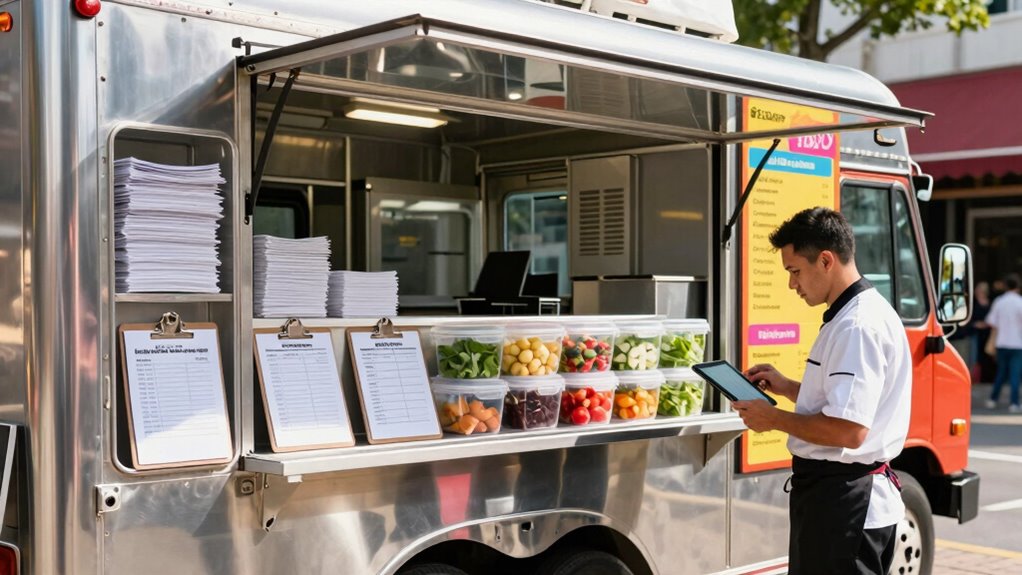
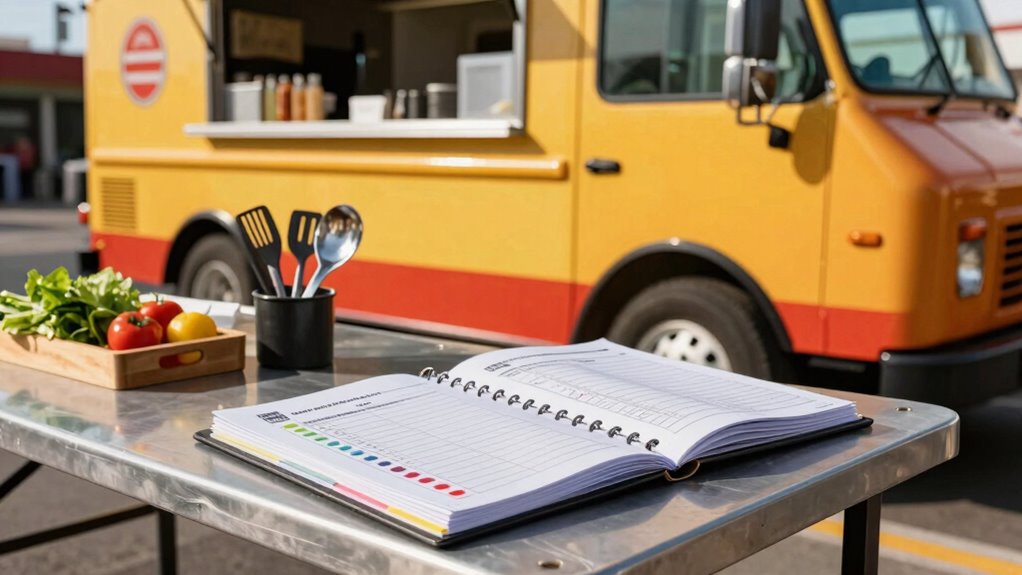
Preparing your food truck for inspection can feel overwhelming, but with the right approach, you can guarantee everything runs smoothly. The key is to develop a thorough inspection readiness folder that demonstrates your commitment to maintaining a safe, compliant mobile kitchen. This folder acts as your go-to resource during inspections, showcasing that you understand and meet all relevant health codes and safety standards. To build an effective folder, start by gathering all documentation that proves your adherence to local regulations, including permits, licenses, and certifications. These documents confirm that your mobile kitchen operates within legal boundaries and can easily be accessed when needed.
Organize a comprehensive folder with permits, licenses, and certifications to ensure smooth, compliant food truck inspections.
Next, focus on your food safety protocols. Include detailed procedures for food handling, storage, and sanitation, which align with health codes. Regularly updating these documents shows you stay proactive in maintaining hygiene standards. Keep records of routine cleaning schedules, pest control measures, and employee training sessions. Providing evidence of ongoing staff education not only reassures inspectors but also demonstrates your commitment to food safety. Photos of your setup—such as sanitized surfaces, proper food storage areas, and equipment—can further validate your compliance.
Your inspection readiness folder should also contain maintenance logs for your equipment. Regular maintenance ensures your kitchen functions smoothly and reduces the risk of violations related to malfunctioning appliances. Include receipts, service reports, and inspection records for your refrigerators, grills, and other essential equipment. This documentation shows you prioritize safety and operational integrity. Additionally, keep a detailed inventory list of all food and supplies, including expiration dates. Proper inventory management aligns with health codes by preventing cross-contamination and foodborne illnesses. Incorporating smart home technology solutions can also help you monitor critical systems remotely, ensuring continuous compliance and safety. Staying informed about food safety standards can help you adapt your procedures proactively to new regulations. Establishing a comprehensive recordkeeping system is also essential for maintaining organized documentation, which facilitates quick updates and retrievals during inspections.
Finally, prepare a section with your emergency procedures and contact information for local health officials or inspectors. Clear, accessible instructions for handling emergencies and responses to potential violations demonstrate your readiness to address issues proactively. Organizing everything neatly, using clearly labeled folders or binders, so you can quickly locate documents during an inspection. Developing an organized documentation system that keeps all relevant materials in order will streamline your inspection process. Remember, implementing a consistent recordkeeping practice can help identify areas for improvement and maintain ongoing compliance. By maintaining an organized, thorough inspection folder, you not only comply with health codes but also build confidence in your ability to run a safe, compliant mobile kitchen. This preparation saves you time, reduces stress, and helps you focus on serving your customers with peace of mind.
food truck inspection readiness folder
As an affiliate, we earn on qualifying purchases.
As an affiliate, we earn on qualifying purchases.
Frequently Asked Questions
How Often Should Food Trucks Update Their Inspection Readiness Folders?
You should update your inspection readiness folder at least quarterly to guarantee it stays current and organized. Regular updates help track inspection frequency requirements and keep documents like licenses, permits, and safety records accurate. Maintaining proper folder organization makes it easier to access essential information quickly during inspections. By staying proactive with updates, you reduce the risk of missing important compliance details and demonstrate your commitment to food safety standards.
What Digital Tools Can Streamline Inspection Documentation for Food Trucks?
Investing in digital tools like mobile apps and cloud storage can truly streamline your inspection documentation. Mobile apps allow you to quickly capture photos, notes, and compliance data on-site, reducing errors and saving time. Cloud storage keeps all your records organized and accessible anytime, anywhere, ensuring you’re always prepared for inspections. These tools verify the theory that digital solutions enhance efficiency and compliance, making your inspection readiness process smoother and more reliable.
Are There Specific Regulations Unique to Food Trucks Versus Brick-And-Mortar Establishments?
You need to understand that mobile compliance often involves regulation differences compared to brick-and-mortar restaurants. Food trucks must adhere to specific mobile food vending regulations, such as mobile food unit permits and parking restrictions, which aren’t always applicable to stationary establishments. These regulation differences guarantee safety standards are maintained while accommodating the unique challenges of operating on the go. Staying updated on local health department rules is essential for seamless mobile compliance.
How Can Food Trucks Prepare for Unexpected Inspection Surprises?
To prepare for unexpected inspection surprises, keep your mobile signage clear, accurate, and up-to-date to show compliance. Make sure parking permits are valid and properly displayed to avoid fines. Regularly review your health and safety practices, conduct internal audits, and stay organized so you’re ready to demonstrate adherence during inspections. Staying proactive helps you handle surprises confidently, demonstrating your commitment to safety and regulation compliance.
What Are Common Mistakes to Avoid in Inspection Readiness Folders?
You should avoid common mistakes like incomplete or outdated documentation, which can raise red flags during inspections. Guarantee your documentation accuracy by regularly updating records and double-checking details. Additionally, prioritize staff training so everyone knows where to find and how to present necessary documents confidently. This proactive approach minimizes errors, demonstrates professionalism, and helps you stay prepared for any surprises during inspections.
food safety documentation organizer
As an affiliate, we earn on qualifying purchases.
As an affiliate, we earn on qualifying purchases.
Conclusion
By staying organized, staying prepared, and staying proactive, you guarantee your food truck is always ready for inspections. Keeping detailed records, maintaining cleanliness, and regularly reviewing standards aren’t just tasks—they’re commitments to excellence. When you prioritize these practices, you’re not just passing inspections; you’re building trust, boosting reputation, and ensuring safety. Remember, the key to inspection readiness isn’t a one-time effort—it’s a continuous process of preparation, diligence, and improvement.
food truck equipment maintenance logs
As an affiliate, we earn on qualifying purchases.
As an affiliate, we earn on qualifying purchases.
food truck inventory management system
As an affiliate, we earn on qualifying purchases.
As an affiliate, we earn on qualifying purchases.
Flea & tick season Picks
flea and tick prevention
As an affiliate, we earn on qualifying purchases.