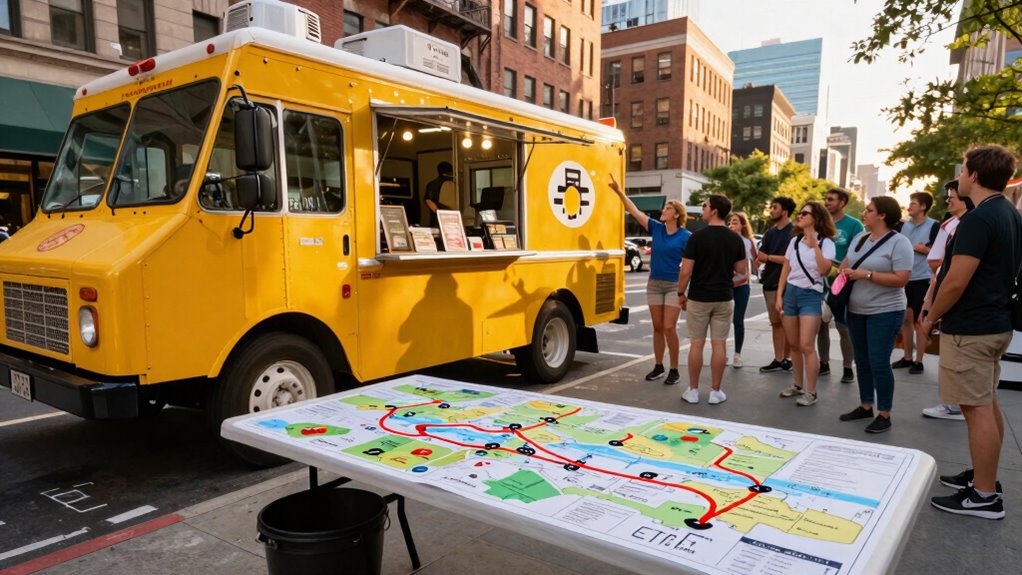

Effective route planning goes beyond just saving fuel for your food truck. It helps you target high-traffic areas during peak hours, boosting customer engagement and repeat business. Proper scheduling also guarantees smooth operations and reduces downtime, improving overall efficiency. By analyzing traffic and customer data, you can adjust routes to stay relevant and build your reputation. If you want to discover how smart route planning can support your growth, there’s more to explore.

Get kitchen staples and gadgets delivered free — and shop member deals
- Fast, free delivery on millions of items
- Access to Prime Big Deal Days deals on October 6–7
- Prime Video, Amazon Music and more included
Key Takeaways
- Effective route planning enhances customer engagement by targeting high-traffic, strategic locations at optimal times.
- It ensures operational efficiency through proactive maintenance scheduling and minimized vehicle downtime.
- Well-designed routes reduce unnecessary fuel consumption and optimize resource allocation.
- Strategic routing improves customer experience and market responsiveness by maintaining consistent presence and adjusting based on feedback.
- Proper route planning supports long-term business growth and sustainability beyond just saving fuel costs.
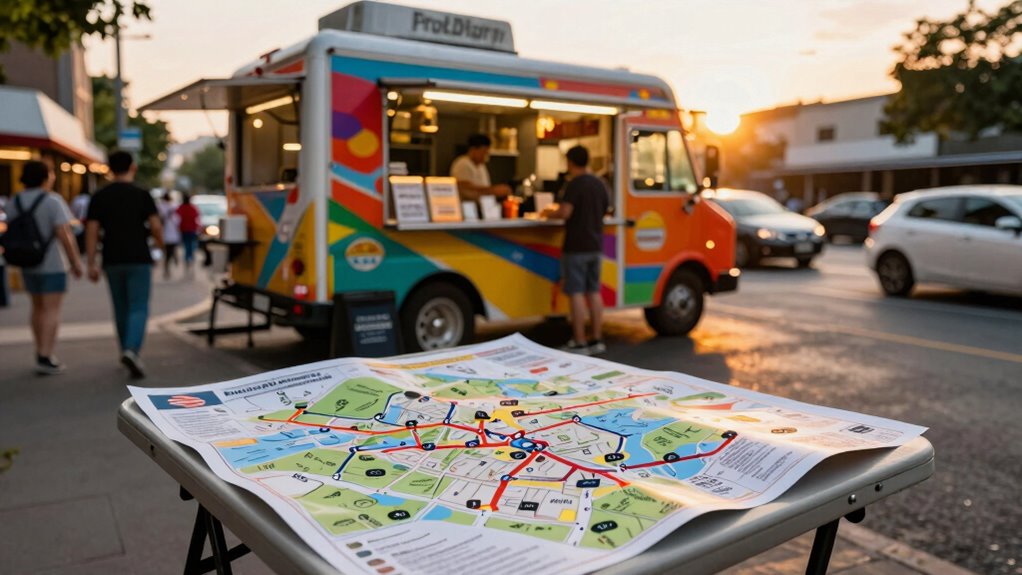
Ever wondered how food trucks consistently find their way to busy spots and attract hungry crowds? It’s not just about luck or random stops — route planning plays an essential role in how successful your food truck business becomes. When you map out your routes carefully, you’re doing more than just saving on fuel; you’re actively shaping customer engagement and ensuring smooth operations. A well-planned route allows you to target high-traffic areas during peak hours, increasing your chances of drawing in large crowds and boosting sales. By strategically positioning yourself, you can build a loyal customer base that knows they can count on you during certain times and locations, turning casual visitors into regular clients.
Good route planning also helps you manage your maintenance scheduling more effectively. When you know your daily routes in advance, you can plan your vehicle upkeep around those schedules, avoiding breakdowns during critical busy times. This proactive approach minimizes downtime and keeps your truck running smoothly, which is vital for maintaining consistent customer service. It’s frustrating for both you and your customers when your truck is out of commission unexpectedly, so an organized route helps you avoid those pitfalls. You can plan routine maintenance during less busy hours or days, ensuring your truck stays in top condition without disrupting your sales.
Beyond fuel costs, route planning directly influences how well you engage with your customers. When you arrive at the right spots at the right times, you’re more likely to create positive experiences that lead to repeat business. Consistent presence in popular areas builds recognition and trust, which are key to growth. Plus, by monitoring customer responses and adjusting your routes accordingly, you maintain a dynamic presence that keeps your offerings fresh and relevant. This active engagement keeps your patrons interested and encourages word-of-mouth advertising. Incorporating technology such as route optimization tools can further enhance your efficiency and responsiveness. Additionally, understanding the importance of efficient scheduling can help you allocate resources more effectively and improve overall business performance.
Furthermore, effective route planning can help you optimize your indoor air quality by reducing unnecessary idling and ensuring proper ventilation during stops. When you use digital tools to analyze traffic patterns and customer locations, it becomes easier to develop routes that maximize efficiency and customer reach. In addition, accurate data analysis can provide insights into customer preferences, enabling you to tailor your stop locations for better engagement. In essence, route planning is a strategic tool that extends far beyond just saving fuel. It’s about maximizing customer engagement, ensuring your truck is always ready to serve, and making your daily operations more efficient. When you put thought into your routes, you’re setting yourself up for sustained success, building a dependable business that customers can rely on. Proper planning doesn’t just keep your wheels turning — it keeps your business growing.
food truck route optimization software
As an affiliate, we earn on qualifying purchases.
As an affiliate, we earn on qualifying purchases.
Frequently Asked Questions
How Does Route Planning Influence Staff Scheduling for Food Trucks?
Route planning directly influences your staff scheduling by optimizing shift coordination and boosting staff efficiency. When you map out precise routes, you can predict busy locations and peak hours, allowing you to schedule staff accordingly. This reduces downtime and prevents understaffing during busy times. Better route planning guarantees your team is well-coordinated, improving service quality, and making sure you have the right staff available at the right place and time.
What Safety Considerations Are Affected by Route Planning?
Route planning directly impacts safety considerations by helping you adhere to safety protocols and prevent accidents. You can choose routes that avoid hazardous areas, reduce travel time in risky conditions, and guarantee your truck stays within safe driving limits. By planning carefully, you minimize potential dangers, protect your staff and customers, and maintain compliance with safety standards, ultimately creating a safer environment for everyone involved.
Can Route Planning Impact Customer Satisfaction and Loyalty?
Yes, route planning directly impacts customer satisfaction and loyalty. When you plan efficient routes, customers experience timely service, fresh food, and reliable availability, enhancing their overall experience. This consistency strengthens your brand reputation, encouraging repeat business. Poor route planning, on the other hand, can cause delays and frustrations, damaging trust and reducing loyalty. So, strategic routing is essential for maintaining positive customer relationships and growing your food truck’s reputation.
How Does Weather Affect Route Planning Decisions?
Weather greatly influences your route planning decisions. You need to take into account weather patterns like rain, snow, or storms, which can slow down travel or make certain routes unsafe. Seasonal adjustments are essential, as winter may require different paths compared to summer. By staying flexible and monitoring weather forecasts, you can avoid delays, protect your staff, and guarantee your food truck runs smoothly regardless of changing conditions.
What Tools Are Best for Optimizing Food Truck Routes?
You’d think a simple map would suffice, but ironically, the best tools for optimizing your food truck routes include real-time tracking and traffic analysis. These tools help you dodge traffic jams and sudden detours, saving time and increasing sales. Apps like Route4Me or Circuit prioritize efficient routes, adjusting on the fly. Embracing these tech solutions guarantees you stay ahead of the game, rather than stuck in traffic and lost customers.
mobile POS systems for food trucks
As an affiliate, we earn on qualifying purchases.
As an affiliate, we earn on qualifying purchases.
Conclusion
You might think route planning is just about saving fuel, but it’s so much more. Proper planning can boost your daily sales and build a loyal customer base. Did you know that food trucks that optimize their routes see up to a 20% increase in revenue? That’s like adding an extra day’s worth of customers each week. So, take the time to plan wisely—your profits and reputation depend on it.
vehicle maintenance scheduling tools
As an affiliate, we earn on qualifying purchases.
As an affiliate, we earn on qualifying purchases.
traffic analysis tools for food trucks
As an affiliate, we earn on qualifying purchases.
As an affiliate, we earn on qualifying purchases.
Fall Picks
fall essentials
As an affiliate, we earn on qualifying purchases.