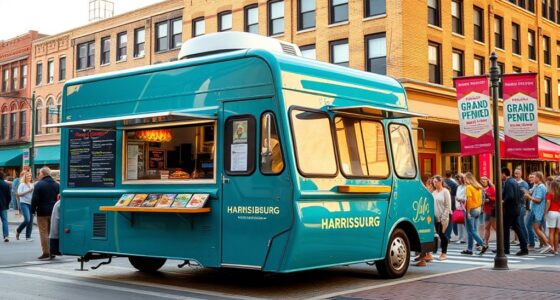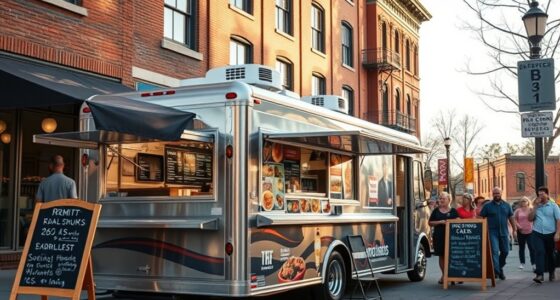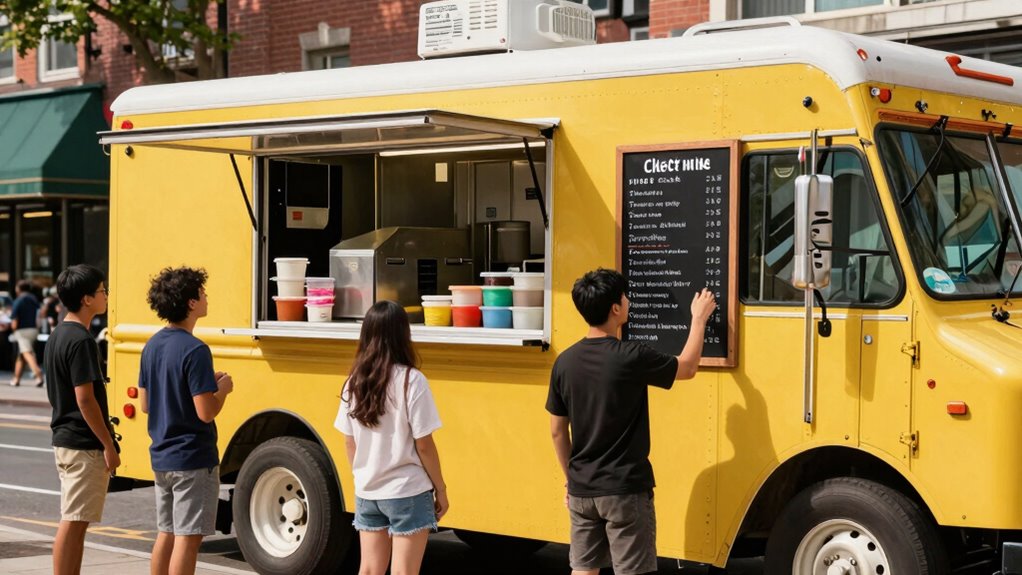
As a first-time food truck owner, your startup timeline usually spans three to six months, depending on your location and experience. You’ll start with site scouting, permits, and designing your truck, which can take several weeks to a few months. Next, you’ll focus on marketing, community engagement, and preparing for health licenses. Building in time buffers for unexpected delays helps. If you keep moving forward, you’ll uncover key insights to make your launch a success.

Get kitchen staples and gadgets delivered free with Prime
- Fast, free delivery on millions of items
- Prime Video, Amazon Music and more included
- Member-only deals all year
Key Takeaways
- The entire process typically takes 3 to 6 months from planning to launch.
- Location scouting and permit acquisition can take several weeks to ensure compliance and visibility.
- Customizing and outfitting the truck usually spans a few months, depending on complexity.
- Marketing efforts should start weeks prior to opening to build community interest.
- Securing health licenses and passing inspections can introduce additional delays if not planned early.
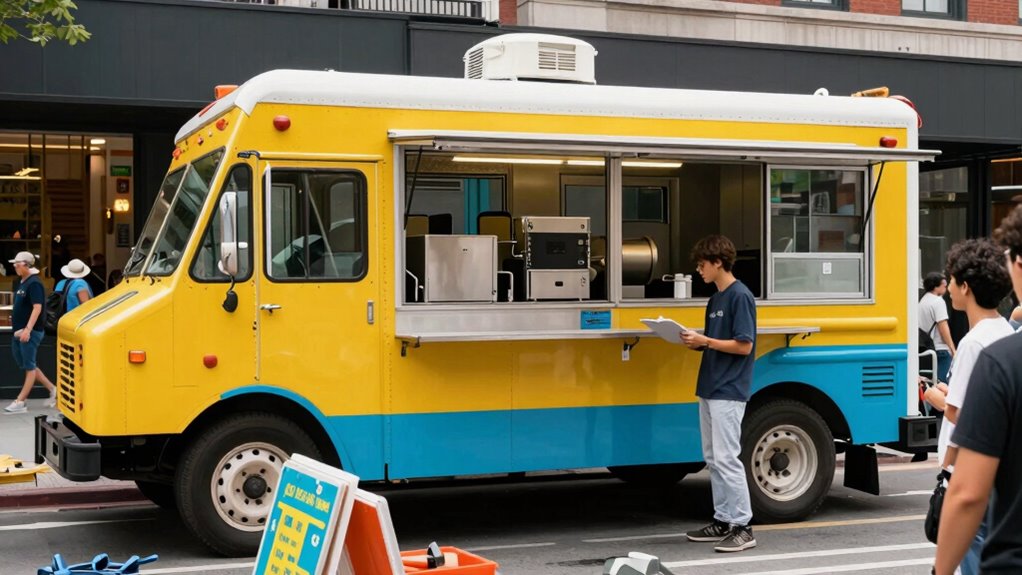
Starting a food truck business can be an exciting venture, but it requires careful planning and a clear timeline to stay on track. One of your first steps is understanding what the startup process looks like, especially if you’re new to the scene. As a street vendor, your success hinges on more than just great food; it’s about strategic planning, timely decisions, and consistent execution.
Initially, you’ll want to focus on location scouting. Finding the right spot is crucial because your success depends on foot traffic, visibility, and local regulations. This process can take a few weeks, as you visit potential locations, observe the crowd patterns, and evaluate permits or restrictions. Don’t rush this step—your chosen site will serve as your primary revenue source, so it’s worth investing time to find the best fit. During this phase, you’ll also want to understand the zoning laws and obtain necessary permits, which can add a few more weeks to your timeline depending on your city’s requirements. Understanding local regulations early on can help prevent delays later in the process. Additionally, researching enforcement policies related to street vending can provide insights into potential challenges and compliance needs.
Focus on location scouting and permits; this crucial step can take several weeks to ensure optimal site selection.
Once you’ve nailed down your location, you’ll need to move into designing and customizing your food truck. This stage involves sourcing a truck, outfitting it with kitchen equipment, and branding it to attract customers. The timeline here varies widely, but expect it to take a couple of months, especially if you’re customizing a used vehicle or working with a contractor. It’s also beneficial to research kitchen equipment thoroughly to ensure your setup is efficient and compliant with health standards. Simultaneously, you should develop your menu, focusing on dishes that can be prepared efficiently and appeal to your target audience.
With your truck ready and menu finalized, the next phase involves marketing and community engagement. As a street vendor, building buzz before your launch is essential. This can include social media promotion, participating in local events, or even offering soft openings to gather feedback. Coordinating these efforts should start a few weeks before your planned opening day to maximize visibility and customer interest.
Finally, before you hit the streets full-time, you’ll need to complete health inspections, secure your licenses, and plan your daily operations. These steps are often time-consuming, so build in a buffer for unexpected delays. It’s also important to understand food safety protocols and how they impact your setup process. Once everything’s approved and in place, you’re ready to launch your food truck. Keep in mind, the entire process from initial planning to your first day on the street typically takes anywhere from three to six months, depending on your location, experience, and resources. Staying organized and adhering to your timeline ensures you’re prepared to hit the ground running as a successful street vendor.
Products Worth Considering

Le Creuset Signature Enameled Cast Iron Round Dutch Oven, 5.5 qt, Deep Teal

Weber Searwood XL 600 Wood Pellet Smoker Grill, 36 inches, Black

Cuisinart Stainless Steel Bread Maker, 16 Programs, 2 lb Capacity
As an affiliate, we earn on qualifying purchases.
Frequently Asked Questions
How Much Initial Capital Is Typically Needed to Start a Food Truck?
You’ll typically need $50,000 to $100,000 to start a food truck, covering vehicle costs, equipment sourcing, and initial supplies. Your budget depends on menu customization, as specialty ingredients may increase expenses. Don’t forget ongoing costs like licensing, permits, and marketing. Prioritize efficient equipment sourcing to save money, and plan your budget carefully so you can manage all startup costs comfortably.
What Are Common Legal Challenges Faced by First-Time Food Truck Owners?
Steering legal waters can feel like walking a tightrope. You’ll face permits delays and insurance hurdles that slow your launch and test your patience. You must make sure your truck complies with local health and safety regulations, which can be complex and time-consuming. Overcoming these challenges requires diligence and persistence, but with careful planning, you’ll find your balance and keep your food truck journey moving forward smoothly.
How Do Weather Conditions Impact the Startup Timeline?
Weather conditions can considerably impact your startup timeline, causing delays due to weather delays like storms or extreme heat. You’ll need to incorporate seasonal planning to prepare for these disruptions, adjusting your launch dates and operations accordingly. Flexibility is key; by accounting for weather-related setbacks in your schedule, you can better manage expectations and guarantee a smoother start, even when Mother Nature doesn’t cooperate.
What Are the Most Effective Marketing Strategies for New Food Trucks?
You might think marketing costs a lot, but social media is your best tool for brand awareness at little to no expense. Post engaging content, share your story, and showcase your menu to attract local customers. Collaborate with local events or influencers to boost visibility. Consistent online presence builds your reputation, draws crowds, and makes your food truck a go-to spot, even before your first customer walks in.
How Long Does It Usually Take to Become Profitable?
You can expect to see your food truck reach profitability within 6 to 12 months, depending on factors like location, marketing efforts, and menu popularity. Your profitability timeline hinges on consistent revenue growth, which requires strategic pricing and effective marketing. While some trucks might turn a profit sooner, it’s normal for revenue growth to be gradual initially. Stay focused, track expenses, and optimize operations to accelerate your path to profitability.
Conclusion
So, as you start your food truck journey, remember that patience and persistence are key. The timing might feel coincidental—delays, surprises, small wins—all fitting into a bigger picture. Just like the perfect seasoning, success takes time and the right balance. Keep pushing forward, and you might find that everything falls into place just when you least expect it. After all, some of the best moments happen when you least plan for them.