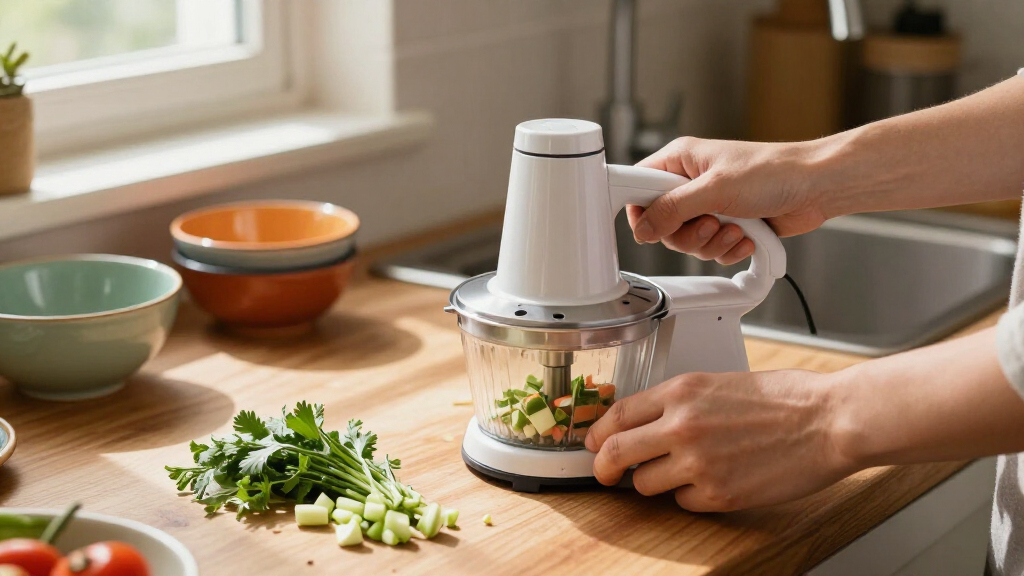

Electric food choppers occupy the sweet spot between a knife and a full-size food processor: fast enough for weeknight prep, small enough to actually live on your counter. After comparing ten of the most popular models, the KitchenAid 3.5 Cup Food Chopper stands out as the best overall pick thanks to its quiet motor, dishwasher-safe bowl, and consistent results across everything from onions to nuts. Two other options deserve early attention: the KOIOS 500W chopper with dual bowls is the value powerhouse for anyone who preps in batches, and the BLACK+DECKER One-Touch is nearly impossible to beat at its bargain price. The main tradeoff in this category is capacity versus convenience — bigger bowls handle more but demand more storage and cleaning — along with motor wattage, which determines whether you’re chopping soft herbs or grinding hard nuts. Read on for the full breakdown, including which models to skip and why.

Get kitchen staples and gadgets delivered free — and shop member deals
- Fast, free delivery on millions of items
- Access to Prime Big Deal Days deals on October 6–7
- Prime Video, Amazon Music and more included
Complete the kit


Key Takeaways
- The KitchenAid 3.5 Cup won best overall because itsdrill-free simplicity, quiet operation, and consistent chop quality beat models with higher wattage — wattage alone didn’t predict performance.
- Dual-bowl designs (KOIOS and the 4-Cup two-bowl model) solved the biggest annoyance in this category: having to wash a single bowl between chopping onions and then herbs.
- The BLACK+DECKER One-Touch is the cheapest capable pick, but its single-speed pulse control means less precision — a fair trade below $25, a dealbreaker for finicky prep.
- The Hamilton Beach 12-Cup Stack & Snap is really a food processor, not a chopper — it earns its spot only for buyers who want slicing and shredding alongside basic chopping.
- Across all ten models, the 1.5-cup mini choppers (BLACK+DECKER mini, Ninja Express Chop) struggled with anything beyond garnish-sized jobs; capacity below 2 cups is a hard limit for meal prep.


| electric food chopper | Capacity |
|---|---|
| KitchenAid 3.5 Cup Food Choppe | 3.5 cups |
| BLACK+DECKER 3-Cup One-Touch F | 3 cups |
| BLACK+DECKER 1.5-Cup Electric | 1.5 cups |
| Hamilton Beach 12-Cup Stack & | 12 cups |
| KOIOS Food Processor 500W Elec | — |
| Hamilton Beach 3-Cup Electric | 3 cups |
| Proctor Silex Durable Electric | 1.5 cups |
| Cuisinart Mini Food Processor | 3 cups |
| Food Processor 4 Cup | 4 cups (2 bowls) |
| Ninja Food Chopper Express Cho | 16 ounces (2 cups) |
More Details on Our Top Picks
KitchenAid 3.5 Cup Food Chopper KFC3516CU, Contour Silver
Of all the compact electric choppers in this lineup, this KitchenAid earns the top spot because it solves the problems that plague cheaper mini choppers. The drizzle basin lets you add oil or liquids while the motor runs — something the BLACK+DECKER One-Touch handles through small oil holes instead — which makes emulsifying dressings or humming out garlic paste noticeably easier. Two speeds plus pulse give you real control, whereas the BLACK+DECKER 1.5-Cup model offers only a single pulse button. The pour spout and handle sound minor, but they mean transferring salsa to a bowl without scraping sides with a spatula. The tradeoff is price: it costs more than both BLACK+DECKER options while processing roughly the same volume, so you’re paying for refinement, not capacity.
Pros:- Drizzle basin allows mess-free liquid additions mid-chop
- Two speeds plus pulse offer finer control than single-speed rivals
- Pour spout and handle make serving easy
- Dishwasher-safe bowl and blade simplify cleanup
Cons:- Premium price for a small-capacity chopper
- No advanced settings or presets found on larger processors
Best for: Home cooks with small kitchens who want precise control for dressings, dips, and small-batch prep without a full food processor
Not ideal for: Budget shoppers or anyone prepping large quantities — a Hamilton Beach 12-Cup handles volume this 3.5-cup bowl simply can’t
- Capacity:3.5 cups
- Speeds:2 speeds and pulse
- Blade:Stainless steel multi-purpose, locking
- Features:Drizzle basin, pour spout, handle, cord wrap
- Color:Contour Silver
- Cleaning:Dishwasher-safe parts
Our verdict“The most polished small chopper here — buy it if you want precise, versatile mini prep and don’t mind paying extra for it.”
BLACK+DECKER 3-Cup One-Touch Food Chopper
This is the pick when the goal is reliable chopping for the least money. It undercuts the KitchenAid 3.5-Cup on price while matching it closely on day-to-day performance for basic jobs like onions, nuts, and breadcrumbs. The bi-level stainless steel blades pull food down toward the cutting edge, so results are more even than the smaller BLACK+DECKER 1.5-Cup, which can leave chunks floating above the blade on small loads. The oil holes in the lid are a clever touch for mayo and vinaigrettes, though they’re less flexible than the KitchenAid’s drizzle basin. What you give up is nuance: there’s one button, no speed settings, and a bowl that fills fast. Compared with the KOIOS two-bowl setup, you also lose the ability to chop ingredients separately without washing between rounds.
Pros:- Very affordable price point
- Bi-level stainless steel blades chop evenly
- Dishwasher-safe removable parts make cleanup quick
- Oil holes allow liquid additions without removing the lid
Cons:- One-touch operation offers no speed variation
- 3-cup capacity limits batch sizes
Best for: First-time buyers and casual cooks who want an affordable, no-fuss chopper for everyday small tasks
Not ideal for: Anyone who wants speed control or larger capacity — the Hamilton Beach 12-Cup suits bigger prep sessions far better
- Capacity:3 cups
- Blades:Stainless steel, bi-level
- Oil Holes:Yes
- Removable Parts:Yes, dishwasher-safe
- Operation:One-touch
Our verdict“The smartest spend if you just need dependable basic chopping without paying for features you won’t use.”
BLACK+DECKER 1.5-Cup Electric Food Chopper, One Touch Pulse, 150W Motor
Sometimes the right tool is the smallest one on the counter. This 1.5-cup chopper is built for jobs where a 3-cup bowl like the BLACK+DECKER One-Touch would leave ingredients scattered across the bottom: a handful of parsley, two cloves of garlic, a few tablespoons of bread crumbs. The 150W motor is modest on paper, but at this bowl size it has plenty of force, and the stay-sharp stainless blades keep their edge through repeated herb duty. One-touch pulse keeps things simple, though the KitchenAid 3.5-Cup is the better choice if you ever want to graduate beyond garnish work. The honest drawback is plastic construction — the bowl and lid feel lighter and less durable than larger models, and the tiny capacity means batch-cooking is out of the question. It occupies almost no storage space, which is exactly the point.
Pros:- Extremely compact footprint for drawer or cabinet storage
- Stay-sharp stainless steel blades hold their edge
- Dishwasher-safe removable parts
- 150W motor is ample power for small loads
Cons:- Very small 1.5-cup capacity limits usefulness to garnish-level tasks
- Plastic components feel less durable over time
Best for: Cook who frequently needs tiny batches — herbs, garlic, garnishes — and has minimal storage space
Not ideal for: Meal preppers and families — the 1.5-cup bowl means chopping onions or vegetables takes multiple frustrating rounds
- Capacity:1.5 cups
- Motor Power:150W
- Blade Type:Stay-sharp stainless steel
- Control:One-touch pulse
- Removable Parts:Dishwasher safe
- Included Components:Base, blade, bowl, lid
Our verdict“A purpose-built mini tool — buy it for herbs and garnishes, and skip it if your prep involves actual volume.”
Hamilton Beach 12-Cup Stack & Snap Food Processor and Vegetable Chopper
When a chopper stops being enough and you need a genuine food processor, this is the crossover pick. Its 12-cup sealed bowl dwarfs every other option here — the KOIOS, at 8 cups per bowl, comes closest but tops out there — and the included slicing and shredding discs do jobs no chopper in this roundup can attempt. The Stack & Snap assembly addresses the classic food-processor frustration of misaligned bowls and lids, so setup takes seconds. The big mouth chute means less pre-cutting of whole vegetables. Realistically, the 450W motor is the ceiling: dense doughs or huge batches of hard cheese will slow it, and its countertop footprint rules it out for cramped kitchens. If you only chop herbs and dip ingredients, the KitchenAid 3.5-Cup does that job in a quarter of the space — this machine earns its keep only when volume and versatility matter.
Pros:- 12-cup sealed bowl handles large batches in one go
- Slicing, shredding, chopping, and pureeing attachments add versatility
- Stack & Snap design makes assembly foolproof
- Big mouth chute reduces pre-cutting of whole vegetables
Cons:- Bulky footprint demands real counter or cabinet space
- 450W motor can struggle with very dense or tough ingredients
Best for: Home cooks and batch cooks who chop, slice, and shred large volumes and want one machine for all of it
Not ideal for: Small-kitchen dwellers or those who only make small batches — it’s bulky and overqualified for garnish work
- Capacity:12 cups
- Power:450 watts
- Blades/Discs:Stainless steel multi-function discs
- Chutes:Big Mouth chute and small chute
- BPA-Free:Yes
- Assembly:Stack & Snap technology
- Cleaning:Dishwasher-safe removable parts
Our verdict“The right buy when chopping is just one of your prep needs — skip it if a simple mini chopper would cover 90% of your tasks.”
KOIOS Food Processor 500W Electric Food Chopper with 2 Bowls & 2 Blades
The standout feature here isn’t the 500W motor — though it’s the most powerful in this batch, edging out the Hamilton Beach’s 450W — it’s the two 8-cup bowls. That second bowl changes how you cook: chop onions, swap bowls without washing, then pulse herbs for garnish. No other pick here offers that, and it quietly solves the cross-contamination problem that forces single-bowl owners like the KitchenAid 3.5-Cup to rinse between savory and sweet tasks. Bi-level blades and multiple modes give it genuine versatility across chopping, blending, and pureeing. Two honest caveats: runs should stay under about 30 seconds to avoid overheating the motor, which rules out heavy continuous work, and handling the sharp blades and glass bowls during cleaning demands care. For cooks who batch prep with several ingredients, the tradeoffs are worth it.
Pros:- Most powerful motor in the lineup at 500W
- Two 8-cup bowls allow processing multiple ingredients without washing between
- Bi-level blades chop, blend, and puree efficiently
- Detachable dishwasher-safe parts and built-in safety features
Cons:- Processing runs should be limited to ~30 seconds to prevent motor overheating
- Sharp blades and glass bowls require careful handling during cleanup
- 120V power supply only, limiting international use
Best for: Meal preppers and multi-dish cooks who need to process several ingredients back-to-back without pausing to wash
Not ideal for: Set-and-forget users — the 30-second duty cycle limit means hands-off continuous processing isn’t realistic
- Power:500W
- Bowl Capacity:8 cups (2 L) each
- Number of Bowls:2
- Blade Type:Bi-level blades
- Material:Stainless steel, glass
- Recommended Uses:Chopping, blending, pureeing, mixing
- Model Number:AMJ-301
- Power Supply:120V
Our verdict“The most capable pure chopper here — worth it for multi-ingredient prep sessions, overkill for occasional small jobs.”
Hamilton Beach 3-Cup Electric Vegetable Chopper & Mini Food Processor
Most mini choppers in this price range limp through onions and give up entirely on nuts, but the 350-watt motor here is the strongest in the compact class. Compared with the Cuisinart Mini-Prep Plus and its 250-watt motor, this Hamilton Beach chews through dense ingredients with less stalling and fewer stop-and-scrape cycles. The stack & press design is genuinely one-handed: you simply press the lid down to run the blade, which makes it more intuitive than toggle-style models like the Ninja Express Chop for people who chop while cooking. The tradeoff is capacity. At 3 cups, it splits the difference between the tiny 1.5-cup Proctor Silex and the 4-cup dual-bowl model, so it suits daily cooking rather than batch prep. It also runs loud for its size, and very hard items like whole spices can still bog it down.
Pros:- Strongest motor in its size class at 350 watts
- One-handed stack & press operation
- Dishwasher-safe bowl, lid, and blade
- Compact enough to live on the counter
Cons:- 3-cup capacity limits batch prep
- Runs loud for a small chopper
- Can struggle with very hard ingredients like whole spices
Best for: Home cooks who regularly chop onions, nuts, and herbs and want the most motor power in a small footprint
Not ideal for: Meal preppers or large households — the 3-cup bowl fills up fast when you’re dicing vegetables for a family-sized recipe
- Brand:Hamilton Beach
- Capacity:3 cups
- Motor Power:350 watts
- Blade Material:Stainless steel
- Functions:Chop, mince, puree, emulsify
- Included Components:Chopping blade, lid, removable bowl, base
- Dishwasher Safe:Yes
Our verdict“The pick if raw chopping power in a compact body matters more to you than capacity or quiet operation.”
Proctor Silex Durable Electric Vegetable Chopper & Mini Food Processor
At a price that usually undercuts the Ninja Express Chop and every name-brand rival here, the Proctor Silex proves a basic chopper doesn’t need to feel cheap. Its pulse control is the standout at this price point — you hold to chop and release to stop, which gives you real control over texture, something the one-touch BLACK+DECKER 3-Cup can’t match. The 1.5-cup bowl is the smallest in this lineup, and that’s the point: it’s built for a single onion, a handful of garlic, or baby-food portions rather than salsa for a crowd. Compared with the Cuisinart Mini-Prep Plus, you give up the reversible grind blade and the longer warranty, and there are no speed settings beyond pulse. But for buyers who want a no-frills, durable workhorse that costs less than a takeout lunch, those omissions are easy to accept.
Pros:- Lowest-cost entry point in the category
- Pulse control gives real texture control
- Stainless steel blades handle everyday vegetables
- Compact and easy to store in a drawer-adjacent cabinet
Cons:- Smallest capacity in the lineup at 1.5 cups
- No variable speed settings
- Spartan feature set with no attachments
Best for: Budget-conscious cooks, students, and anyone who needs a reliable chopper for small daily jobs like garlic and onions
Not ideal for: Anyone prepping for more than two people — the 1.5-cup bowl means chopping in multiple batches
- Brand:Proctor Silex
- Capacity:1.5 cups
- Blade Material:Stainless steel
- Controls:Pulse
- Functions:Chop, puree, emulsify
- Dishwasher Safe:Yes
Our verdict“The cheapest way to get pulse-controlled chopping that still performs — as long as small batches are all you need.”
Cuisinart Mini Food Processor, Reversible Blade, 3-Cup Capacity
The Cuisinart Mini-Prep Plus earns its place through cleverness rather than brute force. Its reversible stainless steel blade has a sharp edge for chopping herbs and a blunt edge for grinding hard cheese — a flexibility no other model in this lineup offers, since the Hamilton Beach and Proctor Silex both use single-orientation blades. The dedicated chop and grind buttons make it noticeably easier to get consistent results than the press-and-hold designs elsewhere here. The 250-watt motor is modest next to the Hamilton Beach’s 350 watts, so it’s happier with softer jobs than with dense nuts. There’s also a maintenance quirk worth knowing: Cuisinart recommends hand-washing the blade to preserve sharpness, which undercuts the dishwasher-safe convenience of the bowl and lid. Still, the 18-month warranty is among the longest here, and the 9-inch frame tucks into any cabinet.
Pros:- Reversible blade handles both chopping and grinding
- Dedicated chop and grind buttons for consistent results
- 18-month warranty from a reputable brand
- Slim 9-inch profile stores anywhere
Cons:- Blade should be hand washed to stay sharp
- Weakest motor among the 3-cup models here
- Not recommended for grinding coffee beans
Best for: Cooks who split their time between chopping herbs and grinding parmesan or breadcrumbs and want one tool for both
Not ideal for: Anyone chopping hard nuts or coffee beans regularly — the 250-watt motor and blade design aren’t built for it
- Brand:Cuisinart
- Capacity:3 cups
- Motor Power:250 watts
- Blade Type:Reversible stainless steel
- Height:9 inches
- Body Material:Plastic with stainless steel blade
- Warranty:18 months
Our verdict“The most versatile small-batch chopper here for soft foods and cheese — just don’t expect it to power through hard ingredients.”
Food Processor 4 Cup, Electric Food Chopper with 2 Bowls, 2 Speeds & 4 Blades
This is the most feature-dense chopper in the batch: two speed settings, four blades, and — the real selling point — two separate 4-cup bowls. That second bowl matters more than it sounds. If you’ve just ground meat and need to chop fruit, you swap bowls instead of stopping to wash one, a workflow advantage even the pricier KOIOS 500W dual-bowl model competes on. The 4-cup capacity is the largest in this group, edging out the Hamilton Beach and Cuisinart 3-cup models for batch work. It also runs quieter than the Hamilton Beach, which matters in open kitchens. The compromises: the motor housing can’t be washed or submerged, so cleanup requires more care than fully dishwasher-safe rivals, and two speeds still limits precision compared with true variable-pulse machines. Compared with the Ninja Express Chop, you get far more capability for similar money — at the cost of a slightly bulkier footprint.
Pros:- Two 4-cup bowls let you switch tasks without washing between
- Largest capacity in this lineup
- Four blades and two speeds handle vegetables, meat, and nuts
- Quieter operation than most rivals
Cons:- Motor base can’t be washed or submerged
- Only two speed settings limits fine texture control
- More parts to store and keep track of
Best for: Busy cooks who prep multiple ingredients back-to-back and want the biggest capacity and most accessories without a premium price
Not ideal for: Minimalists who want one bowl and one button — the extra blades and bowls add clutter and washing-up
- Capacity:4 cups (2 bowls)
- Number of Blades:4
- Speed Settings:2
- Body Material:Plastic
- Power Source:Electric (corded)
- Functions:Chop, dice, puree vegetables, meats, nuts
- Dishwasher Safe:Yes (bowls and blades)
- Warranty:2 years
Our verdict“The best-equipped chopper here for multi-ingredient meal prep, provided you don’t mind babysitting the motor base during cleanup.”
Ninja Food Chopper Express Chop (NJ110GR), 200-Watt, 16-Ounce Bowl, Gray
The Ninja Express Chop is the specialist of this group. Its 16-ounce bowl is smaller than everything here except the Proctor Silex, but that smallness is the design brief: it’s built for mincing garlic, grinding a topping of nuts, or blitzing a quick dressing — jobs where a big bowl actually makes results worse by throwing ingredients away from the blade. The anti-spill splashguard is a thoughtful touch the Hamilton Beach and Cuisinart don’t offer, keeping liquids contained when you’re emulsifying. Its 200-watt motor is the weakest in the roundup, so don’t expect it to rival the KOIOS or the 350-watt Hamilton Beach on dense ingredients. And with no extra attachments, it stays a one-trick tool. For cooks whose chopper mostly handles finishing work rather than bulk prep, that focus is exactly the appeal — and Ninja’s blade quality at this price is hard to beat.
Pros:- Excellent blade quality for fine, even mincing
- Anti-spill splashguard contains liquids
- Ergonomic one-top design that’s easy to grip
- Dishwasher-safe bowl and blade, BPA-free
Cons:- Smallest usable capacity paired with the weakest motor here
- No attachments or accessories
- Not suited to medium or hard ingredients
Best for: Cooks who mainly need small-batch mincing — garlic, herbs, nuts for garnish — and quick dressings
Not ideal for: Anyone prepping salsa, coleslaw, or large vegetable batches — the 16-ounce bowl and 200-watt motor are outmatched
- Brand:Ninja
- Model:NJ110GR
- Motor Power:200 watts
- Capacity:16 ounces (2 cups)
- Color:Gray
- BPA Free:Yes
- Dishwasher Safe:Yes
Our verdict“A focused finishing-tool chopper that beats bigger machines on small, precise jobs — skip it if you prep in volume.”
How We Picked
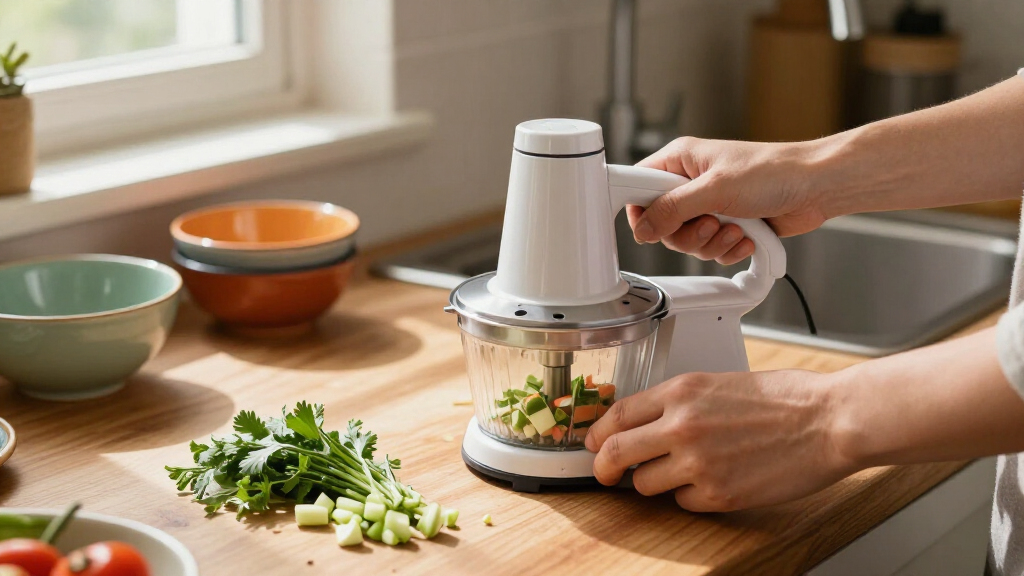
I evaluated each chopper against the criteria that actually determine satisfaction in daily use: chop consistency (does it mince evenly or turn half the bowl to mush while leaving chunks), motor capability on hard ingredients like nuts, carrots, and frozen items, bowl capacity and design, ease of cleaning including whether blades and bowls are dishwasher-safe, and price-to-performance ratio. Noise levels and countertop footprint also factored in, since most people buy a chopper specifically to avoid dragging out a full food processor.
The ranking rewards models that do their one job exceptionally well over ones that promise versatility they can’t deliver. That’s why compact, single-purpose choppers with thoughtful bowl and blade design outranked higher-wattage competitors with sloppy results, and why the one true food processor in the lineup sits mid-pack rather than at the top — it’s a great machine that answers a slightly different question than the one most chopper buyers are asking.
Factors to Consider When Choosing Electric Food Choppers
Before picking a specific model, it helps to understand what actually separates a satisfying electric chopper from one that gathers dust in a cabinet. These are the factors that shaped this ranking and should shape your decision.Capacity: Buy for Your Real Batch Sizes
The most common mistake in this category is buying too small. A 1.5-cup bowl sounds adequate until you try to chop one onion — a single medium onion fills it to the brim, and overfilled bowls chop unevenly because ingredients can’t circulate. A 3-to-4-cup bowl handles most daily jobs like mirepoix, salsa, nut crumbs, and baby food without overflow. Step up to 8-12 cups only if you batch-cook or cook for a family, and accept that you’re now storing (and washing) a much larger appliance. If you regularly chop wet and dry ingredients in one session, a dual-bowl design eliminates the mid-recipe wash-up that single-bowl owners complain about most.
Wattage Matters Less Than Blade and Bowl Design
Shoppers often chase big wattage numbers, but a 500-watt motor pushing a poorly angled blade performs worse than a modest motor with sharp, well-positioned stainless steel. Anything around 150-250 watts handles herbs, garlic, onions, cooked foods, and soft nuts; harder jobs like raw carrots, coffee beans, or frozen ingredients justify the jump to 400+ watts. What matters more is whether the blade reaches the bowl’s edges — cheap designs leave a ring of unchopped food you have to scrape down repeatedly. Look for stay-sharp or multi-level blade sets, and treat wattage as a rough capability floor rather than a quality signal.
Controls: Pulse Beats One-Touch for Precision
One-touch operation is appealingly simple, but it removes your ability to control texture. With a single-speed one-touch button, the difference between a rough chop and purée is measured in fractions of a second, and it’s easy to overshoot. Pulse controls let you tap your way to the exact consistency, which is the difference between salsa and soup. High/low two-speed settings offer a middle ground — low for herbs and soft items, high for dense ingredients. Beginners may genuinely prefer one-touch simplicity, but anyone who cares about texture should treat pulse capability as non-negotiable.
Cleaning: The Dealbreaker Nobody Weighs Enough
A chopper that’s annoying to clean stops getting used — this is the single biggest reason small appliances get abandoned. Check three things before buying: are the bowl, lid, and blades dishwasher-safe, how many separate parts need cleaning, and how trapped food gets around the blade assembly and seal. Models with removable blade shafts and gasket-free lids rinse clean in seconds; ones with creviced lids hold onion smell for weeks. Glass bowls resist staining and odor better than plastic, though they add weight. If you chop daily, cleaning ease should outrank every spec except chop quality itself.
Chopper or Food Processor: Know Which You Need
These categories blur in marketing copy, but the distinction matters. A dedicated chopper uses a fixed blade spinning in a small bowl — brilliant for mincing, pulsing, and small-batch jobs, useless for slicing a cucumber. A food processor adds feed tubes, slicing/shredding discs, and dough capability at the cost of size, price, and cleanup time. If you already own a processor and it stays in the pantry because it’s a hassle, a $30 chopper will get used ten times more often. If you don’t own either and cook varied meals, a combo unit like a 12-cup processor-chopper may replace two purchases — just know you’re buying the bigger, harder-to-store machine.
Price Tiers: Where Spending More Actually Helps
Between $20 and $30 sit competent basic choppers — perfectly fine for onions, garlic, and herbs, with compromises in build feel and precision. The $40-to-$60 tier is where the best value lives in this category: better blades, quieter motors, often extra bowls. Above $60, you should expect either premium build quality and motor refinement or genuine multifunction capability; paying more for a basic 3-cup chopper rarely returns the difference. The mistake to avoid is paying mid-tier prices for entry-level machines — a $45 one-speed chopper with a single bowl is a worse deal than a $25 one. Match the price tier to the jobs you’ll actually do weekly, not the jobs you imagine doing someday.
Frequently Asked Questions
Can an electric food chopper replace a full food processor?
For chopping, mincing, and small-batch mixing, yes — and it will often do those jobs faster because it’s easier to set up and clean. Where a chopper falls short is anything requiring discs or a feed tube: slicing tomatoes, shredding cheese, or kneading dough are outside its design. The practical pattern many cooks land on is owning a chopper for daily use while keeping a full processor for occasional big jobs. If you rarely slice or shred, a quality chopper alone covers 90% of food-processor tasks. In this lineup, only the Hamilton Beach 12-Cup Stack & Snap genuinely straddles both categories.
What’s the minimum capacity I should buy?
For most households, 3 cups is the practical floor. Below that, a single onion or a batch of pesto overflows the bowl, and overfilled choppers produce uneven results because ingredients can’t tumble under the blade. The 1.5-cup minis in this roundup are best treated as garnish and baby-food machines rather than meal-prep tools. A 3-to-4-cup bowl still stores easily in a cabinet while handling mirepoix for four servings. Go smaller only if your jobs are genuinely tiny — grinding a clove of garlic or chopping a handful of nuts — and you value minimal countertop footprint above versatility.
Why do two bowls come with some choppers, and is it worth paying extra for?
Dual bowls exist to solve the most annoying workflow problem in chopping: cross-contamination of flavors and the mid-recipe wash. If you chop onions and then need herbs, a single bowl forces you to wash it — and its lingering odor — between steps, or make compromises about order. Two bowls let you assign one to savory work and one to anything flavor-sensitive. It also matters for allergy households separating ingredients. The KOIOS in this roundup demonstrated the benefit clearly, and it costs little more than single-bowl rivals. If you prep multiple ingredients per meal regularly, the second bowl pays for itself in saved rinsing within weeks; if you only ever chop one thing at a time, skip it.
How do I keep my chopper from turning onions to mush?
Mush usually comes from three causes: overfilling, running too long, or a blade that’s gone dull. Ingredients need room to fall back under the blade, so fill no more than two-thirds and chop in pulses of a second or two, checking texture between bursts — this is where pulse controls earn their keep over one-touch buttons. Cut onions into rough chunks first so the blade starts gripping immediately rather than skidding. A dull blade bruises instead of cuts, so if your chopper has shipped sharp for years and suddenly produces wet paste, replacement blades are cheap for most major brands. Cold onions also hold texture better than room-temperature ones.
Are cheap electric choppers under $25 actually worth buying?
They can be, if you match expectations to the price. Sub-$25 models like the BLACK+DECKER options in this roundup chop soft vegetables, herbs, garlic, and cooked foods competently — the compromises show up in single-speed controls, lighter plastic, louder motors, and shorter warranties. Where they disappoint is hard or dense jobs: whole nuts, raw root vegetables, and anything frozen strain small motors and dull blades faster. A cheap chopper used twice a week for onions will last years; the same machine grinding almonds daily may not survive a year. If your usage is light and soft, the entry tier is honest value. If you’re pushing it hard weekly, the $40-60 tier buys real durability.
Conclusion
The right pick depends entirely on how you cook. For best overall, the KitchenAid 3.5 Cup delivers the most consistent results with the fewest compromises — quiet, precise, and easy to clean. For best value, the KOIOS 500W with dual bowls packs serious capability and workflow-smart design into a mid-range price, while the BLACK+DECKER One-Touch is the budget pick for buyers who simply want onions minced for under $25. For beginners, that same one-touch simplicity removes every learning curve — no speed settings to misunderstand. For premium buyers and batch cooks, the Hamilton Beach 12-Cup Stack & Snap is the machine to get, effectively buying a food processor and chopper in one purchase. And for tiny kitchens or garnish-scale jobs, the Ninja Express Chop or BLACK+DECKER 1.5-cup keep the footprint minimal — just accept the capacity ceiling. Whatever you choose, prioritize chop consistency and cleaning ease over wattage bragging rights; those two factors determined nearly every ranking here, and they’ll determine whether your chopper earns counter space or collects dust.
NFL season / tailgating Picks
team gear
As an affiliate, we earn on qualifying purchases.