Small water-saving habits in food trucks add up quickly because every leak fixed, faucet turned off, or rinse water reused reduces overall water use. When you start using low-flow fixtures and collect rainwater, your daily consumption drops markedly. These small actions prevent waste and lower your bills over time. Consistently practicing these habits creates a big impact on both your environment and your expenses. Keep exploring to discover more easy ways to boost your water efficiency.

Get kitchen staples and gadgets delivered free with Prime
- Fast, free delivery on millions of items
- Prime Video, Amazon Music and more included
- Member-only deals all year
Key Takeaways
- Small habits like fixing leaks prevent significant daily water waste in a compact food truck setting.
- Using water-efficient fixtures reduces overall water consumption with minimal effort.
- Mindful water use during cleaning and dishwashing adds up to substantial savings over time.
- Regular maintenance ensures plumbing remains efficient, preventing costly water loss.
- Combining multiple small habits creates a cumulative effect, drastically lowering water bills and environmental impact.
Running a food truck requires careful attention to resource management, and water conservation is an essential part of that. Small water-saving habits might seem insignificant at first, but they add up quickly and can make a big difference in your overall efficiency. One of the most effective ways to start is by integrating rainwater harvesting into your setup. Installing simple rain barrels allows you to collect and reuse rainwater for cleaning tasks or non-potable uses. This reduces your reliance on municipal water supplies and cuts costs over time. Plus, harvesting rainwater is environmentally friendly, helping you lower your truck’s carbon footprint.
Collect and reuse rainwater with simple barrels to save costs and reduce your environmental impact.
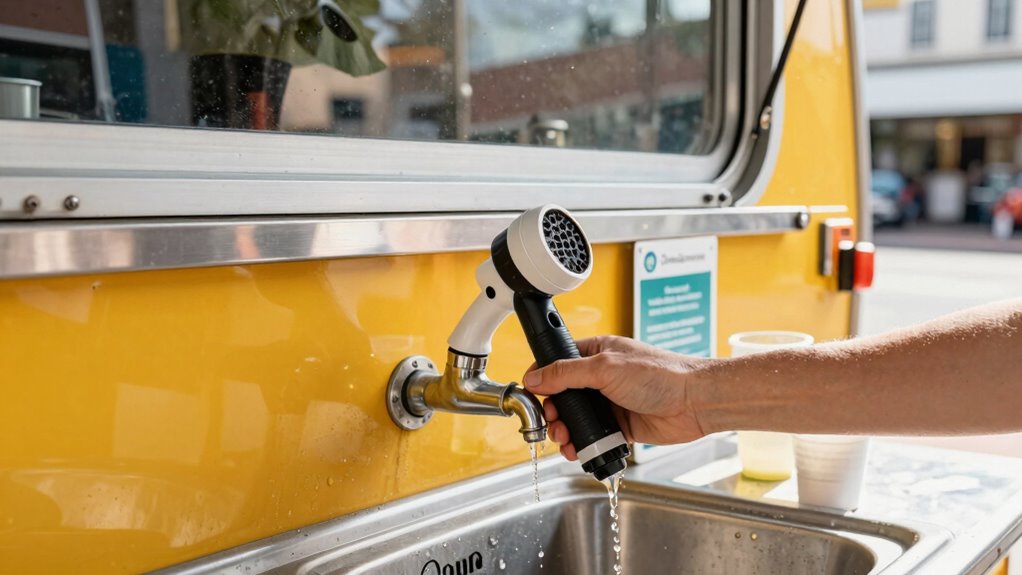
Alongside rainwater harvesting, upgrading to water-efficient fixtures can dramatically reduce your water consumption. Low-flow faucets and aerators in sinks limit water flow without sacrificing performance, making everyday tasks like handwashing or cleaning dishes more efficient. These fixtures are easy to install and maintain, and they’re a smart investment that pays off by reducing your water bills. When combined with rainwater harvesting, water-efficient fixtures create a thorough approach to conserving water, especially during busy service hours when usage spikes.
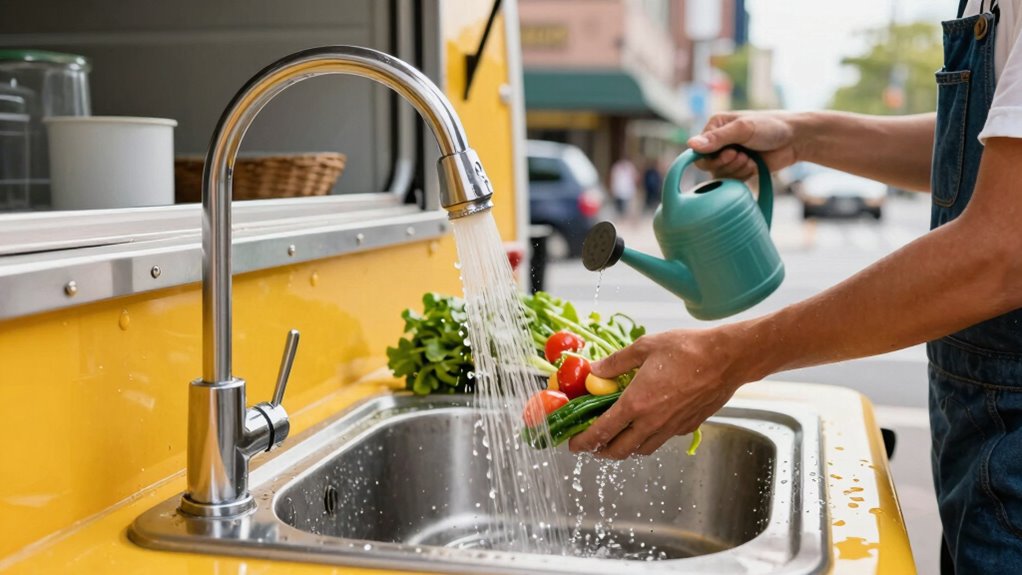
You should also develop habits that minimize waste. For example, always fix leaks immediately; a small drip can waste gallons of water daily. Be mindful of how much water you use when washing utensils, dishes, or cleaning surfaces. Instead of letting the faucet run the entire time, use a bucket to collect rinse water and reuse it when possible. This practice not only saves water but also encourages water-efficient practices and more mindful resource use overall. Incorporating water conservation techniques into your routine can lead to long-term savings and sustainability benefits. Additionally, understanding water-saving habits can help you implement more effective conservation strategies across your operations.
Another small habit is scheduling regular maintenance checks on plumbing fixtures. Ensuring that all pipes, hoses, and fixtures are in good condition prevents leaks and unnecessary waste. You can also train your staff to adopt water-saving routines, like turning off taps when not in use or using minimal water for cleaning. These habits, while simple, become second nature over time and contribute considerably to overall water conservation.
low flow faucet aerator for kitchen
As an affiliate, we earn on qualifying purchases.
As an affiliate, we earn on qualifying purchases.
Frequently Asked Questions
How Much Water Can a Typical Food Truck Save Annually?
A typical food truck can save around 10,000 to 20,000 gallons of water annually by adopting water efficiency and sustainability practices. When you implement small habits like fixing leaks, using water-efficient fixtures, and recycling greywater, you markedly reduce water waste. These practices add up quickly, helping you cut costs and minimize your environmental impact, making your food truck more sustainable and eco-friendly in the long run.
Are There Affordable Water-Saving Devices Suitable for Food Trucks?
Yes, there are affordable water-saving devices perfect for food trucks. You can install water-efficient fixtures like low-flow faucets and aerators, which reduce water use without sacrificing performance. Additionally, implementing leak detection systems helps you catch leaks early, preventing water waste and costly repairs. These simple upgrades are cost-effective and easy to maintain, making them ideal for small food trucks aiming to conserve water and cut expenses.
What Training Is Needed for Staff on Water Conservation?
You need to implement staff education through effective training programs that emphasize water conservation. Train your team on simple practices like turning off taps when not in use, using water-efficient appliances, and reporting leaks promptly. Regular refreshers guarantee everyone stays aware of conservation goals. By prioritizing this training, you foster a culture of responsible water use, which helps save resources and reduces costs over time.
How Do Water-Saving Habits Impact Food Truck Operations?
Your water-saving habits improve food truck operations by boosting cleaning efficiency and promoting water recycling. When you use water wisely, you reduce wastage, making cleaning quicker and more effective. Implementing water recycling systems allows you to reuse water, lowering overall consumption and costs. These habits help your truck run smoothly, cut expenses, and support environmental sustainability, all while maintaining high hygiene standards essential for customer satisfaction.
Can Water-Saving Measures Reduce Overall Costs Significantly?
Yes, water-saving measures can considerably reduce your overall costs. By improving water efficiency, you cut down on water bills and lower utility expenses. Small habits like fixing leaks, using low-flow fixtures, and optimizing water use in cleaning help add up to substantial savings over time. These cost reductions not only benefit your bottom line but also support your food truck’s sustainability efforts, making your operation more efficient and eco-friendly.
rainwater harvesting barrel for outdoor use
As an affiliate, we earn on qualifying purchases.
As an affiliate, we earn on qualifying purchases.
Conclusion
By adopting simple water-saving habits, you can make a big difference in your food truck’s efficiency. Did you know that a single water-saving tip can reduce your water usage by up to 30%? That’s like saving hundreds of gallons each year—enough to keep your truck running smoothly and sustainably. Remember, small changes add up fast, so start today and see how your efforts can make a meaningful impact on both your business and the environment.
water-saving fixtures for food trucks
As an affiliate, we earn on qualifying purchases.
As an affiliate, we earn on qualifying purchases.
As an affiliate, we earn on qualifying purchases.
Fall Picks
fall essentials
As an affiliate, we earn on qualifying purchases.