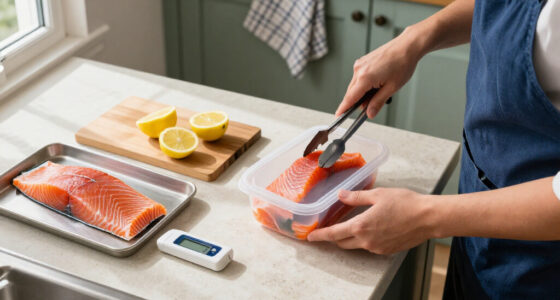
To keep food safe on the road, pack lightweight, non-perishable snacks and use insulated containers or small coolers with ice packs to keep perishables cold. Always wash your hands or use sanitizer before handling food, and keep raw meats separate from cooked foods to prevent cross-contamination. Regularly check cooler temperatures, and consume perishables quickly if refrigeration isn’t available. For more tips on staying safe with your food during travel, continue exploring key strategies.

Get kitchen staples and gadgets delivered free with Prime
- Fast, free delivery on millions of items
- Prime Video, Amazon Music and more included
- Member-only deals all year
Key Takeaways
- Use insulated containers and ice packs to keep perishable foods below 40°F (4°C).
- Separate raw meats from cooked foods to prevent cross-contamination during storage and handling.
- Regularly monitor cooler temperatures and consume perishables within a day or two.
- Practice strict hand hygiene with soap and water before handling or eating food.
- Check food labels and expiration dates, and store foods properly to prevent spoilage and contamination.
Packing Smart: Choosing the Right Food Items for Travel
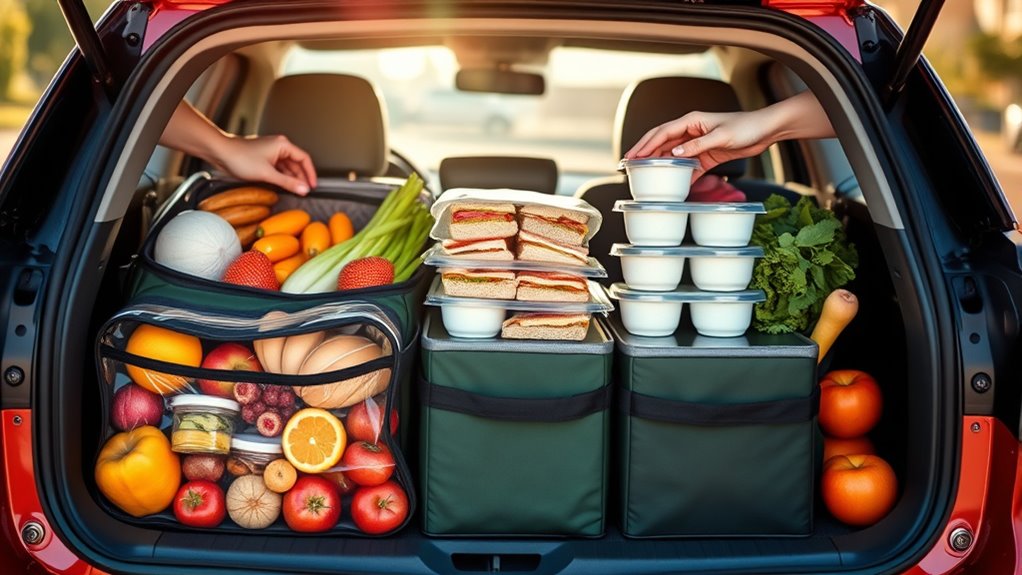
When packing food for travel, choosing the right items is essential to guarantee safety and freshness. Start with lightweight snacks that are easy to carry and won’t add unnecessary bulk to your bag. Think nuts, dried fruits, or granola bars—these are convenient, nutritious, and travel-friendly. If you plan to bring perishable foods, consider portable refrigeration options like small, battery-operated coolers or insulated bags with ice packs. These help keep items at safe temperatures and prevent spoilage. Avoid bulky, heavy foods that are difficult to transport or prone to spoilage without proper cooling. Remember, selecting compact, non-perishable foods and investing in portable refrigeration can make your trip safer and more enjoyable, ensuring your food stays fresh and safe throughout your journey. Using the right storage methods can also help maintain food safety and quality during travel.
Proper Storage Techniques to Keep Food Fresh
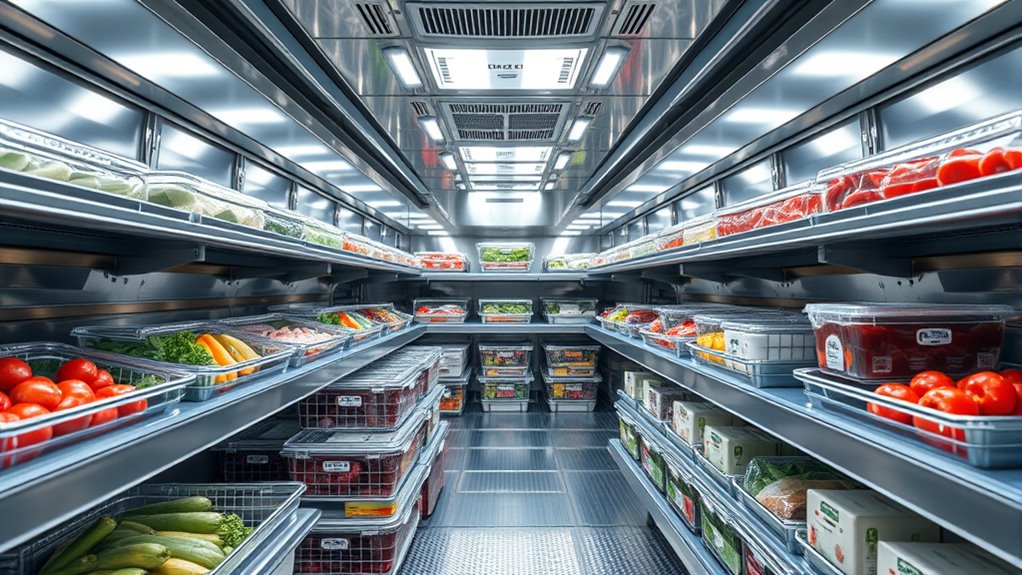
To keep your food fresh while on the road, proper storage techniques are essential. Focus on food temperature control by storing perishable items at the right temperatures. Use coolers with ice packs or portable refrigeration methods to maintain a safe environment for your food. Keep raw meats, dairy, and cooked foods separate to prevent cross-contamination. Regularly check the temperature of your cooler; it should stay below 40°F (4°C) to inhibit bacterial growth. Invest in insulated containers and ensure they are sealed tightly to retain cold. If refrigeration isn’t possible, plan to consume perishables within a day or two. Color accuracy in your storage environment can also influence the preservation of food quality during transit. Proper storage not only preserves freshness but also reduces food safety risks during your journey.
Maintaining Hygiene During Food Preparation and Consumption
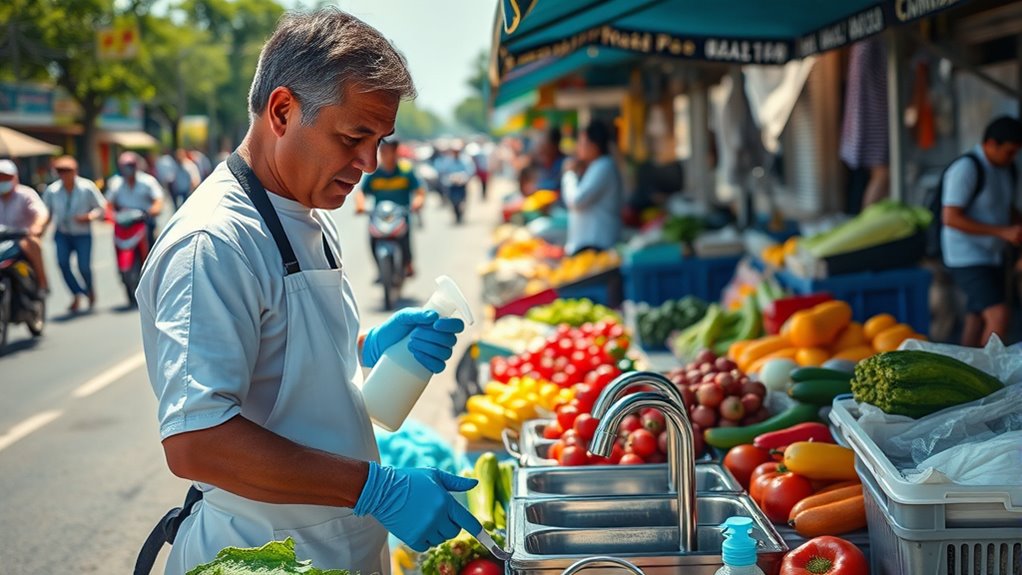
After securing your food with proper storage techniques, maintaining hygiene during preparation and consumption becomes essential to prevent contamination. Follow strict handwashing protocols—wash your hands thoroughly with soap and water before handling food, after touching raw ingredients, or using the restroom. This step reduces bacteria transfer considerably. Always ensure cooking temperatures reach safe levels; for example, cook meats to the recommended internal temperature to kill harmful pathogens. Use a food thermometer to verify temperatures instead of relying on visual cues. Keep your workspace clean, use separate cutting boards for raw meat and vegetables, and avoid cross-contact. Practicing proper food handling is crucial for preventing germs from spreading, protecting you and others from foodborne illnesses while on the road.
Recognizing and Preventing Food Spoilage and Contamination
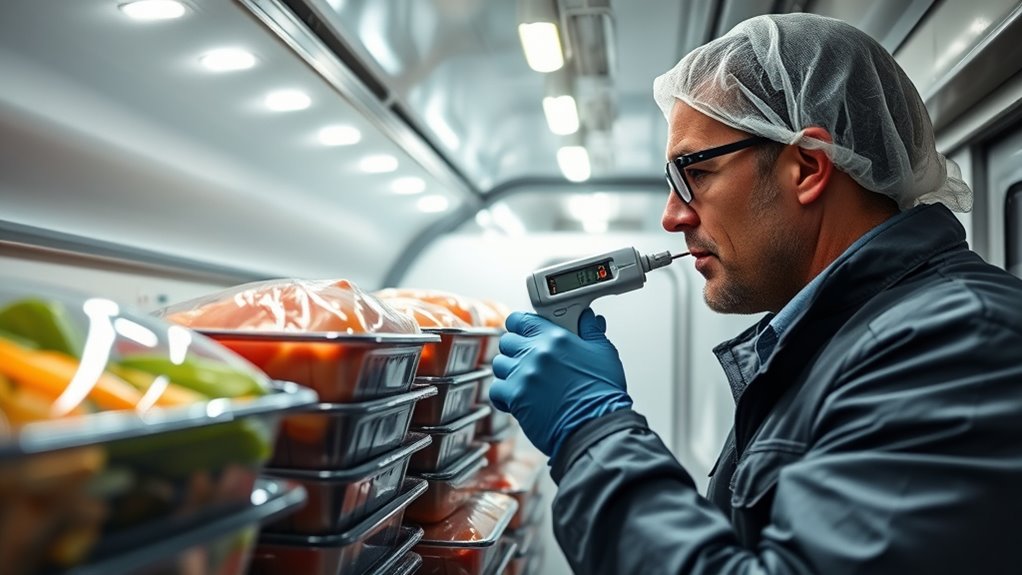
Recognizing signs of food spoilage and contamination is essential to prevent foodborne illnesses while on the road. You should look out for changes like foul odors, slimy textures, discoloration, mold, or an off taste. These indicators often signal the presence of foodborne pathogens or spoilage bacteria. To prevent cross contamination, store raw meats separately and keep cooked foods away from raw ingredients. Always check expiration dates and ensure proper refrigeration. Practice good hygiene by washing hands and utensils regularly. Keep foods at safe temperatures and avoid leaving perishable items out for extended periods. Proper storage techniques are crucial for maintaining food safety during travel. You can spot spoiled food by noting these signs: – Unpleasant smell or sour odor – Slimy or sticky surfaces – Discoloration or mold growth – Unusual textures or mushiness – Fizzing or bubbling in liquids
Tips for Safe Eating on the Go
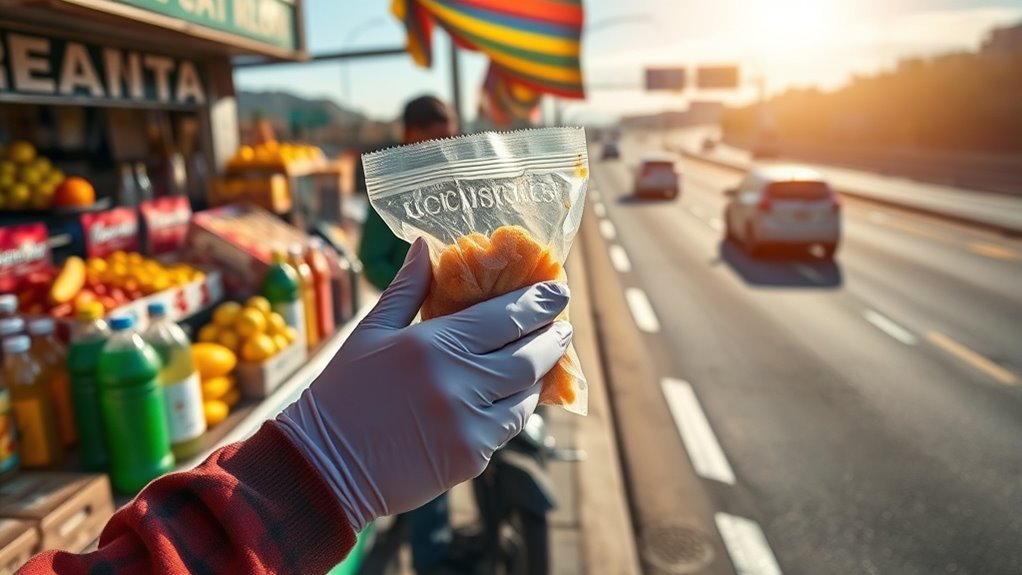
When eating on the go, it’s important to prioritize food safety to prevent illness and enjoy your meals without worry. Always check food labeling for expiration dates, storage instructions, and ingredients. Be aware of allergen information to avoid reactions—read labels carefully or ask about ingredients if dining out. Use insulated containers to keep food at safe temperatures, and pack wipes or hand sanitizer before eating. Additionally, understanding proper food storage practices can help maintain freshness and reduce the risk of contamination.
Frequently Asked Questions
How Can I Tell if Food Has Been Contaminated During Travel?
You can tell if food has been contaminated during travel by inspecting the food packaging for any damage or leaks. Also, check if the travel temperature was maintained—if it was too warm or cold, bacteria could grow. Look for unusual odors, colors, or textures, which are signs of spoilage. Always trust your senses and if something seems off, it’s safer to discard the food to prevent illness.
Are There Specific Foods That Are More Prone to Spoilage on the Road?
Imagine a warm day, with fresh produce and perishable snacks sitting in your car; these foods are more prone to spoilage due to heat and time. You know that perishable snacks, like dairy or seafood, and fresh produce, such as berries or leafy greens, spoil quickly without proper refrigeration. To keep them safe, always store them in cool, insulated containers and consume them promptly, especially during long trips.
What Are the Best Ways to Prevent Cross-Contamination When Sharing Food?
To prevent cross-contamination when sharing food, always practice proper food storage by keeping raw and cooked foods separate. Use clean utensils for each dish, and avoid mixing different types of food with the same utensils. Regularly clean your utensils and surfaces to eliminate bacteria. By following these steps, you guarantee food stays safe and prevent the spread of germs, keeping everyone healthy during your travels.
How Do I Handle Leftovers Safely During Long Trips?
When handling leftovers during long trips, you should prioritize proper storage and temperature control. Use airtight containers to keep food fresh and prevent leaks. Keep leftovers in a cooler with ice packs to maintain a safe temperature below 40°F (4°C). Regularly check the cooler’s temperature, and avoid leaving leftovers out for extended periods. This way, you reduce the risk of bacteria growth and keep your food safe to enjoy later.
What Personal Hygiene Practices Are Most Effective While Traveling?
Imagine your hands as tiny messengers, carrying germs from one place to another. To keep them clean, you should practice good hand hygiene by washing thoroughly with soap and water, especially before eating or touching food. Keep up with personal grooming by regularly trimming your nails and showering. These simple steps help prevent contamination, ensuring you stay healthy and safe during your travels.
Conclusion
As you hit the road, picture your favorite snacks staying crisp and fresh in your cooler, free from spills and spoilage. By packing smart, storing properly, and practicing good hygiene, you create a safe, delicious journey. Think of each meal as a small adventure—trust your preparations to keep it fresh and safe. With these tips, you’ll savor every bite, turning your travel into a flavorful, worry-free experience.
Halloween Picks
halloween
As an affiliate, we earn on qualifying purchases.