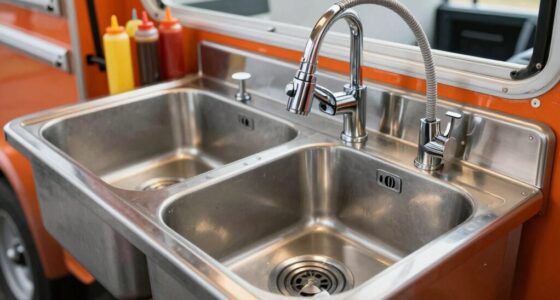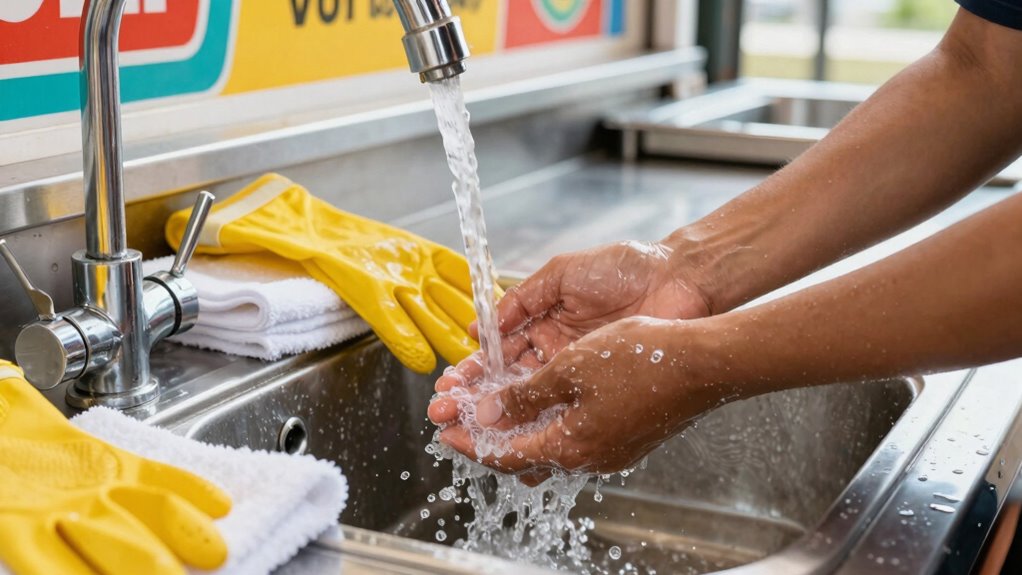
A strong handwashing routine in a food truck means washing your hands with warm water and soap for at least 20 seconds, scrubbing all parts of your hands, including under nails and between fingers. You should wash hands thoroughly after handling raw ingredients, using the restroom, or touching surfaces. Always dry with a clean towel or paper towels, and use a paper towel to turn off the faucet. Keep going to learn more essential hygiene practices for food safety.
Open a free Amazon Business account
Business pricing, bulk buying and tax-exempt orders.
As an affiliate, we earn on qualifying purchases.
Key Takeaways
- Wash hands with warm water and soap for at least 20 seconds, covering all surfaces including under nails and between fingers.
- Always wash hands before starting shifts, after handling raw ingredients, restroom use, or touching surfaces.
- Dry hands thoroughly with clean paper towels or towels, using a paper towel to turn off the faucet to prevent re-contamination.
- Use hand sanitizer as a supplementary measure, especially when soap and water are unavailable, but prioritize proper handwashing.
- Incorporate regular handwashing into your routine, making it a disciplined habit to ensure ongoing food safety and customer trust.
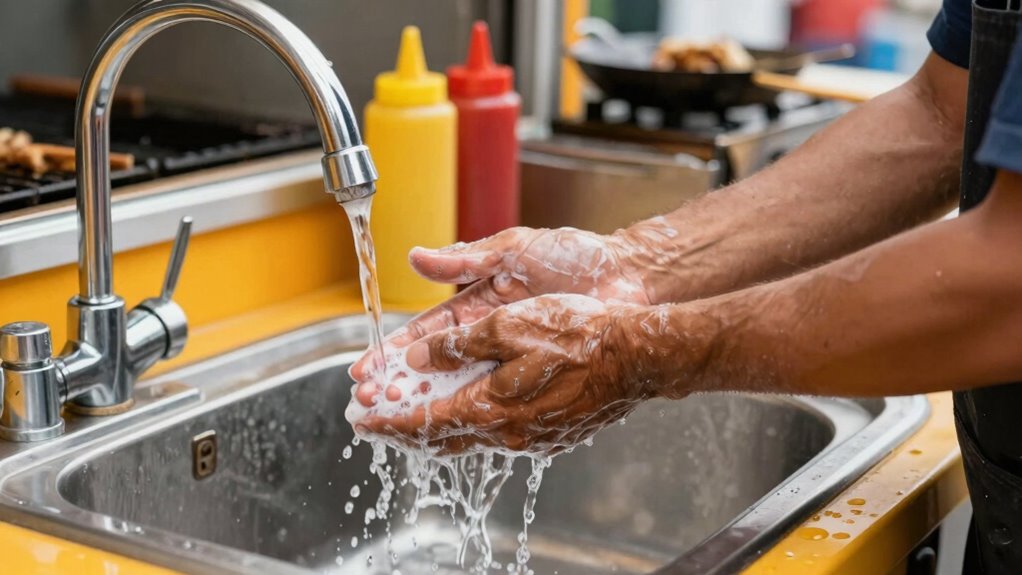
Have you ever wondered how food trucks keep their food safe and hygienic? The key lies in a strong handwashing routine and strict sanitation practices. When you’re working in a food truck, maintaining impeccable hand hygiene isn’t just a good idea—it’s an essential for preventing cross-contamination and ensuring customer safety. You need to make handwashing a non-negotiable part of your daily routine, not just an afterthought. Every shift should start with thoroughly washing your hands, and you should do so frequently, especially after handling raw ingredients, using the restroom, or touching surfaces that aren’t sanitized. Using warm water and soap, you scrub all parts of your hands for at least 20 seconds, making sure to clean under your nails and between your fingers. Drying your hands with paper towels or a clean towel helps prevent bacteria transfer, and if possible, use a paper towel to turn off the faucet to avoid re-contamination.
In addition to proper hand hygiene, sanitation practices are vital. Your work surfaces, utensils, and equipment should be cleaned and sanitized regularly throughout your shift. After prepping raw meats or seafood, you must sanitize all cutting boards and knives to prevent bacteria from spreading. Keep cleaning cloths and sponges sanitized and replace them often, as they can harbor germs. Implementing a routine for disinfecting high-touch areas—like door handles, condiment dispensers, and serving counters—can drastically reduce the risk of contamination. Proper sanitation standards help ensure that your operation remains compliant and trustworthy. Being aware of food safety standards and adhering to them ensures your operation remains compliant and trustworthy. You should also be mindful of your personal hygiene; wearing clean uniforms, tying back long hair, and avoiding jewelry minimizes the chances of introducing bacteria into your workspace. Regular training and supervision can reinforce proper hygiene practices among staff, leading to a safer environment for everyone. Additionally, understanding the importance of proper cleaning techniques can help you effectively eliminate germs and maintain a hygienic environment.
A strong handwashing routine in a food truck involves more than just washing your hands when you remember. It requires discipline and consistency. Make hand hygiene a habit, and treat it as an integral part of your sanitation practices. Keep hand sanitizer stations accessible as an additional measure, but don’t rely solely on them. Soap and water are your best tools for removing germs effectively. Remember, every step you take to improve your hand hygiene and sanitation practices directly impacts the safety of the food you serve and the health of your customers. By maintaining these routines diligently, you not only comply with health regulations but also build trust and loyalty from your patrons. With a focus on cleanliness and a commitment to hygiene, your food truck can thrive as a safe, reputable, and successful operation.
As an affiliate, we earn on qualifying purchases.
Frequently Asked Questions
How Often Should Hands Be Washed During a Shift?
You should wash your hands frequently during your shift, ideally every 30 minutes or after handling raw food, touching trash, or using the restroom. Maintaining good hygiene consistency is essential to prevent contamination. Always wash your hands before starting work, after breaks, and whenever they become visibly dirty. By keeping a steady handwashing frequency, you protect both yourself and customers, ensuring food safety and hygiene standards are consistently met.
What Types of Soap Are Best for Food Trucks?
You might think all soaps are equal, but in a food truck, choosing the right ones matters. Eco-friendly soaps are your best bet—they’re gentle on the environment and safe for food prep areas. Antimicrobial formulations add an extra layer of protection, killing germs effectively without harsh chemicals. This combination keeps your hands clean, your food safe, and your reputation intact. Don’t compromise—opt for soaps that work as hard as you do.
Can Hand Sanitizer Replace Handwashing in Food Trucks?
Hand sanitizer can’t replace handwashing in food trucks because of sanitizer limitations, especially when dealing with raw food, grease, or dirt. You need to understand the importance of handwashing, which effectively removes bacteria and contaminants that sanitizer alone might miss. While sanitizer is useful for quick disinfection, regular handwashing with soap and water is essential to maintain safety standards and prevent foodborne illnesses.
How to Handle Handwashing During Busy Service Times?
During busy service times, think of handwashing as your trusted lighthouse guiding you safely. Keep your handwashing equipment ready and accessible, so staff can quickly wash hands without missing a beat. Staff training is essential—everyone should know when and how to wash hands efficiently. By staying vigilant and prepared, you guarantee food safety remains steady, even in the rush, preventing contamination and maintaining customer trust.
Are Gloves a Substitute for Handwashing in Food Prep?
Gloves aren’t a substitute for handwashing in food prep. While gloves can protect food from contamination, you must maintain them properly—change them frequently and avoid touching your face or other surfaces. Handwashing vs. gloves shows that washing hands is essential to remove germs and dirt. Relying solely on gloves can give a false sense of security. Always wash your hands thoroughly, especially after glove removal, to keep food safe.
disposable paper towels for hand drying
As an affiliate, we earn on qualifying purchases.
As an affiliate, we earn on qualifying purchases.
Conclusion
A strong handwashing routine isn’t just a habit—it’s your shield, your silent guardian in the bustling world of food trucks. When you wash thoroughly, you’re not just removing germs; you’re creating trust, building safety, and showing pride in every dish served. Remember, cleanliness is the melody that keeps your operation harmonious. So, embrace a routine that’s consistent and precise—because in the rhythm of food safety, your hands are the drumbeat that keeps everything in tune.
As an affiliate, we earn on qualifying purchases.
sanitizing spray for kitchen surfaces
As an affiliate, we earn on qualifying purchases.
As an affiliate, we earn on qualifying purchases.
NFL season / tailgating Picks
team gear
As an affiliate, we earn on qualifying purchases.