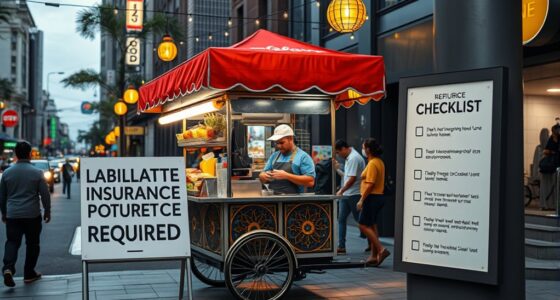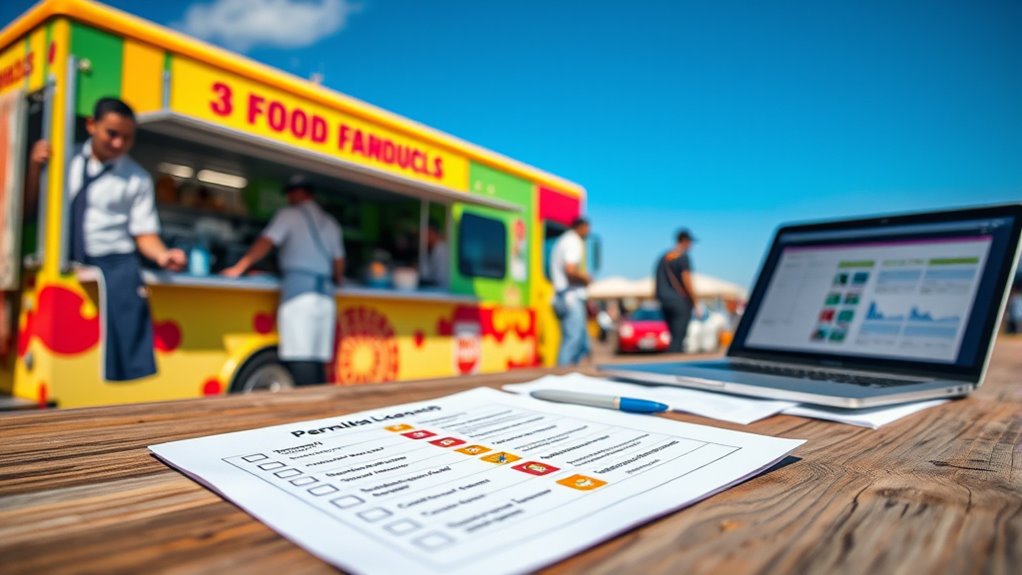

Starting a food truck might seem straightforward, but the legal landscape is anything but simple. While your passion fuels your business idea, managing permits, health codes, and zoning laws can quickly become overwhelming. Without proper compliance, you risk costly fines or shutdowns that could derail your plans. Understanding the essential legal and regulatory steps is vital—yet many entrepreneurs overlook key requirements until it’s too late. How do you guarantee your food truck stays on the right side of the law?

Get kitchen staples and gadgets delivered free with Prime
- Fast, free delivery on millions of items
- Prime Video, Amazon Music and more included
- Member-only deals all year
Key Takeaways
- Obtain all necessary licenses, permits, and certifications, including health, business, and sales tax permits.
- Comply with local health inspection standards and maintain detailed records of sanitation and temperature logs.
- Adhere to zoning laws and restrictions on operation locations and times for food trucks.
- Ensure staff hold proper food handler permits and perform background checks if required.
- Regularly update knowledge of local laws, regulations, and participate in inspections to ensure ongoing compliance.
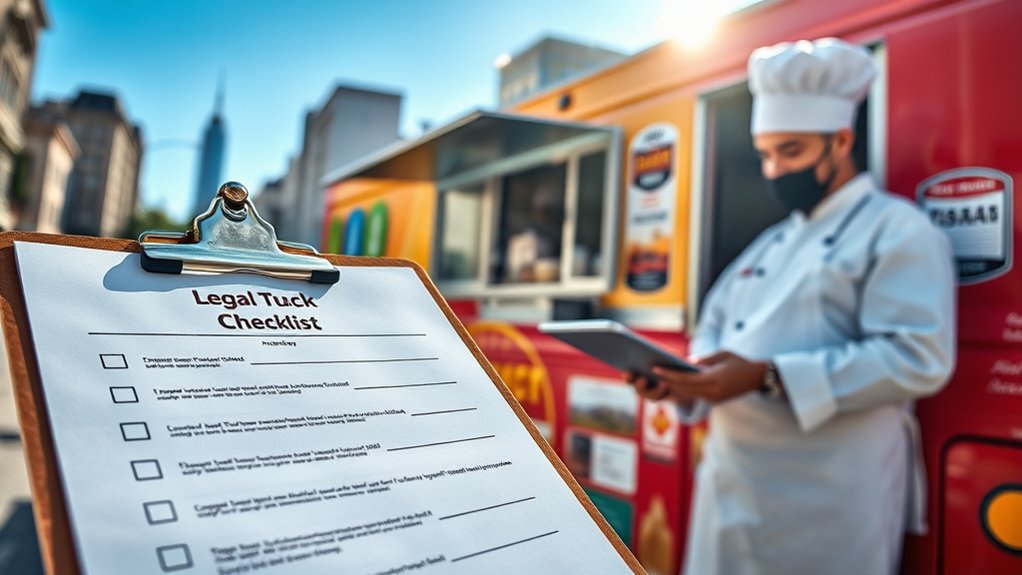
Starting a food truck business can be exciting, but steering the legal and regulatory landscape is essential to guarantee your venture runs smoothly. One of your first priorities should be understanding the health inspection process and licensing requirements. These are critical steps to ensure your truck meets all safety standards and complies with local laws, helping you avoid costly fines or shutdowns down the line. When preparing for a health inspection, you’ll need to ensure your truck’s kitchen area is spotless, well-organized, and equipped with proper sanitation tools. Food safety is paramount, so familiarize yourself with the specific health codes in your city or county. This often involves maintaining correct food storage temperatures, using approved cleaning chemicals, and following strict protocols for handling raw and cooked foods. Regularly scheduled health inspections will verify that your truck maintains these standards, so stay proactive and keep detailed records of cleaning routines and temperature logs. Implementing a health inspection checklist can help you stay prepared and organized for these evaluations.
Licensing requirements are equally important and can vary substantially depending on your location. Typically, you’ll need a mobile food vendor permit or a food service license, which you can obtain through your local health department or city government. These licenses authorize you to operate legally in designated areas, and you’ll often have to renew them periodically. In addition to health permits, you might require a business license, sales tax permit, or specific street vending permits, especially if you plan to park in high-traffic areas or participate in city-sponsored events. Many jurisdictions also have zoning laws dictating where food trucks can operate, so it’s wise to check these restrictions beforehand. Failing to secure the necessary licenses can lead to hefty fines or confiscation of your truck.
To streamline the licensing process, gather all required documentation early, including proof of insurance, a detailed menu, and compliance certificates from your health inspection. Some places also require background checks or food handler permits for you and your staff. Remember, these requirements are designed to protect public health and ensure fair business practices. While navigating these regulations might seem daunting at first, staying organized and proactive makes it manageable. Regularly check for updates to local laws, and consider consulting with a legal professional or a business advisor experienced in the food service industry. By understanding and fulfilling health inspection standards and licensing requirements from the start, you set a solid foundation for a successful, compliant food truck business that can thrive in your community.
Conclusion
Think of your food truck startup as a well-tuned engine—every legal and regulatory step is a crucial gear keeping it running smoothly. By staying compliant with permits, zoning laws, and health codes, you’re fueling your business with the momentum it needs to thrive. Keep these guidelines in mind, and your journey will glide effortlessly down the road to success. With preparation and attention to detail, you’ll steer clear of bumps and accelerate toward your goals.
Columbus Day / Indigenous Peoples' Day Picks
long weekend sales
As an affiliate, we earn on qualifying purchases.